



Building Leaders
Even if people receive some training, there is more to becoming a leader than taking a class. Training in all its aspects needs to change with the times. But it's a pervasive cultural issue. And it takes time to change a culture.

Photo: Mark W. Clark
An officer with a Southern California police department died in a single-car crash driving more than 100 mph on the freeway during a pursuit. His supervisors said, "That doesn't surprise me," because he had a history of speeding.
"I would ask, 'If you knew, why didn't anyone pull him aside and write him up?' But sometimes we don't have the courage as supervisors to do that," says Sgt. John Satterfield of the Los Angeles Sheriff's Department.
Satterfield has worked in the Administrative and Training Division as a supervisor in LASD's Advanced Officer Training Unit for the past four years. He believes American law enforcement as a whole needs to do a better job of deciding who to promote, training its staff at all levels, and holding everyone accountable for what they should know in order to properly do their jobs. And he's not the only one.
The above situation may have resulted from many different problems in leadership. If the supervisors' superiors were aware that they were letting recurring dangerous speeding slide, they could have stepped in. The officer's direct supervisors could have enforced the rules by reprimanding the officer. But it would have been even better to find a way to connect with the officer in such a way as to motivate him to alter his speed on his own.
It could be that the supervisors received promotions before they obtained needed leadership skills or that they didn't receive training even after getting promoted. The fact that multiple supervisors refrained from intervening speaks of a larger problem—one that might have been corrected with formal or informal leadership training.
Even if people receive some training, there is more to becoming a leader than taking a class. "Some of the program that exists is extremely stale," says Tim Janowick, assistant chief at Mt. Prospect (Ill.) Police Department and a longtime trainer. "I think significant changes need to be made." Training in all its aspects needs to change with the times. But it's a pervasive cultural issue. And it takes time to change a culture.
Promoting the Wrong People
Giving leadership positions to officers who are unqualified or simply not a good fit for the job happens often. It's a symptom of the lack of awareness regarding training needs. Whatever the reason, such a mistake has a ripple effect up and down the chain of command and beyond. Not everyone is ready to get promoted.
"Overpromotion I think is the biggest problem," says Janowick, who works with other departments through his membership in the International Law Enforcement Educators and Trainers Association (ILEETA). "We see that all the time in agencies all over the place."
At small departments, of which there are many, there may not be many candidates to choose from. "Nobody else took the test," is an excuse Janowick has heard for promoting the lone applicant, whether the officer is ready for a promotion or not.
In some cases, misunderstanding a person's skillset leads to an ill-advised promotion. Not everyone recognizes that leadership is a skillset in its own right that one must be taught. "They look at folks and there are tasks they complete in their current position at such a level of excellence that they think they can supervise people in doing them. But they lack the leadership skills to help others excel in that position," says Janowick. Then higher-ups become disappointed with the new sergeant's performance because he or she doesn't meet the higher-ups' unrealistic expectations.
Some people want the caché of a higher rank without working to obtain the necessary skills to succeed in that role. "Sometimes people aren't ready to be promoted yet, but are focused on attaining the brass ring," says Satterfield.
Satterfield teaches officers from agencies all across California, and he says less than half of the promoted officers he's seen come through his LASD training for sergeants in the past four years have had any experience supervising anyone. "They've never been any type of leader. They just went from follower to in charge. There's got to be something wrong with that," he says.
Maj. Dwayne Orrick, who heads up the Training and Support Services Division at the Gwinnett County (Ga.) Sheriff’s Office, says many agencies don't provide any training at all, especially smaller departments. In these cases it's difficult to expect an officer to succeed as a supervisor.
An Ounce of Prevention
Having a pool of the right people to promote doesn’t happen by accident. While some people may be born leaders, they still need to develop specific skills. Agencies need to be willing to make this happen.
"I think the way law enforcement is going, we have a real opportunity to develop leaders not when promoted, but when you join a department," says Commander Gregg Jacquin of the Chandler (Ariz.) Police Department. "The minute you get that new officer, you have that opportunity to present the standards and mores of the department. Everything we do, how we act, that's socialization and it's how we as leaders develop future leaders. It's about what you do from day one."
Jacquin incorporates this philosophy into Chandler PD's training program. Much of it is borrowed directly from a program provided by the International Association of Chiefs of Police (IACP). The three-week IACP course called "Leadership in Police Organizations" (LPO) is designed to promote leadership development with a behavioral science approach to leading individuals and groups and effecting change in organizations. One section is devoted to socialization, as described by Jacquin. A train-the-trainer program allows attendees to bring the training back with them to their agencies and help develop more leaders. This can be especially helpful for smaller departments that have a limited budget and limited time to allow officers to attend training because of their small numbers.
"You're a leader even if you're just on the streets as a first-year officer. You must have skills to work as part of a team," says Robby Jacobsen, project coordinator for the IACP's Center for Police Leadership and Training. This is a major tenet of the LPO program. It encourages everyone to exercise leadership skills at every level of the department by using specific tactics that require understanding group dynamics.
"If you don't provide officers with opportunities to train and don't give them exposure to leadership school, how do we develop new leaders? How will the department move on?" asks Jacquin. "If someone leaves tomorrow, someone will fill that position." The question is whether the person who fills that position will be up to the task.
Formal Training
With the field training officer program under his command, Jacquin is very involved in officer training at the entry level at Chandler PD. And the agency strives to extend that level of training throughout officers' careers.
Chandler PD sends all officers on the sergeant promotion list to supervisor school before they are promoted whenever possible, for example. And an informal sergeant prep course covers what officers can expect as they test, go through the promotional process, and take on the role of sergeant.
A new extensive promotion process also better identifies the best candidates. It involves several scenarios with live actors covering incident command and conflict resolution. Further training includes developing and delivering a presentation to a city council or neighborhood group and handling any questions and comments.
Newly promoted sergeants at the Chandler PD then get "assigned to the FTO sergeant" for two weeks to get their feet wet before they go out on the road. They assume the role of the FTO sergeant as he or she looks on for guidance. "So right away they have an opportunity to do counseling and coaching," says Jacquin. During this time, the FTO sergeant goes over specific issues with the new sergeant such as crime scene management, critical incident command, and personnel rules. Jacquin and the Chandler PD are looking into additional training for new sergeants, including shadowing sergeants in different divisions.
"A lack of training manifests itself in many ways," says Jacquin. Being able to communicate with people appropriately, when working with other officers and with the public, can be just as important as receiving training in "the big things," such as how to handle critical incidents.
Timing Training
"The current trend in law enforcement agencies to promote and then train often sets the newly promoted supervisor up for failure," contends J. Frank Woodall, assistant director and chief training officer for the Texas Department of Public Safety. Which is why he is directing an overhaul of training at all levels to change that and more.
As they say, timing is everything. Most people I spoke with agree that receiving rank-specific training before a promotion is preferable. But it often doesn't happen that way, for a variety of reasons. Even a large department like LASD isn't always able to time training so that everyone receives it before promotion every time. Ideally, officers will obtain skills in leadership and other relevant areas before a promotion.
"In so many agencies, they throw them into a job and they are there for a year or even two years before they get to go to a supervisor's class," opines Orrick. "And by then, people say, 'Oh, you made a mistake,' or 'You should have known this.' Really?"
People contacted for this article say it's important to provide leadership opportunities at all levels and to create informal training wherever possible, such as mentoring and job shadowing.
Allowing a person to try out a position lets him or her find out if it's desirable in the first place. This alone can help prevent promoting the wrong people.
Janowick recommends sending officers on the sergeants list to go to the academy as class supervisors. "One candidate came back and said, 'If this is what being a supervisor is like, I'll pass, thanks,'" says Janowick. "It not only gives us a chance to test drive the people, it also gives them a chance to test drive the position before they accept it."
Training Shouldn't Stop
All levels of law enforcement need to continue training and learning. This requires a mindset that welcomes feedback, even if it's not positive.
Janowick says he is willing to take constructive criticism from his subordinates as well as his peers and superiors. He figures if he's going to dish it out, he should be willing to accept suggestions as well. And those he works with have come to expect such a relationship and respect him all the more for it.
IACP's Jacobsen agrees. "Leadership is not something you just learn in the beginning of your career," he says. "Even if you are a chief, you need to continue to learn and develop and be able to hear the voice of the people below you."
There are always reasons for a lack of training, chief among them a budget crunch. But there's never a surplus of money. The bottom line is that training is important. Ignoring that reality costs everyone.
Veteran officers in supervisory positions say that not recognizing the importance of leadership training and letting it slide leads to liability issues in every sense, including litigation and deaths. Training properly at the outset and perpetuating a culture that encourages leadership development and mentoring at an early stage saves everyone pain and money in the long run.
Related:
More Training
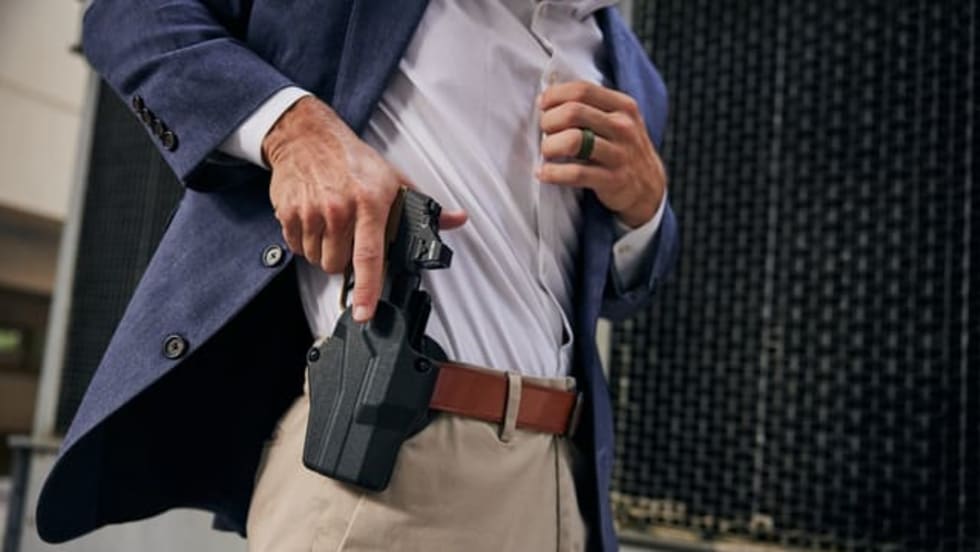
Safariland Solis Rethinks Concealable Duty
What if Level I retention didn’t require a full duty rig? Safariland’s Solis delivers trusted ALS security in a streamlined OWB platform built for administrative and plainclothes professionals who need protection without the bulk.
Read More →
Two-Officer Tactical Doorway Entry Techniques
Entering a room during active-threat situations requires communication, coordination, and disciplined tactical movement. In this video, trainers from the United States Deputy Sheriff’s Association demonstrate critical room entry concepts, including fatal funnel awareness, team coordination, and safe tactical movement.
Read More →
High Compressed Ready Explained | Muzzle Control For Room Entry
In this video, Mike Willis, law enforcement national training and program director for the United States Deputy Sheriffs’ Association, demonstrates the high compressed ready position and discusses muzzle control during room entry.
Read More →
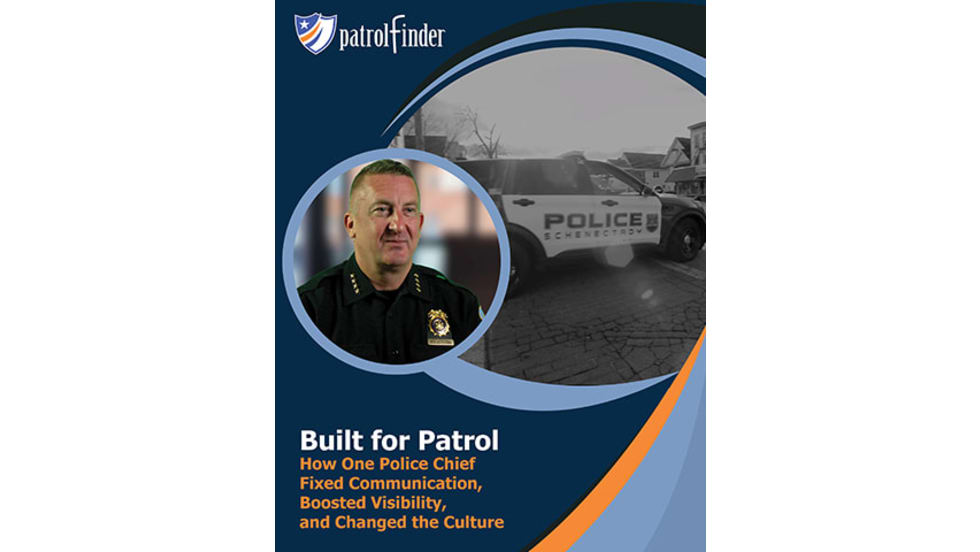
Built for Patrol: How One Police Chief Fixed Communication, Boosted Visibility, and Changed the Culture
Patrol work hasn’t changed—but the expectations on officers have. See how one police chief helped officers get the right information at the right time, improve patrol visibility, and strengthen trust without adding complexity or surveillance. This real-world story shows how patrol-driven technology can make the job safer, smarter, and more effective—starting on day one.
Read More →
Why Attend the DroneSense Innovation Summit by Versaterm?
Let’s hear from Ryan Bracken, head of product, about why your agency should send someone to the first annual DroneSense Innovation Summit by Versaterm in April.
Read More →
Caswell Live Fire Spins Off from InVeris
Caswell Live Fire has spun off from parent company InVeris, coinciding with the 100th anniversary of Caswell’s founding. Over the past 100 years, Caswell has developed pioneering solutions that support military, law enforcement, and commercial clients worldwide.
Read More →
When Do You Transport a Wounded Officer Instead of Waiting for EMS?
Thumbnail for video series POLICE Topics, Tactics & Tips with a yellow headline that reads When Do You Transport a Wounded Officer Instead of Waiting for EMS?
Read More →
How to Pick Your High-Risk Stop Location for Tactical Advantage
Hear veteran trainer Mike Willis, of the United States Deputy Sheriff’s Association, explain several considerations that can help you wisely pick your best spot to initiate high-risk or felony traffic stops.
Read More →
Coffee Break with Police Experts: Using Your Patrol Vehicle for Cover
In this video, hear from Dustin Mowery, a product specialist at Team Wendy, as he discusses how to best use a patrol vehicle for cover.
Read More →
Preventing Blue-on-Blue Shootings
In this video, Mike Willis, law enforcement national training and program director, United States Deputy Sheriff’s Association, discusses how to prevent blue-on-blue shootings.
Read More →