



Maintaining Focus
Focus is all about concentrating on what's important, being in the present, and not letting anything distract you. Of course, that's a lot easier said than done.

If you are a Star Wars fan, you might remember that in Episode I, Jedi Master Qui-Gon Jinn tells young Anakin Skywalker, "Always remember, your focus determines your reality." Although this quote comes from a work of science fiction, it makes an interesting real-world point. Over time, successful supervisors have come to understand that learning how to stay focused is one of the best ways you can invest in yourself. Knowing how to focus multiplies your efforts and makes you more effective.
There are no tricks or short cuts when it comes to focus. Focus is all about concentrating on what's important, being in the present, and not letting anything distract you. Of course, that's a lot easier said than done. We live in an age in which dealing with distractions has become the norm. Every experienced supervisor knows that distractions lie in wait around every corner with every call of the radio, buzz of your cell phone, or walk-up question. I always knew it would be an interesting day when the conversation started with, "Hey, LT, got a minute?"
In order to understand how to use focus to our advantage, let's break it down into three basic concepts: focusing on the now, focusing on the task at hand, and focusing on the positive.
Focusing on the now is also called mindfulness. Mindfulness means being present in the moment; being more conscious of life as it happens. It is being in a state of active attention in the present. One of the keys to accomplishing this is doing one thing at a time. This may seem counterintuitive as a supervisor, but it can be applied.
We often hear the term multitasking in the same conversation about focus. However, there is no such thing as multitasking in the sense that we have been led to believe. You may be involved with five tasks simultaneously, but you're not actually doing them all at once. You are just switching focus from one to another in succession. There is a Zen proverb that says, "When walking, walk. When eating, eat."
Another key to focusing on the now is not thinking of the past or worrying about the future. You need to think in terms of what's important now. What are you dealing with right now, at this very moment? There is no way to think in terms of the past, the present, and the future all at the same time. If you don't stay in the present, the moment will pass without you and you will miss something. Missing something will ultimately lead to you making a mistake.
Focusing on the task at hand goes back to the fallacy of multitasking. For example, if you are talking on the phone and writing an email at the same time, you are kidding yourself if you think you are doing both well. The mind is not wired that way; it only commits so many pathways to performing complicated tasks. One of them is suffering from your lack of attention. We have all done this while talking on the phone. You know you're not paying attention if you are saying things like "uh-huh," "right," "sure," or "I get it" just to get by.
Conversely, if you are listening to the conversation, then you are probably making errors as you type your email. You have probably made some spelling mistakes or typed the same words twice. It's far better to focus on one task at a time by taking the phone call and then finishing your email afterward. If it deserves your attention, then you should give it fully.
Focusing on the positive is more important than you might think. Negativity is one of our biggest distractions. It's a proven fact that negative thoughts, words, and attitude create negative and unhappy feelings, moods, and behavior. In essence, you are what you think. I believe it's better for a supervisor to think in terms of how to make something happen instead of why it's not going to happen. Focus on what resources you already have, what past experience you can draw from, or any middle ground and use that as your starting point.
Negativity is contagious and only serves to drag everyone down. Bypass the drag by looking for the positive first and moving on from there. Complaining or whining about what you don't have or why you feel it won't work does nothing to accomplish the mission. Change the conversation in order to find ways to make it work. When you change the conversation, you tend to change the outcome in your favor.
Staying focused requires practice and commitment. It's only a great tool if you learn how to use it. Mark Sanborn said, "Fear not but to waste the present moment." I have to agree.
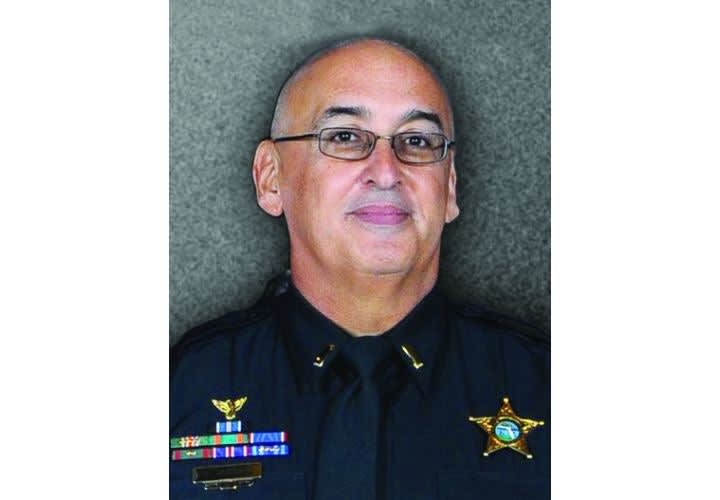
Amaury Murgado retired a senior lieutenant from the Osceola County (FL) Sheriff's Office with over 29 years of experience.
More Training

Vector Solutions Launches Comprehensive Online Dispatch Training Catalog for Emergency Communications Professionals
Vector Solutions’ new catalog of 35 expert-developed online courses can help emergency communication centers strengthen training, meet certification requirements, and simplify continuing education.
Read More →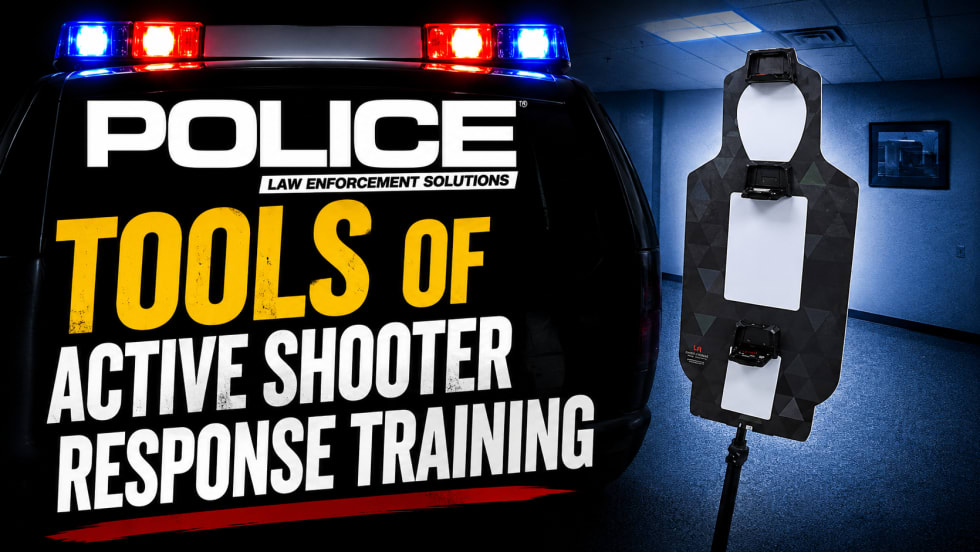
Tools for Active Shooter Response Training
What technologies help prepare officers for active shooter response situations? This behind-the-scenes look at law enforcement training explores shot simulators, smart firearms, laser target systems, and the tools used to build safer, more effective training environments.
Read More →
Two-Officer Tactical Doorway Entry Techniques
Entering a room during active-threat situations requires communication, coordination, and disciplined tactical movement. In this video, trainers from the United States Deputy Sheriff’s Association demonstrate critical room entry concepts, including fatal funnel awareness, team coordination, and safe tactical movement.
Read More →
High Compressed Ready Explained | Muzzle Control For Room Entry
In this video, Mike Willis, law enforcement national training and program director for the United States Deputy Sheriffs’ Association, demonstrates the high compressed ready position and discusses muzzle control during room entry.
Read More →
Why Attend the DroneSense Innovation Summit by Versaterm?
Let’s hear from Ryan Bracken, head of product, about why your agency should send someone to the first annual DroneSense Innovation Summit by Versaterm in April.
Read More →
Caswell Live Fire Spins Off from InVeris
Caswell Live Fire has spun off from parent company InVeris, coinciding with the 100th anniversary of Caswell’s founding. Over the past 100 years, Caswell has developed pioneering solutions that support military, law enforcement, and commercial clients worldwide.
Read More →
When Do You Transport a Wounded Officer Instead of Waiting for EMS?
Thumbnail for video series POLICE Topics, Tactics & Tips with a yellow headline that reads When Do You Transport a Wounded Officer Instead of Waiting for EMS?
Read More →
How to Pick Your High-Risk Stop Location for Tactical Advantage
Hear veteran trainer Mike Willis, of the United States Deputy Sheriff’s Association, explain several considerations that can help you wisely pick your best spot to initiate high-risk or felony traffic stops.
Read More →
Coffee Break with Police Experts: Using Your Patrol Vehicle for Cover
In this video, hear from Dustin Mowery, a product specialist at Team Wendy, as he discusses how to best use a patrol vehicle for cover.
Read More →
Preventing Blue-on-Blue Shootings
In this video, Mike Willis, law enforcement national training and program director, United States Deputy Sheriff’s Association, discusses how to prevent blue-on-blue shootings.
Read More →