
Police Magazine

 MENU
MENU SEARCHMENUSEARCH
Loading data...
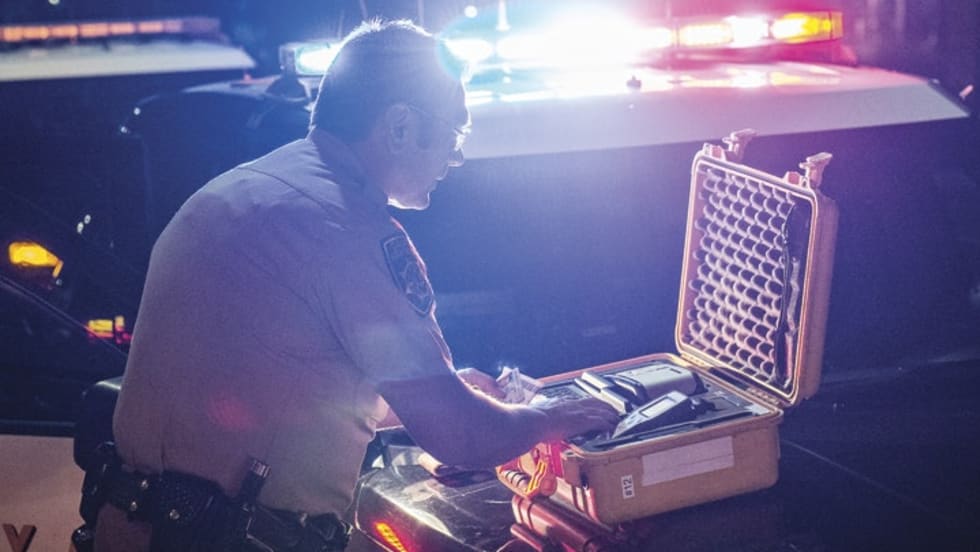
You notice a driver weaving in and out of traffic, so you signal with lights and siren for him to pull over. He definitely seems out of sorts, so you conduct the standardized field sobriety tests, which he fails. But when you administer a breath test, his blood alcohol content (BAC) is way below the legal limit for alcohol–despite his clearly exhibiting signs of being under the influence. What you have here is most likely a case of "drug driving."
Read More →
The culmination of more than seven years of development, the Interlock 7000 incorporates new technologies to help prevent people from driving under the influence of alcohol. It can be installed in any type of vehicle, including motorcycles.
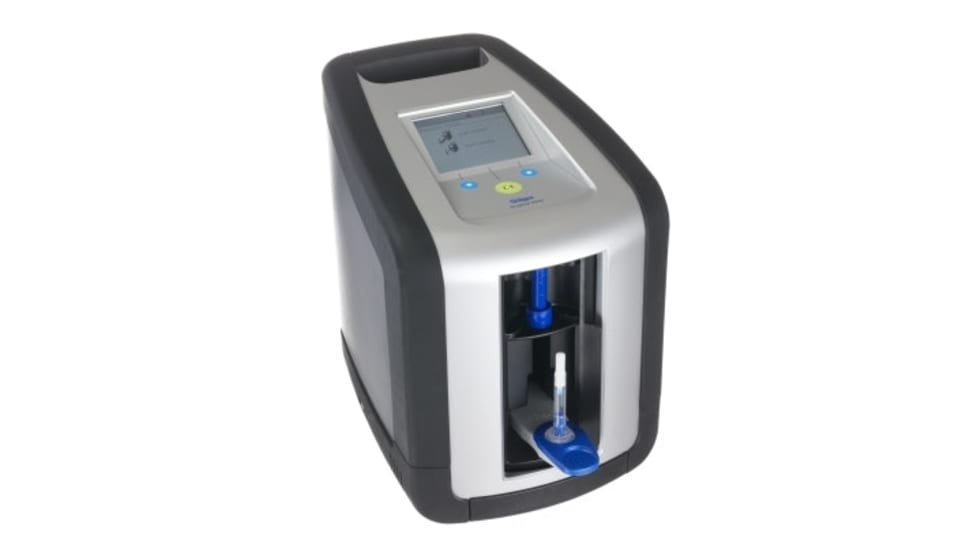
Read More →In the past, roadside drug screening has been difficult because it involved the collection of urine or blood samples. The Dräger DrugTest 5000 mobile oral fluid screening system provides an alternative.
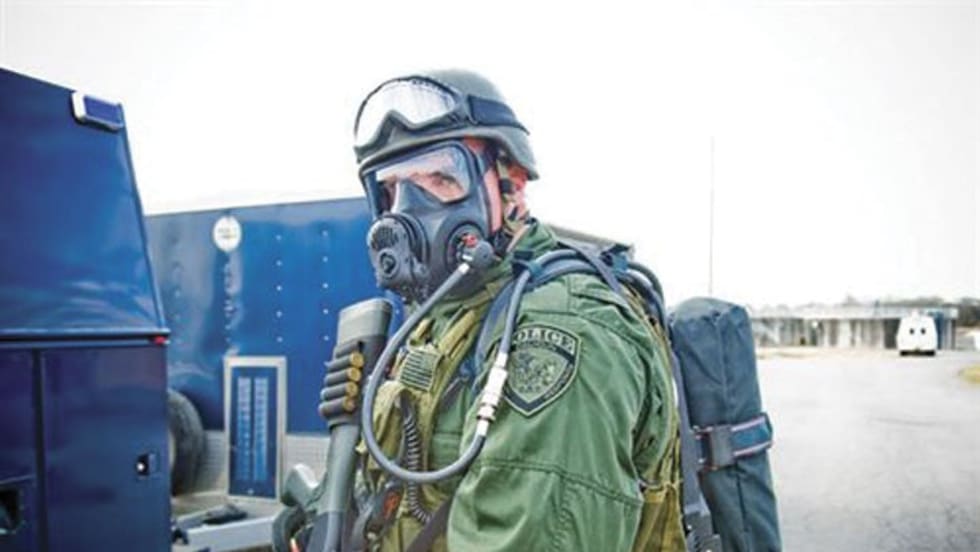
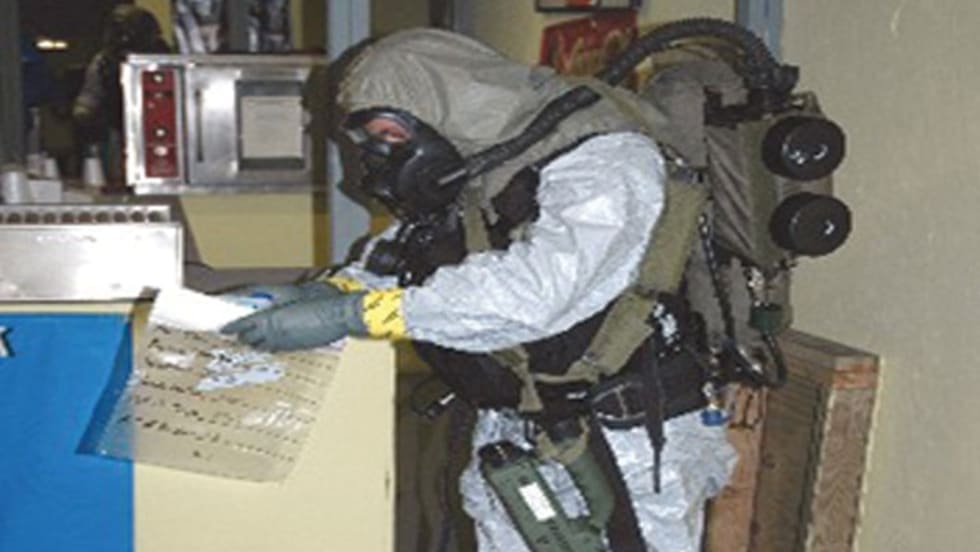
Read More →Today, there's less emphasis on equipping every law enforcement agency in America for responding to chemical, biological, radiological, and nuclear (CBRN) incidents. But that doesn't mean that some officers at some agencies are in need of the latest personal protective equipment.
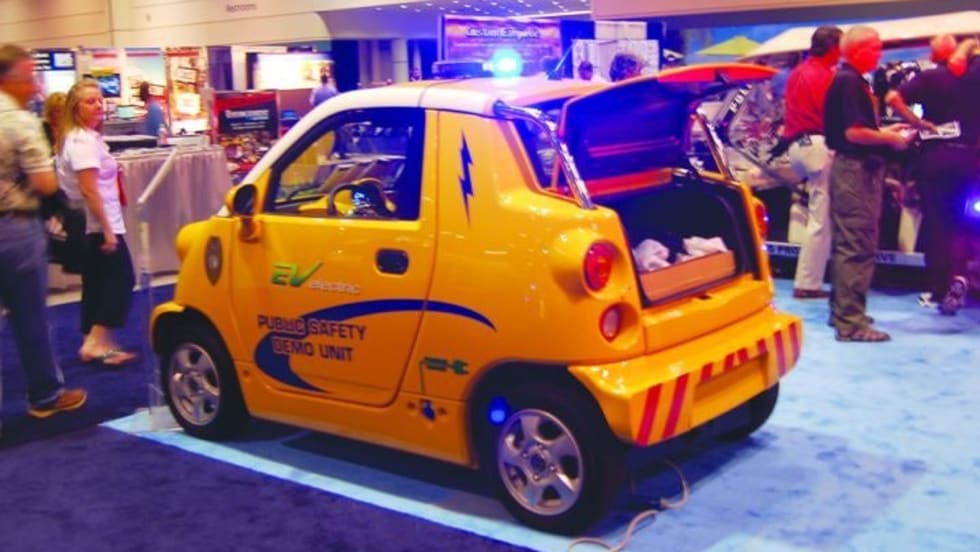
Read More →Every International Association of Chiefs of Police show kind of has its own vibe. Last year's show in Denver was all about vehicles. This year's show was much more subdued but there was still plenty of cool stuff on the show floor.
Read More →The Draeger Bio-Agent test is a series of immunological rapid tests to detect biological agents and toxins. You'll get results in 10 to 15 minutes, or in just three minutes for high concentrations.
Read More →The SCBA-G is a modular combination SCBA/PAPR designed to provide long-duration breathing protection to emergency responders. Utilizing proven, tested technology, the SCBA-G is ideal for missions requiring long entry/egress or involving unknown elements that may require more or less protection.
Read More →New Pac 3000 and Pac 5000 single-gas detectors from Draeger Safety monitor the air and alert the user to dangerous concentrations of carbon monoxide or H2S, and low oxygen levels. Once activated, these small, lightweight monitors operate for two years without replacing or calibrating the sensors. The new instruments feature simple, two-button operation, an infrared interface, and three alarm modes. During an alarm or at the push of a button, each unit’s display becomes backlit.
Read More →