
Police Magazine

 MENU
MENU SEARCHMENUSEARCH
Loading data...

The Department of Homeland Security has indicated it will replace its color-coded, five-level system of terrorism alerts with a new two-tiered approach and will issue some public alerts via social media sites.
Read More →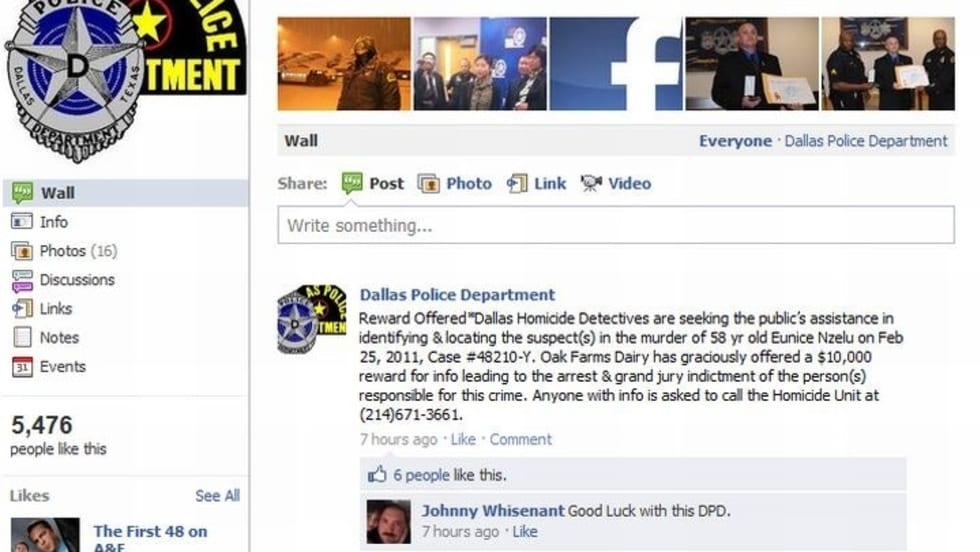




Albuquerque Police Officer Trey Economidy was placed on desk duty after his description of his job as "human waste disposal" came to light following an officer-involved shooting.
Read More →In the past year, the Richmond (Va.) Police Department has been using Facebook posts and Twitter tweets to broaden its search for new police officers. The department also used its blog to answer questions and direct potential applicants to submit electronically.
Read More →Sr. Cpl. Melinda Gutierrez has been distributing crime alerts, requests for public assistance to locate missing persons, surveillance video and departmental commendations via Facebook, Twitter, Nixle and YouTube.
Read More →Six-year veteran Officer Cat Lafitte has been placed on administrative leave for Facebook posts stating she was "at war" with command staff, and bragging about a fight with a hospital worker.
Read More →Don't think you'll be able to set back your clock and readjust your "cool level" to theirs. If you've given an analogy and had to explain it, you've committed a faux pas. Face it. There are generational icons that we still use that many don't understand.
Read More →Most of law enforcement has watched the information age and rising knowledge-worker revolution as curious observers. We should instead embrace the opportunities these innovations have brought us, and communicate directly with the public. After all, we work for them.
Read More →Andrew Noyes, manager of public policy communications at Facebook, says there will be a page for each state, plus the District of Columbia, Puerto Rico and the U.S. Virgin Islands.
Read More →It's now become nearly impossible for law enforcement agencies to remain uninvolved in social media. Enter the Social Media, the Internet, and Law Enforcement (SMILE) conference.
Read More →This is the first in a series of short movies produced by the Denver PD's Media Relations Unit and the Denver Police Foundation to illustrate the challenges and rewards of law enforcement.
Read More →