



New NC Law Toughens Penalty for Assaulting LEOs
"Conner's Law" is named after State Trooper Kevin Conner, who was shot to death almost a year ago during a traffic stop in Columbus County, NC.

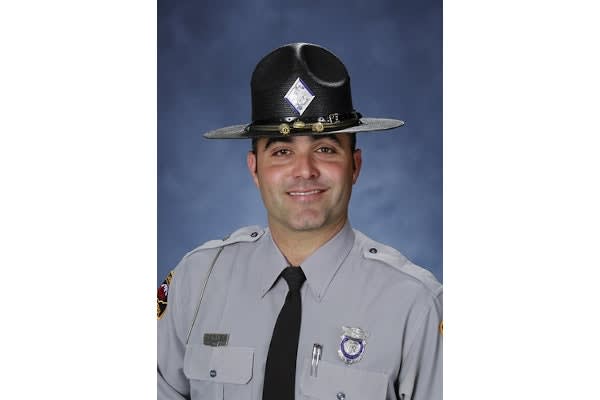
North Carolina Highway Patrol Trooper Kevin Conner was shot and killed in Oct. 2018 in Columbus County.
Photo: North Carolina Highway Patrol
North Carolina Gov. Roy Cooper on Wednesday signed "Conner's Law"—legislation to boost the penalty for assaulting emergency personnel and to increase the death benefit for the families of emergency personnel murdered in the line of duty.
The law is named after State Trooper Kevin Conner, who was shot to death almost a year ago during a traffic stop in Columbus County, NC.
Two people are charged with Conner's murder, reports the Fayetteville Observer.
"I have spoken to Trooper Kevin Conner's family and know how much he meant to them and to his community and our state. I hope that in his honor and memory, Conner's Law will help prevent future violence against the brave men and women who keep our communities safe," Cooper said in a news release Wednesday.
The new law mandates active prison time for people who use a firearm to assault law enforcement officers (prior law had an option for probation) and it toughens the potential sentences for people who assault and injure other emergency responders regardless of what kind of weapon is used.
The law also doubles the death benefit, to $200,000, for the family of a public safety worker murdered on the job.
More Point of Law

Point of Law: The Limits of Electronic Searches
Can an individual be prosecuted for despicable criminal conduct based on evidence obtained in violation of the United States Constitution? Ultimately, the Ninth Circuit judges wrote, “In the circumstances of this case (United States v. Holcomb, 23-469 (9th Cir. 2025)), respect for the Constitution and the rule of law requires an answer of “no.”
Read More →
Trump Issues Order Cutting Federal Funding in Cashless Bail Jurisdictions
<strong>“</strong>Cashless bail policies allow dangerous individuals to immediately return to the streets and further endanger law-abiding, hard-working Americans because they know our laws will not be enforced,” the administration said.
Read More →Justice Department Sues Los Angeles Over Sanctuary Policies
The DOJ said in a press release that the “sanctuary city” policies of the City of Los Angeles are illegal under federal law.
Read More →
Understanding Officer-Created Jeopardy
Officers can be criminally prosecuted for using force when their actions led to escalation during contact with subjects.
Read More →
Point of Law: The Limitations of Search Warrants
In the Tenth Circuit case of Cuervo v. Sorenson, the Court ruled officers cannot deviate from the language of the warrant.
Read More →DOJ Dismisses Consent Decrees Affecting Louisville and Minneapolis Police
The Civil Rights Division will be taking all necessary steps to dismiss the Louisville and Minneapolis lawsuits with prejudice, to close the underlying investigations into the Louisville and Minneapolis police departments.
Read More →New Michigan Bill would Give Officers Civil Immunity in Self-Defense Cases
House Bill 4404 would create a presumption of civil immunity for individuals who are cleared criminally after using force in self-defense, shifting the burden of proof onto plaintiffs.
Read More →Seattle to Pay Police Captain $1 Million to Settle Lawsuit
Seattle police Capt. Eric Greening sued former Chief Adrian Diaz last year alleging that Diaz retaliated when Greening brought up concerns about racial and gender discrimination.
Read More →Washington Agencies Ordered to Not Delete Critical Facebook Contents
Jim Leighty, a local activist, filed two federal lawsuits last year claiming both agencies deleted or hid critical comments he had written below multiple posts, while keeping comments that were pro-police in nature.
Read More →Washington State Attorney General Sues Sheriff for Helping Immigration Enforcement
The lawsuit claims the Adams County Sheriff’s Office has illegally held people in custody based only on their immigration status, helped federal agents question people in custody, and given immigration officials confidential personal information.
Read More →