



Holder Severely Limits Federal Civil Asset Forfeiture Program
While police can continue to make seizures under their own state laws, the federal program was easy to use and required most of the proceeds from the seizures to go to local and state police departments. Many states require seized proceeds to go into the general fund.

Attorney General Eric H. Holder Jr. on Friday barred local and state police from using federal law to seize cash, cars and other property without evidence that a crime occurred.
Holder’s action represents the most sweeping check on police power to confiscate personal property since the seizures began three decades ago as part of the war on drugs.
Since 2008, thousands of local and state police agencies have made more than 55,000 seizures of cash and property worth $3 billion under a civil asset forfeiture program at the Justice Department called Equitable Sharing, the Washington Post reports.
The program has enabled local and state police to make seizures and then have them “adopted” by federal agencies, which share in the proceeds. The program allowed police departments and drug task forces to keep up to 80 percent of the proceeds of the adopted seizures, with the rest going to federal agencies.
While police can continue to make seizures under their own state laws, the federal program was easy to use and required most of the proceeds from the seizures to go to local and state police departments. Many states require seized proceeds to go into the general fund.
A Justice official, who spoke on the condition of anonymity in order to discuss the attorney general’s motivation, said Holder “also believes that the new policy will eliminate any possibility that the adoption process might unintentionally incentivize unnecessary stops and seizures.”
Holder’s decision follows a Washington Post investigation published in September that found that police have made cash seizures worth almost $2.5 billion from motorists and others without search warrants or indictments since the terrorist attacks of Sept. 11, 2001.
The Post found that local and state police routinely pulled over drivers for minor traffic infractions, pressed them to agree to warrantless searches and seized large amounts of cash without evidence of wrongdoing. The law allows such seizures and forces the owners to prove their property was legally acquired in order to get it back.
More Patrol

Streamlight Portable Scene Light III Wins 2026 OH&S New Product of the Year Award
Streamlight’s Portable Scene Light III has won the 2026 Occupational Health & Safety (OH&S) New Product of the Year Award in the Lighting category.
Read More →
Adept Armor Introduces Two New Rifle Plates
Adept Armor has launched two new Level IV ballistic plates, the Emperor and the Archon Mark 2, which brings Adept Armor’s new Quatroid ceramic to the high-threat, performance-value center of the range at 5.2 pounds.
Read More →
POLICE Product Test: Benchmade Bailout
The Benchmade Bailout is a slim, lightweight carry knife with a deep-ride pocket clip and comes in a variety of blade steels and scales. Here is a detailed review of the Taiga Green Bailout, released earlier this year.
Read More →
NLEOMF Announces July 2026 Officer of the Month
NLEOMF honored a Michigan deputy sheriff as the July 2026 Officer of the Month for rescuing a trapped driver from a burning vehicle following a Fourth of July crash.
Read More →
Streamlight to Showcase Newest Lighting Products at National Safety Council’s Safety Congress & Expo 2026
Streamlight will showcase its latest lights, including the Portable Scene Light III and the LiteBox 1Million, at the 2026 National Safety Council (NSC) Safety Congress & Expo.
Read More →
The 2027 World Police & Fire Games Set for Perth, Australia
The 2027 World Police & Fire Games (WPFG) will take place in Perth, Western Australia, from Friday, March 12 through Sunday, March 21, 2027.
Read More →
5.11 Partners with National Fallen Firefighters Foundation to Support #ForThe343
5.11 has joined the nationwide movement honoring the 343 New York City Fire Department firefighters lost on Sept. 11, 2001.
Read More →
Team Wendy Announces Title Sponsorship of the Jorge Pastore Foundation
Team Wendy’s 3-year partnership with the Jorge Pastore Foundation expands access to programs that strengthen those who serve.
Read More →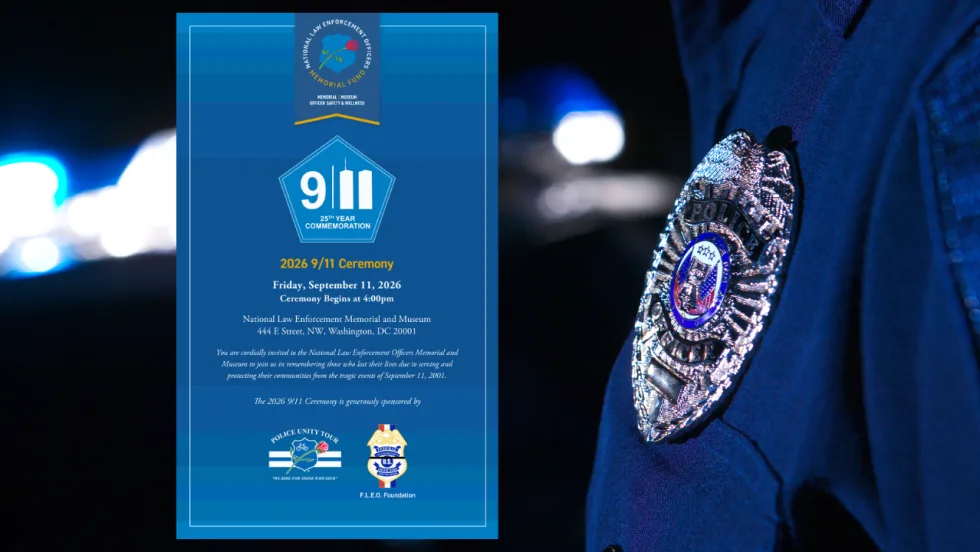
National Law Enforcement Memorial and Museum Hosting 9/11 25th-Year Commemoration Ceremony
The National Law Enforcement Memorial and Museum is hosting a 9/11 25th Year Commemoration Ceremony on Sept. 11 at 4 p.m.
Read More →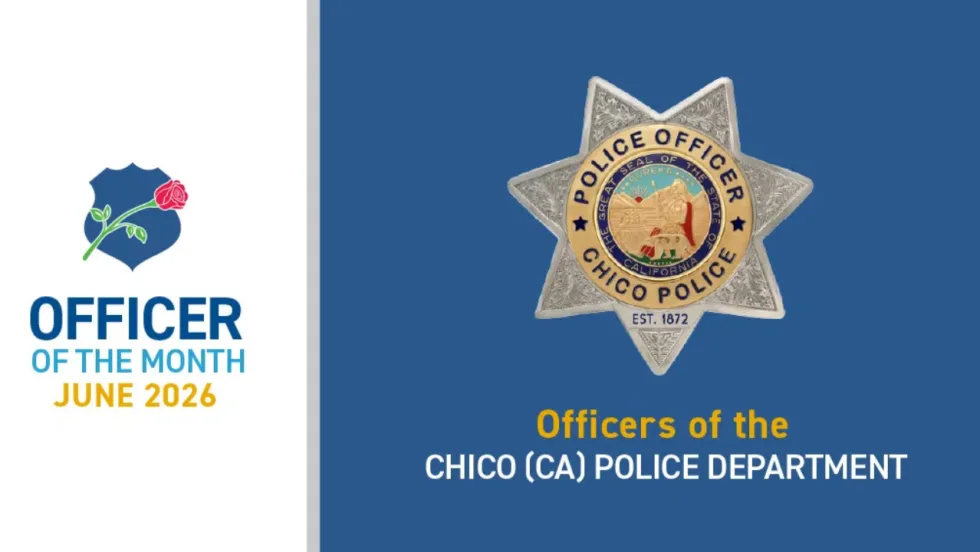
National Law Enforcement Officers Memorial Fund Announces June 2026 Officers of the Month
The National Law Enforcement Officers Memorial Fund (NLEOMF) named 15 officers of the Chico Police Department (California) as the Officers of the Month for June 2026 for their roles in responding to an active-shooter incident at a public library.
Read More →