



IACP 2016: IACP President Apologizes for Law Enforcement's 'Historical Injustices'
At the 2016 IACP Conference and Expo in San Diego this week, IACP President Terrence M. Cunningham delivered remarks that focused on acknowledging police officers' past mistreatment of minorities.

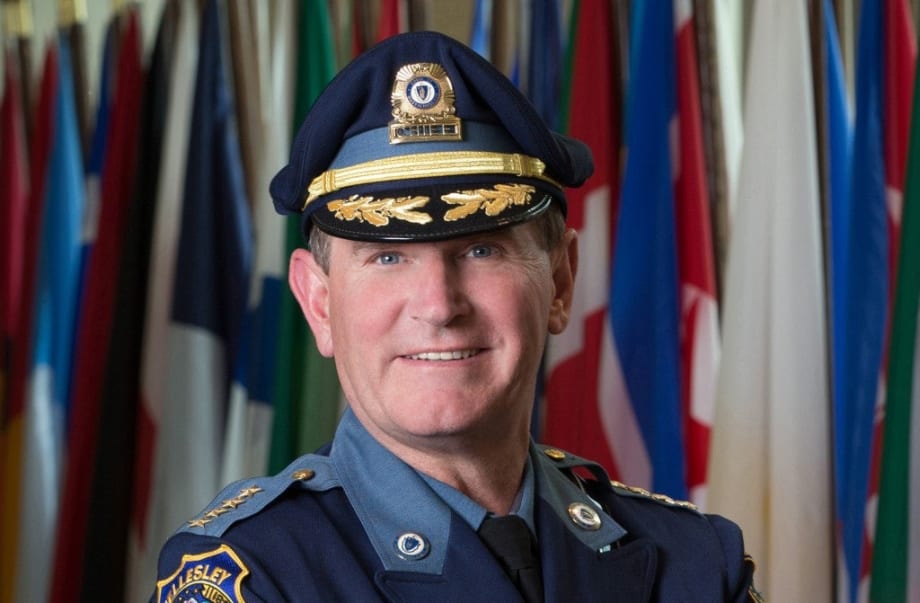
Photo: IACP
At the 2016 International Association of Chiefs of Police Conference and Expo in San Diego this week, IACP President Terrence M. Cunningham delivered remarks that focused on acknowledging police officers' mistreatment of minorities in the United States:
I would like to take a moment to address a significant and fundamental issue confronting our profession, particularly within the United States. Clearly, this is a challenging time for policing. Events over the past several years have caused many to question the actions of our officers and has tragically undermined the trust that the public must and should have in their police departments. At times such as this, it is our role as leaders to assess the situation and take the steps necessary to move forward.
This morning, I would like to address one issue that I believe will help both our profession and our communities. The history of the law enforcement profession is replete with examples of bravery, self-sacrifice, and service to the community. At its core, policing is a noble profession made up of women and men who have sworn to place themselves between the innocent and those who seek to do them harm.
Over the years, thousands of police officers have laid down their lives for their fellow citizens while hundreds of thousands more have been injured while protecting their communities. The nation owes all of those officers, as well as those who are still on patrol today, an enormous debt of gratitude.
At the same time, it is also clear that the history of policing has also had darker periods.
There have been times when law enforcement officers, because of the laws enacted by federal, state, and local governments, have been the face of oppression for far too many of our fellow citizens. In the past, the laws adopted by our society have required police officers to perform many unpalatable tasks, such as ensuring legalized discrimination or even denying the basic rights of citizenship to many of our fellow Americans.
While this is no longer the case, this dark side of our shared history has created a multigenerational—almost inherited—mistrust between many communities of color and their law enforcement agencies.
Many officers who do not share this common heritage often struggle to comprehend the reasons behind this historic mistrust. As a result, they are often unable to bridge this gap and connect with some segments of their communities.
While we obviously cannot change the past, it is clear that we must change the future. We must move forward together to build a shared understanding. We must forge a path that allows us to move beyond our history and identify common solutions to better protect our communities.
For our part, the first step in this process is for law enforcement and the IACP to acknowledge and apologize for the actions of the past and the role that our profession has played in society’s historical mistreatment of communities of color.
At the same time, those who denounce the police must also acknowledge that today’s officers are not to blame for the injustices of the past. If either side in this debate fails to acknowledge these fundamental truths, we will be unlikely to move past them.
Overcoming this historic mistrust requires that we must move forward together in an atmosphere of mutual respect. All members of our society must realize that we have a mutual obligation to work together to ensure fairness, dignity, security, and justice.
It is my hope that, by working together, we can break this historic cycle of mistrust and build a better and safer future for us all.
More Patrol

Team Wendy Introduces the EXFIL Endurance Ballistic Helmet, Engineered to Reduce the Burden of Extended Wear
Team Wendy has launched its EXFIL Endurance, a new lightweight ballistic helmet engineered to deliver protection, comfort, and fit during demanding, extended operations.
Read More →
The First Responders Children’s Foundation National First Responders Day Roll Call of Heroes Ceremony Returns to Times Square, NYC
First Responders Children’s Foundation (FRCF), in collaboration with T-Mobile, will host the Roll Call of Heroes ceremony in Times Square to commemorate National First Responders Day on Wednesday, Oct. 28. During the event, FRCF will present 18 Hero Awards.
Read More →
Streamlight to Showcase Newest Lighting Products for Law Enforcement Professionals at IACP 2026
Streamlight will showcase its newest lights for law enforcement at the International Association of Chiefs of Police Annual Conference & Expo. Featured lights will include the TLR-3 X, the PolyTac 1X, and more.
Read More →
Streamlight Portable Scene Light III Wins 2026 OH&S New Product of the Year Award
Streamlight’s Portable Scene Light III has won the 2026 Occupational Health & Safety (OH&S) New Product of the Year Award in the Lighting category.
Read More →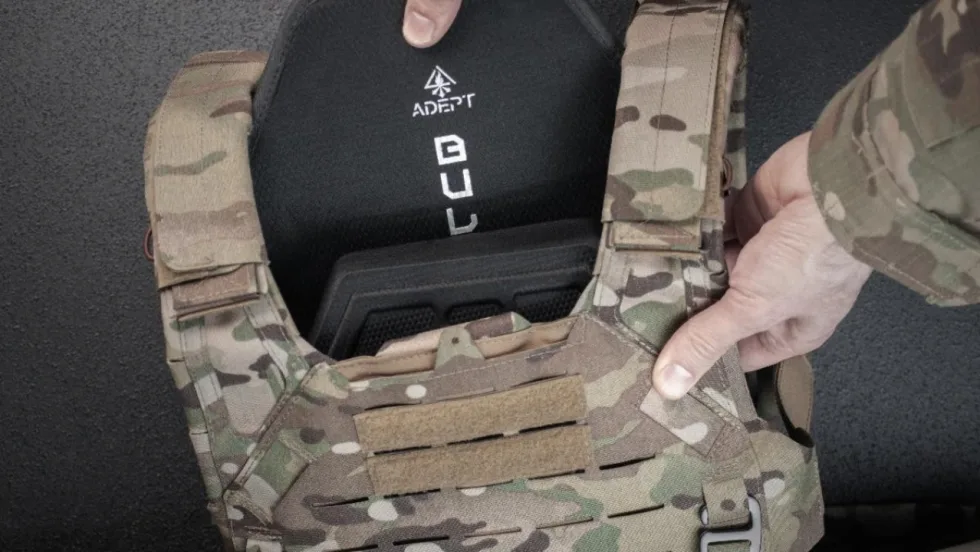
Adept Armor Introduces Two New Rifle Plates
Adept Armor has launched two new Level IV ballistic plates, the Emperor and the Archon Mark 2, which brings Adept Armor’s new Quatroid ceramic to the high-threat, performance-value center of the range at 5.2 pounds.
Read More →
POLICE Product Test: Benchmade Bailout
The Benchmade Bailout is a slim, lightweight carry knife with a deep-ride pocket clip and comes in a variety of blade steels and scales. Here is a detailed review of the Taiga Green Bailout, released earlier this year.
Read More →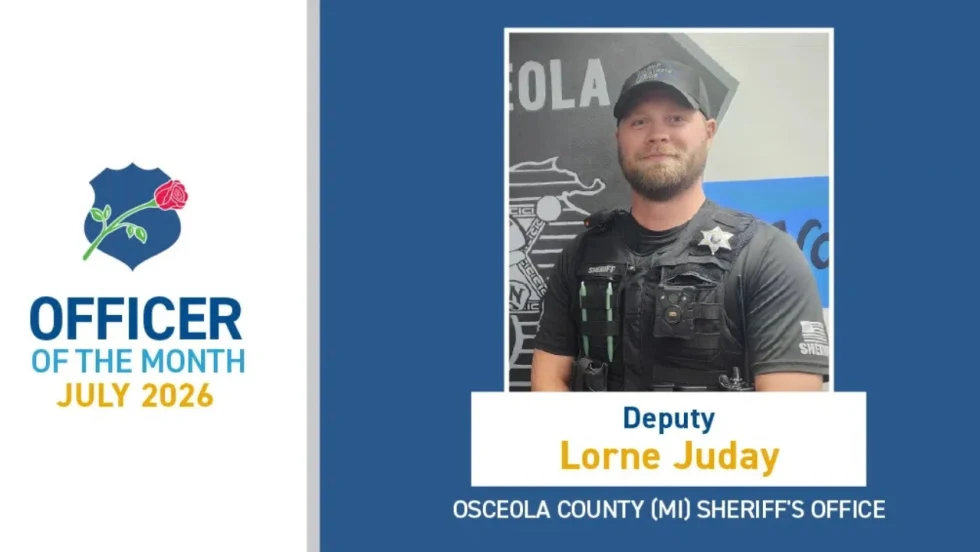
NLEOMF Announces July 2026 Officer of the Month
NLEOMF honored a Michigan deputy sheriff as the July 2026 Officer of the Month for rescuing a trapped driver from a burning vehicle following a Fourth of July crash.
Read More →
Streamlight to Showcase Newest Lighting Products at National Safety Council’s Safety Congress & Expo 2026
Streamlight will showcase its latest lights, including the Portable Scene Light III and the LiteBox 1Million, at the 2026 National Safety Council (NSC) Safety Congress & Expo.
Read More →
The 2027 World Police & Fire Games Set for Perth, Australia
The 2027 World Police & Fire Games (WPFG) will take place in Perth, Western Australia, from Friday, March 12 through Sunday, March 21, 2027.
Read More →
5.11 Partners with National Fallen Firefighters Foundation to Support #ForThe343
5.11 has joined the nationwide movement honoring the 343 New York City Fire Department firefighters lost on Sept. 11, 2001.
Read More →