



Editorial: Shutting Down the Sideshows
The latest evolution of street racing is a danger to the public and to law enforcement, and the participants and spectators need to be prosecuted.


Camaro seized at a sideshow by Oakland Police and featured in video intended to deter such illegal events.
Screen Shot from Oakland PD Video
Back in June some Seattle City Council members wanted to punish street takeover participants—the actual drivers—with a draconian measure. They wanted to give police the power to cite them with a ticket that carries a $500 fine.
That’s five Benjamins for reckless driving, reckless endangerment of the public, blocking streets, disturbing the peace, and other crimes. And I’m not even mentioning the documented evidence that many such sideshow, street takeover, and street racing events are lures for gang activity, drug dealing, and shots fired calls. A $500 fine is a joke for such crimes, but the Seattle City Council actually had to debate if it was warranted.
One problem law enforcement and public officials have in trying to prevent street racing incidents is vocabulary. We are still referring to these events as “street racing,” which evokes images of 1950’s greasers.
Sideshows and street takeovers are more like criminal street parties organized on social media around vehicle stunt shows that involve dangerous maneuvers like doing doughnuts and ghost riding than they are drag races. They started in the 1980s, but they’ve become much more common over the last 10 years and are now a scourge on urban and suburban neighborhoods nationwide.
Talk to people who have been trapped in their driveways by these events and you’ll learn what a public nuisance they are. An associate of this publication once told me that his grandmother and sister had to cope with a weekend long street takeover. The parties raged all night, parked cars blocked their access to the street, and gunshots and fireworks combined with squealing tires prevented any rest.
Street takeovers can be much more than a nuisance. People have been killed by accidents. Others have been murdered as gang beefs or other criminal activities have followed them to the party. And law enforcement officers have also been injured during these events.
In April, a Fairfax County, Virginia, Police officer was responding to a sideshow in an industrial complex. Her car was swarmed and she called for backup. As another officer arrived on scene and got out of their patrol vehicle, they were hit by a fleeing car and injured. During the same event photos were captured of young men leaning out of moving vehicles brandishing AR- and AK-style pistols.
It's clear that these events are a hazard to both law enforcement and the public. And a lot more has to be done about them than debating whether to cite the participants and fine them $500.
Way back in the 2000s street racing still meant actual “racing.” One of the most celebrated methods some agencies used to address the problem was to organize races at local commercial drag strips to redirect the street racers to a legal venue. That’s not going to work for street takeovers and sideshows. The illegal nature of the street takeovers and the many illegal acts perpetrated at them, such as drug dealing and gun brandishing, are a large part of their appeal. So police departments are not going to be successful trying to reproduce sideshows and redirect the interest of people who participate in them.
The easiest way to deter these street racers would be to take their cars. And a number of jurisdictions have passed laws and ordinances that allow them to do just that. For example, in North Carolina law enforcement agencies can impound the vehicles until a judge orders them to be returned. You can imagine that the impound fees will skyrocket while the car owner’s attorney tries to convince a judge to order its return. In California, San Joaquin County Sheriff Patrick Withrow seized 88 cars at a sideshow in Stockton back in February. He announced on his agency’s Facebook page that the owners should stop asking for their return, at least until their cases were adjudicated.
Going after the cars is a fine strategy. But the bad guys have an easy workaround. They are stealing muscle cars for use in side shows and street takeovers then abandoning them.
If communities really want to get a handle on sideshows and street takeovers, they need a two-prong approach. First, they need to target the spectators. Sheriff Withrow did that by impounding 88 cars, many of them owned by the crowd. Other jurisdictions should be following his model.
The reason that targeting the spectators could be effective is that the sideshow street takeover scourge is all about social media. Spectators stand close to the cars during the stunts to get the best videos for their platforms of choice. Take away the audiences videoing the events and the drivers will be less interested in showing off. Heavy fines and impound fees for cars parked at these events might dull spectator enthusiasm.
Second, we need to target the participants with felony reckless driving charges and prosecute them to the fullest extent of the law.
Sideshows and street takeovers present a clear danger to the public and to law enforcement. They need to be shut down. And a $500 fine is not going to do the job.
More Patrol

Streamlight Portable Scene Light III Wins 2026 OH&S New Product of the Year Award
Streamlight’s Portable Scene Light III has won the 2026 Occupational Health & Safety (OH&S) New Product of the Year Award in the Lighting category.
Read More →
Adept Armor Introduces Two New Rifle Plates
Adept Armor has launched two new Level IV ballistic plates, the Emperor and the Archon Mark 2, which brings Adept Armor’s new Quatroid ceramic to the high-threat, performance-value center of the range at 5.2 pounds.
Read More →
POLICE Product Test: Benchmade Bailout
The Benchmade Bailout is a slim, lightweight carry knife with a deep-ride pocket clip and comes in a variety of blade steels and scales. Here is a detailed review of the Taiga Green Bailout, released earlier this year.
Read More →
NLEOMF Announces July 2026 Officer of the Month
NLEOMF honored a Michigan deputy sheriff as the July 2026 Officer of the Month for rescuing a trapped driver from a burning vehicle following a Fourth of July crash.
Read More →
Streamlight to Showcase Newest Lighting Products at National Safety Council’s Safety Congress & Expo 2026
Streamlight will showcase its latest lights, including the Portable Scene Light III and the LiteBox 1Million, at the 2026 National Safety Council (NSC) Safety Congress & Expo.
Read More →
The 2027 World Police & Fire Games Set for Perth, Australia
The 2027 World Police & Fire Games (WPFG) will take place in Perth, Western Australia, from Friday, March 12 through Sunday, March 21, 2027.
Read More →
5.11 Partners with National Fallen Firefighters Foundation to Support #ForThe343
5.11 has joined the nationwide movement honoring the 343 New York City Fire Department firefighters lost on Sept. 11, 2001.
Read More →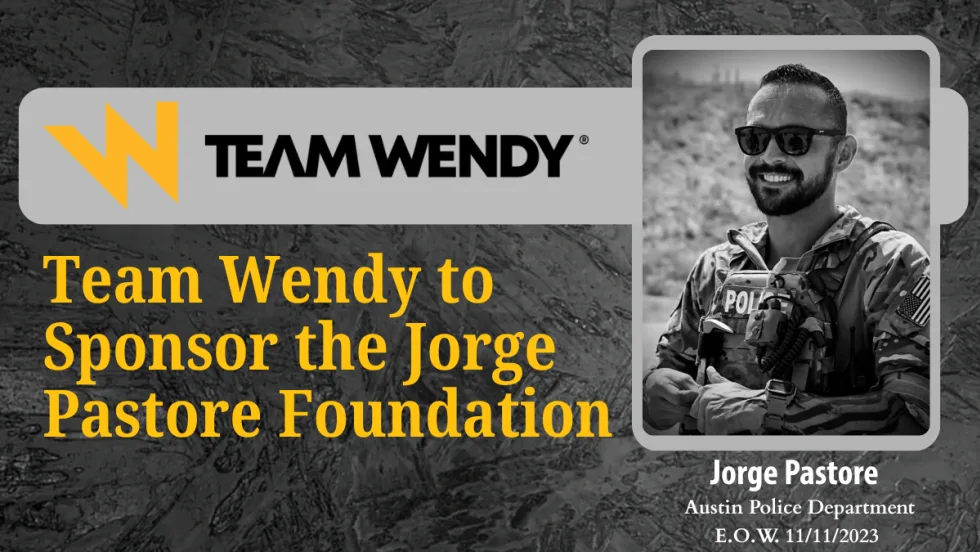
Team Wendy Announces Title Sponsorship of the Jorge Pastore Foundation
Team Wendy’s 3-year partnership with the Jorge Pastore Foundation expands access to programs that strengthen those who serve.
Read More →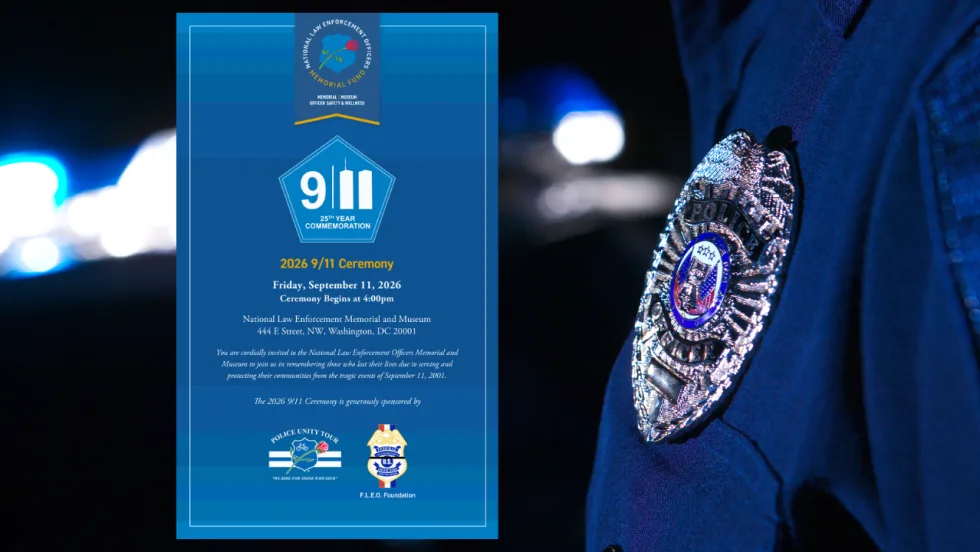
National Law Enforcement Memorial and Museum Hosting 9/11 25th-Year Commemoration Ceremony
The National Law Enforcement Memorial and Museum is hosting a 9/11 25th Year Commemoration Ceremony on Sept. 11 at 4 p.m.
Read More →
National Law Enforcement Officers Memorial Fund Announces June 2026 Officers of the Month
The National Law Enforcement Officers Memorial Fund (NLEOMF) named 15 officers of the Chico Police Department (California) as the Officers of the Month for June 2026 for their roles in responding to an active-shooter incident at a public library.
Read More →