



Wolf Pack: Multiple Assailants
Police officers should command enough respect to deter a group of individuals from spontaneously attacking. But statistics tell a different story. In fact, 40 percent of all assaults against police officers are by two or more assailants.

On Halloween night 1995, a police officer in the Greater Vancouver, Canada area was dispatched to a call involving a citizen who was being assaulted by a group of youths. Upon arrival, the uniformed officer moved to intervene and protect the victim, when he was blindsided with a punch to the head and knocked to the ground.
Suddenly, the officer was surrounded by an aggressive, hostile group of youths more closely resembling a "wolf pack' than a group of local high school kids. This time the officer was lucky; cover showed up in time to successfully disperse the pack and make the arrest.
All too often, however, the results are not so favorable. Officers have been severely beaten, disarmed and shot with their own weapon. In this day and age, multiple-assailant are the rule rather then the exception. Incidents in which groups of assailants have attacked and seriously injured or killed their victim are on the rise and causing fear among law-abiding citizens.
The assault usually grows out of a minor confrontation or criminal plan that rapidly escalates out of control, leaving the victim maimed or even dead.
Police officers should command enough respect to deter a group of individuals from spontaneously attacking. But statistics tell a different story. In fact, 40 percent of all assaults against police officers are by two or more assailants. Bad guys are willing to roll the dice and gang up on cops more than ever before.
Use-of-force context
Probably one of the most vivid images of a multiple-assailant attack was captured on a dash-mounted video camera in Garrison, Texas, in January 1991. Constable Darrell Lunsford was questioning three individuals at a roadside stop when he was suddenly and viciously attacked. He was taken to the ground in three seconds and killed with his own weapon 11 seconds later. Lunsford stood 6-feet-5-inches tall and weighed 280 pounds. Clearly, a multiple-assailant situation is a potentially deadly encounter and one you cannot afford to lose.
Could those assailants have fled the scene without killing the officer? Was it easier for them to achieve their short-term goal by killing him? Are you justified in rapidly escalating your force response in dealing with multiple assailants? The answer to all of these questions is yes.
Because a multiple-assailant situation is a deadly force encounter, it is essential to consider the amount of force you are willing to use. You must understand your force-response justification and be prepared to articulate this justification before the courts.
There is considerable empirical evidence to support the fact that multiple-assailant attacks arise out of seemingly routine situations to encounters. They escalate rapidly and if not successfully contained, can result in serious bodily injury or death. The federal statutes relating to the use of force specifically authorize you to protect yourself from this type of attack. There is no time for a guarded, measured response when dealing with a "wolf pack". As little as 14 seconds can make the difference between life and death.
The pack mentality
Several things occur within a group that do not occur in one-on-one confrontations. In a group, there is an unstated pressure or agreement to support each other. There is also a feeling of reduced risk and greater anonymity within a group, and with that comes a reduced sense of accountability. Additionally, there is peer pressure to keep pace with the group and perform and participate equally.
People in groups are often said to descend several rungs on the evolutionary ladder and behave in a more crude, Neanderthal fashion. Many of these dynamics suppport and explain the behavior of multiple assailants. This "pack" mentally is one of the factors that causes violence to escalate rapidly and in such an uncontrolled manner. This is also why seemingly "nice kids" turn into something quite different in a violent group dynamic.
When does a group become a potential "wolf Pack"? As police officers, it is part of our job to routinely deal with groups of people. While most of them could not be considered wolf packs, you should always be aware of what is going on around you.[PAGEBREAK]
It is absolutely critical to become an expert in reaching the verbal and nonverbal cues that people give off when you are dealing with them. Situations do not just happen. They develop because someone fails to accurately assess or recognize pre-assault cues. If you are tuned into these cues, a bad situation may be averted. Look for the following pre-assault cues:
Raspiness or change in the voice
Repeated words or phrases
Confrontational, aggressive or hostile language
Direct threats
Unusual or inappropriate sweating
Tightened jaw or clenched teeth
Resistive tension in body and face
Breathing through the mouth or audible breathing
Balling of fists
Trembling
I,000-yard stare (intimidation)
Target glancing (looking where they will attack)
Looking around furtively, possibly for witnesses or escape routes
Encroachment of space
Physical distraction
Reaction hand distraction
Blading body (turning sideways)
Shifting weight (ready to attack)
Rolling shoulders forward, tucking chin or bending knees
Usually these cues, which occur as a result of stress, are done to intimidate, prepare the body to fight or cause the intended victims to drop their guard. Be on the lookout for these cues, whether you are dealing with one subject or several. Specific multiple-assailant pre-assault cues:
Positioning group members relative to each other
Positioning group members relative to you (adjusting to each other or to you in order to attack)
Assailants glancing at each other (silent communication)
U sing words or phrases that do not make sense or are out of context (used to confuse or as an attack signal)
Showing body language inconsistent with words or context
Secondary subject distraction (one person will attempt to divert attention towards another)
These cues are strong indicators that you are dealing with a wolf pack. These movements occur in the assailants' efforts to coordinate an effective attack or to lower an officer's awareness so that he or she is more susceptible to an attack.
If these cues are recognized and the opportunity exists, this may be the appropriate time to revise your priorities, turn into "Ofc. Friendly," curtail any investigative activities and gracefully disengage from this imminent physical encounter. No arrest, ticket or check could possibly be worth your physical safety. It is better to return when the odds are more in your favor.[PAGEBREAK]
Multiple-assailant mentality
A multiple-assailant situation is not an arrest-and-control situation. It is quite simply a survival situation. Your goals must change, and your techniques and tactics must change accordingly. But above all else, your mentality must be correct. You must be 100 percent committed to winning. You cannot afford to be mentally overwhelmed by the numbers, nor can you simply take as many of them down with you as you can. These are both defeatist attitudes. First defeat multiple assailants in your mind, and then defeat them physically.
It is possible to win against multiple assailants. As you know from trying to arrest a violent subject with too many cops, more is not necessarily better.
Officers have a number of advantages in a multiple-assailant situation, and you must take advantage of them all. When the wolf pack thinks that you are the prey, you must become the predator.
Intermediate goals
In a multiple-assailant situation, the immediate goal is to survive. There is no shame in defeating a group of individuals committed to physically harming us and other innocent people.
Surviving the encounter does not simply mean getting out of it with a pulse; it means surviving physically, mentally and legally intact. If winning or total survival is the primary goal, how can it be achieved?
Devastate the group psychologically
Take out the leader
Cause a psychologically devastating visible injury
Force a group retreat-most of the group probably does not really want to be there
Make a opportunity to escape in complete safety
Create a clear window to disengage in complete safety
Get to your vehicle
Get to a safe haven
Fight long enough for cover to arrive
Create a clear opportunity to disengage, draw and point your sidearm. It will likely take more time than you think, especially if you're wearing a security holster.
Use loud, repetitive verbal commands
Do not chance losing your weapon by attempting to acquire it at an inopportune moment
Destroy the group physically (This is the most difficult course of action; however. you probably won't have to defeat each and every assailant.)
Use sound tactics of screening, cracking and redirecting (putting assailants between each other, moving between assailants at opportune moments, redirecting assailants' momentum into each other or stationary objects).
Use assailants against each other
Strike to high-percentage targets
Use the environment favorably: Use door frames and hallways as protective funnels; and natural objects (cars, trees, mail boxes, etc.) as obstacles to assailants. Let those obstacles do damage to assailants
Always train with multiple assailants in mind
If multiple assailants are a potential problem for you or other members of your agency, it must be addressed in training. That means all operational personnel should be trained in how to effectively deal with the wolf pack.
This training should include identification and recognition, prevention and avoidance strategies and use-of-force context. It should also include justification and response, the winning mind-set, pre-assault cues, primary, intermediate and subsidiary goals, basic concepts and strategies, specific tactics and techniques for defeating multiple assailants.
This training should be primarily hands-on and, if possible, involve the use of dynamic simulation training so that officers get to experience something resembling a real-world application.
You do not need to be a trained martial artist to defeat multiple assailants, but you do need to consider the possibility that this type of confrontation could happen, so that you are not psychologically and emotionally overwhelmed if it does. You also need to be able to recognize the danger signs, understand your goals and apply some basic strategies, tactics and techniques.
Train with multiple assailants in mind. When you do, one-on-one situations will become much easier, and you will know you are prepared to deal with one of the highest threat levels you may ever face. Train to win!
Joel Johnston Jr. is the Control Tactics Coordinator for the Vancouver (Canada) Police Department. Special thanks to Phillip J. Messina, president of Modern Warrior Inc.; George Demetriou, New York Police Department; and the International Shotokan Karate Federation.
More Patrol
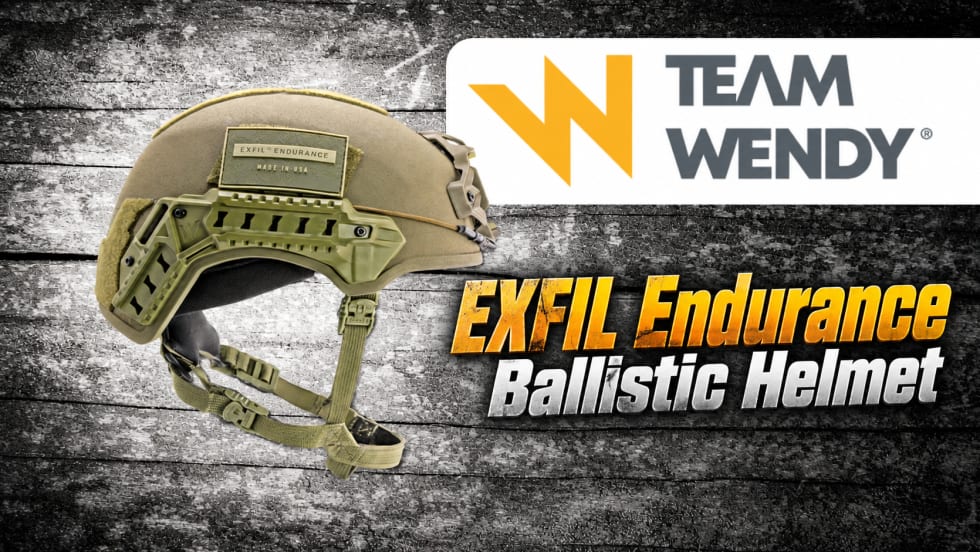
Team Wendy Introduces the EXFIL Endurance Ballistic Helmet, Engineered to Reduce the Burden of Extended Wear
Team Wendy has launched its EXFIL Endurance, a new lightweight ballistic helmet engineered to deliver protection, comfort, and fit during demanding, extended operations.
Read More →
The First Responders Children’s Foundation National First Responders Day Roll Call of Heroes Ceremony Returns to Times Square, NYC
First Responders Children’s Foundation (FRCF), in collaboration with T-Mobile, will host the Roll Call of Heroes ceremony in Times Square to commemorate National First Responders Day on Wednesday, Oct. 28. During the event, FRCF will present 18 Hero Awards.
Read More →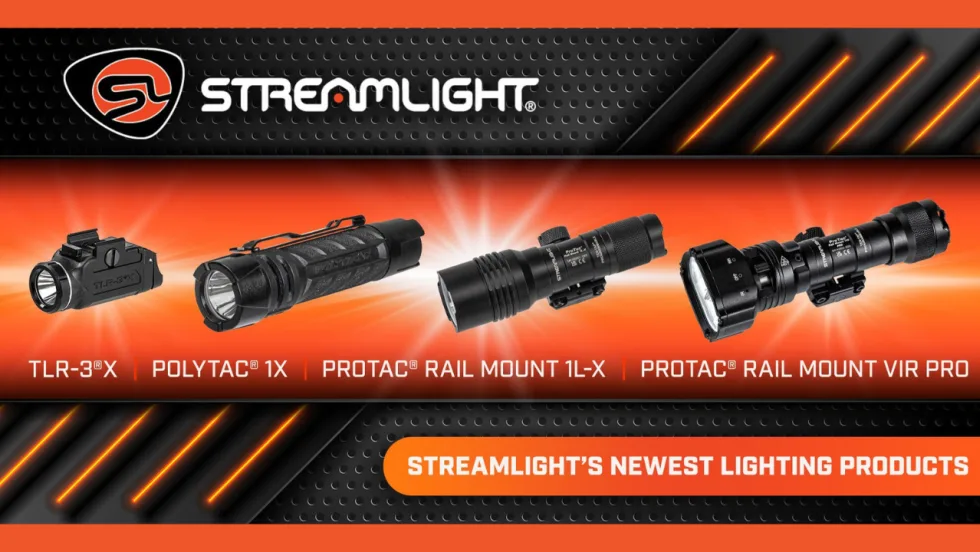
Streamlight to Showcase Newest Lighting Products for Law Enforcement Professionals at IACP 2026
Streamlight will showcase its newest lights for law enforcement at the International Association of Chiefs of Police Annual Conference & Expo. Featured lights will include the TLR-3 X, the PolyTac 1X, and more.
Read More →
Streamlight Portable Scene Light III Wins 2026 OH&S New Product of the Year Award
Streamlight’s Portable Scene Light III has won the 2026 Occupational Health & Safety (OH&S) New Product of the Year Award in the Lighting category.
Read More →
Adept Armor Introduces Two New Rifle Plates
Adept Armor has launched two new Level IV ballistic plates, the Emperor and the Archon Mark 2, which brings Adept Armor’s new Quatroid ceramic to the high-threat, performance-value center of the range at 5.2 pounds.
Read More →
POLICE Product Test: Benchmade Bailout
The Benchmade Bailout is a slim, lightweight carry knife with a deep-ride pocket clip and comes in a variety of blade steels and scales. Here is a detailed review of the Taiga Green Bailout, released earlier this year.
Read More →
NLEOMF Announces July 2026 Officer of the Month
NLEOMF honored a Michigan deputy sheriff as the July 2026 Officer of the Month for rescuing a trapped driver from a burning vehicle following a Fourth of July crash.
Read More →
Streamlight to Showcase Newest Lighting Products at National Safety Council’s Safety Congress & Expo 2026
Streamlight will showcase its latest lights, including the Portable Scene Light III and the LiteBox 1Million, at the 2026 National Safety Council (NSC) Safety Congress & Expo.
Read More →
The 2027 World Police & Fire Games Set for Perth, Australia
The 2027 World Police & Fire Games (WPFG) will take place in Perth, Western Australia, from Friday, March 12 through Sunday, March 21, 2027.
Read More →
5.11 Partners with National Fallen Firefighters Foundation to Support #ForThe343
5.11 has joined the nationwide movement honoring the 343 New York City Fire Department firefighters lost on Sept. 11, 2001.
Read More →