



Police Corruption Should Concern Every Officer
As of mid-June this year, there were 548 local, state and federal law enforcement officers in federal prisons alone up from 107 in 1994. An unknown number of other ex-officers are in state lockups. The figures come from "Misconduct to Corruption," a lengthy report released in June and compiled by officials from 15 cities with assistance from the FBI.

The numbers are not good. The implications of an alarming trend are even worse.
As of mid-June this year, there were 548 local, state and federal law enforcement officers in federal prisons alone up from 107 in 1994. An unknown number of other ex-officers are in state lockups. The figures come from "Misconduct to Corruption," a lengthy report released in June and compiled by officials from 15 cities with assistance from the FBI.
As a law officer, should you be concerned? Maybe. The media was. Headlines such as "Illegal Drug Scene Spurs Rise in Police Corruption" could be found around the country following the report's publication. The report's research was based in large part on questionnaires sent to 52 cities by the authors. Thirty-seven communities responded with all acknowledging ongoing problems with misconduct and corruption.
Subsequent to the report, was a planned meeting in Idaho later in June, among police leaders from more than 50 cities. Their task was to review and discuss the report.
In our view, there is cause for concern but not hysteria.
Several hundred former officers in prison may not seem like more than a few grains of sand on the entire beach when you consider there are something like 17,000 traditional and 20,000 so called "non-traditional" police agencies in the United States. That translates into tens of thousands of cops. Isn't 548-plus a small percentage of that total?
Well, yes. But it's the trend, my friends. It's the trend. And because police work is an honorable profession, police officers are supposed to be a serious cut above the citizenry in ethics and integrity not to mention other characteristics.
Should there be a zero-tolerance for malfeasance? We think so.
Each year for the past decade, little by little, the numbers of officers ending up jailed have risen. Doesn't matter that there are more cops on the street than years past. The issue, in our view, is one of standards and what is acceptable. What exactly are we, as a profession, willing to abide? Is one rogue cop in a department of 12 any more appalling than it is in a department of 1,000?
The above report states that a large city chief of police "can expect, on average, to have 10 officers charged per year with abuse of authority, five arrested for a felony, seven for a misdemeanor, three for theft and four for domestic violence. By any estimation, these numbers are unacceptable."
We would agree.
The horror stories abound, of course. There have been infamous cases and long term problems in New York City, New Orleans, Los Angeles County; Washington, D.C., and other large cities. But the disease has not been confined to Gotham, U.S.A. Small-town America is at risk where instances of police corruption have fairly well rocked these quiet communities.
"It's going on all over the country," said former San Jose (Calif.) Police Chief Joseph McNamara in remarks to a major newspaper. "And corruption ranges from chiefs and sheriffs on down to officers. "Every week we read of another police scandal related to the drug war corruption, brutality and even armed robbery by cops in uniform."
We think every officer ought to examine how far he or she is willing to go to protect a fellow officer's unethical or even criminal behavior. These are individual standards and decisions to be sure. But keep in mind: if you don't rise up at some point to speak out, how will the integrity and behaviors change for the better? By you simply telling your partner who helps himself to whatever is lying around at burglary investigation scenes, to knock it off? What if he doesn't? Where is he going to draw the line on standards and ethics next time? Think about it.
Dennis Hall is the executive editor of POLICE and a former police officer.
More Patrol

Team Wendy Introduces the EXFIL Endurance Ballistic Helmet, Engineered to Reduce the Burden of Extended Wear
Team Wendy has launched its EXFIL Endurance, a new lightweight ballistic helmet engineered to deliver protection, comfort, and fit during demanding, extended operations.
Read More →
The First Responders Children’s Foundation National First Responders Day Roll Call of Heroes Ceremony Returns to Times Square, NYC
First Responders Children’s Foundation (FRCF), in collaboration with T-Mobile, will host the Roll Call of Heroes ceremony in Times Square to commemorate National First Responders Day on Wednesday, Oct. 28. During the event, FRCF will present 18 Hero Awards.
Read More →
Streamlight to Showcase Newest Lighting Products for Law Enforcement Professionals at IACP 2026
Streamlight will showcase its newest lights for law enforcement at the International Association of Chiefs of Police Annual Conference & Expo. Featured lights will include the TLR-3 X, the PolyTac 1X, and more.
Read More →
Streamlight Portable Scene Light III Wins 2026 OH&S New Product of the Year Award
Streamlight’s Portable Scene Light III has won the 2026 Occupational Health & Safety (OH&S) New Product of the Year Award in the Lighting category.
Read More →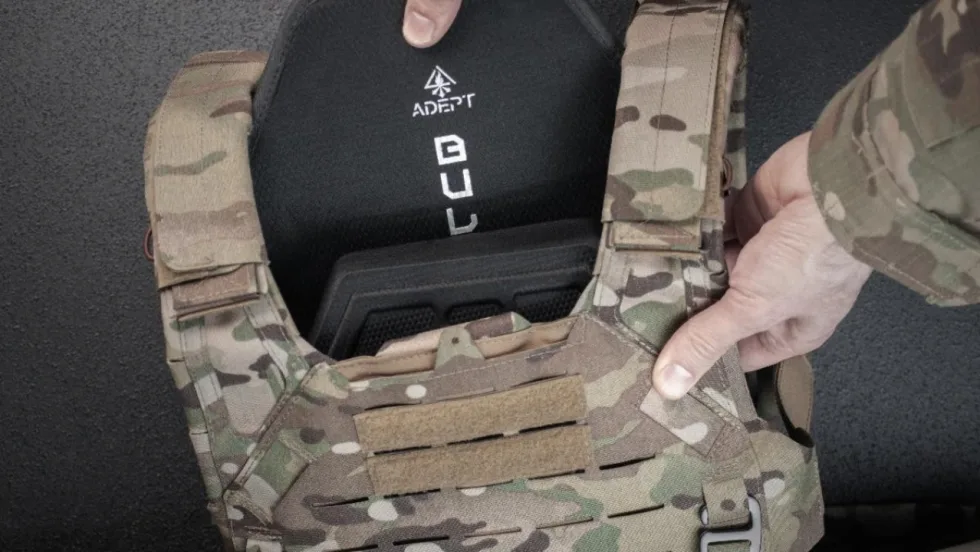
Adept Armor Introduces Two New Rifle Plates
Adept Armor has launched two new Level IV ballistic plates, the Emperor and the Archon Mark 2, which brings Adept Armor’s new Quatroid ceramic to the high-threat, performance-value center of the range at 5.2 pounds.
Read More →
POLICE Product Test: Benchmade Bailout
The Benchmade Bailout is a slim, lightweight carry knife with a deep-ride pocket clip and comes in a variety of blade steels and scales. Here is a detailed review of the Taiga Green Bailout, released earlier this year.
Read More →
NLEOMF Announces July 2026 Officer of the Month
NLEOMF honored a Michigan deputy sheriff as the July 2026 Officer of the Month for rescuing a trapped driver from a burning vehicle following a Fourth of July crash.
Read More →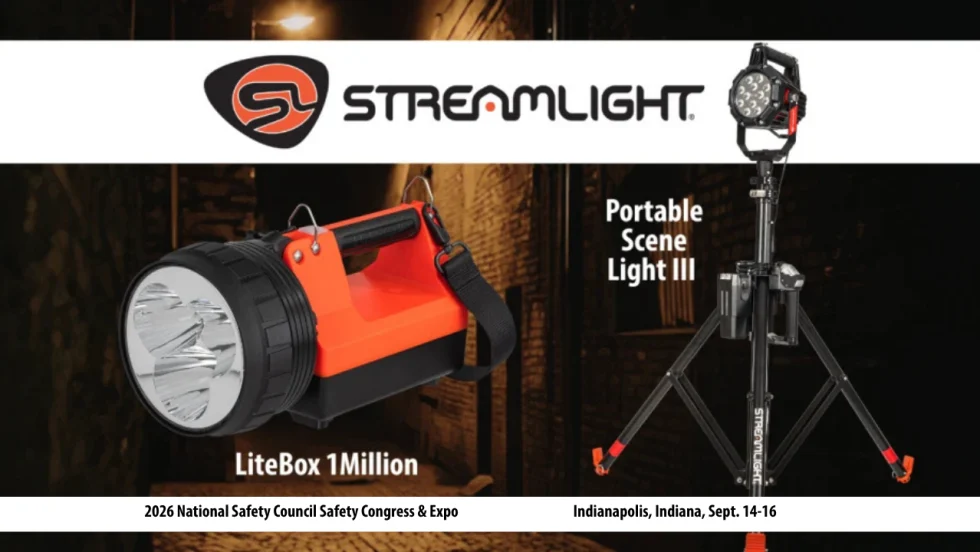
Streamlight to Showcase Newest Lighting Products at National Safety Council’s Safety Congress & Expo 2026
Streamlight will showcase its latest lights, including the Portable Scene Light III and the LiteBox 1Million, at the 2026 National Safety Council (NSC) Safety Congress & Expo.
Read More →
The 2027 World Police & Fire Games Set for Perth, Australia
The 2027 World Police & Fire Games (WPFG) will take place in Perth, Western Australia, from Friday, March 12 through Sunday, March 21, 2027.
Read More →
5.11 Partners with National Fallen Firefighters Foundation to Support #ForThe343
5.11 has joined the nationwide movement honoring the 343 New York City Fire Department firefighters lost on Sept. 11, 2001.
Read More →