



School Terrorism: A Tactical Overview
Within the tactical community there's no doubt that the hottest topic is school terrorism. In the aftermath of several attacks against students at schools, there is much debate and second guessing as to whether SWAT teams have made the correct tactical responses to such incidents.

Within the tactical community there's no doubt that the hottest topic is school terrorism. In the aftermath of several attacks against students at schools, there is much debate and second guessing as to whether SWAT teams have made the correct tactical responses to such incidents.
Experts disagree on the proper tactical response to school terrorism incidents. Some believe that the proper tactical response is to have first responders set up a perimeter and only engage immediate and direct threats. Others believe that first responders should immediately enter the school in an attempt to mitigate losses. The only thing that all experts agree upon is that there is no single correct way to respond to a school terrorism incident.
There has been much talk about SWAT teams having to come up with "unconventional" responses to school terrorism incidents. However, this talk is generally engaged in by people who are not familiar with tactical operations. The very essence of a SWAT operation is the "unconventional" response. That is why the name is "SPECIAL WEAPONS AND TACTICS." The fact that special tactics are employed by SWAT teams underscores the awareness of tactical officers that conventional approaches do not always work against sophisticated criminals and/or terrorists.
There was a time that a terrorist was perceived as a tough-looking, ruthless killer from a foreign country. Unfortunately, that narrow-sighted definition has been proven inadequate time and time again. Today, some of the worst terrorism incidents are carried out by the boy or girl next door, who appear to look and act no differently than anyone else. In fact, because the modern-day terrorist is often impossible to identify by physical or behavioral characteristics, warnings to law enforcement agencies are, at times, not followed up or taken seriously because a threat does not "appear" to exist or be real.
Compounding the problems in responding to a terrorist incident in a school is the fact that depending upon the size of a school you will encounter anywhere from 100 to 5,000 innocent victims (the students and faculty) who are potential targets and/or hostages. Additionally, depending on the size of the facility, you will encounter anywhere from 50 to 500 entrances and exists that have to be secured, watched or breached. (The typical school building has windows in every classroom and office). The obvious problems of deployment into large structures are exacerbated by the fact that the terrorists will often not be readily identifiable. Add to that the natural advantage that a suspect has when lying in wait and the inherent disadvantage that a tactical team has in searching for and apprehending such a suspect.
Unconventional responses do not mean untried, untested and unproven tactics. Unconventional responses mean unique ways of dealing with unique situations. There is no substitute for preparation and training. There is no substitute for being familiar with the facility that you may have to enter as part of a tactical response. There is no substitute for proper equipment. And finally, there is no substitute for proper planning and supervision.
Supervisory ineptitude and ignorance cannot be tolerated when engaging in a tactical response. It is essential that those in charge of a tactical response have the most up-to-date training available.
The only way that we can be thoroughly prepared to respond to school terrorism is to formulate various plans for a tactical response, train with these various plans and perfect all options and alternatives prior to the time when they will be needed.
Unfortunately, we will never be able to totally eliminate the possibility of school terrorism. Even the use of armed guards, metal detectors, searches and keeping all windows and doors locked, will never completely eliminate the possibility of a terrorist attack.
As long as there are criminals intent on terrorizing our society, SWAT teams must be prepared. SWAT leaders must continually anticipate every type of scenario that can occur in order to have a feasible tactical response. School terrorism is no exception. Unfortunately, school violence and terrorism are facts of life. Fortunately, SWAT teams are also a fact of life. It is our duty and obligation to be prepared to mount the most effective tactical response in order to protect the lives of our children if, God forbid, they should ever become victims of school terrorism.
Dan Kalk is a police officer with the Aurora (Ohio) Police Dept. and a legal advisor and police trainer for the Sagamore Hills (Ohio) Police Dept. Kalk holds law degrees from Cleveland State University and also holds Ohio Peace Officer Training Council Instructor Certification. The former SWAT team leader is a member of the Advisory Board for POLICE.
More Patrol

Why Tennessee’s New Deadly Force Law Matters Beyond Tennessee
Tennessee’s new deadly force law is more limited than many may realize. Effective July 1, 2026, the law applies to a person who is not engaged in conduct that would constitute a felony or a Class A misdemeanor and who is in a place where the person lawfully resides. But it could have far-reaching influence.
Read More →
When Do You Transport a Wounded Officer by Police Vehicle?
Time-sensitive injuries like penetrating trauma mean a wounded officer needs to reach a trauma center as soon as possible, and in some cases, that means transporting by police vehicle rather than waiting for EMS. What are the factors to consider in making that transport decision?
Read More →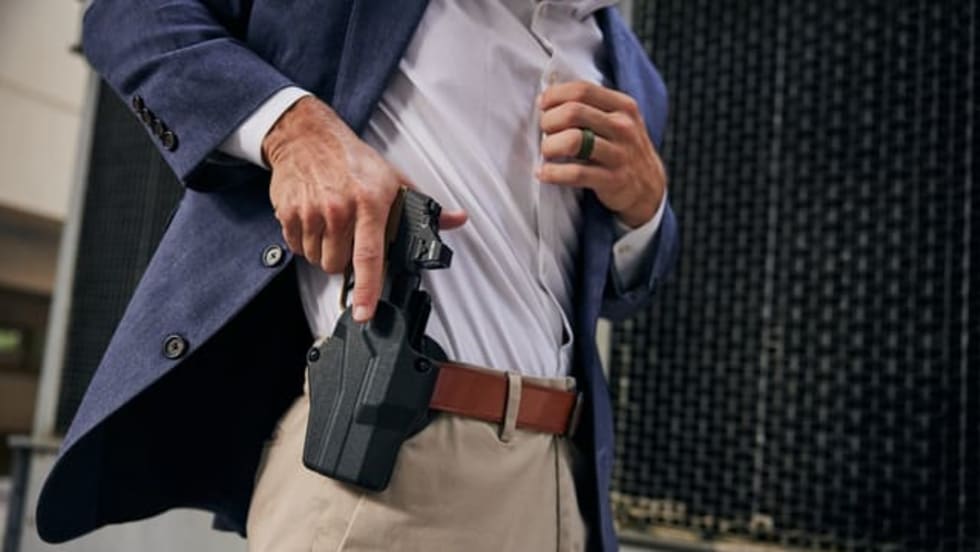
Safariland Solis Rethinks Concealable Duty
What if Level I retention didn’t require a full duty rig? Safariland’s Solis delivers trusted ALS security in a streamlined OWB platform built for administrative and plainclothes professionals who need protection without the bulk.
Read More →
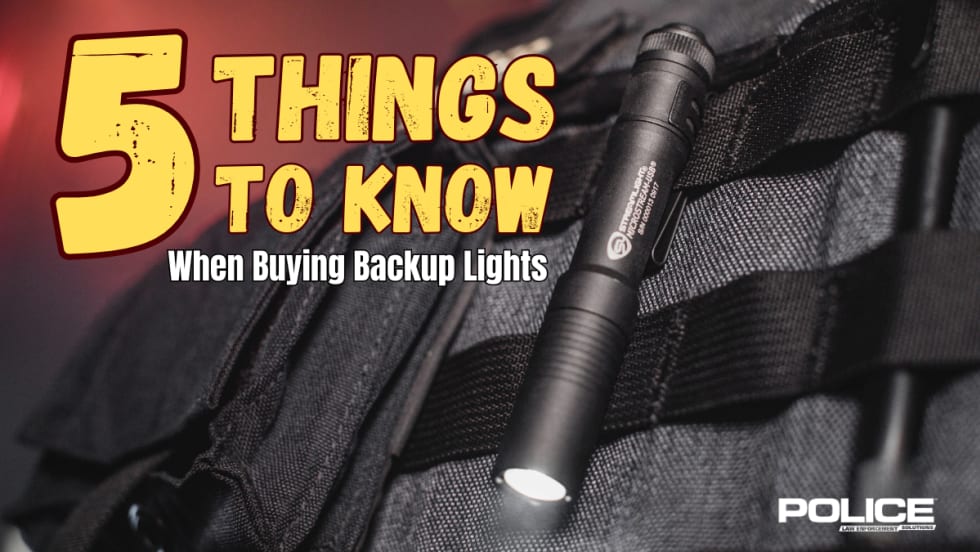
5 Things to Know When Buying Backup Lights for Patrol Use
What is the value of a backup light, and what do you need to consider when selecting one? These smaller lights are invaluable as a secondary or special-purpose light and can be easily carried in a pocket or clipped to MOLLE gear, a key chain, shirt, or a vest.
Read More →
363 Fallen Officers Honored During National Police Week
In case you missed NELOMF’s annual Candlelight Vigil, here are all 363 names of the fallen officers whose names were added to the National Law Enforcement Officers Memorial this year.
Read More →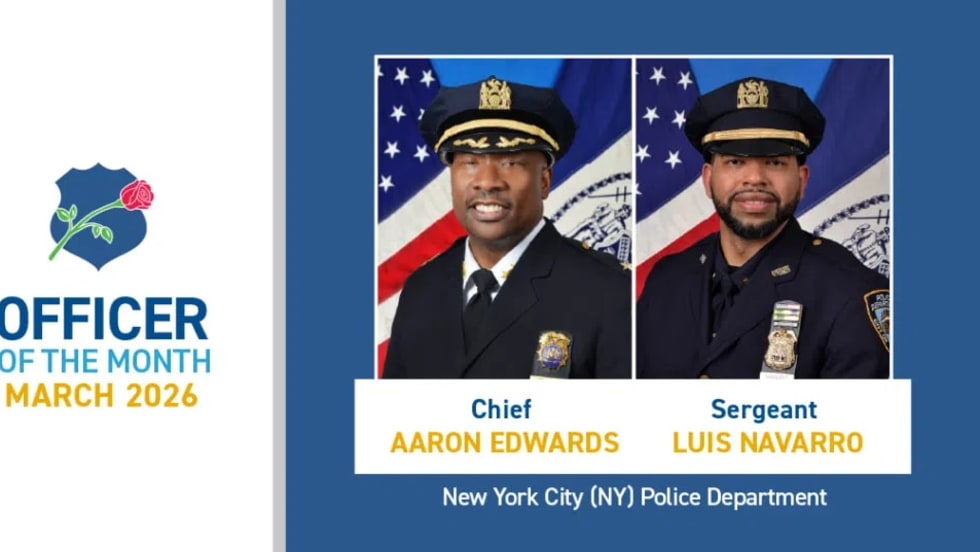
NYPD Officers Who Responded Quickly During IED Incident Recognized as NLEOMF Officers of the Month
Chief Aaron Edwards and Sgt. Luis Navarro were recognized by NLEOMF as Officers of the Month for their response during an IED incident and their actions that helped prevent harm to the public.
Read More →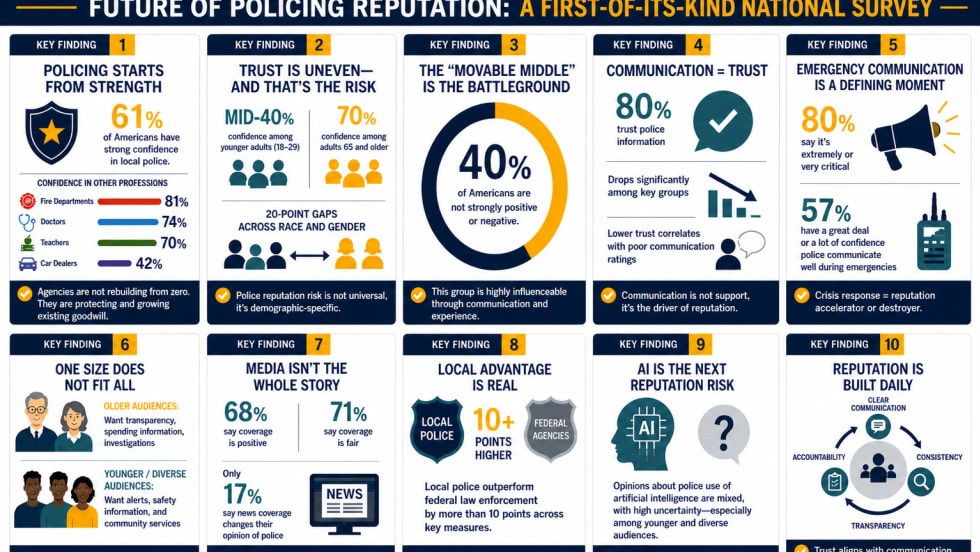
National Police Survey Reveals How Americans View Policing Today
A new national survey offers a comprehensive look at how Americans view policing. The study uncovers public sentiment toward local vs. federal police, communications, crisis response, the use of AI in policing, and more.
Read More →
Streamlight TLR-7 X Selected as Standard Issue Pistol Light by Canadian Federal Police
The Canadian Federal Police will be adding a new duty pistol system, which will include Streamlight’s TLR-7 X and a Glock 45 MOS 7 pistol with a red dot sight.
Read More →
Fallen Law Enforcement Officers from Across the Country to be Honored During 38th Annual Candlelight Vigil on May 13th in Washington, D.C.
The National Law Enforcement Officers Memorial Fund (NLEOMF) will honor 363 fallen officers who have died in the line of duty as their names are added to the National Law Enforcement Officers Memorial during the annual Candlelight Vigil on May 13.
Read More →
What Should Be in Your IFAK?
What should every officer include in an IFAK? Sydney Vail, M.D., a veteran trauma surgeon and former SWAT surgeon, explains which components are needed and which are not, and stresses training.
Read More →