



Eyewitness Identification
A pretrial identification procedure is considered too unreliable if it is "so impermissibly suggestive as to give rise to a very substantial likelihood of misidentification."

One of the essential things that must be proven in any criminal prosecution is the identity of the perpetrator. ID can be shown with three kinds of evidence: physical ("trace") evidence, the suspect's own statements, and identification by witnesses. Any of these varieties of proof can be unreliable, so the Supreme Court has set standards to determine, for each case, whether it is fair to admit certain evidence, including eyewitness ID. "Reliability is the linchpin in the admissibility of identification testimony." (Manson v. Brathwaite.)
A pretrial identification procedure is considered too unreliable if it is "so impermissibly suggestive as to give rise to a very substantial likelihood of misidentification." (Neil v. Biggers.) To be sure that you don't cause admissibility problems, you have to be careful not to suggest to the witness in any way that a particular person should be identified.
In most cases, pretrial ID will be made either at a field show-up where the suspect is being detained, or from a photo display shown to the witness, or at a lineup conducted in the jail or police station. Here are some basic rules and precautions for each procedure.
Show-Up Identification
In some cases, a suspect is detained near a recently committed crime, and it's important to quickly confirm or eliminate him as the perpetrator. A victim or another witness who can make an ID may be brought to the place of detention. Or in cases where the victim is physically unable to move, the suspect may be transported for a show-up ID. The need to make a prompt determination of whether you have the right person will generally permit this procedure.
For example, in Stovall v. Denno, a couple had been attacked by an intruder who stabbed the man to death and severely wounded the woman. A suspect was soon apprehended, and officers took him to the hospital, where doctors did not know how long the woman would survive. She made an ID and the Supreme Court upheld admission of this evidence at trial, saying that "immediate hospital confrontation was imperative."
When using this procedure, be sure to document in your report the reasons why it was important to obtain a prompt ID and any steps you took to ensure a fair opportunity for accurate ID. To reduce the suggestive nature of a single-person show-up, it's best not to tell the witness that you think you've caught the perpetrator, or that you've recovered property or incriminating evidence from the suspect.
On the other hand, there's no need to discourage an ID with some lengthy admonition listing all the risks of misidentification; it may be sufficient to say, "We have someone we want you to look at. Please take a careful look and tell us if you recognize him."
Photographic Identification
If you don't have the suspect in custody (or even if you do), you can legitimately seek to obtain an ID by showing pictures to the witness. Many officers use a "six pack" photo display of mug shots or other available pictures of the suspect and five other individuals. There's no magic number, however, and, if handled correctly, even a single-photo ID is permissible. (Manson v. Brathwaite.) A similar admonition to the witness before showing photos is appropriate: "We want you to take a careful look at some pictures of a few people and tell us whether you recognize any of them."
When constructing a photo spread, it's best to use individuals who match the general description of the perpetrator. Try to use photos of people of the same sex, race, coloring, build, features, and approximate age. All photos should be in color, if possible, or else all black and white; all should be similar in size; and it's best to cover booking numbers and other identifying information. Unless the original display can be kept, a photocopy should be maintained in the case file to illustrate the fairness of the composition, in case of court challenges later.
Lineup Identification
Most of the same considerations of fairness apply to live lineups. Try to use similar people, don't do anything to call special attention to your suspect, and give a simple admonition to the witness that doesn't necessarily suggest the perpetrator is in the line, but simply asks the witness to let you know if he or she recognizes anyone.[PAGEBREAK]
If the witness asks to have a particular person step forward, or assume some position, or repeat words used by the criminal, have each person do the same things, from one end to the other. If the witness does not ID and you later try again, do not have the suspect be the only repeat participant. This happened in Foster v. California and the Supreme Court ruled this technique too suggestive.
General Guidelines
For all three kinds of identification procedures, general precautions apply.
If two or more witnesses will be attempting identifications, keep them separate during the display so that neither hears and then simply "confirms" the other's selection.
Record the witness' ID comments verbatim. Instead of reporting that "The witness was able to identify the suspect," it's better to report, "She said, 'It's number four-I'm positive that's him,'" or whatever is said.
Do not ask the witness to quantify brain chemistry, by asking, "Are you 90 percent sure, or maybe 86 percent, or more like 63.4 percent?" People have no way of numerically measuring their strength of certainty. It's okay to say, "How sure are you?" And if they answer with numbers, write them down. But if they simply say, "I'm very sure," or "I'm pretty sure," or "Not real sure," just write that down, without making them put a number on it.
After a person has been indicted or arraigned, he has a right to have his attorney present as an observer at a lineup. (U.S. v. Wade.) If this right is violated, proof of the lineup ID is not admissible at trial. (Gilbert v. California.) The same rule applies to a one-on-one courtroom ID. (Moore v. Illinois.)
Suspects have no right to have counsel present at a field show-up or photo ID (U.S. v. Ash), nor is counsel constitutionally required at a lineup conducted before indictment, arraignment, or other initial court appearance. (Kirby v. Illinois.)
Even if a pretrial ID is ruled by a court to be inadmissible because the procedure was unduly suggestive, the witness can still make an ID in court unless the pretrial procedure was so suggestive as to cause "a very substantial likelihood of irreparable misidentification." (Simmons v. U.S.)
To establish the reliability of both the pretrial ID and the trial ID, courts examine five factors: (1) witness opportunity to observe the suspect during the crime or flight; (2) witness degree of attention; (3) accuracy of the description given by the witness before making the ID; (4) level of certainty in making an ID; and (5) time period between the crime and the ID. (Neil v. Biggers.) Since these are the factors the court will use, they should all be accurately detailed in your report.
Bottom line: Try not to "help" witnesses make an ID by saying or doing anything that would suggest the person you think they should identify.
Attorney Devallis Rutledge, a former police officer and prosecutor, defends officers and agencies at Manning & Marder, Kass, Ellrod, Ramirez.
More Patrol

Team Wendy Introduces the EXFIL Endurance Ballistic Helmet, Engineered to Reduce the Burden of Extended Wear
Team Wendy has launched its EXFIL Endurance, a new lightweight ballistic helmet engineered to deliver protection, comfort, and fit during demanding, extended operations.
Read More →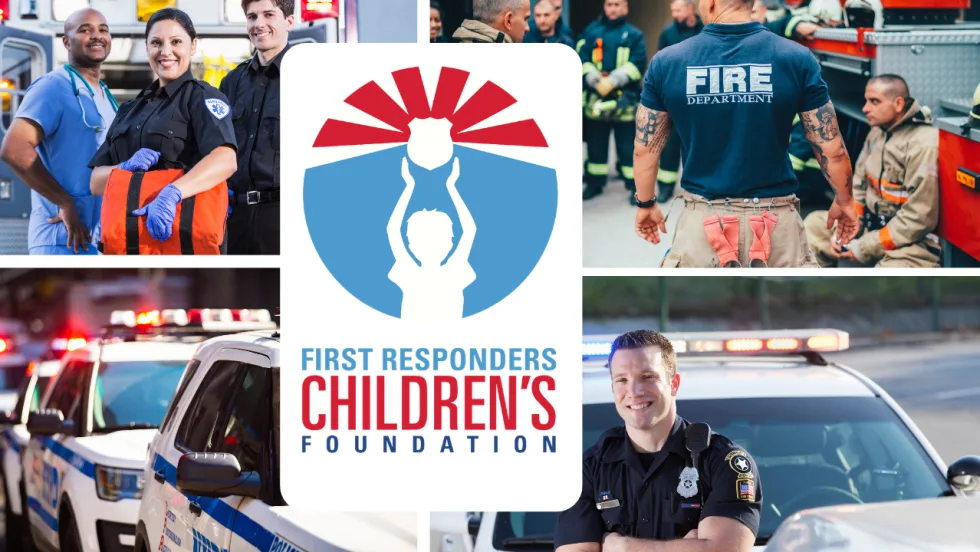
The First Responders Children’s Foundation National First Responders Day Roll Call of Heroes Ceremony Returns to Times Square, NYC
First Responders Children’s Foundation (FRCF), in collaboration with T-Mobile, will host the Roll Call of Heroes ceremony in Times Square to commemorate National First Responders Day on Wednesday, Oct. 28. During the event, FRCF will present 18 Hero Awards.
Read More →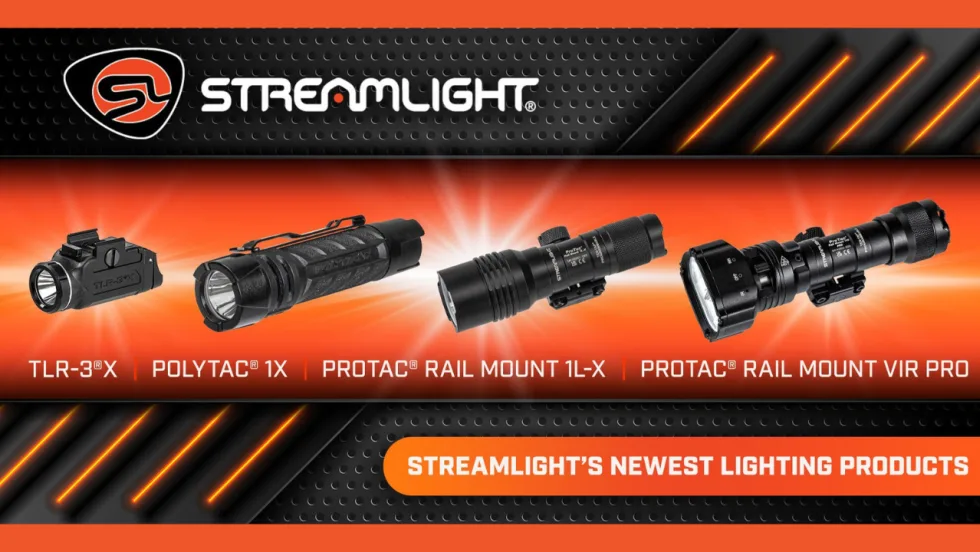
Streamlight to Showcase Newest Lighting Products for Law Enforcement Professionals at IACP 2026
Streamlight will showcase its newest lights for law enforcement at the International Association of Chiefs of Police Annual Conference & Expo. Featured lights will include the TLR-3 X, the PolyTac 1X, and more.
Read More →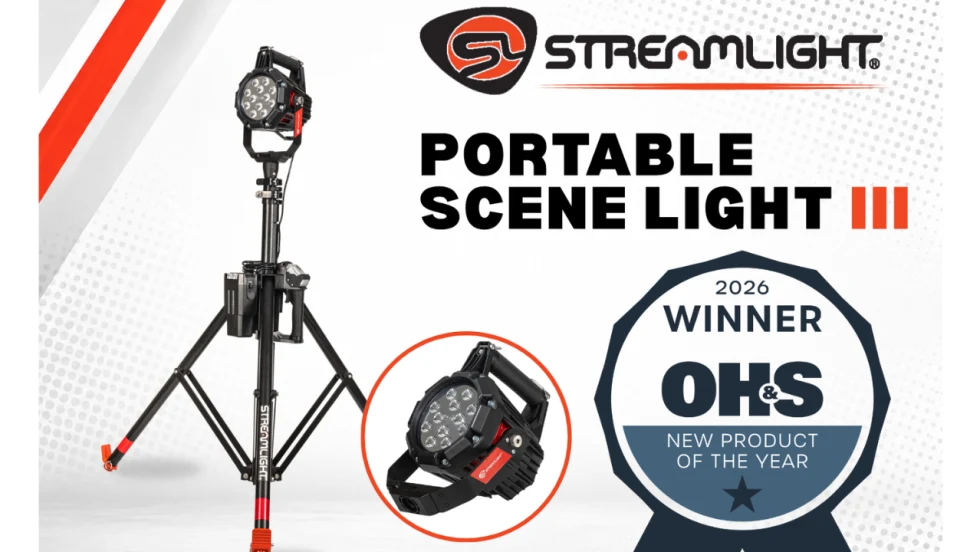
Streamlight Portable Scene Light III Wins 2026 OH&S New Product of the Year Award
Streamlight’s Portable Scene Light III has won the 2026 Occupational Health & Safety (OH&S) New Product of the Year Award in the Lighting category.
Read More →
Adept Armor Introduces Two New Rifle Plates
Adept Armor has launched two new Level IV ballistic plates, the Emperor and the Archon Mark 2, which brings Adept Armor’s new Quatroid ceramic to the high-threat, performance-value center of the range at 5.2 pounds.
Read More →
POLICE Product Test: Benchmade Bailout
The Benchmade Bailout is a slim, lightweight carry knife with a deep-ride pocket clip and comes in a variety of blade steels and scales. Here is a detailed review of the Taiga Green Bailout, released earlier this year.
Read More →
NLEOMF Announces July 2026 Officer of the Month
NLEOMF honored a Michigan deputy sheriff as the July 2026 Officer of the Month for rescuing a trapped driver from a burning vehicle following a Fourth of July crash.
Read More →
Streamlight to Showcase Newest Lighting Products at National Safety Council’s Safety Congress & Expo 2026
Streamlight will showcase its latest lights, including the Portable Scene Light III and the LiteBox 1Million, at the 2026 National Safety Council (NSC) Safety Congress & Expo.
Read More →
The 2027 World Police & Fire Games Set for Perth, Australia
The 2027 World Police & Fire Games (WPFG) will take place in Perth, Western Australia, from Friday, March 12 through Sunday, March 21, 2027.
Read More →
5.11 Partners with National Fallen Firefighters Foundation to Support #ForThe343
5.11 has joined the nationwide movement honoring the 343 New York City Fire Department firefighters lost on Sept. 11, 2001.
Read More →