



Vehicle Checkpoints
The U.S. Supreme Court recently considered whether it was permissible under the Fourth Amendment for law enforcement officers to locate witnesses to a fatal hit-and-run accident by setting up a checkpoint to stop vehicles.

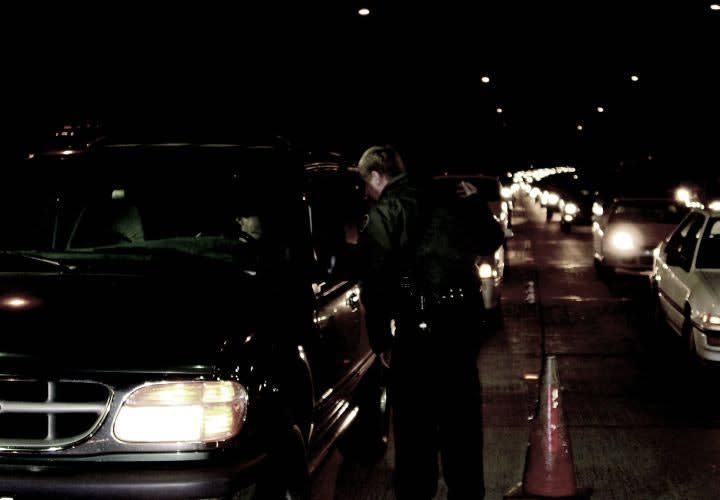
The U.S. Supreme Court recently considered whether it was permissible under the Fourth Amendment for law enforcement officers to locate witnesses to a fatal hit-and-run accident by setting up a checkpoint to stop vehicles. This recent case, together with the rulings and language from four earlier decisions, may have wider application to the homeland security issues that agencies increasingly confront.
Near the Border
For many years, the court has upheld the constitutionality of briefly stopping vehicles at fixed checkpoints at or near international borders to check immigration status. In the 1976 opinion in U.S. v. Martinez-Fuerte, the court acknowledged that when Border Patrol officers cause a motorist to slow down or stop before passing through a checkpoint, a detention has occurred. "Checkpoint stops are 'seizures' within the meaning of the Fourth Amendment," said the court.
The general rule, of course, is that seizures must be supported by individualized suspicion that the person being seized is involved in criminal activity. When the Border Patrol stops vehicles at immigration checkpoints, there will not necessarily be any individualized suspicion that the occupants are in violation of immigration laws. The court therefore summarized the issue it considered in Martinez-Fuerte as, "whether a vehicle may be stopped at a fixed checkpoint for brief questioning of its occupants even though there is no reason to believe the particular vehicle contains illegal aliens."
Answering affirmatively, the court created an exception to the general rule by balancing the slight nature of the intrusion on the liberty of the motoring public with the significant need to address the serious problem of illegal immigration.
In Martinez-Fuerte, checkpoints had been used near the international border in Texas and California. They were fixed sites, with signs informing motorists of the nature of the checkpoints. Locations were chosen on major highways, and only a small percentage of vehicles were diverted for secondary inspection. On balance, the court reasoned that the public interest in interdicting illegal aliens outweighed the minimal intrusion, and held that "the stops and questioning at issue may be made in the absence of any individualized suspicion at reasonably located checkpoints."
Sobriety
In Michigan v. Sitz, the Supreme Court considered police use of a checkpoint to detect impaired drivers. The sites for the checkpoints were selected by supervisors, every approaching car was stopped by uniformed officers for a brief observation of signs of intoxication, and only where such indications were noted were the drivers diverted to secondary sites for a license check and further tests of impairment.
The Supreme Court again used a balancing test in upholding the lawfulness of the initial stops. The court found it important that individual officers did not make discretionary decisions about which cars to stop. Against the momentary inconvenience to stopped motorists, the court weighed the enormity of the risks of "death and mutilation" on the nation's highways posed by impaired drivers, and declared the sobriety checkpoints permissible under the Fourth Amendment.
Narcotics
On the other hand, the Supreme Court ruled that it was unconstitutional for police in Indianapolis to establish roadblocks for the purpose of allowing drug-sniffing dogs to circle each vehicle, looking for a hit. Whereas checkpoints might be justified to address illegal immigration and drunken driving, the court viewed the narcotics checkpoint as merely an intrusion on motorists' liberty in order to try to catch the occasional drug carrier. The Court reasoned that drug possession does not immediately threaten highway safety or the nation's territorial integrity.[PAGEBREAK]
Said the court, "We decline to suspend the usual requirement of individualized suspicion where the police seek to employ a checkpoint primarily for the ordinary enterprise of investigating crimes." (Indianapolis v. Edmond.)
Witness Contact
In Illinois v. Lidster, the Supreme Court recently approved the use of a checkpoint to try to locate witnesses to a crime. One week after a hit-and-run motorist killed a bicyclist, police set up an informational checkpoint at the site of the collision, at the same time of night, to try to locate possible witnesses who might customarily use that road at that time of night, on that same day of the week. Each driver was stopped for 10 to 15 seconds, was asked about having seen anything, and was given a flier containing details and a request for helpful information.
When Robert Lidster came through the checkpoint, officers noticed his symptoms of intoxication and arrested him for driving under the influence. He challenged the lawfulness of his detention.
What was significant in this case, according to the court, was that "The stop's primary purpose was not to determine whether a vehicle's occupants were committing a crime, but to ask vehicle occupants, as members of the public, for their help in providing information about a crime in all likelihood committed by others."
Drivers License
Although the Supreme Court has never directly ruled on the constitutionality of using checkpoints to examine license and registration compliance, it has strongly suggested that such checkpoints would be permissible.
In Delaware v. Prouse, the court disapproved random car stops to check for license and registration, but added, "This holding does not preclude the State of Delaware or other States from developing methods for spot checks that involve less intrusion or that do not involve the unconstrained exercise of discretion. Questioning of all oncoming traffic at roadblock-type stops is one possible alternative."
And in the Edmond case, the court repeated that "In Delaware v. Prouse we suggested that a similar type of roadblock with the purpose of verifying drivers' licenses and vehicle registrations would be permissible."
A proper checkpoint would likely require site selection by supervisors, attendance by uniformed personnel, a non-discretionary formula for stopping vehicles (every vehicle, or every third, etc.), and very brief delays.
Security
Even before the recent terrorist activity and the D.C. Sniper case arose, the Supreme Court had been careful to point out that extraordinary situations would alter the constitutional balance. For example, when the court invalidated the Indianapolis narcotics checkpoint in the Edmond case one year before the World Trade Center attacks, there was language in the court's opinion making allowance for special security needs:"Our holding does not affect the validity of border searches or searches at places like airports and government buildings, where the need for such measures to ensure public safety can be particularly acute. The Fourth Amendment would almost certainly permit an appropriately tailored roadblock set up to thwart an imminent terrorist attack or to catch a dangerous criminal who is likely to flee by way of a particular route."
Based on this language and the recent ruling in Lidster, it appears that law enforcement now has the tools to use checkpoints as reasonably necessary for homeland security purposes. The leeway granted by the court's language in Edmond would undoubtedly allow roadblocks near potential terrorist targets, such as airports, dams, power plants, malls, and amusement parks, where intelligence might indicate a heightened risk, and would certainly allow strategic roadblocks after any terrorist incident or other dangerous crimes, to net the perpetrators. Additionally, the Lidster ruling permits checkpoints to locate witnesses or to pass out informational fliers to motorists following a serious incident. Naturally, advance checkpoint planning is imperative.
Attorney Devallis Rutledge, a former police officer and prosecutor, defends
officers and agencies at Manning & Marder, Kass, Ellrod, Ramirez.
More Patrol
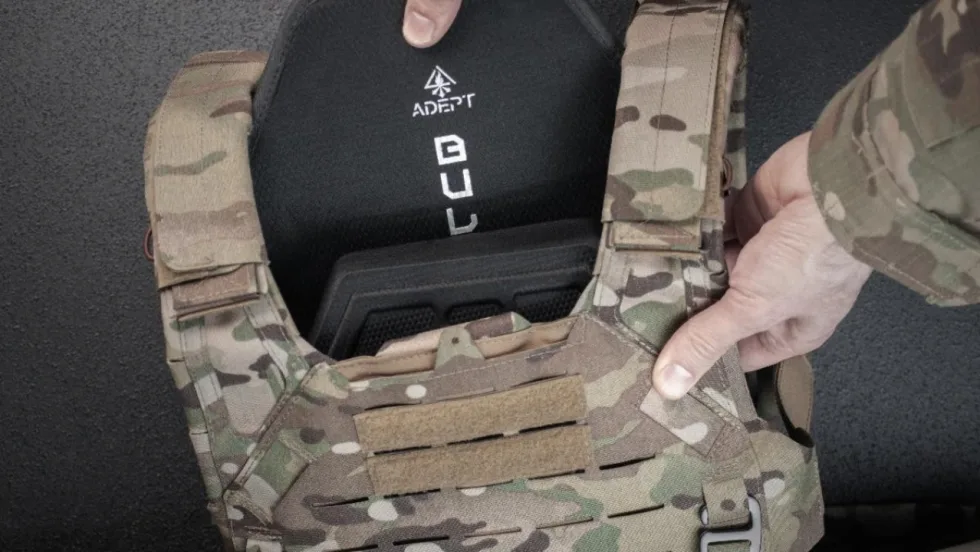
Adept Armor Introduces Two New Rifle Plates
Adept Armor has launched two new Level IV ballistic plates, the Emperor and the Archon Mark 2, which brings Adept Armor’s new Quatroid ceramic to the high-threat, performance-value center of the range at 5.2 pounds.
Read More →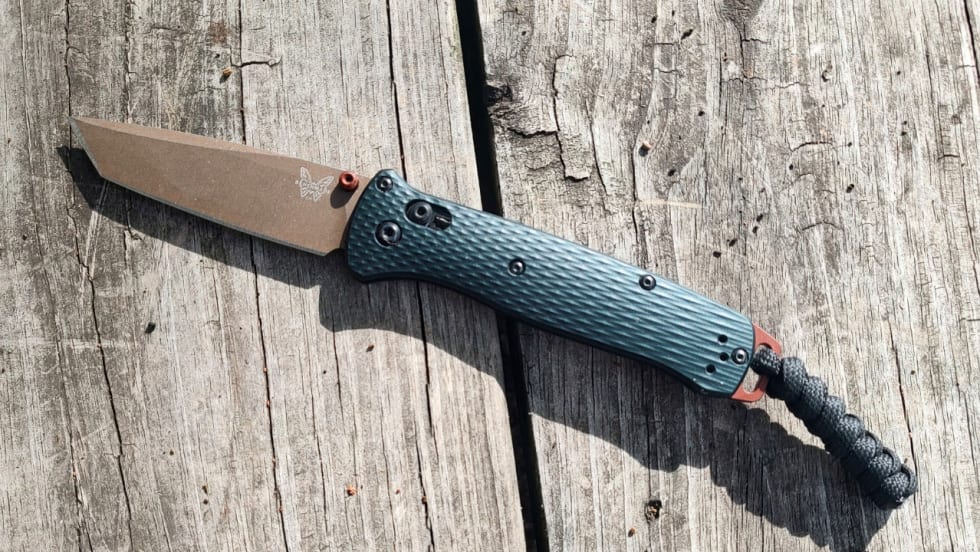
POLICE Product Test: Benchmade Bailout
The Benchmade Bailout is a slim, lightweight carry knife with a deep-ride pocket clip and comes in a variety of blade steels and scales. Here is a detailed review of the Taiga Green Bailout, released earlier this year.
Read More →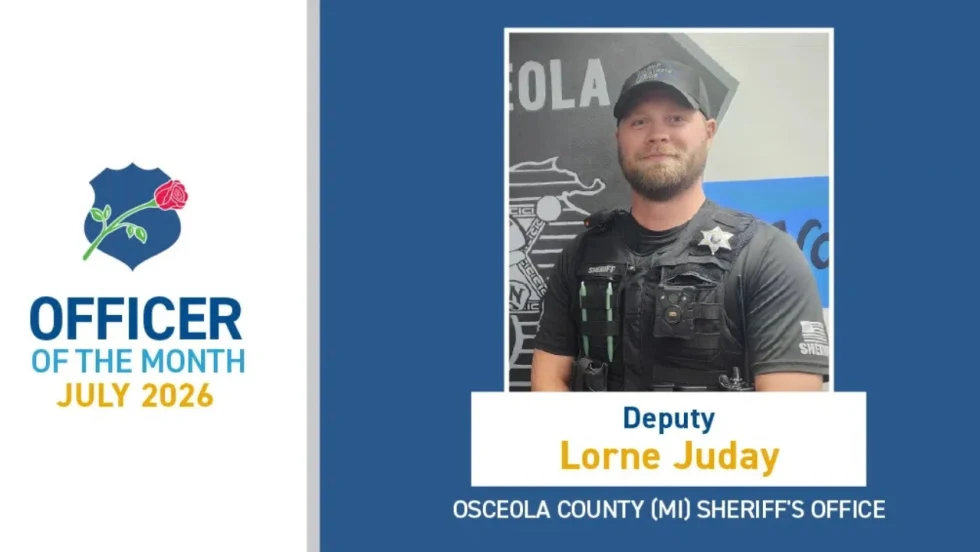
NLEOMF Announces July 2026 Officer of the Month
NLEOMF honored a Michigan deputy sheriff as the July 2026 Officer of the Month for rescuing a trapped driver from a burning vehicle following a Fourth of July crash.
Read More →
Streamlight to Showcase Newest Lighting Products at National Safety Council’s Safety Congress & Expo 2026
Streamlight will showcase its latest lights, including the Portable Scene Light III and the LiteBox 1Million, at the 2026 National Safety Council (NSC) Safety Congress & Expo.
Read More →
The 2027 World Police & Fire Games Set for Perth, Australia
The 2027 World Police & Fire Games (WPFG) will take place in Perth, Western Australia, from Friday, March 12 through Sunday, March 21, 2027.
Read More →
5.11 Partners with National Fallen Firefighters Foundation to Support #ForThe343
5.11 has joined the nationwide movement honoring the 343 New York City Fire Department firefighters lost on Sept. 11, 2001.
Read More →
Team Wendy Announces Title Sponsorship of the Jorge Pastore Foundation
Team Wendy’s 3-year partnership with the Jorge Pastore Foundation expands access to programs that strengthen those who serve.
Read More →
National Law Enforcement Memorial and Museum Hosting 9/11 25th-Year Commemoration Ceremony
The National Law Enforcement Memorial and Museum is hosting a 9/11 25th Year Commemoration Ceremony on Sept. 11 at 4 p.m.
Read More →
National Law Enforcement Officers Memorial Fund Announces June 2026 Officers of the Month
The National Law Enforcement Officers Memorial Fund (NLEOMF) named 15 officers of the Chico Police Department (California) as the Officers of the Month for June 2026 for their roles in responding to an active-shooter incident at a public library.
Read More →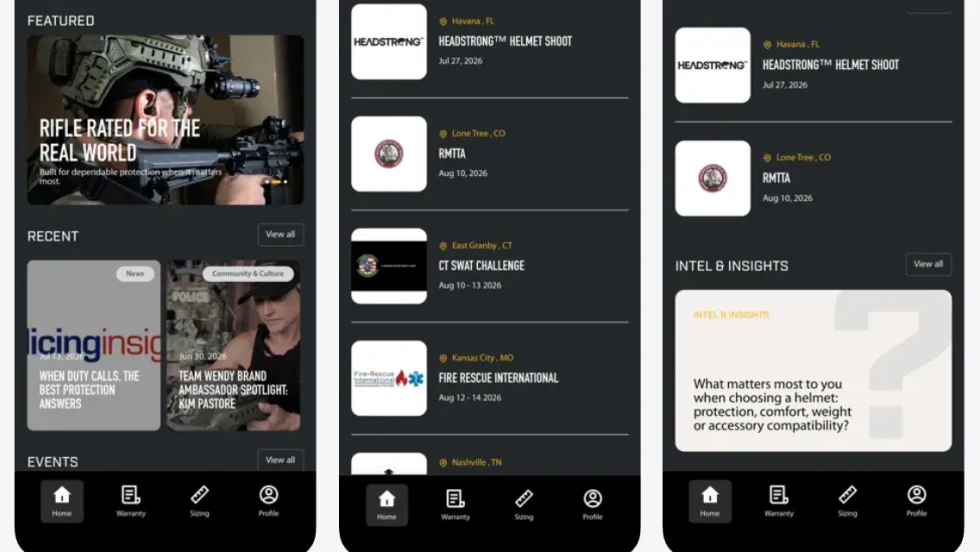
Team Wendy App Creates New Digital Hub for Helmet Owners
The Team Wendy Community App provides one location for warranty registration, size-fit tools, product updates, and community connection. For helmet owners, the new app creates a simpler path to the information and tools that matter most.
Read More →