



K-9 Sniffs and the Fourth Amendment
Under what circumstances is it permissible to use a dog to try to detect the presence of narcotics or dangerous substances without prior suspicion? The Supreme Court has considered this issue in three decisions.

Under what circumstances is it permissible to use a dog to try to detect the presence of narcotics or dangerous substances without prior suspicion? The Supreme Court has considered this issue in three decisions.
U.S. v. Place
Based on reliable information, DEA agents at a New York airport intercepted Place, a suspected drug courier, and detained his luggage for approximately 90 minutes so that it could be subjected to a K-9 sniff. The dog alerted and the agents subsequently obtained a search warrant and found cocaine inside a bag. Place moved to suppress the drugs as the product of an unreasonable seizure.
The Supreme Court ruled that a brief detention of property, based on reasonable suspicion, would not violate the Fourth Amendment. In this case, the court found that the agents had reasonable suspicion for such a brief detention of the luggage, for the purpose of exposing it to a K-9 sniff. However, the court ruled that the agents exceeded the proper scope of such a detention by keeping the luggage too long. A delay of 90 minutes, said the court, was too long, and the subsequent discovery of drugs was the fruit of an unreasonable detention.
Considering the issue of whether the K-9 sniff itself would have been an unreasonable search if the seizure of the bags had not been for an excessive length of time, the court said that since a dog sniff does not intrude upon any legitimate expectation of privacy, there is no need to justify using a trained dog:
“A ‘canine sniff’ by a well-trained narcotics detection dog does not require opening the luggage. It does not expose noncontraband items that otherwise would remain hidden from public view. The sniff discloses only the presence or absence of narcotics, a contraband item. Exposure of respondent’s luggage, which was located in a public place, to a trained canine did not constitute a ‘search’ within the meaning of the Fourth Amendment.”
In other words, the mere use of a K-9 to sniff for contraband, not being a “search,” does not require any reasonable suspicion, probable cause, or other justification. In this case, if the agents had arranged for a prompt K-9 sniff within a quicker, more reasonable time, the seizure of the drugs would have been reasonable, because the dog sniff itself is not a search.
Indianapolis v. Edmond
Although the facts were different, the court used an analysis similar to that in Place to analyze the use of K-9s during narcotics checkpoint stops in Indianapolis.
To try to stem the flow of illegal narcotics into and within the city, Indianapolis police set up checkpoints, similar to DUI checkpoints, to detect drugs. Signs were posted along the routes to warn motorists of the checkpoints, a mathematical formula was used to determine which vehicles to stop, and each stop lasted only two or three minutes.
While the vehicles were stopped, narcotics-detection dogs were walked around the exterior. If the dog hit, a search was conducted, and narcotics were recovered. Edmond challenged the practice in a federal lawsuit. When the case reached the Supreme Court, the practice was held to violate the Fourth Amendment.
The court pointed out that checkpoint stops had only been approved for limited purposes, such as protecting the border, removing drunk drivers, and checking for license and registration. The court has also suggested that checkpoints would be permissible in counter-terrorism situations and to block the escape of a dangerous offender. In this case, the court declined to permit the use of traffic checkpoints to search for drugs.[PAGEBREAK]
As in Place, the court found that the detention that provided the opportunity for a K-9 sniff was unreasonable. But also as in Place, the court made clear that if the detention had been justified, the mere use of the dog would not have violated the Fourth Amendment.
The court explained, “The fact that officers walk a narcotics-detection dog around the exterior of each car at the Indianapolis checkpoints does not transform the seizure into a search. Just as in Place, an exterior sniff of an automobile does not require entry into the car and is not designed to disclose any information other than the presence or absence of narcotics. A sniff by a dog that simply walks around a car is much less intrusive than a typical search.”
Once again, the court held that it was the seizure that violated the Fourth Amendment—not the use of the K-9. If the narcotics checkpoint had been a permissible way to stop cars, the walk-around would not have been any problem.
Illinois v. Caballes
In 2005, the Supreme Court finally got a chance to clarify that exterior dog sniffs, during a lawful detention, do not violate the Fourth Amendment.
Caballes was stopped for speeding. The officer intended to write him a warning ticket, which might have taken 10 minutes. A nearby K-9 officer, hearing about the stop on the radio, rolled by and walked his dog around the car while Caballes was being issued a traffic warning—a lawful detention. The dog hit, a search produced drugs, and Caballes moved to suppress the evidence.
The Illinois Supreme Court thought the K-9 sniff was an “unjustifiable enlargement” of the traffic stop, and held that since there was no reasonable suspicion to justify use of the dog, the drugs should be suppressed. The U.S. Supreme Court reversed the decision.
Since the duration of the 10-minute stop was not extended to accommodate the K-9 sniff, the Supreme Court found this case to be distinguishable from Place and Edmond. Once it was determined that there had been no unreasonable seizure and that the K-9 sniff did not extend the length of the seizure, the court simply applied the K-9 portions of its earlier decisions, and upheld the search of Caballes’s car.
“The use of a well-trained narcotics-detection dog during a lawful traffic stop generally does not implicate legitimate privacy interests,” the court said. “In this case, the dog sniff was performed on the exterior of respondent’s car while he was lawfully seized for a traffic violation. A dog sniff conducted during a concededly lawful traffic stop that reveals no information other than the location of a substance that no individual has any right to possess does not violate the Fourth Amendment.”
The court held that the K-9 alert was sufficiently reliable to establish probable cause for a full-blown search of the trunk of the car and, therefore, the drugs were lawfully seized and should not have been suppressed.
General K-9 Sniff Principles
Several points can be seen from these cases:
• If the initial detention of property or persons is unlawful, the results of the K-9 sniff may be inadmissible.
• If an initially lawful detention is unlawfully prolonged just to allow a K-9 sniff, the results may be inadmissible.
• Motorists cannot be subjected to checkpoint stops solely for the purpose of running a K-9 check for drugs.
• As long as there is no detention, or as long as any detention is lawfully made and not unduly prolonged, the use of a K-9 to sniff for contraband (which could include both narcotics and explosive materials) is not a Fourth Amendment “search” and, therefore, requires no suspicion.
Devallis Rutledge, a former police officer and veteran prosecutor, is Special Counsel to the Los Angeles County District Attorney.
More Patrol

Streamlight to Showcase Newest Lighting Products at National Safety Council’s Safety Congress & Expo 2026
Streamlight will showcase its latest lights, including the Portable Scene Light III and the LiteBox 1Million, at the 2026 National Safety Council (NSC) Safety Congress & Expo.
Read More →
The 2027 World Police & Fire Games Set for Perth, Australia
The 2027 World Police & Fire Games (WPFG) will take place in Perth, Western Australia, from Friday, March 12 through Sunday, March 21, 2027.
Read More →
5.11 Partners with National Fallen Firefighters Foundation to Support #ForThe343
5.11 has joined the nationwide movement honoring the 343 New York City Fire Department firefighters lost on Sept. 11, 2001.
Read More →
Team Wendy Announces Title Sponsorship of the Jorge Pastore Foundation
Team Wendy’s 3-year partnership with the Jorge Pastore Foundation expands access to programs that strengthen those who serve.
Read More →
National Law Enforcement Memorial and Museum Hosting 9/11 25th-Year Commemoration Ceremony
The National Law Enforcement Memorial and Museum is hosting a 9/11 25th Year Commemoration Ceremony on Sept. 11 at 4 p.m.
Read More →
National Law Enforcement Officers Memorial Fund Announces June 2026 Officers of the Month
The National Law Enforcement Officers Memorial Fund (NLEOMF) named 15 officers of the Chico Police Department (California) as the Officers of the Month for June 2026 for their roles in responding to an active-shooter incident at a public library.
Read More →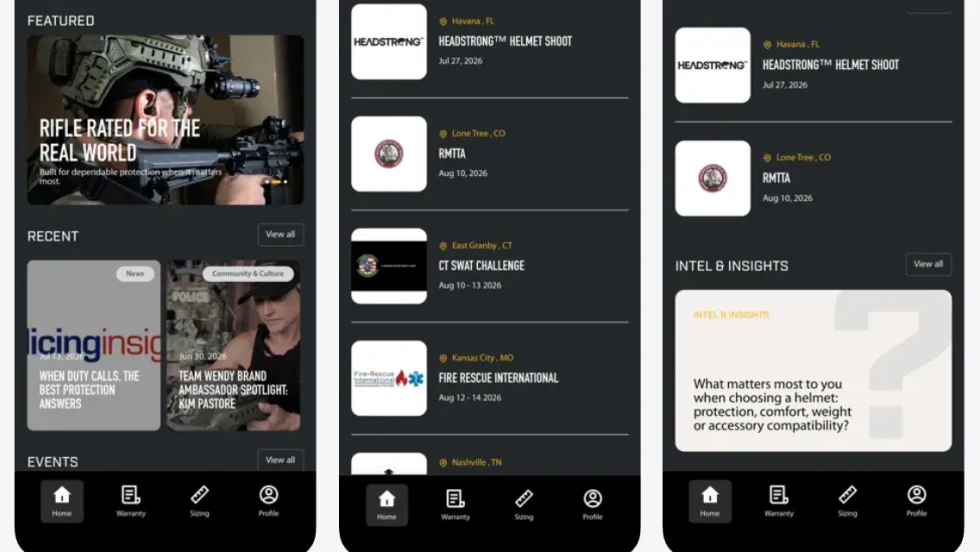
Team Wendy App Creates New Digital Hub for Helmet Owners
The Team Wendy Community App provides one location for warranty registration, size-fit tools, product updates, and community connection. For helmet owners, the new app creates a simpler path to the information and tools that matter most.
Read More →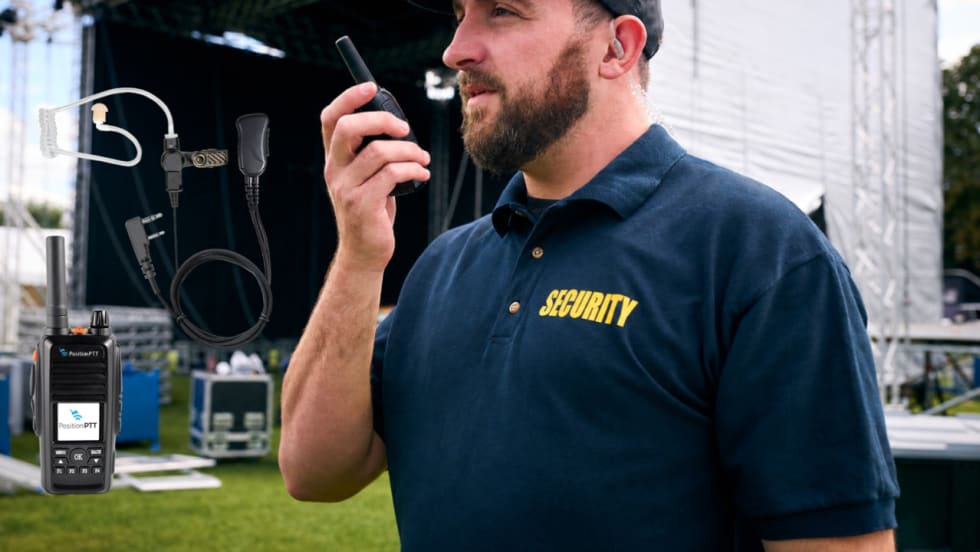
PositionPTT & Pryme Combine Communication Technologies to Deliver Distracted Driving Compliance
Pryme Radio Accessories and hardware/software maker PositionPTT join forces to advance hands-free communications and ensure Department of Transportation compliance using an integrated system of push-to-talk platforms, devices, and audio equipment.
Read More →
Justice Department Releases $25M in Law Enforcement Grants & Resources
The Office of Community Oriented Policing Services has just released $25 million in new grant Notices of Funding Opportunities (NOFOs) to support law enforcement. The recently released NOFOs include the Safer Outcomes: Enhancing Crisis Response Training for Law Enforcement Program and other grant programs.
Read More →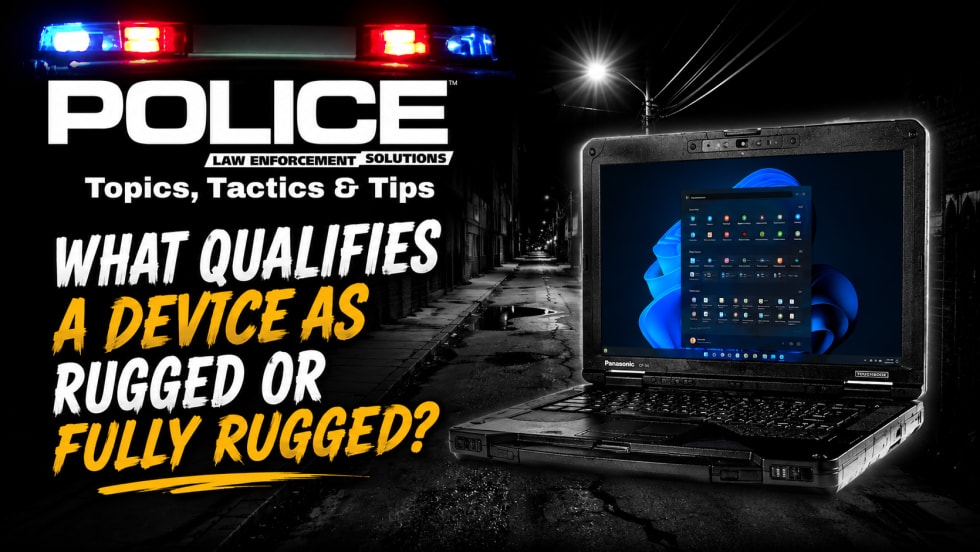
What Makes a Laptop Rugged or Fully Rugged?
What separates a rugged laptop from a fully rugged one? In this video, two Panasonic Connect experts explain the military testing, IP ratings, durability standards, and real-world features that help law enforcement officers rely on their computers in any environment.
Read More →