



Shots Fired: Des Moines, Iowa 06/25/2005
During the last hour of his shift, soon-to-be-retired Lt. Roger Sanders of the Des Moines Police Department was headed back to the station when the call of a fight at Walnut and 8th went out.

During the last hour of his shift, soon-to-be-retired Lt. Roger Sanders of the Des Moines Police Department was headed back to the station when the call of a fight at Walnut and 8th went out.
When the call at Walnut and 8th went out, Sanders noted that the handling units had extended response times and hoped that the cavalry would arrive before he was needed. If not, rolling to the location would entail just a slight detour so he decided to do so.
Downtown areas are typically magnets for transients. In Des Moines, Walnut Avenue is such an epicenter. But the problem with some transients is that they aren’t transient enough, lingering just long enough to allow their psychological quirks to get the better of them. More than once, Sanders or his men had been obligated to clean up the aftermath.
Today would ultimately prove no different, and when the call was upgraded to a “stabbing just occurred,” Sanders put himself en route.
Upon his arrival, Sanders saw eight people congregated around a bus stop shelter. One person stood out: a highly agitated white male with a bloody shirt tied around his neck. The man was uncommunicative, and others on scene let Sanders know why: a sizable portion of the man’s throat had been cut.
Paramedics were en route. Sanders asked a security guard on the scene to try to calm the man down while he attempted to determine what had happened.
Two Suspects
A witness contacted Sanders, telling the lieutenant that in the minutes preceding his arrival, the injured man had been in a heated argument with another man. Shortly thereafter, a female acquaintance of both men passed a knife to the male suspect, who then proceeded to give the victim an impromptu tracheotomy.
The witness said the male and female suspects then walked westbound from the location. The attacker was described as a tall black male with a muscular build wearing a Slipknot shirt; his accomplice was a younger white female. When asked how far he thought the suspects might have gotten, the witness speculated perhaps as far as 11th Street. The witness then joined Sanders in his patrol car while they checked the vicinity for the suspects and began to establish a perimeter containment.
At the intersection of 12th and Walnut, the lieutenant saw a black man and a white woman matching the suspects’ descriptions exit a parking structure off of Mulberry Street. A mutual exchange of wary glances was made as Sanders drove in their direction, then pulled up just short of the two. Exiting his patrol car, Sanders removed his duty weapon and aimed at the male, Donald Walker.
Walker was not intimidated.
“F___ you!” he yelled. “You better put that gun away, unless you’re going to use it!”
The lieutenant sized up the situation. Walker was obviously not going along with the program, and assisting units were still several minutes away. In any situation, these would be less than desirable variables. But once he factored in Walker’s size, youth, and manifest predisposition toward using violence, Sanders found himself on Def Con One alert.
Simultaneously, Sanders had another concern: The female suspect started to distance herself from the male suspect and walk up the street toward Sanders. As Sanders was accustomed to the “stand by your man” mindset of many of society’s misfits, this action suggested to him that something else was in the offing. Two things were certain: getting any degree of compliance from the man was iffy at best; getting it from both of them would be next to impossible.
Weighing the Options
Several possibilities went through Sanders’ mind: The woman might attempt to flank him in a bid to take him out from behind. The man was at the same time rapidly closing the distance between himself and Sanders.
At six feet, three inches, the 38-year-old Walker possessed an impressive build and an obvious strength no doubt intensified by his altered state. Knife or not, the man would be a formidable threat. At the very least, any confrontation between the two men would put Sanders’ gun up for grabs. For Sanders, committing his attentions to the man wasn’t so much a gamble as a case of exercising the most survivable option. As the woman disappeared from Sanders’ peripheral vision, he tuned his hearing for telltale signs of an attack from behind.
Sanders told the man to put his belongings atop the hood of the patrol car. The man’s agitated compliance consisted of slamming a pouch on the hood. The man then removed a pouch that was slung over his shoulder and across his chest and slammed it down next to the first.
Sanders moved to pat the man down. As he did, he drew his duty weapon back tightly against his waist in an effort to accomplish two things. First, it availed him a means to retain his weapon should the suspect attempt to make a grab for his gun. Secondly, it availed him the opportunity to shoot from the hip if that were to become necessary.
Prior to initiating a pat-down search of the suspect, Sanders got an evaluative grip on the man’s elbow. It didn’t take long before his suspicions were confirmed. Sanders felt the muscles in the man’s arm tense a split second before the suspect drove his elbow back into Sanders’ chest. A move anticipated by Sanders, who stepped back to minimize the impact of the blow while simultaneously pushing the suspect away with his free hand.
Sanders stepped back and told the man to stand still. He warned Walker that if he was attacked again, he would shoot him.
Walker yelled obscenities again. And he repeated his warning, “You better put that gun away, unless you’re going to use it!”
[PAGEBREAK]
You Just Killed Me
Throughout his 34 years in law enforcement, Sanders had never shot a man. But then, he had never left any ambiguity about his willingness to do so. His obvious intent to do whatever was necessary to ensure his safety or that of others was never in doubt. This bearing had caused many a suspect to reevaluate any thoughts of noncompliance. He’d seen what might otherwise happen.
Several years earlier, a Des Moines officer had allowed a violent suspect to gain the upper hand, resulting in the officer being stabbed eight times. Only the officer’s ballistic vest and the last-second intervention of another officer’s use of deadly force had saved his life. Sanders believed intimidation may have factored into the victim officer’s unwillingness to do whatever was necessary to protect himself while he had the chance. The situation had been so Monday morning quarterbacked, discussed, and dissected that ultimately a question was put to the assistant district attorney for the county: Could an officer who is confronted by a suspect, known to be violent but not visibly armed, use deadly force to stop that suspect’s advance?
The district attorney acknowledged that case law was on the side of the officer. However, he cautioned that he never wanted to take such a case before a grand jury.
Now Sanders was living that nightmare scenario. He knew he couldn’t let the man get away; nor could he allow the man to get the better of him and gain control of his sidearm, thereby placing responding officers and citizens in even greater jeopardy.
Consciously or not, Sanders maneuvered himself to a point where any rounds that missed the suspect would not be a concern downfield. Again, he told the suspect to stand back or he would be shot, and again the suspect advanced.
There was no report, only a slight vibration in Sanders’ wrist caused by the gun’s recoil. A hole materialized in the suspect’s chest, followed by a gush of blood. Walker suddenly stopped and stared uncomprehendingly at his chest. His eyes rotated upwards to Sanders, a dawning recognition within them.
“You just killed me.”
Walker stared down to his right, then to his left, as though looking for what would catch him when he fell. He took two steps backward and collapsed.
Sanders approached warily. The knife’s whereabouts were still unknown and Sanders didn’t know what Walker was still capable of doing.
Walker made a gurgling sound that Sanders recognized as the death rattle. As the man’s breath grew shallow, Sanders thought to himself, My God. I’ve just shot an unarmed black man.
The Grand Jury
As additional units arrived, Sanders turned control of the crime scene over to one of his sergeants. While waiting for investigators to arrive, he tracked down witnesses to the incident.
Donald Walker was transported to Iowa Methodist Medical Center where he was pronounced dead.
A co-investigation of the shooting was conducted by the Iowa State Division of Criminal Investigation and the Des Moines Police Department. A thorough search of the area failed to locate the outstanding knife. Sanders speculates that the woman secreted it somewhere as she walked north on 12th Street.
Like Sanders, the police chief was a political realist. He was not an apologist, however. He invited members of the black community to a tour of the shooting scene and a debriefing. Despite its success in curtailing criticism from the community, some officers took exception to the overture. Sanders was thankful for it.
“I honestly think it worked for the best. I told the chief that whatever he felt he needed to do to keep the Department’s reputation intact was right by me. I honestly believe it not only defused the situation, but probably prevented some lawsuits from being filed.”
In late August, the Grand Jury reached the same conclusion as other investigatory bodies and the community and ruled the shooting justifiable. Ironically, the district attorney responsible for making Sanders’ case was the same man who had earlier expressed reservations about such a case.
By early September, Sanders was back to work, but only for a while. He retired shortly thereafter.
Sanders has since taken a position as chief of police for the Meskwaki Indian Settlement at Tama, Iowa. He still thinks about the men and women who continue to do the job throughout the nation. His thoughts and prayers are continually with them. But the one thing that he would most want to impart to them is this: When it comes to facing a life-or-death decision, the political, social, or fiscal reputations be damned.
“Never hesitate to do what’s required of you to keep yourself and your partner alive,” Sanders says. “If you’re a good, conscientious cop, you should never fear doing your job.”
Dean Scoville is a patrol supervisor with the Los Angeles Sheriff’s Department and a contributing editor to Police.
More Patrol
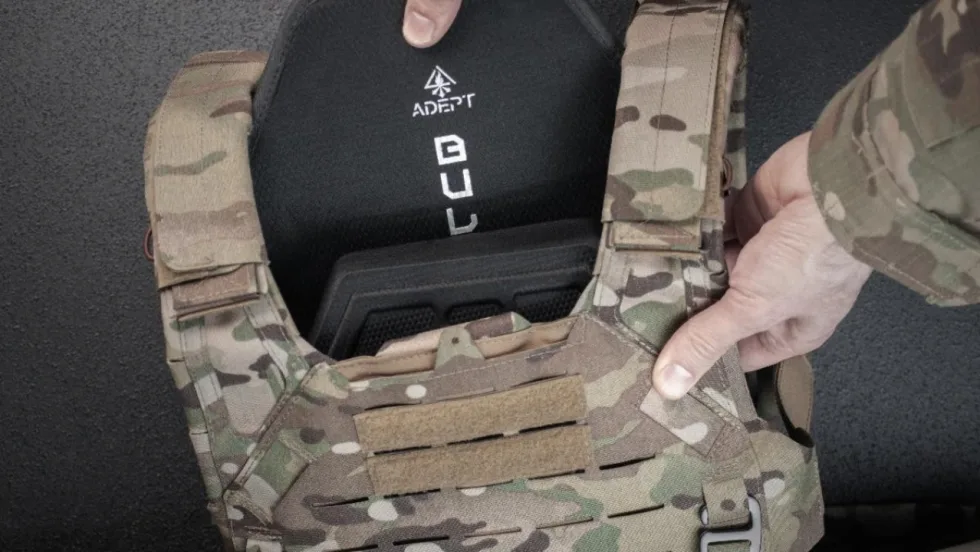
Adept Armor Introduces Two New Rifle Plates
Adept Armor has launched two new Level IV ballistic plates, the Emperor and the Archon Mark 2, which brings Adept Armor’s new Quatroid ceramic to the high-threat, performance-value center of the range at 5.2 pounds.
Read More →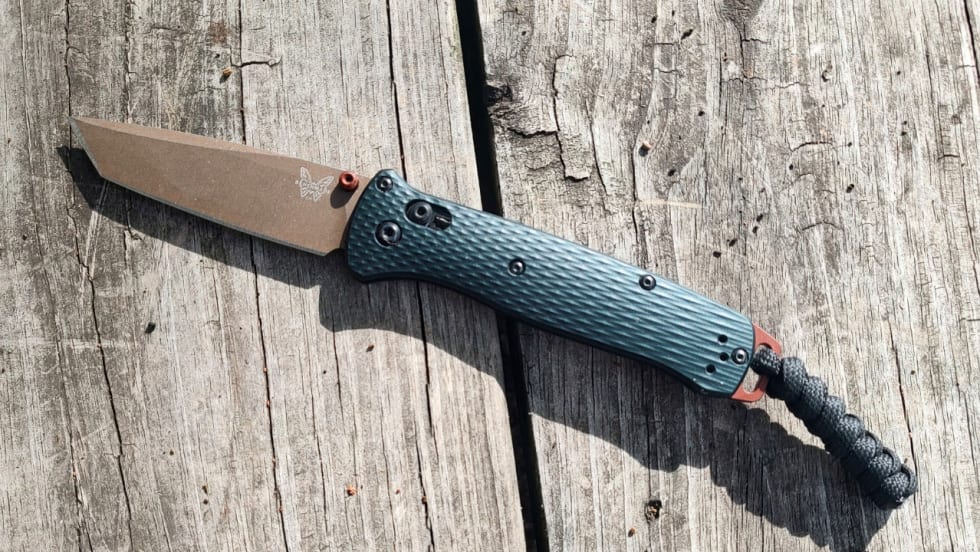
POLICE Product Test: Benchmade Bailout
The Benchmade Bailout is a slim, lightweight carry knife with a deep-ride pocket clip and comes in a variety of blade steels and scales. Here is a detailed review of the Taiga Green Bailout, released earlier this year.
Read More →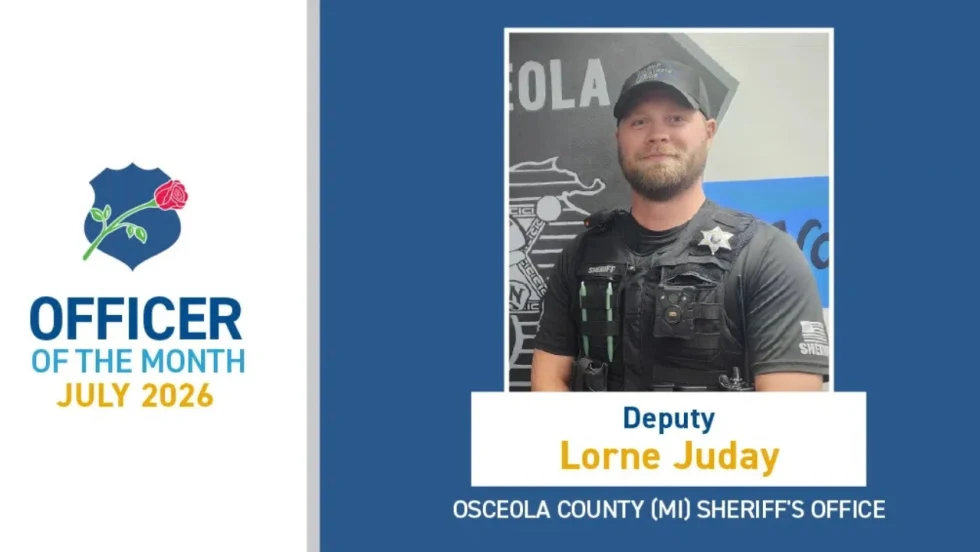
NLEOMF Announces July 2026 Officer of the Month
NLEOMF honored a Michigan deputy sheriff as the July 2026 Officer of the Month for rescuing a trapped driver from a burning vehicle following a Fourth of July crash.
Read More →
Streamlight to Showcase Newest Lighting Products at National Safety Council’s Safety Congress & Expo 2026
Streamlight will showcase its latest lights, including the Portable Scene Light III and the LiteBox 1Million, at the 2026 National Safety Council (NSC) Safety Congress & Expo.
Read More →
The 2027 World Police & Fire Games Set for Perth, Australia
The 2027 World Police & Fire Games (WPFG) will take place in Perth, Western Australia, from Friday, March 12 through Sunday, March 21, 2027.
Read More →
5.11 Partners with National Fallen Firefighters Foundation to Support #ForThe343
5.11 has joined the nationwide movement honoring the 343 New York City Fire Department firefighters lost on Sept. 11, 2001.
Read More →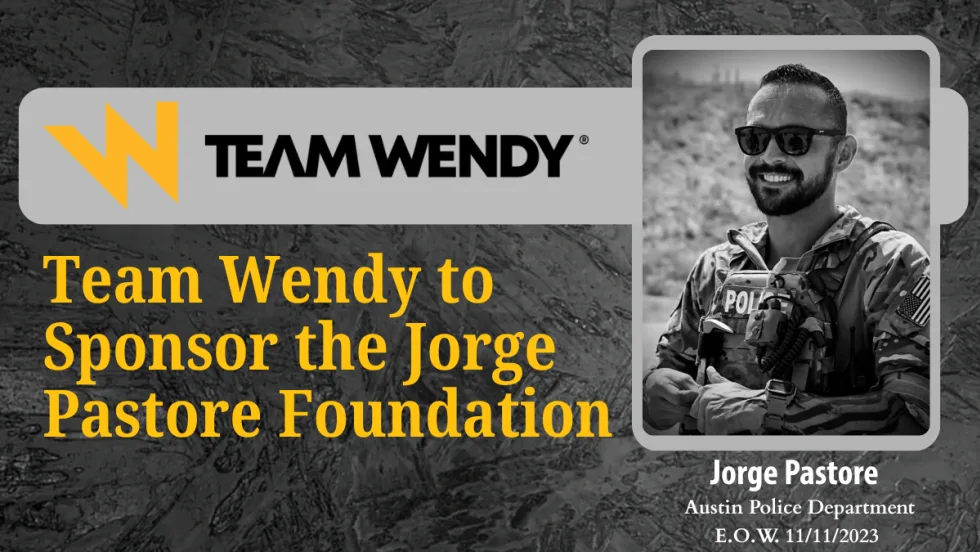
Team Wendy Announces Title Sponsorship of the Jorge Pastore Foundation
Team Wendy’s 3-year partnership with the Jorge Pastore Foundation expands access to programs that strengthen those who serve.
Read More →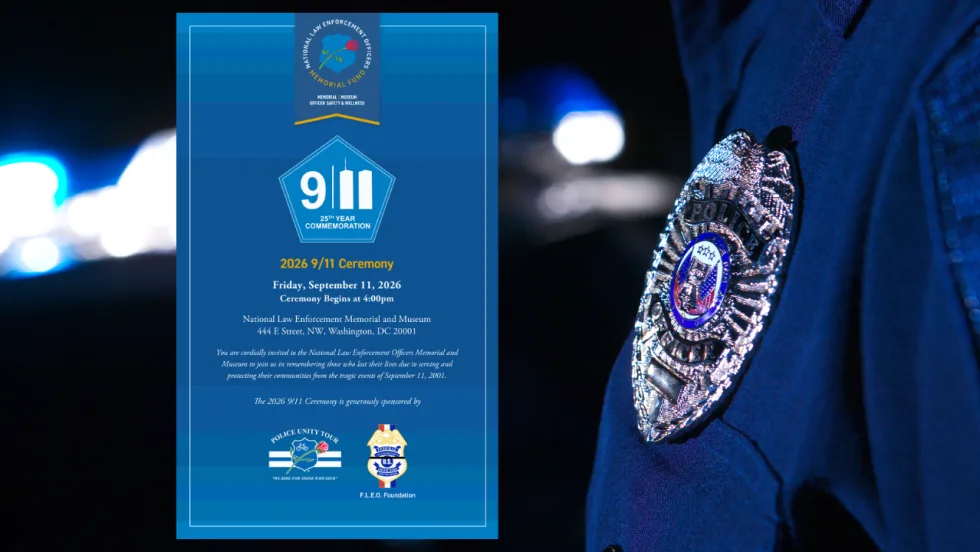
National Law Enforcement Memorial and Museum Hosting 9/11 25th-Year Commemoration Ceremony
The National Law Enforcement Memorial and Museum is hosting a 9/11 25th Year Commemoration Ceremony on Sept. 11 at 4 p.m.
Read More →
National Law Enforcement Officers Memorial Fund Announces June 2026 Officers of the Month
The National Law Enforcement Officers Memorial Fund (NLEOMF) named 15 officers of the Chico Police Department (California) as the Officers of the Month for June 2026 for their roles in responding to an active-shooter incident at a public library.
Read More →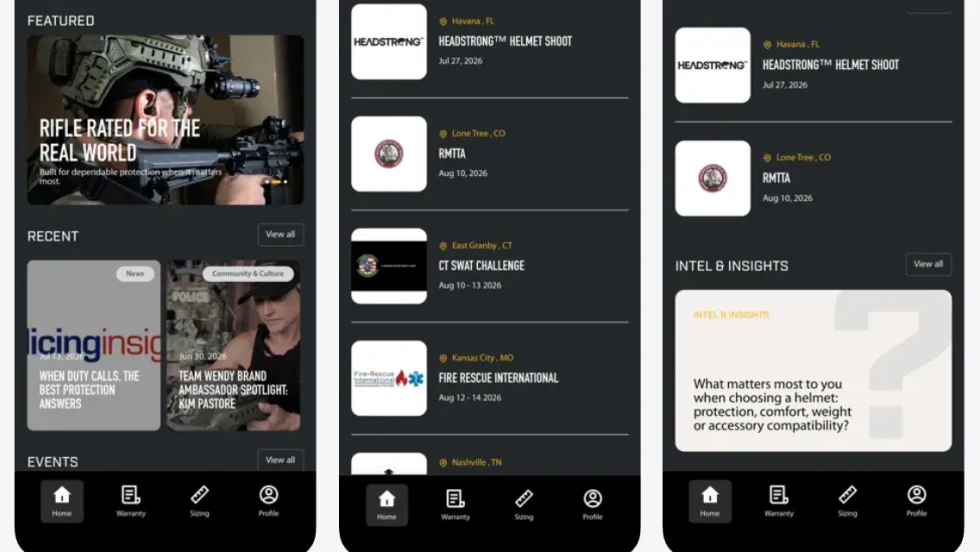
Team Wendy App Creates New Digital Hub for Helmet Owners
The Team Wendy Community App provides one location for warranty registration, size-fit tools, product updates, and community connection. For helmet owners, the new app creates a simpler path to the information and tools that matter most.
Read More →