



Team Leadership
"The important thing to recognize is that it takes a team, and the team ought to get credit for the wins and the losses." - Philip Caldwell

"The important thing to recognize is that it takes a team, and the team ought to get credit for the wins and the losses." - Philip Caldwell
Leadership is too often thought of as an individual sport. Sometimes I think that people view leadership like golf. If you play a lot, take classes, and study the art of golf, you will be a good golfer. I always hear, "He (or she) is a good leader," as if it were an individual success. I think of leadership as really being more of a team sport. Like football, you have to learn, practice, and play individual positions with individual skills, but you cannot be successful unless the team is working together.
For example, a quarterback can be a leader and a great passer. But if the receivers don't follow the plays and they drop the ball, what credit does he gain as an individual? Still, I have rarely heard anybody describing a group collectively as good leaders; usually people are pointed out individually as to their leadership skills, good or bad.
This is interesting, since in my most successful positions I never led alone. And I was never truly successful unless I engaged all the subordinate leaders within my organization and demanded that they work together and help each other out. It is essential in the supervisory ranks that leadership be considered a team sport.
From a practical perspective, not even the best leaders can work 24 hours a day, seven days a week. So who is taking care of the leadership issues with their subordinates when they are not there? Take a second to think about the most successful leaders that you have known. What was their supporting cast of leaders like? I bet you dollars to doughnuts (no cop jokes, please) that their subordinate leaders were not only good individual leaders, but worked well together.
In last month's column, "Leading Cops and Two-year-Olds," I talked about how some officers try to play the lieutenant against the sergeants. If they do not get the answer they want from one supervisor, they go ask a different supervisor. I don't necessarily hold it against them; it is human nature to use that type of tactic to get what you want. In the world of leadership, however, it is a test of the supervisors as to whether they communicate or coordinate properly and effectively enough. If your officers get away with that kind of behavior, then shame on you.
One example of when team leadership is especially important is in the case of a "problem officer." Because of schedule changes, days off, swing shift, or whatever schedule an organization works, if you are a supervisor trying to change one officer's behavior, it is impossible for you to do it alone. Let's say the officer has low productivity. He only writes the occasional ticket, never picks up radio calls, and has the fewest arrests on the watch. Generally, this officer just drives around for the whole shift doing little to nothing.
The classic leadership question is, "What do you do now, Lieutenant/Sergeant?" The first thing I would do is meet with the other supervisors and confirm there is a problem. Maybe I do not have institutional knowledge of this individual. Was he a productive officer at some point? What does his record look like? If so, why has that changed? In my mind, there has to be some agreement that there is a problem that either needs observation or action.
A plan of action to improve the officer's productivity should be agreed upon. The officer's most direct supervisor should be made aware of the problem and assigned to monitor the situation. That entails any required counseling, written progress reports, retraining, or disciplinary action. The remaining supervisors need to be aware of the issue so that they can monitor the individual when appropriate: in the field; in training; and in court. These actions require persistence and patience. The senior leader has to keep the other supervisors focused until the problem is resolved.
This is the kind of positive pressure that can only be brought about by team leadership. While individual supervisors can bring their individual leadership skills to bear on aspects of a problem, only through effective team leadership can long lasting change occur. It is important to remember that as a leader you are not alone. We all need the support and assistance of our fellow leaders to be truly successful in taking care of our people and completing the mission.
More Patrol
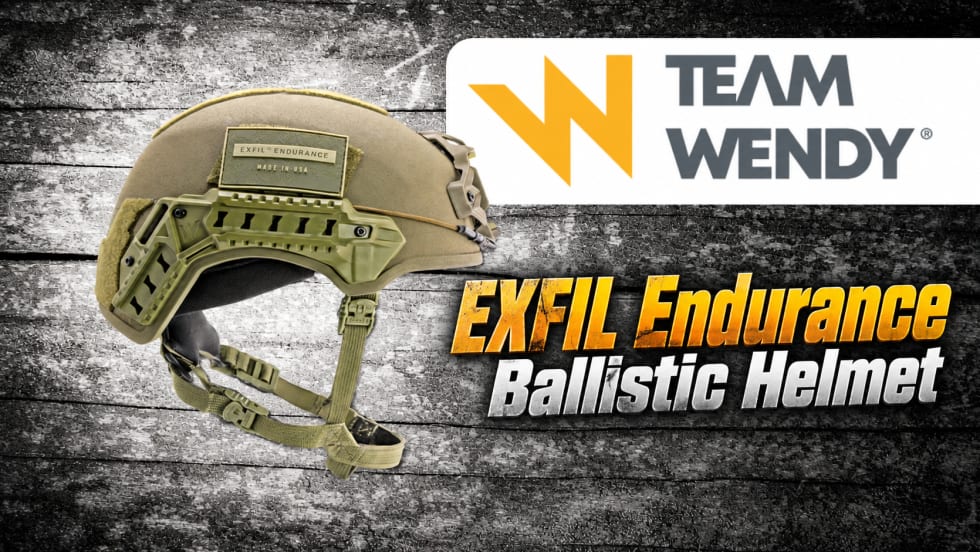
Team Wendy Introduces the EXFIL Endurance Ballistic Helmet, Engineered to Reduce the Burden of Extended Wear
Team Wendy has launched its EXFIL Endurance, a new lightweight ballistic helmet engineered to deliver protection, comfort, and fit during demanding, extended operations.
Read More →
The First Responders Children’s Foundation National First Responders Day Roll Call of Heroes Ceremony Returns to Times Square, NYC
First Responders Children’s Foundation (FRCF), in collaboration with T-Mobile, will host the Roll Call of Heroes ceremony in Times Square to commemorate National First Responders Day on Wednesday, Oct. 28. During the event, FRCF will present 18 Hero Awards.
Read More →
Streamlight to Showcase Newest Lighting Products for Law Enforcement Professionals at IACP 2026
Streamlight will showcase its newest lights for law enforcement at the International Association of Chiefs of Police Annual Conference & Expo. Featured lights will include the TLR-3 X, the PolyTac 1X, and more.
Read More →
Streamlight Portable Scene Light III Wins 2026 OH&S New Product of the Year Award
Streamlight’s Portable Scene Light III has won the 2026 Occupational Health & Safety (OH&S) New Product of the Year Award in the Lighting category.
Read More →
Adept Armor Introduces Two New Rifle Plates
Adept Armor has launched two new Level IV ballistic plates, the Emperor and the Archon Mark 2, which brings Adept Armor’s new Quatroid ceramic to the high-threat, performance-value center of the range at 5.2 pounds.
Read More →
POLICE Product Test: Benchmade Bailout
The Benchmade Bailout is a slim, lightweight carry knife with a deep-ride pocket clip and comes in a variety of blade steels and scales. Here is a detailed review of the Taiga Green Bailout, released earlier this year.
Read More →
NLEOMF Announces July 2026 Officer of the Month
NLEOMF honored a Michigan deputy sheriff as the July 2026 Officer of the Month for rescuing a trapped driver from a burning vehicle following a Fourth of July crash.
Read More →
Streamlight to Showcase Newest Lighting Products at National Safety Council’s Safety Congress & Expo 2026
Streamlight will showcase its latest lights, including the Portable Scene Light III and the LiteBox 1Million, at the 2026 National Safety Council (NSC) Safety Congress & Expo.
Read More →
The 2027 World Police & Fire Games Set for Perth, Australia
The 2027 World Police & Fire Games (WPFG) will take place in Perth, Western Australia, from Friday, March 12 through Sunday, March 21, 2027.
Read More →
5.11 Partners with National Fallen Firefighters Foundation to Support #ForThe343
5.11 has joined the nationwide movement honoring the 343 New York City Fire Department firefighters lost on Sept. 11, 2001.
Read More →