



How Not to Rate a Storm
Hurricane country cops need a scale that screams the following message to the public: Get out! Get out, now!

Watching the news coverage of Hurricane Ike last month, I came to one succinct conclusion: We need a new way to measure the power and potential damage of these summer storms.
Hurricanes are measured on the Saffir-Simpson scale, which was developed in 1971 by civil engineer Herbert Saffir and meteorologist Bob Simpson. The Saffir-Simpson scale scores hurricanes in categories ranging from one to five based on wind strength. Hurricanes with wind speed of 74 mph to 95 mph are Category 1. A Category 5 hurricane boasts winds of more than 156 mph.
The problem is that the scale itself is terribly flawed in determining the true destructive power of one of these beasts. Yet we cite it like it is an absolute: "Oh, that's just a Category 2 storm. It's nothing to worry about."
I'm guilty of this kind of statement myself. You see, my parents live blocks from the Atlantic surf in the Myrtle Beach area of South Carolina. So I've spent many an hour in their living room watching The Weather Channel with my dad and trying to convince him that he doesn't have to worry about some storm boiling out of the Caribbean because it's just a "Cat 2."
The problem with this way of thinking is that it gets people killed. It rocks people gently into complacency. It convinces them that even though some monster with the sweet name of "Jenny" is coming to turn their dream house into kindling that it's OK to stay and ride out the storm rather than evacuate to higher ground.
People don't evacuate out of the path of hurricanes for a variety of reasons. One, it's a monumental pain in the hindquarters to evacuate, especially from a major city. Two, hurricanes are the ultimate teases; the majority of these storms weaken before they reach land or they turn to wreak havoc on somebody else or they head north to die in cooler waters. Three, even if the hurricane hits and hits hard, homeowners believe they need to stay and protect their property from looters because they know you will be too busy rescuing people like them who try to ride out the storm.
But I think another reason that people don't evacuate out of the path of these storms is that this whole "Cat 1," "Cat 2," "Cat 3" business is misleading them. Here's a newsflash for anyone who believes a "Cat 2" hurricane is just a bunch of harmless wind and rain: Hurricane Ike, which just wrecked Galveston Island and cut a swath of destruction through southeast Texas and southwest Louisiana, was a Cat 2.
The real damage from a hurricane hitting the U.S. coast is caused by water. Most modern American buildings can withstand some high winds, but water is another story. No home withstands a flood.
Hurricane Ike pushed a massive wall of water into coastal Texas. As a Cat 2 storm, Ike should have generated a 6- to 8-foot storm surge. On the west side of Galveston Island, Ike's surge peaked at 18 feet high.
What the Saffir-Simpson Scale doesn't take into account is the size of the storm. Hurricane Ike was massive, spanning more than 500 miles. Ike made landfall in Galveston as a Cat 2 hurricane, but it had tropical storm strength all the way to Florida.
We need to revise the hurricane scale to take into consideration size and to better predict storm surge. Until we do, people are going to continue hurricane roulette in coastal areas and try to ride out the storm.
And people staying in place during a storm is a terrible problem for your brothers and sisters in law enforcement who work in hurricane country. After a storm has passed, after they have been required to face the wind, rain, and tidal surge in the name of public safety, hurricane country cops then have to go out and rescue all the idiots who chose to stay.
These cops need a hurricane scale that will scream the following message to the public: A monster is coming to knock down your house. Get out! Get out, now!
More Patrol
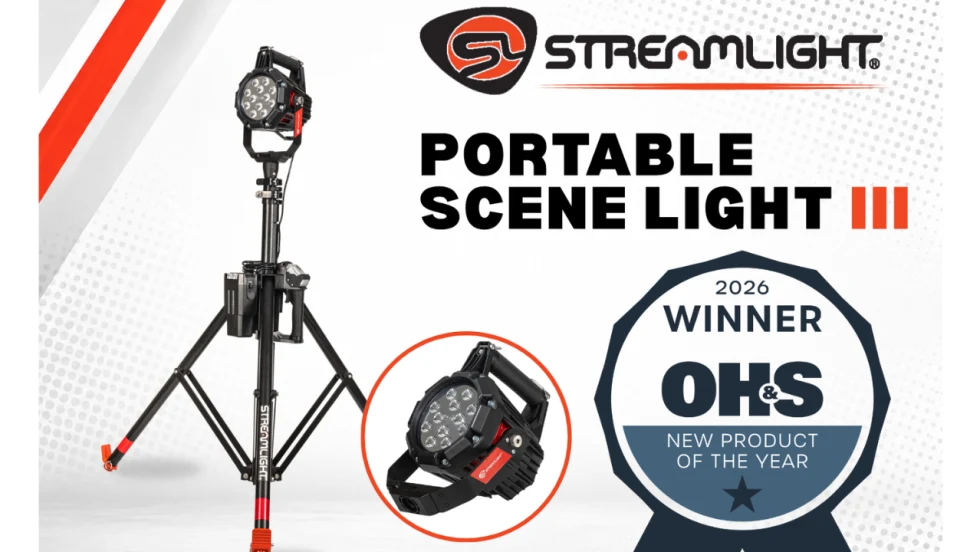
Streamlight Portable Scene Light III Wins 2026 OH&S New Product of the Year Award
Streamlight’s Portable Scene Light III has won the 2026 Occupational Health & Safety (OH&S) New Product of the Year Award in the Lighting category.
Read More →
Adept Armor Introduces Two New Rifle Plates
Adept Armor has launched two new Level IV ballistic plates, the Emperor and the Archon Mark 2, which brings Adept Armor’s new Quatroid ceramic to the high-threat, performance-value center of the range at 5.2 pounds.
Read More →
POLICE Product Test: Benchmade Bailout
The Benchmade Bailout is a slim, lightweight carry knife with a deep-ride pocket clip and comes in a variety of blade steels and scales. Here is a detailed review of the Taiga Green Bailout, released earlier this year.
Read More →
NLEOMF Announces July 2026 Officer of the Month
NLEOMF honored a Michigan deputy sheriff as the July 2026 Officer of the Month for rescuing a trapped driver from a burning vehicle following a Fourth of July crash.
Read More →
Streamlight to Showcase Newest Lighting Products at National Safety Council’s Safety Congress & Expo 2026
Streamlight will showcase its latest lights, including the Portable Scene Light III and the LiteBox 1Million, at the 2026 National Safety Council (NSC) Safety Congress & Expo.
Read More →
The 2027 World Police & Fire Games Set for Perth, Australia
The 2027 World Police & Fire Games (WPFG) will take place in Perth, Western Australia, from Friday, March 12 through Sunday, March 21, 2027.
Read More →
5.11 Partners with National Fallen Firefighters Foundation to Support #ForThe343
5.11 has joined the nationwide movement honoring the 343 New York City Fire Department firefighters lost on Sept. 11, 2001.
Read More →
Team Wendy Announces Title Sponsorship of the Jorge Pastore Foundation
Team Wendy’s 3-year partnership with the Jorge Pastore Foundation expands access to programs that strengthen those who serve.
Read More →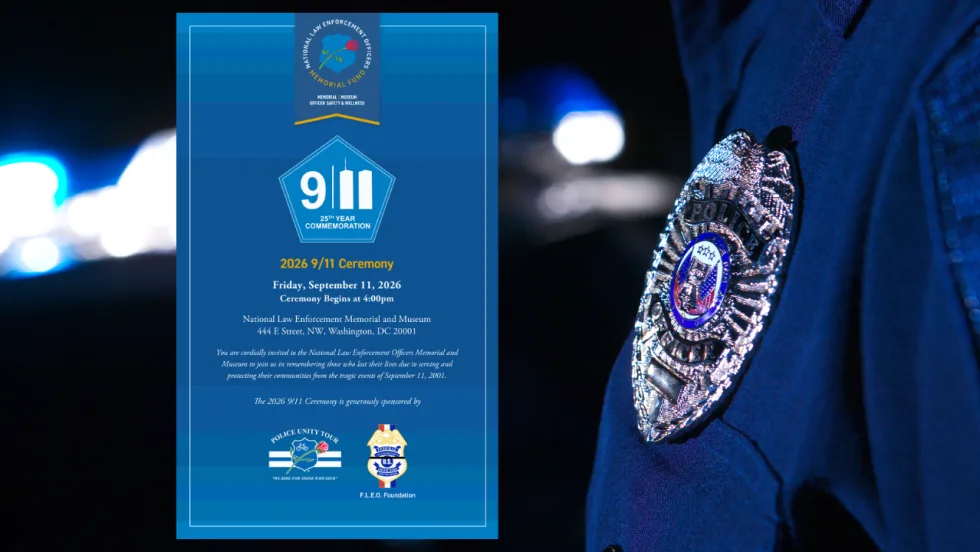
National Law Enforcement Memorial and Museum Hosting 9/11 25th-Year Commemoration Ceremony
The National Law Enforcement Memorial and Museum is hosting a 9/11 25th Year Commemoration Ceremony on Sept. 11 at 4 p.m.
Read More →
National Law Enforcement Officers Memorial Fund Announces June 2026 Officers of the Month
The National Law Enforcement Officers Memorial Fund (NLEOMF) named 15 officers of the Chico Police Department (California) as the Officers of the Month for June 2026 for their roles in responding to an active-shooter incident at a public library.
Read More →