



Brace for Impact
Some homeowners upside down in their mortgages have just walked away, leaving their properties to the bank. An abandoned home is bad news. It draws criminals like dead critters draw vultures.

My hometown of Charlotte, N.C., is/was the nation's second most important banking center. Bank of America is at one end of Tryon Street—our "Main Street" named for a colonial governor who was later hung in effigy on the street that bore his name—and Wachovia is at the other.
Wachovia, a North Carolina institution with roots dating back to well before the Great Depression, has now been destroyed by a financial storm that some think may be the worst since that watershed moment in American history. Which means dark days ahead for the city of Charlotte. That's a long fall for a city that once thought it was recession proof.
But what we've learned in recent weeks is that no business, no community is recession proof. Neither is any government agency, including law enforcement agencies. The Charlotte-Mecklenburg Police Department will feel the pain of Wachovia's dissolution and the coming deep recession.
Most other law enforcement agencies in the United States will also feel the pain of the recession. Forty-five percent of respondents to a recent poll of 180 police chiefs by the Police Executive Research Forum (PERF) said that the downturn in the economy has affected their agency's "ability to reduce crime."
"As we see significant reductions [in our budget], we'll be seeing increased response time, fewer cases solved, and reduced services for victims of crimes," Prince William County, Va., Police Chief Charles Deane recently told USA Today. In the same article, it was revealed that his $73 million budget could drop by as much as 30 percent because of declining property tax revenues.
Such police budget shortfalls couldn't come at a worse time because crime is surely to increase in the coming year.
It already has in some sectors. In that same PERF survey, some 75 percent of respondents said that one or more categories of property crime are on the rise in their jurisdiction.
Because this financial crisis was precipitated by bad mortgages and predatory lending practices, it has resulted in an avalanche of home foreclosures nationwide. And even if homes haven't been foreclosed, some homeowners upside down in their mortgages have just walked away, leaving their properties to the bank.
To reduce the number of vacant homes in his jurisdiction, the Sheriff of Cook County, Ill., Thomas Dart, recently declared a moratorium on evictions from houses due to the fact that many innocent renters were being thrown out of their homes because their landlords had defaulted on their mortgage payments. Dart's concern was not only for the people evicted; he was also worried about the number of vacant properties in Cook County that stretch from depressed areas of Chicago out to the affluent areas northwest of the city.
Dart knows that an abandoned home is bad news. It draws criminals like dead critters draw vultures. Blocks of vacant homes in cities and suburbs are sure to be a magnet for gangs, vagrants, drug dealers, drug users, prostitutes, thieves, and God knows what kinds of miscreants.
And no city, suburb, or town will be immune from this blight, regardless of its affluence or its location. Even if your town doesn't have vacant homes, criminals in nearby cities will use them as a base of operations to victimize homeowners in your jurisdiction. Criminals are mobile.
What this means for you, the local law enforcement officer, is that you will have to do more with less. That includes less money for sworn personnel.
Those of you who work in so-called safe suburbs and small towns will have to be as alert as your big city colleagues. As detailed in our article "Gangster Nation," big city crime has come to every town nationwide.
And now with all these vacant houses, it has a place to stay.
More Patrol
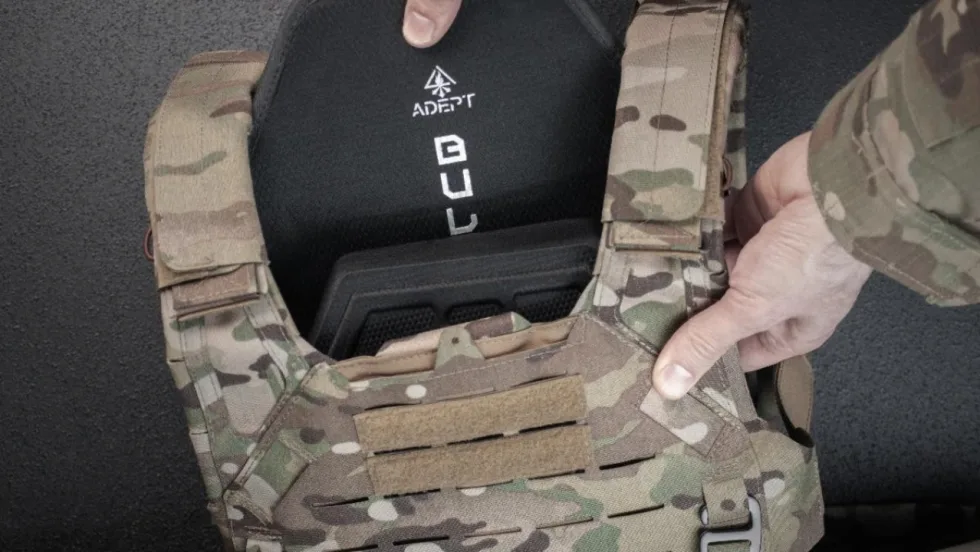
Adept Armor Introduces Two New Rifle Plates
Adept Armor has launched two new Level IV ballistic plates, the Emperor and the Archon Mark 2, which brings Adept Armor’s new Quatroid ceramic to the high-threat, performance-value center of the range at 5.2 pounds.
Read More →
POLICE Product Test: Benchmade Bailout
The Benchmade Bailout is a slim, lightweight carry knife with a deep-ride pocket clip and comes in a variety of blade steels and scales. Here is a detailed review of the Taiga Green Bailout, released earlier this year.
Read More →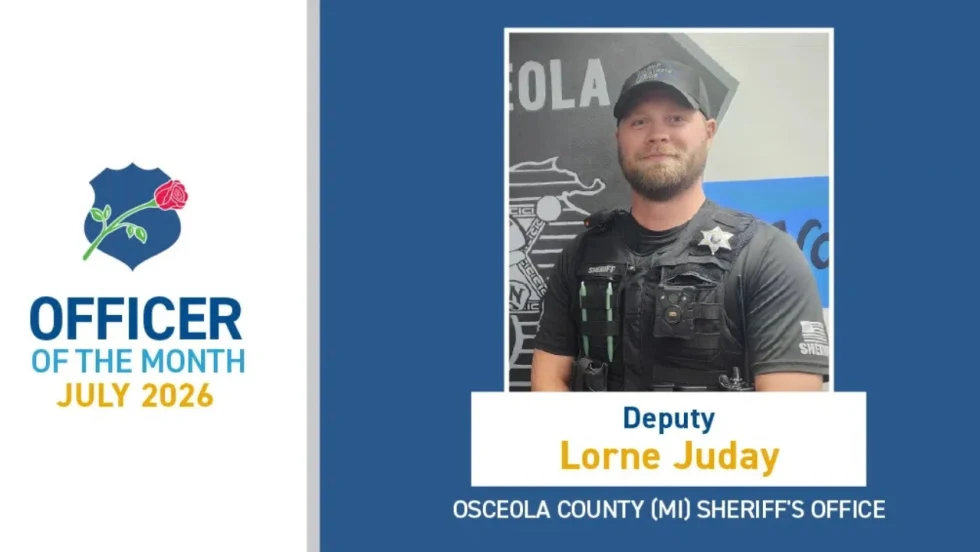
NLEOMF Announces July 2026 Officer of the Month
NLEOMF honored a Michigan deputy sheriff as the July 2026 Officer of the Month for rescuing a trapped driver from a burning vehicle following a Fourth of July crash.
Read More →
Streamlight to Showcase Newest Lighting Products at National Safety Council’s Safety Congress & Expo 2026
Streamlight will showcase its latest lights, including the Portable Scene Light III and the LiteBox 1Million, at the 2026 National Safety Council (NSC) Safety Congress & Expo.
Read More →
The 2027 World Police & Fire Games Set for Perth, Australia
The 2027 World Police & Fire Games (WPFG) will take place in Perth, Western Australia, from Friday, March 12 through Sunday, March 21, 2027.
Read More →
5.11 Partners with National Fallen Firefighters Foundation to Support #ForThe343
5.11 has joined the nationwide movement honoring the 343 New York City Fire Department firefighters lost on Sept. 11, 2001.
Read More →
Team Wendy Announces Title Sponsorship of the Jorge Pastore Foundation
Team Wendy’s 3-year partnership with the Jorge Pastore Foundation expands access to programs that strengthen those who serve.
Read More →
National Law Enforcement Memorial and Museum Hosting 9/11 25th-Year Commemoration Ceremony
The National Law Enforcement Memorial and Museum is hosting a 9/11 25th Year Commemoration Ceremony on Sept. 11 at 4 p.m.
Read More →
National Law Enforcement Officers Memorial Fund Announces June 2026 Officers of the Month
The National Law Enforcement Officers Memorial Fund (NLEOMF) named 15 officers of the Chico Police Department (California) as the Officers of the Month for June 2026 for their roles in responding to an active-shooter incident at a public library.
Read More →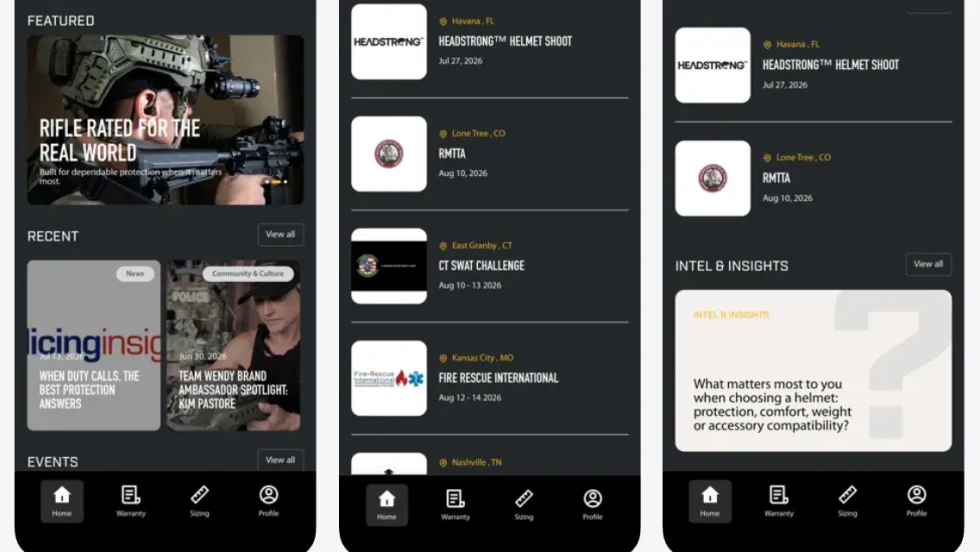
Team Wendy App Creates New Digital Hub for Helmet Owners
The Team Wendy Community App provides one location for warranty registration, size-fit tools, product updates, and community connection. For helmet owners, the new app creates a simpler path to the information and tools that matter most.
Read More →