



University Event Riots
A department can prepare for a large student gathering by reviewing what has occurred in the past and considering the resources it has available. Such precautions are critical because any student gathering can digress into a riot.

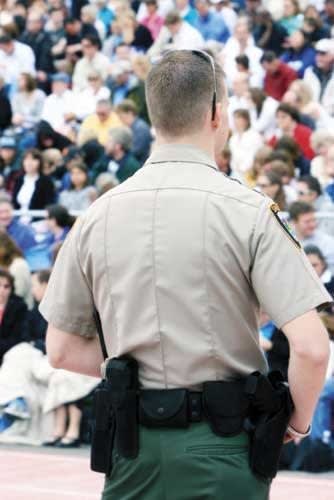
Most student gatherings are peaceful, so there is no definitive way to gauge the effectiveness of different police responses to university and college demonstrations and celebrations.
But a department can prepare for a large student gathering by reviewing what has occurred in the past and considering the resources it has available. Such precautions are critical because any student gathering can digress into a riot.
The most common precursor of a student riot is a large event with a mass dismissal time such as a game, match, or a concert, as opposed to an all-day picnic.
Outbreaks of rioting are difficult to forecast. But some riots can be predicted. For example, some student riots have become "traditions." At the University of Cincinnati many Cinco de Mayo celebrations have devolved into a riot. The same situation often occurs at the University of Wisconsin at Madison during Halloween celebrations. And as you all know, the potential for student riots exists anytime traditional football rivals are playing each other.
Spectators and Actors
In every riot there are many more spectators than participants. But spectators are not totally without blame for the mayhem. There is some evidence that the spectators may fuel the violence merely by their presence.
The crowd conceals and emboldens the actors. The spectators also provide an audience and may provide tacit support by not dispersing from the scene. The energy from the spectators can even fuel the violent minority and make the riot seem much bigger than it really is. Finally, the presence of so many spectators can make it difficult for the police to identify the criminal actors and disperse the crowd.
Riots often start at the end of exciting events where there is a mass dismissal. There is usually a period of great anticipation or excitement followed by some type of boredom or lull in the action. After the initial excitement passes, if the crowd fails to disperse in a timely manner, the event is ripe for a riot.
There are always some participants who are not ready for the excitement to be over. These instigators will try to create a new wave of excitement usually through criminal acts, including vandalism and arson. Such acts will draw a large crowd. A small percentage of this large crowd will be troublemakers and now a dispersed minority of troublemakers are all relocated to the same area. At this point the criminal activity increases, which draws more of a crowd, which draws more individuals looking for trouble. The cycle continues until a full scale riot is achieved.
Flashpoint
The point where an orderly gathering becomes a riot is known as the "flashpoint." A riot can be very effectively managed or even avoided if you can anticipate the flashpoint.
Identifying the flashpoint allows you to effectively and efficiently remove the troublemakers while not interfering with the non-violent majority. But identifying the flashpoint is not easy. Doing so requires some preparation.
Upon learning of a large gathering, ascertain how the event is being advertised. Is it advertised in the local student paper or is it being promoted through digital media, including Websites, Facebook, Twitter, etc.? Use your knowledge of how the event is being promoted to calculate how many people are aware of it.
Next, determine who will be attending. Are you expecting current students, returning alumni, or attendees who are not members of the university community? Is this event likely to draw a "counter-group?"
Once you've given thought to how many people and from what groups people will attend, it's time to consider riot scenarios. If there is a riot, will the rioters likely target each other? Rival fans? Property? Folks with badges like you?
Knowing the terrain will also help you prevent riots. Brainstorm with members of the student body, university officials, and members of the community to assess what could be a flashpoint location.
In some stadiums all the inexpensive student seats are accessed through one gate. That means that most of the students will be exiting the game through that gate, and it can be a flashpoint. You also have to consider flashpoints away from the stadium. A good bet is an entertainment area such as a strip of bars where many of the spectators go after the game.
Identifying a flashpoint location will allow you to take some proactive steps in preventing a riot.
Stage surveillance officers with video cameras on the roofs of establishments. This will allow you to identify surges in the crowd and developing hot spots.
Another benefit of surveillance is that it allows you to identify specific instigators. There are two benefits to knowing who started it. One, you may be able to use your intel to prosecute the bad guys. Two, it can give you a chance to move in and remove troublemakers with surgical precision, tamping down the riot before it accelerates.
Police have inflamed riots by treating everyone at the flashpoint the same. Most people in any rioting crowd are usually spectators. So don't alienate good citizens by treating them like rioters.
Dispersing the Crowd
Another question you want to ask yourself is what time the flashpoint will happen. Most concerts and games have identifiable start and finish times.
You want your agency's maximum presence to be in place at the right time. Often, jittery administrators put ground officers on duty at 10 a.m. for a 1 p.m. football game. This is a really bad idea. By the time the game is over at 4 p.m. and the crowd has hit another location at 6 p.m. and is done drinking at 10 p.m., the ground officers will be fatigued. Anticipating the flashpoint time will help you plan proper and timely deployment of the ground officers.
Anticipating the flashpoint time and location will also allow you to accomplish the most important mission in riot prevention: establishing an effective dispersal protocol. There cannot be a riot without a large crowd. Riots often start when people are just hanging around waiting for something to happen.
You will want to facilitate the orderly dispersal of the large crowd. This is often difficult on a campus, many of which are surrounded by small, narrow streets. So you should plan to disperse the crowd by having plenty of public transportation available.
You may also have to temporarily re-configure the traffic patterns; there should be as many one-way streets leading out of the area as possible. Barricades should also be erected along sidewalks to ensure pedestrians do not enter the flow of vehicular traffic. If there are a large number of pedestrians, crossing guards may be used in place of regularly timed lights to quickly clear an area.
When preparing for a large event, planning is the key. Your department will want to partner with all members of the community who will be affected, including the university administration, campus police, student body representatives, and local business owners.
You will also want to consider deploying officers in a number of different modes. Walking officers, and surveillance officers as well as officers on bicycles, motorcycles, Segways, and horses can be very effective.
Fortunately, most people who attend events at universities are responsible citizens looking to have a good time. You can protect these good citizens and enhance their good experience by properly planning and preparing for a potential riot.
Det. Joseph Petrocelli is a 20-year veteran of New Jersey law enforcement and the author of the books "Anatomy of a Motor Vehicle Stop" and "No One Trips Over a Mountain." You can comment on this article, suggest other topics, or reach the author by sending a message to editor@PoliceMag.com.
Dispelling Crowd Control Myths
One of the first things you need to do as you prepare to respond to student riots is forget all the myths you've learned about these incidents.
Alcohol-The consumption of alcoholic beverages does not "cause" violence. But a large body of research indicates that there is a strong relationship between alcohol use and violence committed by university students. Though the alcohol does not drive the students to commit the acts, it does lower inhibitions and impair judgment. Many students who have over-indulged in alcohol will act recklessly or react violently to what they perceive to be threats or challenges. That includes challenges by police officers.
Further research indicates that very few college students actually set out to get drunk. About five percent of students reported their primary mission was to attend an event and get drunk. Less than one percent reported they were involved in any vandalism and only 1.5 percent confronted the police. The results of this self-report study are supported by photos, videos, and eyewitness accounts.
The Madding Crowd-There is no empirical evidence that a large crowd causes an otherwise rational person to act recklessly. Each member of a crowd makes his or her own decisions. Individuals may use a crowd to conceal their actions or as an excuse for their actions, but individuals still control their own behavior. By controlling individuals, the police can control a crowd.
More Patrol

Streamlight to Showcase Newest Lighting Products for Law Enforcement Professionals at IACP 2026
Streamlight will showcase its newest lights for law enforcement at the International Association of Chiefs of Police Annual Conference & Expo. Featured lights will include the TLR-3 X, the PolyTac 1X, and more.
Read More →
Streamlight Portable Scene Light III Wins 2026 OH&S New Product of the Year Award
Streamlight’s Portable Scene Light III has won the 2026 Occupational Health & Safety (OH&S) New Product of the Year Award in the Lighting category.
Read More →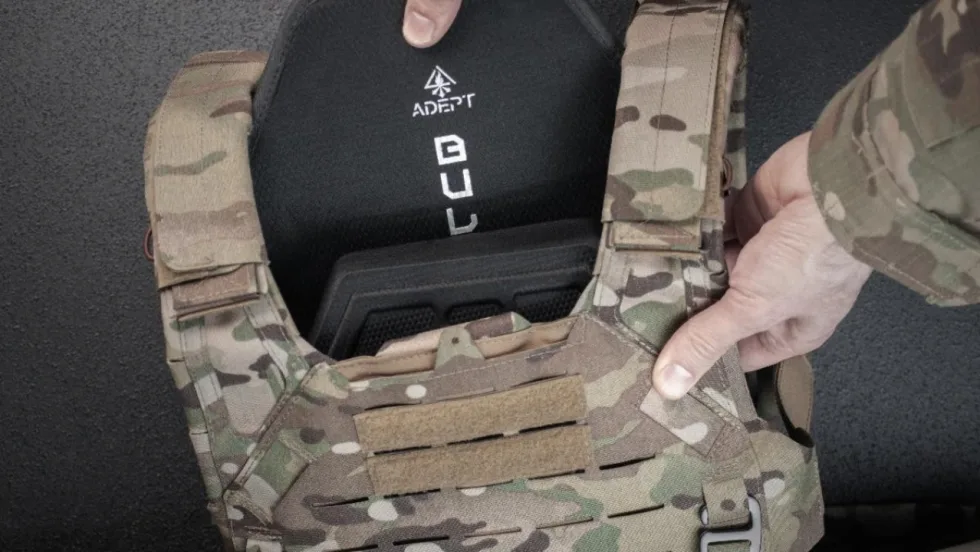
Adept Armor Introduces Two New Rifle Plates
Adept Armor has launched two new Level IV ballistic plates, the Emperor and the Archon Mark 2, which brings Adept Armor’s new Quatroid ceramic to the high-threat, performance-value center of the range at 5.2 pounds.
Read More →
POLICE Product Test: Benchmade Bailout
The Benchmade Bailout is a slim, lightweight carry knife with a deep-ride pocket clip and comes in a variety of blade steels and scales. Here is a detailed review of the Taiga Green Bailout, released earlier this year.
Read More →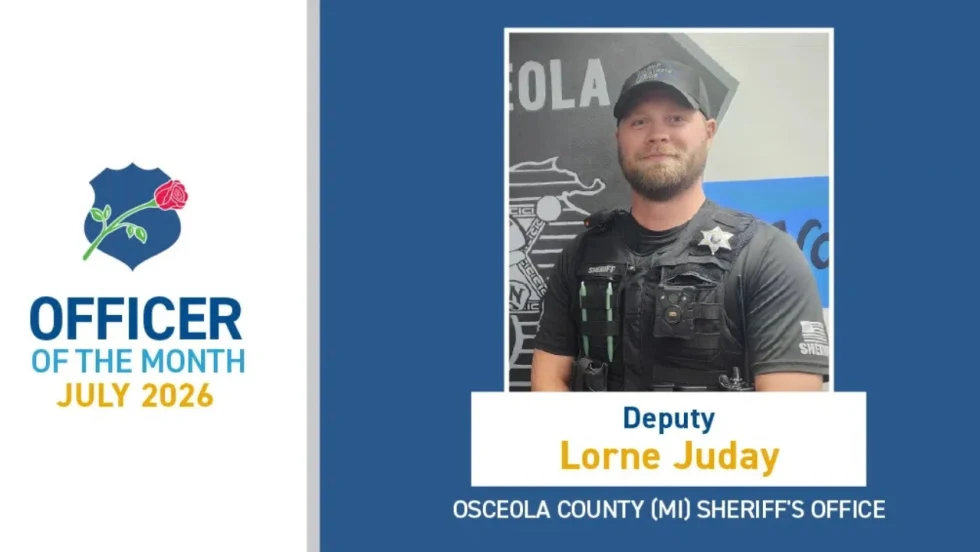
NLEOMF Announces July 2026 Officer of the Month
NLEOMF honored a Michigan deputy sheriff as the July 2026 Officer of the Month for rescuing a trapped driver from a burning vehicle following a Fourth of July crash.
Read More →
Streamlight to Showcase Newest Lighting Products at National Safety Council’s Safety Congress & Expo 2026
Streamlight will showcase its latest lights, including the Portable Scene Light III and the LiteBox 1Million, at the 2026 National Safety Council (NSC) Safety Congress & Expo.
Read More →
The 2027 World Police & Fire Games Set for Perth, Australia
The 2027 World Police & Fire Games (WPFG) will take place in Perth, Western Australia, from Friday, March 12 through Sunday, March 21, 2027.
Read More →
5.11 Partners with National Fallen Firefighters Foundation to Support #ForThe343
5.11 has joined the nationwide movement honoring the 343 New York City Fire Department firefighters lost on Sept. 11, 2001.
Read More →
Team Wendy Announces Title Sponsorship of the Jorge Pastore Foundation
Team Wendy’s 3-year partnership with the Jorge Pastore Foundation expands access to programs that strengthen those who serve.
Read More →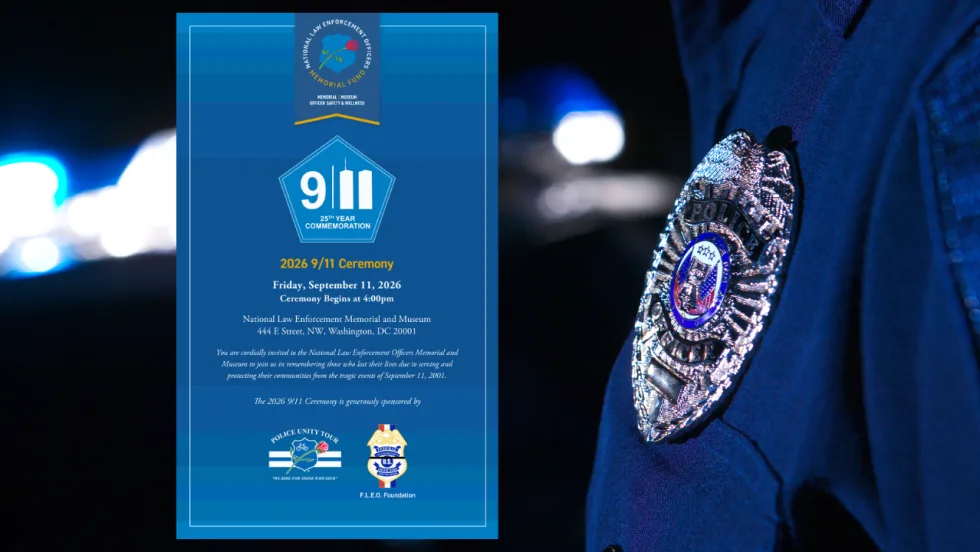
National Law Enforcement Memorial and Museum Hosting 9/11 25th-Year Commemoration Ceremony
The National Law Enforcement Memorial and Museum is hosting a 9/11 25th Year Commemoration Ceremony on Sept. 11 at 4 p.m.
Read More →