



In-Home Arrest Searches
With reasonable suspicion that someone on the premises might endanger officers during the arrest or as they departed, officers could conduct a "protective sweep" of the entire premises, looking only into areas where a person could be concealed.

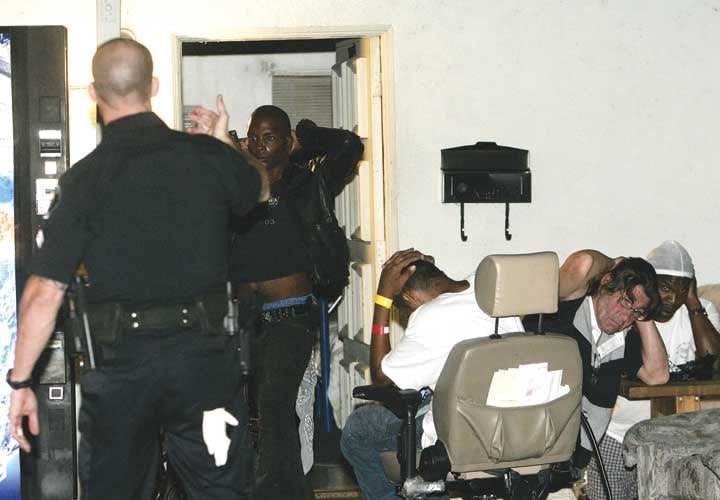
Incident to arrest, police can search the areas of an arrestee's home within his or her immediate control.
In Chimel v. California, the U.S. Supreme Court ruled that the scope of search incident to the arrest of an occupant in a residence includes both the person of the arrestee and "the area within his immediate control." This area was defined as the immediately surrounding area into which the person could reach or lunge, in order to obtain weapons, destructible evidence, or the means of escape.
Later, in Maryland v. Buie, the court created two additional options for protective searches incident to in-home arrests. Without any suspicion that anyone dangerous was hiding on the premises, arresting officers could nevertheless look into immediately adjoining spaces large enough to conceal a potential assailant, from which an attack could be immediately launched.
With reasonable suspicion that someone on the premises might endanger officers during the arrest or as they departed, officers could conduct a "protective sweep" of the entire premises, again looking only into areas where a person could be concealed.
Contraband or evidence seen in plain view during either of these protective searches could be lawfully seized. (See the full discussion of Buie in the November 2005 issue of POLICE.)
State and federal appellate courts have encountered a variety of fact patterns raising issues of the proper application of the first Buie rule in situations where it isn't clear whether the suspect was arrested entirely within one room, or whether a particular space was "immediately adjoining" the place of arrest. In most cases, the courts have upheld the reasonableness of justifiable protective searches, as long as officers have not turned them into full-blown hunts for incriminating evidence.
U.S. v. Lemus
Officers in Calexico, Calif., had an arrest warrant for Juan Lemus. They set up near his apartment house and waited for him to come home, approaching him as he arrived on foot and walked toward the front door to his apartment. Lemus was arrested just as he stepped one foot inside the living room of his apartment. Officers then checked inside to make sure no one was waiting there. Sticking out from beneath a cushion on the couch in plain view was a handgun, which officers seized. Lemus, a convicted felon who could not lawfully possess any firearm, moved to suppress the gun on the ground that since he was not fully inside his apartment when arrested, officers had no right to enter and search.
The Ninth Circuit Court of Appeals ruled that the entry and search were reasonable and the gun was lawfully seized. The court said this: "Lemus was only partially outside the living room when he was arrested. His living room not only immediately adjoined the area of arrest, but was a place from which an attack could be immediately launched. When Lemus opened the door, he not only gave himself access to the living room but exposed the officers to anyone lying in wait inside. Under Buie, the officers were permitted to search the room without reasonable suspicion to believe that an attacker lay in ambush."
Peals v. Terre Haute
Terre Haute, Ind., officers went to the home of Robert Peals to arrest him on a warrant. Peals was in his open garage when police arrived, and he was taken into custody there. An officer then went through the doorway and into the attached house, looking to see if anyone else was present. Peals later sued the officers and their department, claiming the entry into his home violated his Fourth Amendment rights.
The Seventh Circuit Court of Appeals affirmed dismissal of the lawsuit, finding that the officer's entry into the residence, which was attached to the garage, was allowable under Buie. Said the court, "The officers visually inspected the area in which Mr. Peals was arrested and entered an immediately adjoining space in which other persons might be located and from which they could launch an attack. Even without a reasonable suspicion, the undisputed facts show that the search conducted by the officers was reasonable as a protective search."
U.S. v. Charles
Officers from the Broussard (La.) Police Department followed a tip that narcotics were being kept in a public storage unit, where their K-9 alerted. During surveillance, the officers saw the renter of the storage unit, Bernard Charles, go back and forth Between the unit and his nearby vehicle. They moved in and arrested Charles just outside the open unit, and then officers stepped inside the storage space, where they made observations that served as the basis for a subsequent search warrant. Searching officers recovered a firearm, silencer, cocaine, and currency. Charles moved to suppress the evidence as the fruit of an illegal entry and search.
The federal district court denied suppression, and the Fifth Circuit Court of Appeals affirmed this ruling. In the appellate decision, the court said this: "Charles asserts that because he was arrested outside of the storage unit, no area inside the unit was within his immediate control at the time of arrest. Charles fails to recognize, however, that under Maryland v. Buie, the officer's cursory sweep of the unit immediately adjacent to the site of the arrest was permissible, even without reasonable suspicion, because the officer's survey of the storage unit was based on his concern that another individual might be there."
U.S. v. Thomas
U.S. Marshals served a federal arrest warrant on parolee Anthony Thomas at his apartment in Washington DC. The configuration of the apartment was such that the front door opened into a hallway, and all other rooms of the apartment also opened off of this hallway. After Thomas was apprehended in the hallway, officers entered the remaining rooms as a protective measure and saw a firearm and ammunition on a closet shelf in the bedroom. Thomas was subsequently prosecuted for being a convicted felon in possession of a firearm. He sought suppression, claiming that officers exceeded the scope of a protective search by going into every room in his apartment after arresting him inside the front door.
The DC Circuit Court of Appeals denied suppression. Said the court, "Although Thomas was arrested in the hallway immediately inside his front door, every room swept could be immediately accessed from the hallway. If an apartment is small enough that all of it immediately adjoins the place of arrest and all of it constitutes a space or spaces from which an attack could be immediately launched, then the entire apartment is subject to a limited sweep of spaces where a person may be found."
Summary
As these representative cases illustrate, briefly stepping inside adjoining rooms or opening the doors to adjacent closets or other spaces and looking inside to ensure that no potential assailant is lurking there is a legitimate protective search incident to an in-home arrest.
Under the second Buie rule, however, going beyond adjacent rooms and spaces to sweep the entire premises from upper floors to basement requires officers to articulate in their reports and in their testimony a reasonable suspicion that a potential assailant was present (examples: after a chase, a fleeing suspect who ran inside remains unaccounted for; or suspicious noises are heard inside though an arrestee claims no one else is home).
Devallis Rutledge is a former police officer and veteran prosecutor who serves as Special Counsel to the Los Angeles County District Attorney. His twelfth book, "Investigative Constitutional Law," is now available.
More Patrol

The First Responders Children’s Foundation National First Responders Day Roll Call of Heroes Ceremony Returns to Times Square, NYC
First Responders Children’s Foundation (FRCF), in collaboration with T-Mobile, will host the Roll Call of Heroes ceremony in Times Square to commemorate National First Responders Day on Wednesday, Oct. 28. During the event, FRCF will present 18 Hero Awards.
Read More →
Streamlight to Showcase Newest Lighting Products for Law Enforcement Professionals at IACP 2026
Streamlight will showcase its newest lights for law enforcement at the International Association of Chiefs of Police Annual Conference & Expo. Featured lights will include the TLR-3 X, the PolyTac 1X, and more.
Read More →
Streamlight Portable Scene Light III Wins 2026 OH&S New Product of the Year Award
Streamlight’s Portable Scene Light III has won the 2026 Occupational Health & Safety (OH&S) New Product of the Year Award in the Lighting category.
Read More →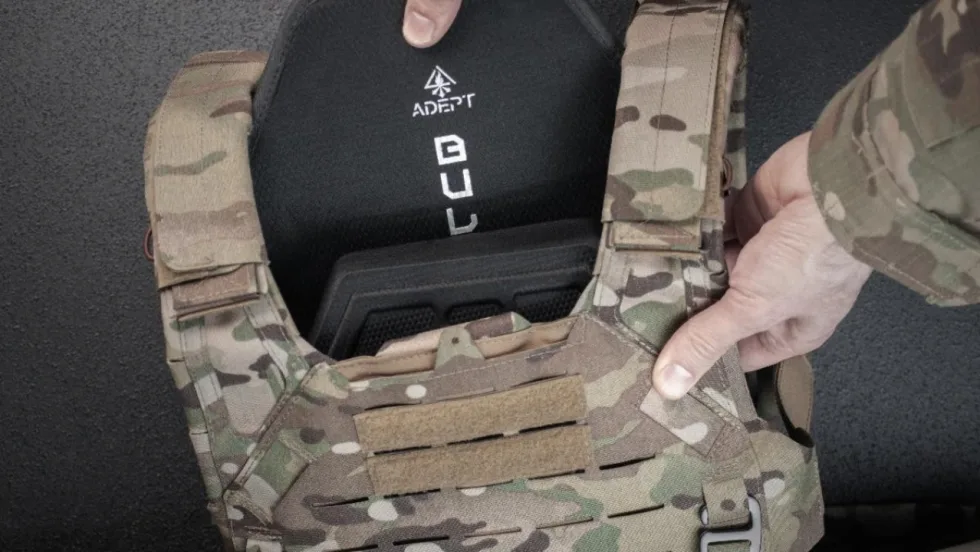
Adept Armor Introduces Two New Rifle Plates
Adept Armor has launched two new Level IV ballistic plates, the Emperor and the Archon Mark 2, which brings Adept Armor’s new Quatroid ceramic to the high-threat, performance-value center of the range at 5.2 pounds.
Read More →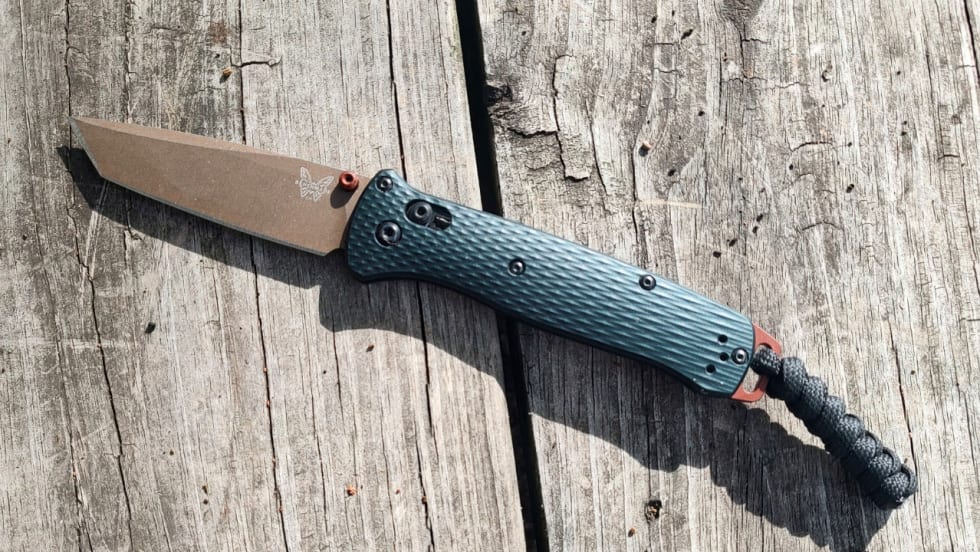
POLICE Product Test: Benchmade Bailout
The Benchmade Bailout is a slim, lightweight carry knife with a deep-ride pocket clip and comes in a variety of blade steels and scales. Here is a detailed review of the Taiga Green Bailout, released earlier this year.
Read More →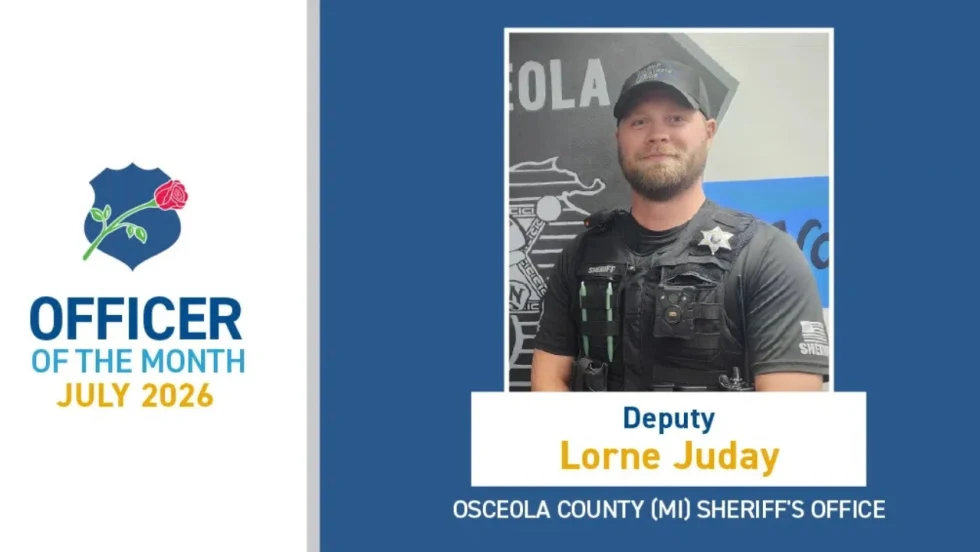
NLEOMF Announces July 2026 Officer of the Month
NLEOMF honored a Michigan deputy sheriff as the July 2026 Officer of the Month for rescuing a trapped driver from a burning vehicle following a Fourth of July crash.
Read More →
Streamlight to Showcase Newest Lighting Products at National Safety Council’s Safety Congress & Expo 2026
Streamlight will showcase its latest lights, including the Portable Scene Light III and the LiteBox 1Million, at the 2026 National Safety Council (NSC) Safety Congress & Expo.
Read More →
The 2027 World Police & Fire Games Set for Perth, Australia
The 2027 World Police & Fire Games (WPFG) will take place in Perth, Western Australia, from Friday, March 12 through Sunday, March 21, 2027.
Read More →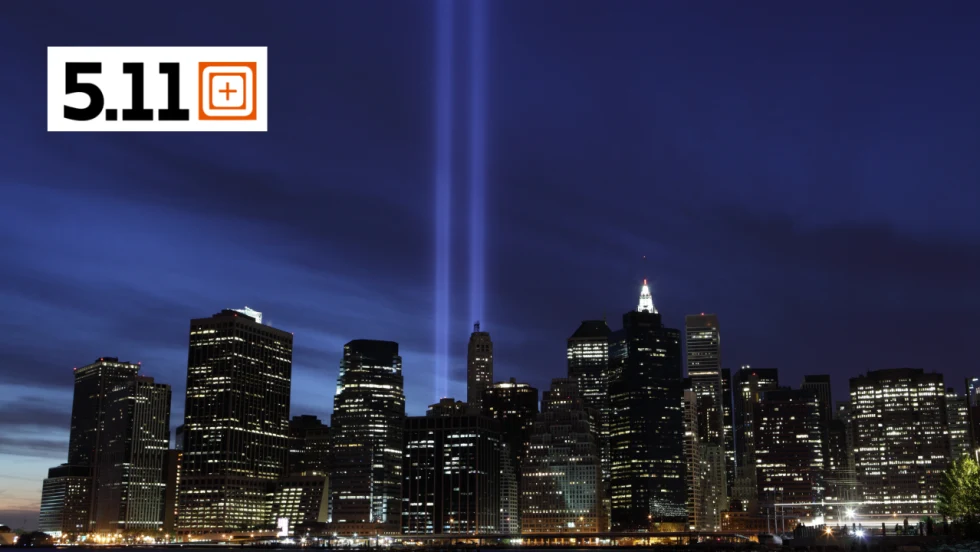
5.11 Partners with National Fallen Firefighters Foundation to Support #ForThe343
5.11 has joined the nationwide movement honoring the 343 New York City Fire Department firefighters lost on Sept. 11, 2001.
Read More →
Team Wendy Announces Title Sponsorship of the Jorge Pastore Foundation
Team Wendy’s 3-year partnership with the Jorge Pastore Foundation expands access to programs that strengthen those who serve.
Read More →