



Pensions: Winning Hearts and Minds
Some citizens are quick to blame police officers themselves for pension funding issues, not understanding the underlying causes. This is why the prospect of citizens who are uninformed or misinformed voting on pension issues is worrisome.

Some citizens are quick to blame police officers themselves for pension funding issues, not understanding the underlying causes. This is why the prospect of citizens who are uninformed or misinformed voting on pension issues is worrisome.
Paul M. Weber, the president of the Los Angeles Police Protective League, thinks voters should be the ones to make such decisions … if they're properly informed. But many are not. And that's often because of aggressive campaigns from very vocal groups.
For example, in Illinois and Texas, groups such as The Civic Federation and Americans for Prosperity have spent money on radio and television commercials to convince the voting public that those in public safety should not receive pensions, or that their benefits should be reduced.
"Typically it's claimed that public pension funds are the cause of all of the economic problems that a city or state are experiencing. We know that's not the case, but if you listen to some of the radio commercials and TV spots in Illinois, that's what they imply," says Sean Smoot, director and legal counsel for the Police Benevolent and Protective Association of Illinois.
Such negative and misleading PR also concerns Jim Pasco, executive director of the national Fraternal Order of Police. "They didn't enter into a contract with the voters. They entered into a contract on behalf of the voters," says Pasco. "They were their agents. They entered into it. And now they're trying to get their constituents to get them out of it, to pull them out of the hole they dug for themselves."
But the fact remains that voters do often have a say in whether a change to a pension fund is accepted. And public employees risk losing their ability to weigh in themselves. In Wisconsin, collective bargaining rights on benefits haven't been taken away from police officers and firefighters yet. But other government workers have already lost that right, and public safety could be next. Not that unions will go quietly.
"We will never cave in on any of these issues," assures Pasco. "The FOP will be 100 years old in 2015. A century of labor progress won't go away in one or two years because a few demagogues have been elected around the country. We won't let it happen."
Working from the grassroots approach, the Website Truth About Pensions was started by the Jacksonville Association of Fire Fighters to set the record straight on how the Jacksonville Police and Fire Pension Fund has been mismanaged for years. One quote on the site tries to get across the position public employees find themselves in, losing benefits although they've done no wrong and have no recourse: "If politicians mismanage money, they raise taxes. If pension trustees mismanage money, they go to jail."
Another hot button issue for voters is so-called "double dipping." The idea that a police officer can retire and then take on a second job while collecting a pension rubs some people the wrong way. The same term is often also used to refer to the Deferred Retirement Option Plan (DROP) system used by LAPD. Officers can stay on in their positions and receive a salary for up to five years after they have technically "retired." Their pension is on hold and accruing interest for the fund until they actually leave the job after having passed on their skill set to another officer who can carry on that knowledge.
"It's a headline risk, but if you actually think about it, it's not a big deal," says Hank Kim, executive director of pension trade association the National Conference on Public Employee Retirement Systems. "As long as they've paid into that pension system, and they deserve what they get from the pension system, what does it matter if they're still working?"
With so much rhetoric surrounding talk about pension funds, it's no wonder citizens are confused. Sifting through the information available is difficult and time-consuming, and sometimes only the loudest voices are heard. But that doesn't mean they can't see the light, even after being bombarded with negative commercials. Smoot's organization educated citizens about pension issues and then conducted a poll of Illinois residents who had heard many commercials demonizing public pensions.
"When the public comes to understand that police officers pay a very significant portion of their wages toward their retirement benefits, and police officers are not covered by Social Security, they are really very supportive of a continuation of the defined benefit plans that are the industry standard in law enforcement," says Smoot.
That's why it's important to be aware of the political climate in your area regarding pensions and to do what you can to set matters straight. You might even want to become actively involved by serving on your pension board as a trustee. Convincing people of the importance of defined benefit plans for law enforcement and the community at large could even help save your pension benefits.
Related:
More Patrol

Streamlight Portable Scene Light III Wins 2026 OH&S New Product of the Year Award
Streamlight’s Portable Scene Light III has won the 2026 Occupational Health & Safety (OH&S) New Product of the Year Award in the Lighting category.
Read More →
Adept Armor Introduces Two New Rifle Plates
Adept Armor has launched two new Level IV ballistic plates, the Emperor and the Archon Mark 2, which brings Adept Armor’s new Quatroid ceramic to the high-threat, performance-value center of the range at 5.2 pounds.
Read More →
POLICE Product Test: Benchmade Bailout
The Benchmade Bailout is a slim, lightweight carry knife with a deep-ride pocket clip and comes in a variety of blade steels and scales. Here is a detailed review of the Taiga Green Bailout, released earlier this year.
Read More →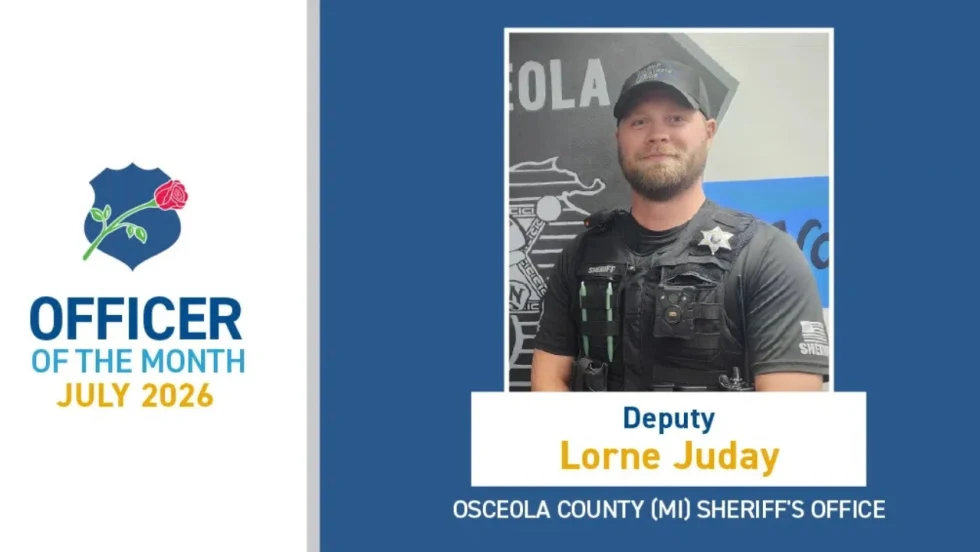
NLEOMF Announces July 2026 Officer of the Month
NLEOMF honored a Michigan deputy sheriff as the July 2026 Officer of the Month for rescuing a trapped driver from a burning vehicle following a Fourth of July crash.
Read More →
Streamlight to Showcase Newest Lighting Products at National Safety Council’s Safety Congress & Expo 2026
Streamlight will showcase its latest lights, including the Portable Scene Light III and the LiteBox 1Million, at the 2026 National Safety Council (NSC) Safety Congress & Expo.
Read More →
The 2027 World Police & Fire Games Set for Perth, Australia
The 2027 World Police & Fire Games (WPFG) will take place in Perth, Western Australia, from Friday, March 12 through Sunday, March 21, 2027.
Read More →
5.11 Partners with National Fallen Firefighters Foundation to Support #ForThe343
5.11 has joined the nationwide movement honoring the 343 New York City Fire Department firefighters lost on Sept. 11, 2001.
Read More →
Team Wendy Announces Title Sponsorship of the Jorge Pastore Foundation
Team Wendy’s 3-year partnership with the Jorge Pastore Foundation expands access to programs that strengthen those who serve.
Read More →
National Law Enforcement Memorial and Museum Hosting 9/11 25th-Year Commemoration Ceremony
The National Law Enforcement Memorial and Museum is hosting a 9/11 25th Year Commemoration Ceremony on Sept. 11 at 4 p.m.
Read More →
National Law Enforcement Officers Memorial Fund Announces June 2026 Officers of the Month
The National Law Enforcement Officers Memorial Fund (NLEOMF) named 15 officers of the Chico Police Department (California) as the Officers of the Month for June 2026 for their roles in responding to an active-shooter incident at a public library.
Read More →