



Four Famous Cases
The decade of the 1960s gave us four of the most significant cases that apply to our daily work: Mapp, Brady, Miranda, and Terry. These four are among the most prominent criminal law cases you should know more about to understand how we got to where we are.

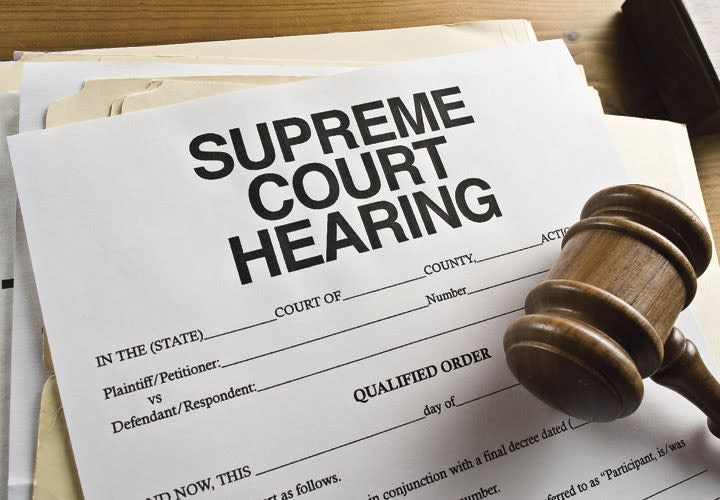
The decade of the 1960s gave us four of the most significant cases that apply to our daily work: Mapp, Brady, Miranda, and Terry. These four are among the most prominent criminal law cases you should know more about to understand how we got to where we are. In the official reports, these cases stretch to a combined total of 206 pages. Here are summaries of the facts and holdings, in just two pages.
Mapp v. Ohio, 1961
Dollree Mapp lived in a second-floor apartment in Cleveland. Police received a tip that someone wanted for questioning in a recent bombing case was hiding there. Without a search warrant, the officers went to the house and demanded entry. Mapp refused, telling the officers to get a warrant. The officers then forced entry.
During a search of the premises, officers found various items of pornography. Mapp was convicted of possession of obscene matter. She appealed to the Ohio Supreme Court, which ruled that even though it did appear the warrantless entry and search may have violated the Fourth Amendment, the federal exclusionary rule did not apply to state prosecutions. Therefore, the court affirmed the conviction. Mapp appealed to the U.S. Supreme Court.
A federal exclusionary rule had been created by the Supreme Court in the 1914 case of Weeks v. U.S., but this rule had been declared inapplicable to the states in Wolf v. Colorado, in 1949. Reversing Mapp's conviction, the U.S. Supreme Court voted 6 to 3 to overturn its own ruling in Wolf and impose the Fourth Amendment exclusionary rule on all of the states, via the Fourteenth Amendment due process clause.
In the words of the Mapp majority, "Since the Fourth Amendment's right of privacy has been declared enforceable against the States through the Due Process Clause of the Fourteenth, it is enforceable against them by the same sanction of exclusion as is used against the Federal
Government."
As a result of the ruling in Mapp, all states have procedures permitting a criminal defendant to move to suppress evidence claimed to have resulted from a violation of the Fourth Amendment. Many jurisdictions still use the terms "Mapp motion," "Mapp hearing," and "Mapp ruling" to refer to these procedures.
Brady v. Maryland, 1963
John Brady and an accomplice committed murder in the course of a robbery. The two men were tried separately. They were each convicted and sentenced to death. At Brady's trial, his attorney conceded that Brady was involved and should be convicted of murder, but maintained that he should be spared the death penalty because he wasn't the actual killer.
After the trial, Brady's lawyer learned for the first time that the accomplice had already told police he had done the killing. Brady then appealed, arguing that if this evidence had been disclosed to the defense and presented to the jury, they might have voted for life imprisonment for him instead of death. The Maryland Court of Appeals affirmed Brady's murder conviction but reversed the death sentence and remanded for a new penalty trial.
On appeal, the U.S. Supreme Court ruled 7 to 2 that Brady was indeed entitled to a new penalty trial and that the withholding of the exculpatory evidence of his accomplice's confession to being the killer denied Brady due process of law. Said the court, "We hold that the suppression by the prosecution of evidence favorable to an accused violates due process where the evidence is material either to guilt or punishment, irrespective of the good faith or bad faith of the prosecution."
This is the case that imposed on prosecutors an obligation to learn about exculpatory evidence from police and to make timely disclosure of it to the defense, to avoid "Brady error."[PAGEBREAK]
Miranda v. Arizona, 1966
Ernesto Miranda kidnapped a young woman off a Phoenix street one night, drove her into the desert, and raped her. Upon his subsequent arrest he was interrogated at the police station, where he confessed to this crime and another kidnap-robbery. Convicted and sentenced to a term of 20 to 30 years in prison, Miranda appealed to the U.S. Supreme Court, arguing that his confession should not have been admitted because his interrogators had not advised him of his right to remain silent, nor cautioned him about proceeding without an attorney.
The U.S. Supreme Court combined Miranda's case with appeals in three other cases involving the same issue. Those cases were Vignera v. New York,Westover v. U.S., and California v. Stewart. (If one of the other cases had been listed first on the docket, we might today speak of a "Vignera warning," or a "Westover warning" or a "Stewart warning.")
The Miranda court ruled 5 to 4 that confessions obtained by custodial police interrogation are "presumptively compelled." Since the Fifth Amendment forbids the evidentiary use of compelled self-incrimination, such statements may not be used to prove guilt at trial. To dispel the inherent compulsion of custodial police interrogation and rebut the presumption of inadmissibility, officers must recite the now-familiar warning, ensure that the suspect understands his or her rights, and take a statement after the suspect gives either an express or implied waiver.
The precise holding of the 110-page decision is this: "The prosecution may not use statements stemming from custodial interrogation unless it demonstrates the use of procedural safeguards effective to secure the privilege against [compelled] self-incrimination."
After release from prison, Miranda was murdered by a man who was Mirandized and then invoked his "Miranda rights." Lacking a confession, the prosecutor declined to file charges. Ironically, as a result of a Miranda warning and invocation, no one has ever been prosecuted for Miranda's murder.
Terry v. Ohio, 1968
Cleveland Police detective Martin McFadden, a 39-year veteran, saw John Terry and two other men casing a downtown store for a robbery. After watching their suspicious movements for 10 to 12 minutes, he detained the men and frisked their outer clothing. Terry and one of the other men were carrying concealed handguns. Terry unsuccessfully moved to suppress his gun, and he was convicted at trial. A series of unsuccessful appeals took him to the U.S. Supreme Court.
By vote of 8 to 1, the court upheld both the detention and the weapons frisk. For the first time, the Supreme Court identified a lower level of justification for these steps than the "probable cause" standard that usually applies to arrests and searches. Both the detention and the frisk are reasonable, said the court, "where a police officer observes unusual conduct which leads him reasonably to conclude in light of his experience that criminal activity may be afoot and that the persons with whom he is dealing may be armed and presently dangerous."
More than 40 years later, a temporary detention is still commonly called a "Terry stop," and a weapons frisk a "Terry search."
Note that each of the two distinct Fourth Amendment activities—the detention and the frisk—must be separately justified by "reasonable suspicion," which might or might not be based on the same facts, as they happened to be in Terry. It is not the law that anyone who can lawfully be stopped can automatically be frisked.
Devallis Rutledge is a former police officer and veteran prosecutor who currently serves as special counsel to the Los Angeles County district attorney. He is the author of 12 books, including "Investigative Constitutional Law."
More Patrol

Streamlight Portable Scene Light III Wins 2026 OH&S New Product of the Year Award
Streamlight’s Portable Scene Light III has won the 2026 Occupational Health & Safety (OH&S) New Product of the Year Award in the Lighting category.
Read More →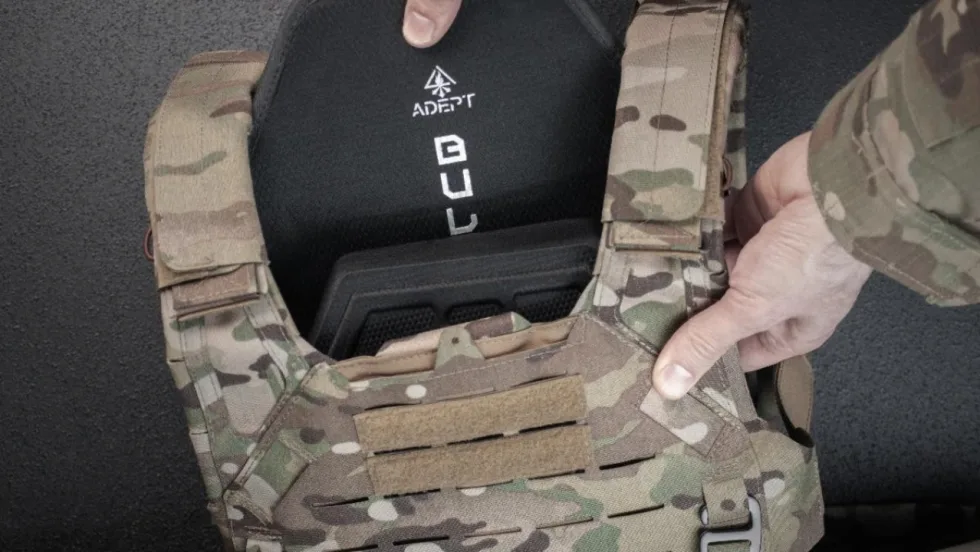
Adept Armor Introduces Two New Rifle Plates
Adept Armor has launched two new Level IV ballistic plates, the Emperor and the Archon Mark 2, which brings Adept Armor’s new Quatroid ceramic to the high-threat, performance-value center of the range at 5.2 pounds.
Read More →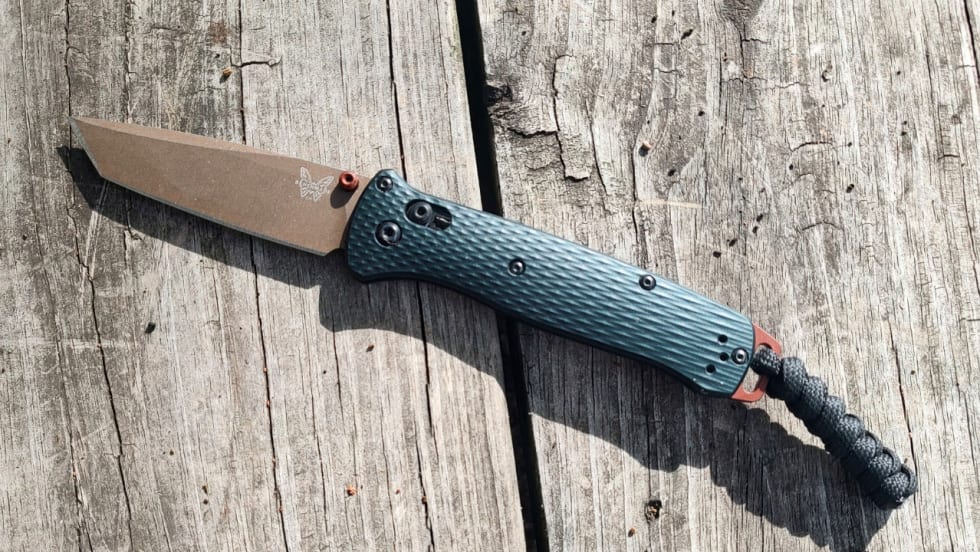
POLICE Product Test: Benchmade Bailout
The Benchmade Bailout is a slim, lightweight carry knife with a deep-ride pocket clip and comes in a variety of blade steels and scales. Here is a detailed review of the Taiga Green Bailout, released earlier this year.
Read More →
NLEOMF Announces July 2026 Officer of the Month
NLEOMF honored a Michigan deputy sheriff as the July 2026 Officer of the Month for rescuing a trapped driver from a burning vehicle following a Fourth of July crash.
Read More →
Streamlight to Showcase Newest Lighting Products at National Safety Council’s Safety Congress & Expo 2026
Streamlight will showcase its latest lights, including the Portable Scene Light III and the LiteBox 1Million, at the 2026 National Safety Council (NSC) Safety Congress & Expo.
Read More →
The 2027 World Police & Fire Games Set for Perth, Australia
The 2027 World Police & Fire Games (WPFG) will take place in Perth, Western Australia, from Friday, March 12 through Sunday, March 21, 2027.
Read More →
5.11 Partners with National Fallen Firefighters Foundation to Support #ForThe343
5.11 has joined the nationwide movement honoring the 343 New York City Fire Department firefighters lost on Sept. 11, 2001.
Read More →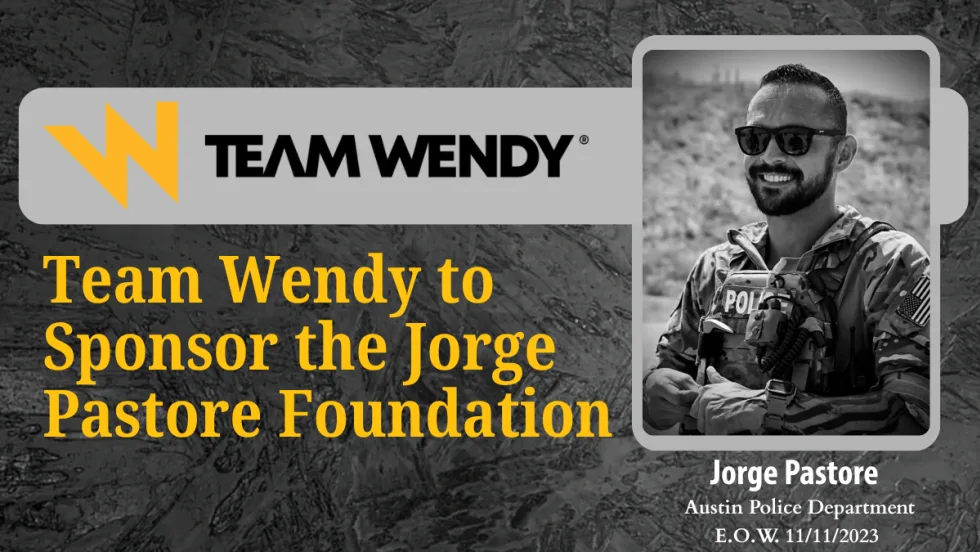
Team Wendy Announces Title Sponsorship of the Jorge Pastore Foundation
Team Wendy’s 3-year partnership with the Jorge Pastore Foundation expands access to programs that strengthen those who serve.
Read More →
National Law Enforcement Memorial and Museum Hosting 9/11 25th-Year Commemoration Ceremony
The National Law Enforcement Memorial and Museum is hosting a 9/11 25th Year Commemoration Ceremony on Sept. 11 at 4 p.m.
Read More →
National Law Enforcement Officers Memorial Fund Announces June 2026 Officers of the Month
The National Law Enforcement Officers Memorial Fund (NLEOMF) named 15 officers of the Chico Police Department (California) as the Officers of the Month for June 2026 for their roles in responding to an active-shooter incident at a public library.
Read More →