



Positive Negativism
Optimism is a sense of control in your life, the belief that you can control your destiny and your emotions, and that if you continue to strive you can create positive outcomes.


Illustration: Sequoia Blankenship
OK, OK, I know the title of this little column doesn't seem logical but bear with me as I flesh out an idea that seems to be misunderstood a great deal of the time. I have long been an advocate of optimism for law enforcement officers, to give them an edge in nearly every aspect of life including deadly confrontations. Unfortunately there is a widespread misunderstanding of the word optimism.
Too many folks think optimism means happiness; no, happiness is a transitory emotion like sadness or laughter. Optimism is a sense of control in your life, the belief that you can control your destiny and your emotions, and that if you continue to strive you can create positive outcomes. As Martin Seligman, PhD, wrote in "Learned Optimism," the difference between optimists and pessimists is the way they explain to themselves what is happening to them and what they should do about it.
Pessimists see their destiny and lives as out of their control, guided by fate or luck or "others," and that is how they "explain" events in their lives. "I seem to always have bad luck," is the common refrain of the pessimist, while the optimist explains a bad event with such words as, "Sometimes you're the windshield and sometimes you're the bug." They move on and grow from the experience, proving Nietzsche was at least right about one thing: That which doesn't kill us makes us stronger.
Optimists know if they are to control their destiny they need to put in the time and effort to create the greatest chance for a positive outcome in whatever challenge they may face. Got a new holster with a different draw pattern than the one before? Don't complain that the agency didn't give you time at work to do enough repetitions to make drawing from this new tool a habit; spend your own time doing rapid draw exercises from traditional positions as well as nontraditional ones, like lying on your back or sitting behind the wheel, until you can draw without any conscious thought whatsoever.
Optimists control the things they can and plan for the things they can't. For instance, you can't control a bad guy suddenly assaulting you. You can control how you stand, your reactionary gap, where your hands are held when talking to a subject, as well as your fitness and training level. This is the key difference between pessimists and optimists: Pessimists hope for the best, optimists train for the best.
From time to time I have had trainees ask me, why if I teach optimism do I teach them to visualize terrible events? I explain that true optimists don't avoid negative thoughts; they embrace them and use them to prepare to overcome the bad event.
I don't know if you are going to be in a shooting confrontation in the next week or not and neither do you. You don't control that. You do control whether or not you sit down, do your tactical breathing, and imagine yourself winning a sudden ambush. Terrible events happen to both optimists and pessimists, and just thinking "joy, joy happy thoughts" doesn't prepare either for these crises.
While the pessimist often spends a great deal of time worrying, which is negative visualization (actually practicing a bad event), the optimist mentally confronts the problem and sees him- or herself resolving the situation and creating a positive outcome.
Seriously, don't let negative ideas fester in your mind; face them, resolve them, and end them. Understand that your mind isn't an optimizer; it will project whatever kind of future you program it for, so make your future projections positive. Use negative ideas to make yourself more resilient, to harden the target so to speak. Worried about getting shot? Take a tactical medical course and then do your crisis rehearsal where you see yourself getting shot, taking action, winning the fight, and then giving yourself self-aid. Then see yourself healing and getting well and strong again.
If you just worry about getting shot you stand a good chance of panicking or giving up, and that greatly diminishes your odds of survival. Wow, pretty negative thought, right? Not if you turn it around! Use negative images to create positive outcomes, to prepare yourself for whatever may get thrown at you. That is the mark of a true optimist.
Dave Smith is an internationally recognized law enforcement trainer and is the creator of "J.D. Buck Savage." You can follow Buck on Twitter at @thebucksavage.
More Patrol
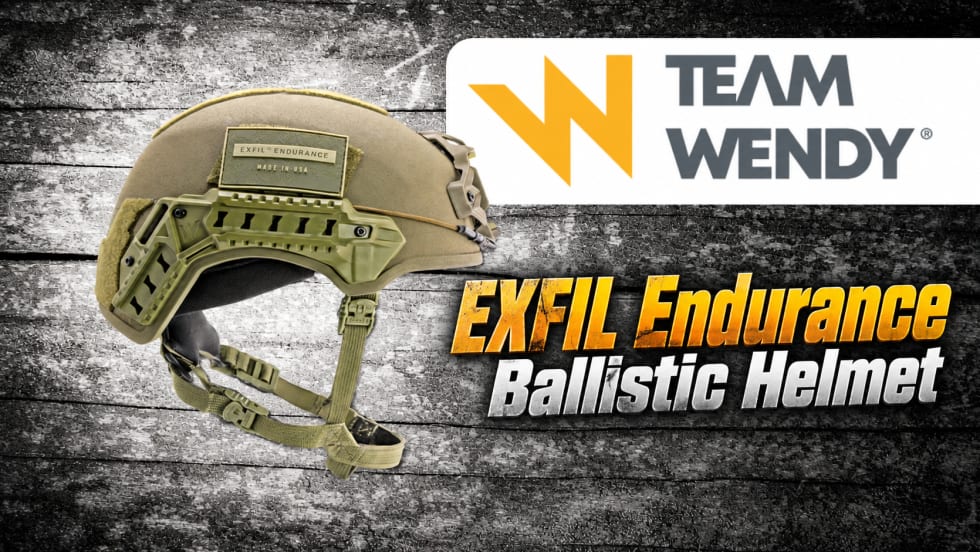
Team Wendy Introduces the EXFIL Endurance Ballistic Helmet, Engineered to Reduce the Burden of Extended Wear
Team Wendy has launched its EXFIL Endurance, a new lightweight ballistic helmet engineered to deliver protection, comfort, and fit during demanding, extended operations.
Read More →
The First Responders Children’s Foundation National First Responders Day Roll Call of Heroes Ceremony Returns to Times Square, NYC
First Responders Children’s Foundation (FRCF), in collaboration with T-Mobile, will host the Roll Call of Heroes ceremony in Times Square to commemorate National First Responders Day on Wednesday, Oct. 28. During the event, FRCF will present 18 Hero Awards.
Read More →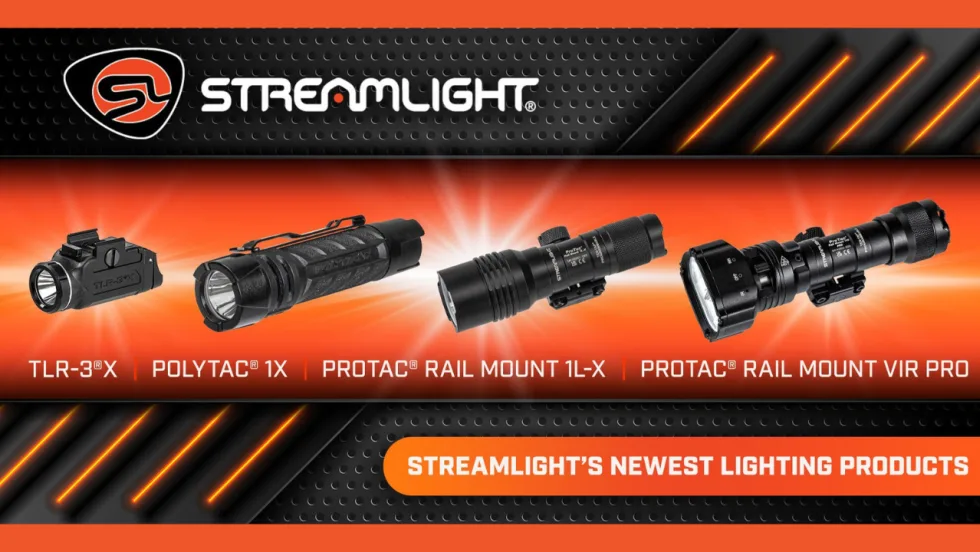
Streamlight to Showcase Newest Lighting Products for Law Enforcement Professionals at IACP 2026
Streamlight will showcase its newest lights for law enforcement at the International Association of Chiefs of Police Annual Conference & Expo. Featured lights will include the TLR-3 X, the PolyTac 1X, and more.
Read More →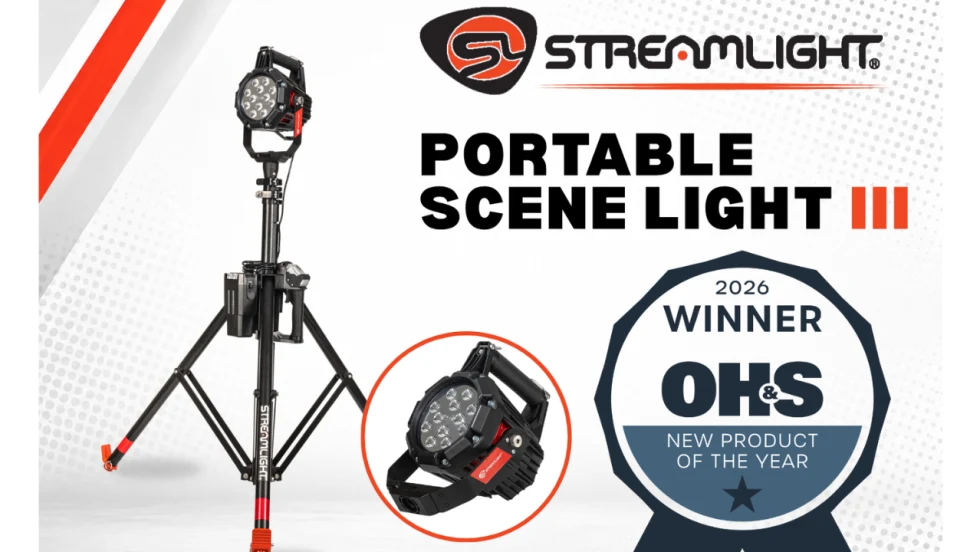
Streamlight Portable Scene Light III Wins 2026 OH&S New Product of the Year Award
Streamlight’s Portable Scene Light III has won the 2026 Occupational Health & Safety (OH&S) New Product of the Year Award in the Lighting category.
Read More →
Adept Armor Introduces Two New Rifle Plates
Adept Armor has launched two new Level IV ballistic plates, the Emperor and the Archon Mark 2, which brings Adept Armor’s new Quatroid ceramic to the high-threat, performance-value center of the range at 5.2 pounds.
Read More →
POLICE Product Test: Benchmade Bailout
The Benchmade Bailout is a slim, lightweight carry knife with a deep-ride pocket clip and comes in a variety of blade steels and scales. Here is a detailed review of the Taiga Green Bailout, released earlier this year.
Read More →
NLEOMF Announces July 2026 Officer of the Month
NLEOMF honored a Michigan deputy sheriff as the July 2026 Officer of the Month for rescuing a trapped driver from a burning vehicle following a Fourth of July crash.
Read More →
Streamlight to Showcase Newest Lighting Products at National Safety Council’s Safety Congress & Expo 2026
Streamlight will showcase its latest lights, including the Portable Scene Light III and the LiteBox 1Million, at the 2026 National Safety Council (NSC) Safety Congress & Expo.
Read More →
The 2027 World Police & Fire Games Set for Perth, Australia
The 2027 World Police & Fire Games (WPFG) will take place in Perth, Western Australia, from Friday, March 12 through Sunday, March 21, 2027.
Read More →
5.11 Partners with National Fallen Firefighters Foundation to Support #ForThe343
5.11 has joined the nationwide movement honoring the 343 New York City Fire Department firefighters lost on Sept. 11, 2001.
Read More →