



A Revolution in Use-of-Force Policy and Training?
A battle is brewing among law enforcement leadership organizations about whether and how to change police use-of-force policy and training to be kinder and gentler.

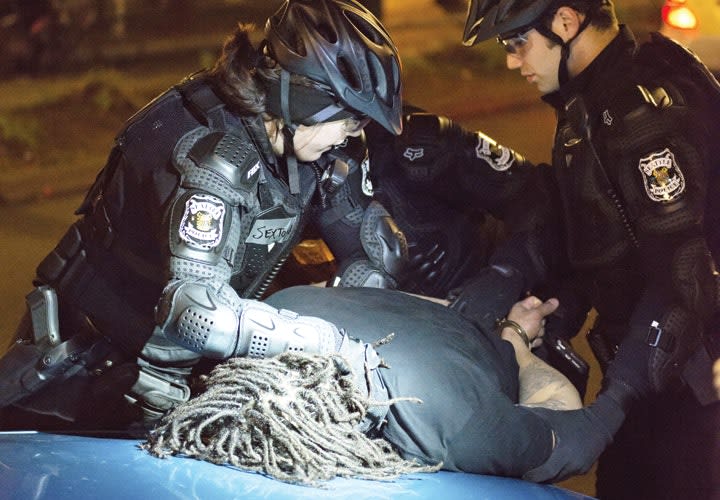
Photo: iStockphoto.com
A battle is brewing among law enforcement leadership organizations about whether and how to change police use-of-force policy and training to be kinder and gentler. As the public, the media, and law enforcement professionals grapple with the persistent post-Ferguson issues, you on the street are surely scratching your heads.
In January, the Police Executive Research Forum (PERF), a Washington, D.C.-based think tank, weighed in with "30 Guiding Principles" at its meeting titled, "Use of Force: Taking Policing to a Higher Standard." These guidelines for use of force and use-of-force training sparked a lot of conversation among officers and those who believe officers have a tendency to use too much force.
"There is a real mismatch between what community standards are, what the community expects, what they think the law should be, versus what the training and the law allows for," Vanita Gupta, the Department of Justice's assistant attorney general for civil rights, told the Washington Post. Gupta said a national conversation about police objective reasonableness was potentially "revolutionary."
PERF Executive Director Chuck Wexler wrote in an e-mail to all PERF members: "In short, PERF's members are telling us that we need to take use-of-force policies and training to a higher standard than what is currently required by the court system. The Supreme Court's landmark ruling from 1989 in Graham v. Connor provides guidance on when police officers are allowed to use deadly force, but it doesn't provide guidance on how to avoid use of deadly force. In certain types of situations that occur thousands of times a year, police are confronted with persons wielding knives, rocks, or other weapons—not guns. In these cases, we are asking police departments to begin rethinking strategies and equipping officers with the appropriate training and tactics to defuse these potentially volatile encounters, in a way that ensures that both the officers and those they are dealing with may survive the encounter."
Some of the research that was used as the foundation of the PERF guidelines resulted from a trip to Scotland by several U.S. law enforcement leaders, to see how business is done over there. Scotland doesn't have a gun-crime problem, but they confront a lot of knives.
As if on cue, within 24 hours two police officers (one with the New York Police Department and one with the California Highway Patrol) were attacked and wounded by knife-wielding suspects.
The Wrong Track
No doubt some (perhaps many) PERF members agree with the organization's 30 Guiding Principles. But not everyone agrees with all of them. As a longtime PERF member and also a longtime member of the International Association of Chiefs of Police (IACP), I and quite a few other PERF and IACP members I've spoken with do not necessarily think PERF is on the right track with some of its specific recommendations.
Here are a few comments I received in early February from police chiefs, trainers, and use-of-force experts:
"Why should my safety not be more important than anyone else's?"
"A smart cop reading through this bulls--- will salute smartly, smile, promise compliance, and then go out and do nothing, or as close to nothing as he can do without being fired or ruining his career."
"I agree with the stated concern of how to 'raise the standard' and still have a consistent standard that officers can understand… But I don't know how you change the standard for fast-moving situations where the officer is faced with a quick, threatening movement, even when the perceived threat turns out not to be a threat."
"I was sorry to see PERF not address training in basic skills."
"Much of the material is good, but it lacks that practical side that only comes from spirited, well-rounded, and educated debate."
Dissenting Views
The IACP quickly responded to PERF in an e-mail to its membership: "[T]he IACP is extremely concerned about calls to require law enforcement agencies to unilaterally, and haphazardly, establish use-of-force guidelines that exceed the "objectively reasonable" standard set forth by the U.S. Supreme Court nearly 30 years ago (Graham v. Connor). The creation of a multitude of differing policies and use-of-force standards throughout the United States would, undoubtedly, lead to both confusion and hesitation on behalf of law enforcement officers, which in turn would threaten both their safety and that of the citizens they are sworn to protect… As we move forward in examining law enforcement's policies and training procedures regarding use of force it is imperative that any reforms be carefully researched and evidence-based."
The next day, the Police Foundation released an infographic titled, "When Can the Police Use Force—and What Happens When They Do?" And in related remarks, the Police Foundation wrote: "Use of force is governed by laws at the federal and local levels, and its justification is dependent on the reasonable perspective of the involved officers at the very moment force was used—not on thoughtful, retrospective examination and questioning. Articulating and explaining this information to the public is critical because these incidents bring challenging and complex considerations that are often not apparent to the public. With this infographic, the public can be better informed about when the police can use force and how police are held accountable for use-of-force situations."
The Association of Los Angeles Deputy Sheriffs (ALADS) weighed in a few days later: "'Hands up, don't shoot!' This is not a new protest group chant, but what law enforcement officers might be required to do, backing away with their hands up when confronting a violent situation… [T]he PERF proposals continue to focus all responsibility for the use of force, including deadly force, on the deputy or officer and absolve of any responsibility the suspect whose actions necessitated the use of force. In virtually every single instance of the use of force, had the suspect simply complied with the commands of law enforcement, use of force would not have been necessary."
The ALADS statement also quoted Executive Director Jim Pasco of the Fraternal Order of Police: "We don't believe that we should just move headlong based on PERF having taken a trip to Scotland, that we should just turn policing in a country, God knows how many times bigger than Scotland, totally on its head. We're not going to stand by and let police officers be sacrificed on the altar of political correctness."
Steps Too Far
There is much that is easy to support in the PERF principles. De-escalation training, slowing down incidents where circumstances allow it, intervening when another officer is over the line with use of force, thorough incident investigation and review processes, training that reflects agency values, improved training on handling the mentally ill… These are examples of items that I believe most law enforcement professionals support.
But misstatements by PERF about the so-called "21-foot rule" and misstatements about officer-involved shootings following failed TASER attempts in imminent deadly force situations make one wonder if anybody who has actually faced deadly threats was involved in the drafting of the document. Further, the 21-foot rule isn't a "rule," it's just a poor label for a reaction time experiment, and it most certainly does not mean that you always shoot a knife-holding suspect that is less than 21 feet from you.
Then there's the baffling PERF suggestion that, "If an encounter requires a use of force, officers should start at the lowest level of force that is possible and safe. Officers should never do anything to escalate a situation themselves."
Pardon me. Use of force that is safe? Established law says no use of force is "safe." In Garrett v. Athens Clarke County, 378 F.3d 1274, 1280, n.12 (11th Cir. 2004), the 11th Circuit Court of Appeals ruled: "Almost every use of force, however minute, poses some risk of death."
And officers should never escalate? Folks, when verbalization fails, you escalate. When soft-hands-on tactics fail, you escalate. And you don't fight to a draw, you fight to win, quickly, which necessarily means using more force than is being used against you.
Getting Past the Noise
All of this rancor among police organizations over use-of-force policy and guidelines comes about in a tumultuous time of increased second-guessing of officers, rising violent crime rates, prolific videos, Black Lives Matter activism, fired officers and police chiefs, criminal prosecution of officers, controversy about "de-policing," and even politicized Super Bowl half-time entertainment.
Much of the current noise surrounds the question of whether law enforcement officers should be "warriors" or "guardians." People seem to have different definitions of these terms, so we talk past each other. Someone must bridge the Warrior-Guardian definitional divide between police leaders and the police on the street. We can't have a good discussion until we are on the same definitional page.
According to the Random House Dictionary, the term "warrior" has two meanings. The first applies to the military at war. The second is applicable to policing: "The term 'warrior' is often associated with images of power, confidence, accomplishment, integrity, chivalry, honor and integrity… They are disciplined… They develop mental focus… They develop an attitude of persistence… They train."
Guardians adopt a service mindset over a crime-fighting mindset, using patience and restraint while maintaining the capability to use force when appropriate.
I happily recall that even in the tough parts of town, the majority of my incidents called for a Guardian mindset, and I'd like to think I delivered that service. Other situations called for guns or sticks or TASERs, and I'm not the one that made the call: the suspect's actions did! I also know that if my sister was taken hostage during an armed robbery, I'd want a Warrior to shoot down the thug without hesitation. And in that case, the officer would be a Guardian for my sister.
The trick is to know what type of response is called for in the moment. To know when to be kind and patient, and when to use force to protect someone. Dynamic training is what gives an officer the skills and confidence needed to turn that switch on and off. Force should be used sparingly, but when it comes it must be used effectively.
Lt. Col. David Grossman's analogy of the sheep, the wolf, and the sheepdog comes to mind. The sheepdog (you) protects the flock. When the wolf comes, the sheepdog turns on the switch and takes on the wolf.
As the use-of-force battle plays out among the various administrative combatants, please remember to follow your policy, your training, and the law. Be a Guardian, when you can. Be a Warrior, when you must. Be a Sheepdog. Be safe. Be worthy of your badge.
Greg Meyer is a retired Los Angeles Police Department captain who consults nationwide on police procedures and tactics. He is a longtime member of the POLICE advisory board.
REFERENCES:
Police Executive Research Forum Use of Force: 30 Guiding Principles
https://www.policeforum.org/assets/30%20guiding%20principles.pdf
Police Foundation Use-of-Force Infographic
http://www.policefoundation.org/general-resources/use-of-force-infographic/
More Patrol

Adept Armor Introduces Two New Rifle Plates
Adept Armor has launched two new Level IV ballistic plates, the Emperor and the Archon Mark 2, which brings Adept Armor’s new Quatroid ceramic to the high-threat, performance-value center of the range at 5.2 pounds.
Read More →
POLICE Product Test: Benchmade Bailout
The Benchmade Bailout is a slim, lightweight carry knife with a deep-ride pocket clip and comes in a variety of blade steels and scales. Here is a detailed review of the Taiga Green Bailout, released earlier this year.
Read More →
NLEOMF Announces July 2026 Officer of the Month
NLEOMF honored a Michigan deputy sheriff as the July 2026 Officer of the Month for rescuing a trapped driver from a burning vehicle following a Fourth of July crash.
Read More →
Streamlight to Showcase Newest Lighting Products at National Safety Council’s Safety Congress & Expo 2026
Streamlight will showcase its latest lights, including the Portable Scene Light III and the LiteBox 1Million, at the 2026 National Safety Council (NSC) Safety Congress & Expo.
Read More →
The 2027 World Police & Fire Games Set for Perth, Australia
The 2027 World Police & Fire Games (WPFG) will take place in Perth, Western Australia, from Friday, March 12 through Sunday, March 21, 2027.
Read More →
5.11 Partners with National Fallen Firefighters Foundation to Support #ForThe343
5.11 has joined the nationwide movement honoring the 343 New York City Fire Department firefighters lost on Sept. 11, 2001.
Read More →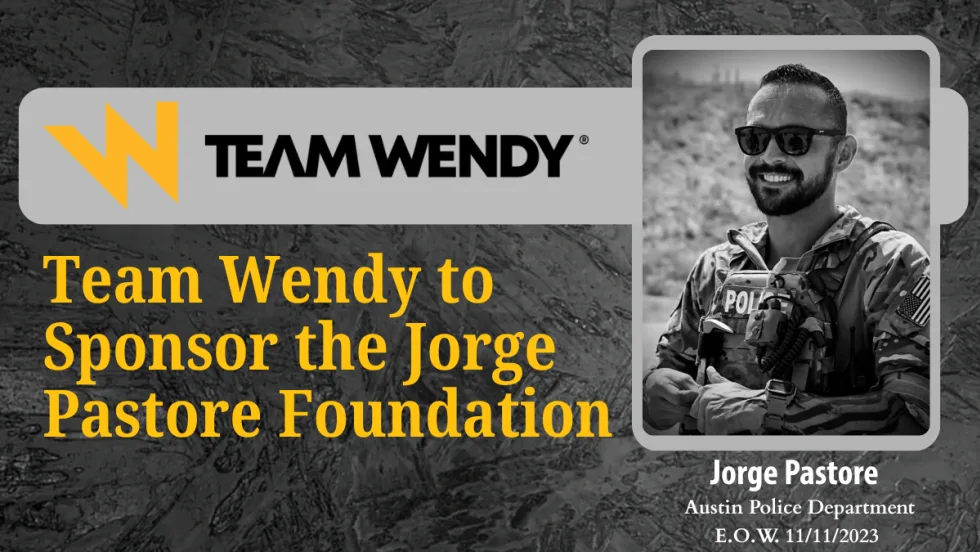
Team Wendy Announces Title Sponsorship of the Jorge Pastore Foundation
Team Wendy’s 3-year partnership with the Jorge Pastore Foundation expands access to programs that strengthen those who serve.
Read More →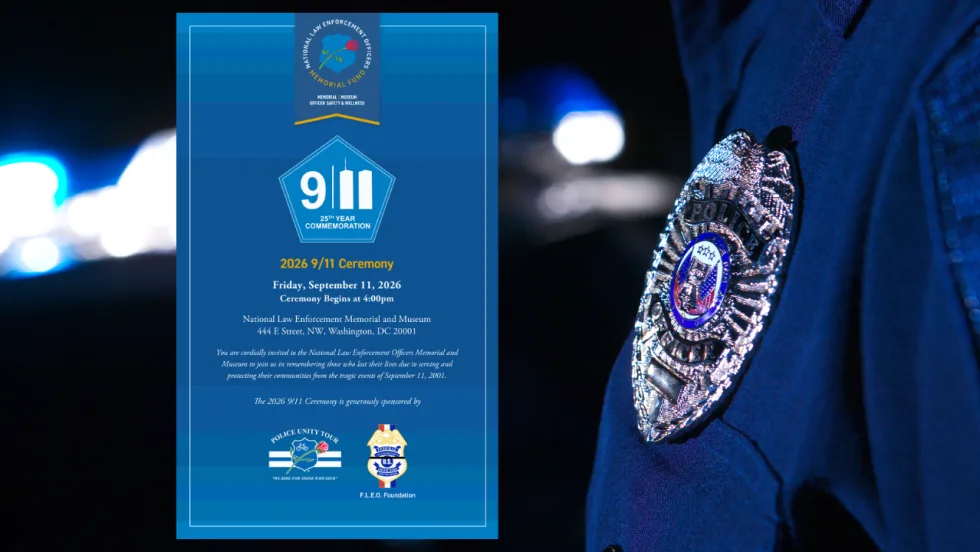
National Law Enforcement Memorial and Museum Hosting 9/11 25th-Year Commemoration Ceremony
The National Law Enforcement Memorial and Museum is hosting a 9/11 25th Year Commemoration Ceremony on Sept. 11 at 4 p.m.
Read More →
National Law Enforcement Officers Memorial Fund Announces June 2026 Officers of the Month
The National Law Enforcement Officers Memorial Fund (NLEOMF) named 15 officers of the Chico Police Department (California) as the Officers of the Month for June 2026 for their roles in responding to an active-shooter incident at a public library.
Read More →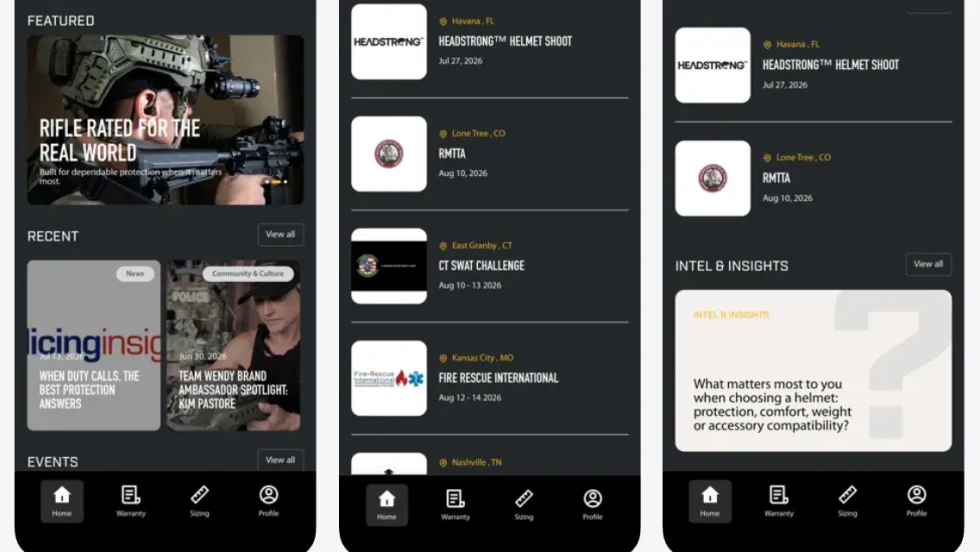
Team Wendy App Creates New Digital Hub for Helmet Owners
The Team Wendy Community App provides one location for warranty registration, size-fit tools, product updates, and community connection. For helmet owners, the new app creates a simpler path to the information and tools that matter most.
Read More →