



Finding the Right Flashlights for the Job
Where there used to be one light, now there are many. If you're like me, you've probably got anywhere from five to 10 different lights with you on any given shift. Let's try to make some sense out of all this technology we're lugging around.

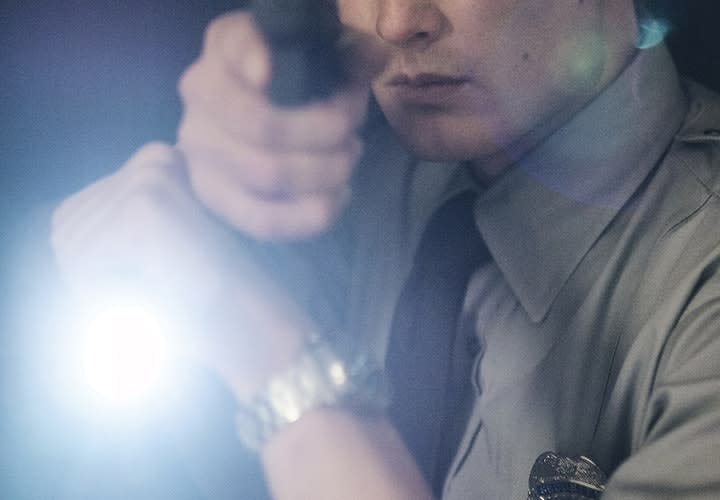
Photo: iStockphoto.com
Humans haven't quite evolved to the point of being able to see in the dark. We have to rely on external light sources if we want to see after the sun goes down. Considering law enforcement is a 24/7 operation, naturally we rely heavily upon flashlights.
In my lifetime, including over a decade in law enforcement and several years as a contributor to POLICE Magazine, I've held and tested more flashlights than I can count. I've watched the steady evolution of both flashlight technology and the way we use these tools in the field. Gone are the days when a single, D-cell aluminum flashlight was the only thing keeping you out of the dark. From clearing buildings, to traffic stops and even shooting, this behemoth was the best thing (and really the only thing) out there. Boy, have we come a long way since then.
Today there are endless options for lighting your way through that dark midnight shift. We've taken the simple concept of artificial light and made it brighter, farther reaching, more compact, more durable, and added way more battery life. Oh, and we've made them more affordable than ever, too. The only problem with all of this is finding the right light for the many different tasks we are faced with on a daily basis.
Where there used to be one light, now there are many. If you're like me, you've probably got anywhere from five to 10 different lights with you on any given shift. Let's try to make some sense out of all this technology we're lugging around. I'm going to help you zero in on the right light for each application and reasons why.
Terms to Know
Let's kick things off by defining some of the most common terms you'll see on almost every flashlight on the store shelves. The most important thing most of us consider is the brightness of the light. If we wanted dim we'd buy a candle. We want our lights to be bright, but "bright" is a relative term. There are bright lights that do an amazing job of illuminating a room but are nearly useless at lighting up a suspect 100 yards away, and vice versa.
Here is where "lumens" and "candela" come into play. Lumens measure the light intensity at close range. A light with a high-lumen rating will produce a ton of bright, white light great for most police applications. Candela or "candle power" is the ability of that beam to project a significant distance. You'll want to consider both carefully when choosing any light.
Keeping that in mind, don't forget there can be such a thing as too much light. I learned this the hard way when I bought the latest and greatest (at the time) weapon light for my patrol rifle. I was part of a team of officers clearing a building on a burglary call. On approach to the house, my new light was amazing. The abundance of clean, white light made it look like it was 10:00 in the morning. As soon as we got into the house I realized I had gone too far. The walls were all white and the intensity of my weapon light against those walls created a blinding effect our dark-adjusted eyes just weren't prepared for. Just another reason that there isn't really a "one size fits all" when it comes to lighting tools.
Another consideration is the power source. If you're looking for a light you'll likely be using all the time as a general "work light" I would suggest a rechargeable. Battery-powered lights definitely have advantages but if you're chewing through handfuls of lithium batteries it'll quickly make a dent in your wallet. I usually reserve the battery-powered lights for specific applications like weapon lights or back-ups. Speaking of specific applications, the beauty of all this flashlight evolution is that there's a light for just about every job out there. Let's talk about a few.
Administrative Task Lights
We'll start off easy by covering lights that are ideal for what I would call "administrative" tasks. These are the lights we need to search for grandma's cat, fill out an accident form, or change a tire on a disabled vehicle. The best option I've found for scratching out a citation or interview card is a tiny, shirt-mounted light. It's something you can clip on your pocket, turn on, and free up your hands to do your job. The one I use is rechargeable, has two small LEDs (one red and one white), and comes with a small "diffuser" so it will broadcast just enough soft, white or red light in your immediate vicinity to do your job without killing your night vision. It usually lasts several hours on a charge and was relatively cheap. A small, single-cell light with a clip on your lapel would do the job as well.
Patrol Lights
As I mentioned above, I also still carry that big, D-cell light every time I put on a uniform. The benefits it brought to the table 20 years ago still hold true today. Mine is current technology so it is an LED light with a long battery life and excellent candela and lumens. It is rechargeable and rides next to me in the patrol car all shift. When I hop out, it comes along, and if I don't need it I sling it through a ring on my belt.
I love the ability to tuck it under my arm, conduct searches through crime scenes, and even use it as an impact weapon, or "improvised baton" should the need arise. It is bulky, but that bulk has value. Many of the new officers I see fresh out of the academy seem to favor the small, handheld tactical lights because they are easy to use and fit nicely on a belt, but they quickly find their limitations and, after a short time on the job, a bigger light usually shows up in those cops' gear bags, too.
Tactical Lights
Speaking of the small, handheld tactical lights, there are probably more options in this category than all others. These lights hit the law enforcement scene in a big way about 15 years ago when the idea of using flashlights as fighting tools became more mainstream. They're generally very affordable and the newest ones have great lumen ratings.
For close-quarters work like shooting or clearing a building they're awesome. They fit easily on a belt or in a pocket and, if all else fails, they'll always be there in a pinch. Options like end-cap or side body power switches allow you to pick a light that will fit your specific tastes and some offer aggressively machined bezels for use as a defensive weapon. I've got one on my belt and a couple others in my gear bag as backups. I even keep a smaller one clipped inside my vest as a last resort.
Common drawbacks of these lights include the inability to tuck them under an arm during administrative tasks, their general lack of candlepower, and frequent use of disposable batteries for power. We probably all have one of these and I'll bet yours also takes a couple of CR123 lithium batteries to keep it lit. If you're trying to blind an assailant they're great, but if you need to light something up at distance, you might be disappointed.
Weapon Lights
Now let's talk about what is likely the most critical light in your arsenal; the weapon-mounted light. I don't know of any cops out there who still rely on a handheld light to illuminate a target. These days there is a specific weapon light for just about every gun out there and it is arguably the best investment in your firearm you'll make.
Here is where I am not afraid to rely on battery power. I check my weapon lights before every shift and change out the batteries at the first sign they're starting to lose power. I also carry a few extras with me at all times in case I am stuck on a post for an extended period of time. If the batteries start to lose their juice, it only takes a minute to pop in a fresh set and I'm back in the game. The expense of an extra box of batteries is a great investment to ensure you'll be able to properly identify and hit a target when you need it most.
When you're shopping for your next weapon light, be sure to pick one that fits the mission. Pistol lights are designed for pistols, both in ergonomics and the abilities of the light output. Generally, these lights are very bright at close range and can be operated with a single finger without compromising your grip on the gun.
I've seen a few guys get cheap and try to mate one of these lights to a long gun, only to find out the fingertip activation switch isn't ideal for the way you hold a rifle and their low candle power ratings will only throw a fraction of what light you'll need to engage a target at the distances rifles are capable of. There are plenty of dedicated rifle lights out there that will do an outstanding job. In either scenario, I would strongly advise against mounting a light to a weapon that it wasn't designed for.
Weapon lights have also been tested to withstand the recoil of the weapon and have what are called "shock isolated bezels." Lights without this torture-earned rating are likely to be damaged by the shock of the weapon recoil and very prone to failure. When I began teaching firearms I saw a variety of these "improvised weapon lights" come through my rifle classes. Many of them went belly-up after only a few days of shooting. Thankfully, this happened on the range and not in the middle of a life-or-death gunfight. As a result, every rifle and pistol my agency issues to our officers comes with a purpose-built weapon light. No more improvisation, no more problems.
Off-Duty Lights
All of this information is great for duty use, but what about those rare times when you have time away from the uniform? I've always recommended that every cop carry a firearm when off duty. We've got the training on how and when to use it and you never know what life will throw at you. Along with this recommendation are a few other "gotta have" items. I always carry a backpack with some necessities, including extra magazines, a set of handcuffs, flat badge, and, you guessed it, a flashlight.
Since I don't want to carry several different lights with me all the time I try to choose one that will work in a variety of settings. The small tactical hand-held lights I detailed above seem to fit this role fairly well. Odds are, if I need a light, it will either be for a short administrative purpose (oops, dropped my keys between the seats) or as a defensive tool for shooting or fighting. I carry an extra set of batteries just in case and make sure to function-check it often. It even has a pocket clip so I can carry it along with my concealed pistol if I choose and it's no bigger than a pocketknife.
The Right Light
Now that you're armed with just enough information about lights to be dangerous, here is the simplest and best advice I can give you before you slam down your next paycheck at the local gear store. Know your mission and fit the light to that mission, not the other way around. That way you'll shop for what you need and not just what looks cool. And once you decide which type of light is best for that role, do your homework.
There are just too many light manufacturers in business today to know the good and bad about all of them but one general rule usually rings true; you get what you pay for. Ask any mechanic if they buy cheap wrenches and they'll laugh at you. Our tools are no different and at the end of the day, if you take care of your tools they'll take care of you.
A.J. George is a sergeant with the Scottsdale (AZ) Police Department assigned to the Technical Operations Unit, Special Investigations Section.
More Patrol

Adept Armor Introduces Two New Rifle Plates
Adept Armor has launched two new Level IV ballistic plates, the Emperor and the Archon Mark 2, which brings Adept Armor’s new Quatroid ceramic to the high-threat, performance-value center of the range at 5.2 pounds.
Read More →
POLICE Product Test: Benchmade Bailout
The Benchmade Bailout is a slim, lightweight carry knife with a deep-ride pocket clip and comes in a variety of blade steels and scales. Here is a detailed review of the Taiga Green Bailout, released earlier this year.
Read More →
NLEOMF Announces July 2026 Officer of the Month
NLEOMF honored a Michigan deputy sheriff as the July 2026 Officer of the Month for rescuing a trapped driver from a burning vehicle following a Fourth of July crash.
Read More →
Streamlight to Showcase Newest Lighting Products at National Safety Council’s Safety Congress & Expo 2026
Streamlight will showcase its latest lights, including the Portable Scene Light III and the LiteBox 1Million, at the 2026 National Safety Council (NSC) Safety Congress & Expo.
Read More →
The 2027 World Police & Fire Games Set for Perth, Australia
The 2027 World Police & Fire Games (WPFG) will take place in Perth, Western Australia, from Friday, March 12 through Sunday, March 21, 2027.
Read More →
5.11 Partners with National Fallen Firefighters Foundation to Support #ForThe343
5.11 has joined the nationwide movement honoring the 343 New York City Fire Department firefighters lost on Sept. 11, 2001.
Read More →
Team Wendy Announces Title Sponsorship of the Jorge Pastore Foundation
Team Wendy’s 3-year partnership with the Jorge Pastore Foundation expands access to programs that strengthen those who serve.
Read More →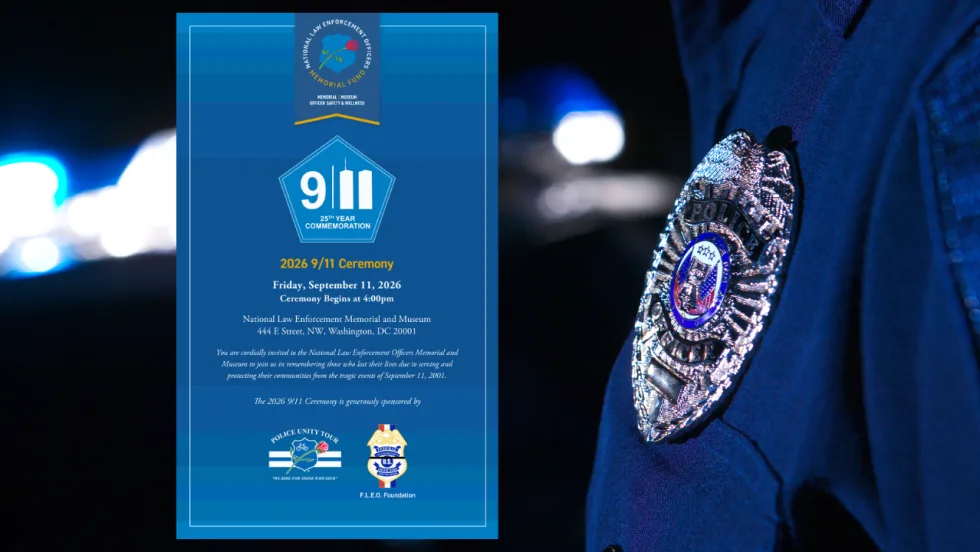
National Law Enforcement Memorial and Museum Hosting 9/11 25th-Year Commemoration Ceremony
The National Law Enforcement Memorial and Museum is hosting a 9/11 25th Year Commemoration Ceremony on Sept. 11 at 4 p.m.
Read More →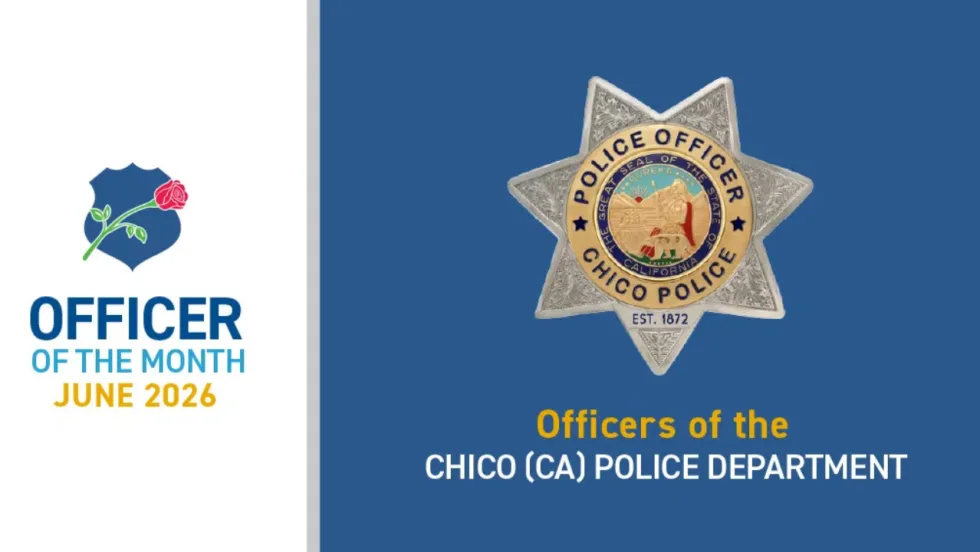
National Law Enforcement Officers Memorial Fund Announces June 2026 Officers of the Month
The National Law Enforcement Officers Memorial Fund (NLEOMF) named 15 officers of the Chico Police Department (California) as the Officers of the Month for June 2026 for their roles in responding to an active-shooter incident at a public library.
Read More →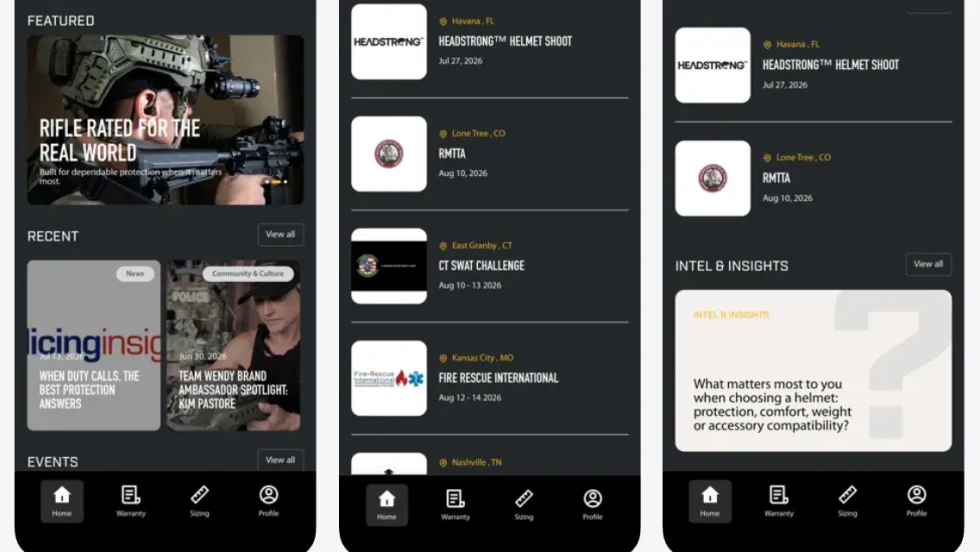
Team Wendy App Creates New Digital Hub for Helmet Owners
The Team Wendy Community App provides one location for warranty registration, size-fit tools, product updates, and community connection. For helmet owners, the new app creates a simpler path to the information and tools that matter most.
Read More →