



Feds Say 1999 MSU Arson Linked to ELF
Earlier this week U.S. Attorney Charles R. Gross, the FBI, and Michigan State University announced a four-count felony indictment charging four defendants with conspiracy to commit arson, aggravated arson, and arson in connection with the Dec. 31, 1999, arson of Agriculture Hall on the main campus of Michigan State University and the Jan. 1, 2000, arson of commercial logging equipment near Mesick, Michigan.

Earlier this week U.S. Attorney Charles R. Gross; Federal Bureau of Investigation (FBI) Special Agent in Charge Andrew G. Arena; MSU President Lou Anna K. Simon; and MSU Police Department Chief James H. Dunlap, announced a four-count felony indictment charging four defendants with conspiracy to commit arson, aggravated arson, and arson in connection with the Dec. 31, 1999, arson of Agriculture Hall on the main campus of Michigan State University and the Jan. 1, 2000, arson of commercial logging equipment near Mesick, Michigan.
The defendants are Marie Jeanette Mason, 46, of Cincinnati, Ohio; Frank Brian Ambrose, 33, of Detroit, Michigan; Aren Bernard Burthwick, 27, of Detroit, Michigan; and Stephanie Lynne Fultz, 27, of Detroit, Michigan.
According to the Indictment, the four conspired to commit the MSU arson in order to destroy federally funded plant genetic research being conducted by university employees, and Mason and Ambrose then carried out the arson. The indictment alleges that the four also conspired to destroy commercial logging equipment in order to sabotage lumbering activity, and that all four defendants then carried out the arson.
The indictment alleges that both actions were committed on behalf of the "Earth Liberation Front (ELF)," a loosely organized movement of environmental extremists with a history of destroying property, often by arson, in order to intimidate and coerce communities, businesses, and governments into abandoning activities that ELF adherents consider harmful to the environment.
"The Indictment we are announcing today is a testament to the perseverance, dedication and hard work of law enforcement professionals at both the state and federal level," said Gross.
Arena added, "This investigation has been ongoing for almost a decade, and it should be a reminder to all that the FBI does not allow the passage of time to thwart our ability to apply our full resources to a case. In particular, domestic terrorism is a top priority of the FBI and we will continue to aggressively investigate and pursue prosecution of all such matters. We would also like to thank the MSU Police Department for its cooperation throughout this investigation."
Speaking for the University, MSU President Simon observed that "This was more than an attack on a building and the destruction of valuable property. It was an assault on the core value of free and open inquiry at a research university. We always must be open to ideas that challenge our own, but what we must never allow are disruptions meant to shut down the open marketplace of ideas."
Commenting on the MSU Police Department's significant role in the investigation, Chief Dunlap explained "This was a significant act of domestic terrorism, which caused more than a million dollars in damage to facilities and loss of research records. As a result, the University dedicated an unprecedented amount of resources and personnel to investigate this crime, and the Michigan State University Police Department appreciates the cooperation of both the FBI and the United States Attorney's Office in the joint investigation of this case and the resulting Federal Indictment."
More Training
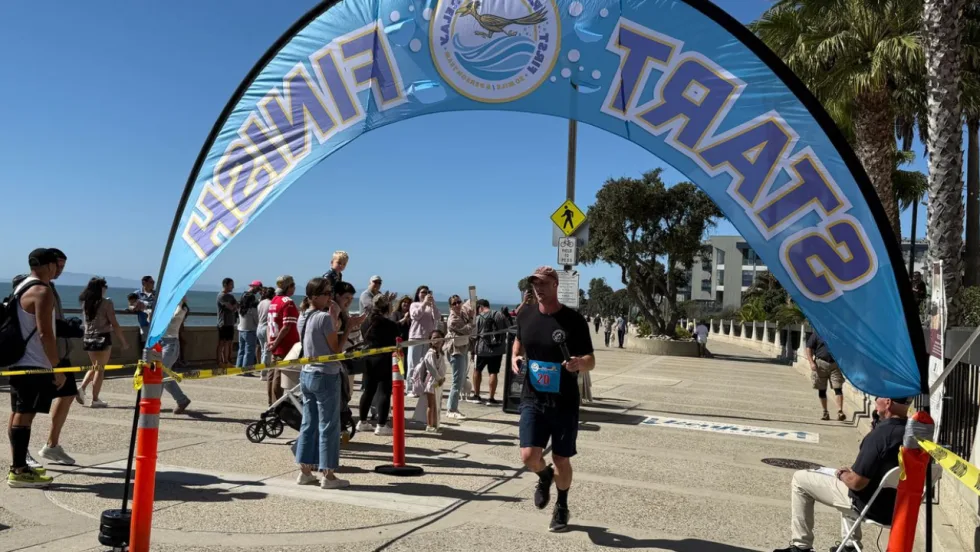
Registration Underway for Sixth Annual First Responders Relay
The California Police Athletic Federation’s annual First Responder Relay will welcome first responder teams from across the globe to compete along Ventura's scenic coastline on Oct. 11. Registration is underway.
Read More →
Vector Solutions Launches Comprehensive Online Dispatch Training Catalog for Emergency Communications Professionals
Vector Solutions’ new catalog of 35 expert-developed online courses can help emergency communication centers strengthen training, meet certification requirements, and simplify continuing education.
Read More →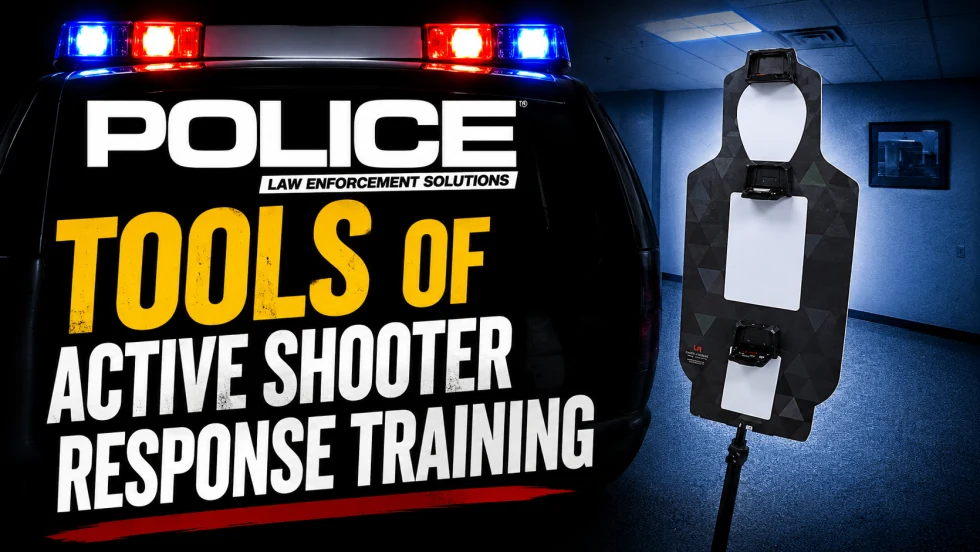
Tools for Active Shooter Response Training
What technologies help prepare officers for active shooter response situations? This behind-the-scenes look at law enforcement training explores shot simulators, smart firearms, laser target systems, and the tools used to build safer, more effective training environments.
Read More →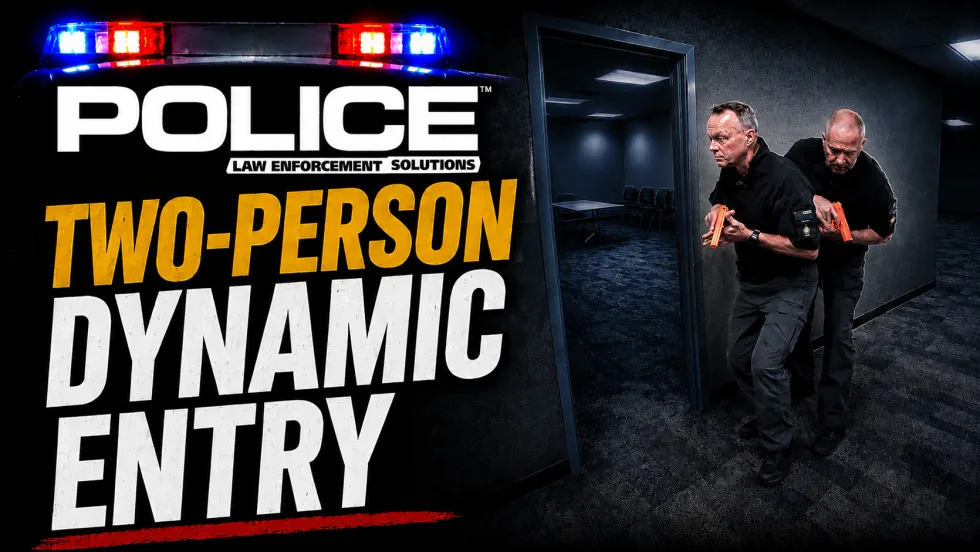
Two-Officer Tactical Doorway Entry Techniques
Entering a room during active-threat situations requires communication, coordination, and disciplined tactical movement. In this video, trainers from the United States Deputy Sheriff’s Association demonstrate critical room entry concepts, including fatal funnel awareness, team coordination, and safe tactical movement.
Read More →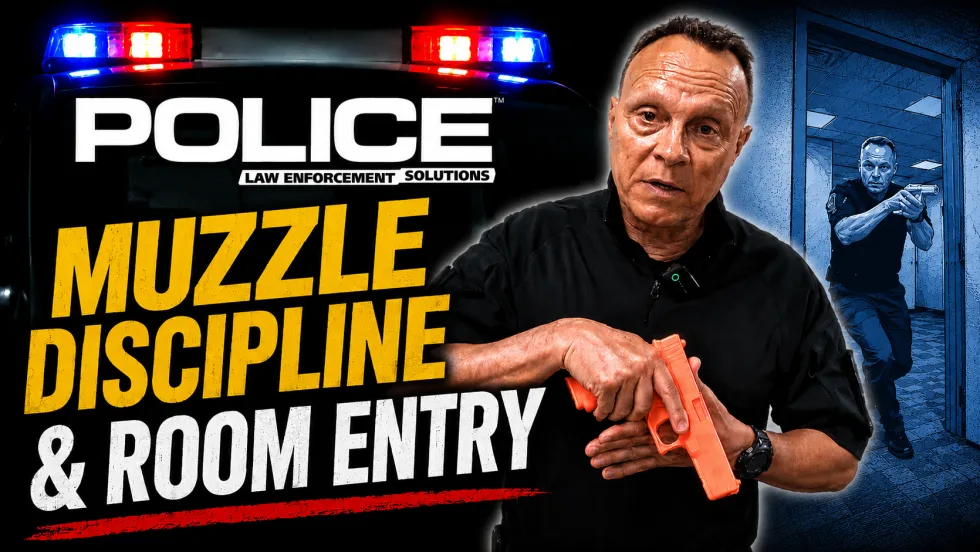
High Compressed Ready Explained | Muzzle Control For Room Entry
In this video, Mike Willis, law enforcement national training and program director for the United States Deputy Sheriffs’ Association, demonstrates the high compressed ready position and discusses muzzle control during room entry.
Read More →
Why Attend the DroneSense Innovation Summit by Versaterm?
Let’s hear from Ryan Bracken, head of product, about why your agency should send someone to the first annual DroneSense Innovation Summit by Versaterm in April.
Read More →
Caswell Live Fire Spins Off from InVeris
Caswell Live Fire has spun off from parent company InVeris, coinciding with the 100th anniversary of Caswell’s founding. Over the past 100 years, Caswell has developed pioneering solutions that support military, law enforcement, and commercial clients worldwide.
Read More →
When Do You Transport a Wounded Officer Instead of Waiting for EMS?
Thumbnail for video series POLICE Topics, Tactics & Tips with a yellow headline that reads When Do You Transport a Wounded Officer Instead of Waiting for EMS?
Read More →
How to Pick Your High-Risk Stop Location for Tactical Advantage
Hear veteran trainer Mike Willis, of the United States Deputy Sheriff’s Association, explain several considerations that can help you wisely pick your best spot to initiate high-risk or felony traffic stops.
Read More →
Coffee Break with Police Experts: Using Your Patrol Vehicle for Cover
In this video, hear from Dustin Mowery, a product specialist at Team Wendy, as he discusses how to best use a patrol vehicle for cover.
Read More →