



CentralSquare Records Customers in Eight States Receive NIBRS Certification
CentralSquare, a leader in public sector technology, has announced that multiple customer agencies have received National Incident-Based Reporting System (NIBRS) certification from the Criminal Justice Information Services Division agencies in Colorado, Connecticut, Minnesota, New York, North Carolina, Oregon, Texas, and Wisconsin.

CentralSquare, a leader in public sector technology, has announced that multiple customer agencies have received National Incident-Based Reporting System (NIBRS) certification from the Criminal Justice Information Services Division agencies in Colorado, Connecticut, Minnesota, New York, North Carolina, Oregon, Texas, and Wisconsin.
The certification was issued following a review by each state's Criminal Justice Information Services Division which determined that these agencies' implementation of CentralSquare Records Enterprise met all required criteria in the areas of system compatibility, responsiveness, statistical reasonableness and satisfactory error rate. Each agency is the first in its state to achieve certification of its web-based CentralSquare Records Enterprise platform and joins a network of more than 1,000 NIBRS-certified agencies using the CentralSquare platform in dozens of states—with more to come in the countdown to meet the FBI deadline.
The FBI is retiring the summary-based reporting system and will transition to a NIBRS-only data collection in 2021. As a result, law enforcement agencies are being encouraged to start implementing NIBRS now. To become NIBRS certified, public safety agencies must submit incident-based data for a designated, consecutive period of time and meet several criteria, including following technical specifications, demonstrating ability to liaise effectively with the state agency and the FBI, submitting data that is statistically reasonable and sustaining an error rate of less than a designated percent for three separate, consecutive data submissions, among other requirements. CentralSquare Records Enterprise returned a 0% percent error rate on its data submission, according to the company.
Summary crime data reports have historically lacked information about the victim and offender, the relationship between them, the location where the crime took place and a host of other contextual variables, resulting in inconsistencies when reviewing individual incidents. For example, in a summary report, agencies have been required to date to list only an incident's top offense, meaning if an armed robbery and homicide occurred, only the homicide would be listed. NIBRS captures details of every reported crime incident, including circumstances and contextual items which can provide more useful statistics to analyze and develop strategies for reducing crimes and victimization.
"Offering the most comprehensive NIBRS-proven records management system on the market, CentralSquare leverages more than 20 years of NIBRS expertise to help ensure our partner agencies meet the 2021 deadline," said Steve Seoane, CentralSquare's president of public safety. "It's our privilege to work with our public safety partners in Colorado, Connecticut, Minnesota, New York, North Carolina, Oregon, Texas and Wisconsin, among the rest of the network of NIBRS-certified agencies using the CentralSquare platform. As a result of NIBRS, law enforcement will be able to dig deeper into the root causes of crime and victimization, which will lead to helping build safer communities across America."
CentralSquare Records Enterprise is a cloud-based records management solution that allows personnel to enter information once and share it across the entire suite of software, including 911, Computer Aided Dispatch, Mobile and Jail. CentralSquare continues to work with its agency partners to roll out additional NIBRS certifications across the United States.
Throughout the year ahead, CentralSquare will continue to provide insights and best practices for public safety agencies who are currently undertaking the transition to NIBRS.
More Procedures & Policies

No Waiting: Detective Busts Missing Persons Myth
Detective David Lee Stephens wants the public and every law enforcement agency to know there is no truth nor logic to the widely held belief that one must wait 24 or 48 hours to report a missing person.
Read More →
Trump Issues Executive Order He Says Will Help Police Fight Crime
“My Administration is steadfastly committed to empowering State and local law enforcement to firmly police dangerous criminal behavior and protect innocent citizens,” Trump said.
Read More →NYPD Restricts Vehicle Pursuits to Suspects Wanted for Serious Crimes
The revamped policy, which takes effect Feb. 1, bars police from pursuing suspects for traffic infractions, violations or non-violent misdemeanors, police Commissioner Jessica Tisch said.
Read More →NYPD Going “Old School” with Uniform, Facial Hair Policy
“It’s absolutely ludicrous that you have an officer with pink hair and nails longer than their fingers,” one Manhattan officer said. “We’re a police department not a hip hop department. Let’s go back to being police officers.”
Read More →AZ POST Considers Revision to Marijuana Rules for Recruits
“My recommendation for your consideration is we go for a six-month window,” said Matt Giordano, executive director. “We would go to six months of the last use.
Read More →
Time to Change Our Pursuit Policies
Complicated guidelines that require officers to make decisions during the heat of the moment are not working.
Read More →Baltimore Police Complying with Key Consent Decree Requirements, DOJ Says
If the court grants the motion, BPD must maintain compliance with the provisions for one year before the court can terminate these sections of the consent decree.
Read More →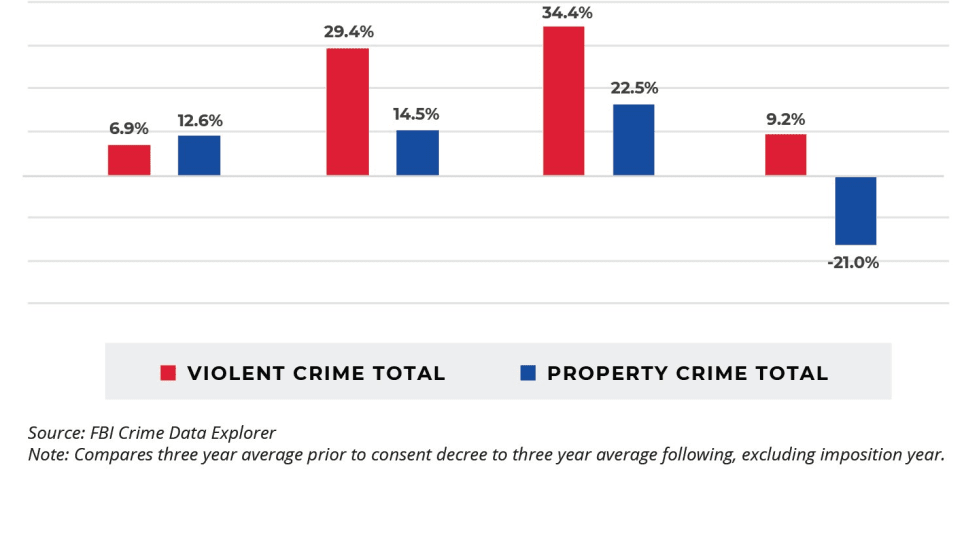
Study Finds Consent Decrees Onerous, Ineffective, and Often Harmful
The report concludes: “When a consent decree is truly warranted, it must focus on the most urgent concerns. The violations should be clearly identified and fully supported by rigorous evidence."
Read More →DOJ and Consent Decree Monitor Praise Albuquerque PD for Reforms
Monitors tracking civilian oversight, one of the largest remaining roadblocks in reaching full compliance, called it “a mess” that was being cleaned up, and advocates applauded the work done by the department to come so far, so fast.
Read More →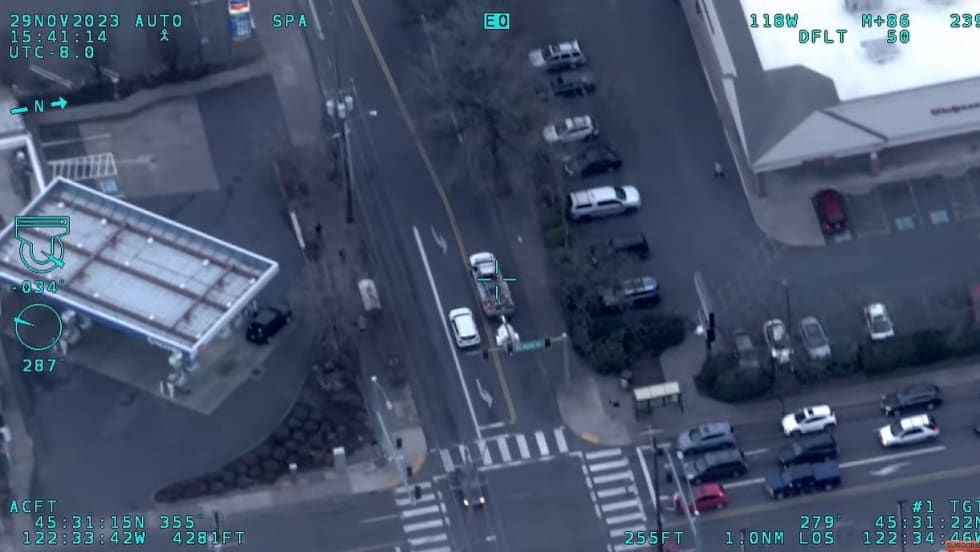
Portland Loosens Restrictions on Vehicle Pursuits
“We have seen a significant propensity for criminal suspects to elude traffic stops, often driving extremely dangerously despite no officers chasing them,” the Bureau said in a statement.
Read More →