



Smart Guns Are Not Ready for Duty
What the lab tried to communicate to the NYPD was that the technology wouldn’t have prevented the Edwards tragedy. You see, the radio system will pick up any friendly gun within 600 feet. That means that when the other officers pointed their weapons at Officer Edwards their guns would have only told them that a friendly gun was in the general area. Well, they already knew that. They knew that at least three friendly guns were in the area. After all, they were holding them.

Since ancient times armed confrontations have led to tragic cases of mistaken identity. Friendly fire incidents happen so much in warfare that military historians have a term for the concept, “fratricide,” literally brother killing brother.
Two weeks ago, two NYPD brothers-in-arms were involved in an incident of fratricide.
Off-duty officer Omar J. Edwards, 25, tried to stop a man from breaking into Edwards’ car. He tried to grab the thief, but the thief squirmed out of his grip and ran. Edwards ran after him, pulling his off-duty weapon during the pursuit. The two ran past three plainclothes officers.
The auto burglary suspect told investigators what happened next. He heard Officer Andrew Dunton yell, “Police! Stop! Drop the gun!” Witnesses say that Officer Edwards responded by turning toward Dunton and the other plainclothes officers with his gun still in his hand. Dunton fired six rounds, killing Edwards. Edwards did not fire his weapon. The officers involved did not learn that Edwards was a cop until paramedics cut away his shirt and exposed an NYPD academy T-shirt.
After a tragedy like this an agency like the NYPD starts looking for ways to prevent similar friendly fire incidents from happening again. The NYPD has responded with two ideas: One good, one ridiculous.
First, the good idea. NYPD officers are now receiving additional training on how to identify themselves to fellow officers when they respond to criminal activity while wearing plain clothes or when off duty. That’s an outstanding idea and one that all agencies should implement immediately. We applaud the NYPD leader who ordered this training. (Note: We have an article on “Plain Clothes Survival Tips” planned for our July issue of POLICE Magazine. It was written and edited long before this tragedy.)
But somebody else in the NYPD’s brass or the NYC city administration responded to this tragedy with utter stupidity. That person’s or persons’ solution is the smart gun.
Let’s get this out of the way real quick: A practical smart gun suitable for law enforcement operations is science fiction at this point. “That’s out of ‘Star Wars.’ It doesn’t exist yet. It’s only a theory,” says Dave Spaulding, author of “Handgun Combatives” and a member of the POLICE Magazine advisory board.
There are basically four types of smart gun systems in development:
• Code locks
• External activators
• Biometric readers
• Radio transmitters
Code locks are a non-starter for law enforcement operations. To take the gun off of safe, you have to plug in a password using a keyboard on the gun. This concept was explored by SIG for the home defense market, and it didn’t go very far.
External activators are rings, bracelets, and other devices that are worn by the authorized user of the weapon. A magnetic ring lock conversion kit has been available for 1911 pistols from a company called Smart Lock. This is more viable for law enforcement than a password system. But it has a couple of key flaws. The gun won’t fire without the activator; so what if the activator malfunctions? Also, who’s to say that an unauthorized user of the gun couldn’t steal the activator? You can probably think of more.
Most biometric reader smart guns require the user to put his or her thumb on a fingerprint scanner in the gun’s grip in order to activate the gun. Other biometric readers measure grip strength. A lot of work is being done in this field.
The New Jersey Institute of Technology (NJIT) has been working on a Dynamic Grip Recognition (DGR) pistol since 1999, but apparently the project, which is federally funded, has hit a wall. The NJIT’s Website only has one reference to the DGR project, and it’s one line long. Reportedly, the Australian future gun company Metal Storm Ltd. is interested in DGR. Metal Storm's innovative weapons can be viewed below:
Another biometric reader smart gun, the Intelligent Fire Arm, was developed by South African inventor Nic Van Zyl. The IFA is a thumbprint system. It supposedly works, but it may be the world’s largest and ugliest handgun. It also requires special non-percussive ammo that can be fired by a laser instead of a firing pin.
Oh, and its inventor’s agenda will terrify gun rights proponents:
Radio transmitter smart guns talk to each other via some kind of RFID chip. You point your gun at a fellow cop, and the RFID signal lets you know that you are about to make a terrible mistake. This technology is what the NYPD reportedly discussed following the tragic shooting of Officer Edwards. The agency quickly came to realize that it was dreaming.
The radio transmitter smart gun system is under development by the Pacific Northwest National Laboratory. It’s clearly in the hypothetical stage, and folks at the lab were not thrilled that the NYPD jumped the gun, so to speak.
What the lab tried to communicate to the NYPD was that the technology wouldn’t have prevented the Edwards tragedy. You see, the radio system will pick up any friendly gun within 600 feet. That means that when the other officers pointed their weapons at Officer Edwards their guns would have only told them that a friendly gun was in the general area.
Well, they already knew that. They knew that at least three friendly guns were in the area. After all, they were holding them. The system wouldn’t have told them that Edwards was their “brother.” All it could have done was tell them that there was a friendly gun somewhere in a three-block area. And that friendly gun could have been on the hip of Officer Muldoon working traffic down the street.
Another reason why the radio transmitter smart gun couldn’t have prevented the Edwards tragedy is that it takes two seconds for the transmitter to register a signal. That might be useful in the mountains of Afghanistan when troops are trying to determine if the guys up ahead are targets, but most police shootings last less than two seconds.
I have no doubt that someday cops, soldiers, and home owners will be able to buy reliable smart guns. But that day is nowhere in the near future.
The technology is in its infancy. And that means that no police agency should even give it a thought. All young, unproven technologies have one distinct characteristic: They fail, a lot.
Adding high-tech sensors and radio transmitters and thumbprint scanners to handguns used in law enforcement is just asking for trouble. Spaulding explains it this way:
“You could have an internal ballistic problem, meaning the round would malfunction. You could also have an external ballistic problem, which means the weapon itself would malfunction. On top of that you’re adding an electronic component that could malfunction. Tell me that we’re not going to have Mr. Murphy coming to dinner.”
The day that smart guns are really smart enough to prevent blue-on-blue fratricide, will be a great day. No one in the law enforcement community wants another fellow cop to die from mistaken identity like Officer Omar J. Edwards. No one in the law enforcement community wants another officer to have to suffer the pain of Officer Andrew Dunton who knows that he killed a brother-in-arms.
But for now, smart guns are not the answer. Smart procedures that allow you to identify yourself to your brothers and sisters in blue when taking law enforcement action while off duty or in plain clothes are the answer.
More Blog Posts
Preventing Heat Injury in Police K-9s
In the relentless heat of summer and even early fall in some parts of the country, officers face the important task of protecting their K-9 partners while working in sweltering temperatures. Recognizing changes in a dog’s behavior is the key.
Read More →
Why Your Agency Needs to Attend the ILEETA Conference
ILEETA is a complete resource for trainers to address trainers' needs. Its mission is to enhance the skills and safety of criminal justice practitioners while fostering stronger and safer communities.
Read More →
IACP 2023: New Training Products
Technologies for improving law enforcement training and training management were some of the highlights at this year's show.
Read More →
Initial Results Released from MSP 2024 Police Vehicle Testing
The 2024 pursuit-rated vehicles--all pickup trucks or SUVs, including two battery electric models the Chevrolet Blazer EV AWD and Ford Mustang Mach-E--were put through their paces.
Read More →
Officer Safety Considerations Related to Alternative-Fuel Vehicles
As more alternative-fuel and hybrid vehicles hit the road, police and other first responders need to understand that they are no more dangerous than conventional vehicles. However, there are certain safety considerations every cop should know.
Read More →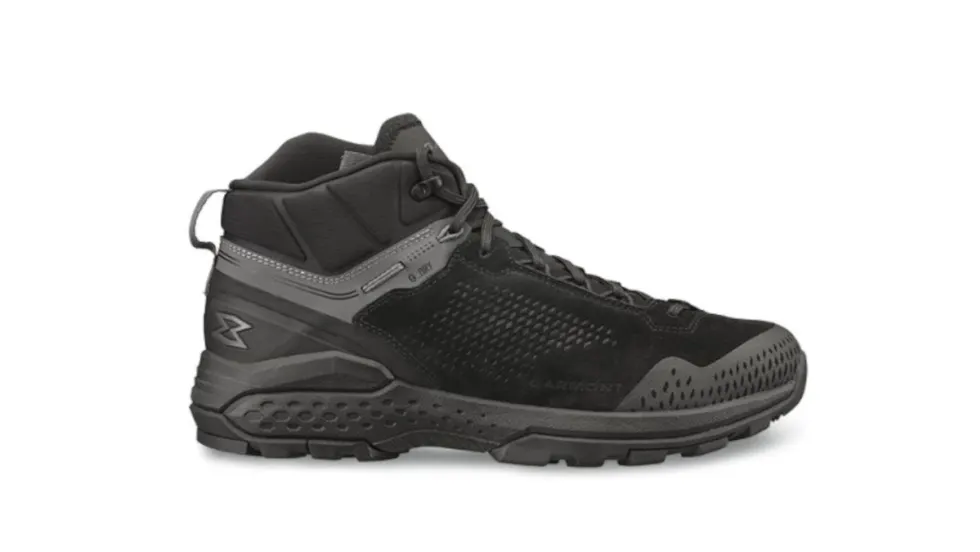
Garmont Working to Grow LE Market Presence
Garmont Tactical has found wide acceptance by military boot buyers, but now the company is trying to better respond to the needs of police officers. Many cops now are not fans of 8-inch boots, so Garmont is adapting.
Read More →
Publisher’s Note: Our Commitment to You
Through our magazine and website and our Police Technology eXchange event, we promise to provide you with information and access to resources to help you do your job safer and better.
Read More →
10 Tips for Responding to Mental Health Crisis Calls
The Harris County Sheriff's Office is a model for other agencies that want to learn about crisis intervention and mental health crisis response. Sgt. Jose Gomez shares the story of their programs and provides 10 tips for mental health crisis call response
Read More →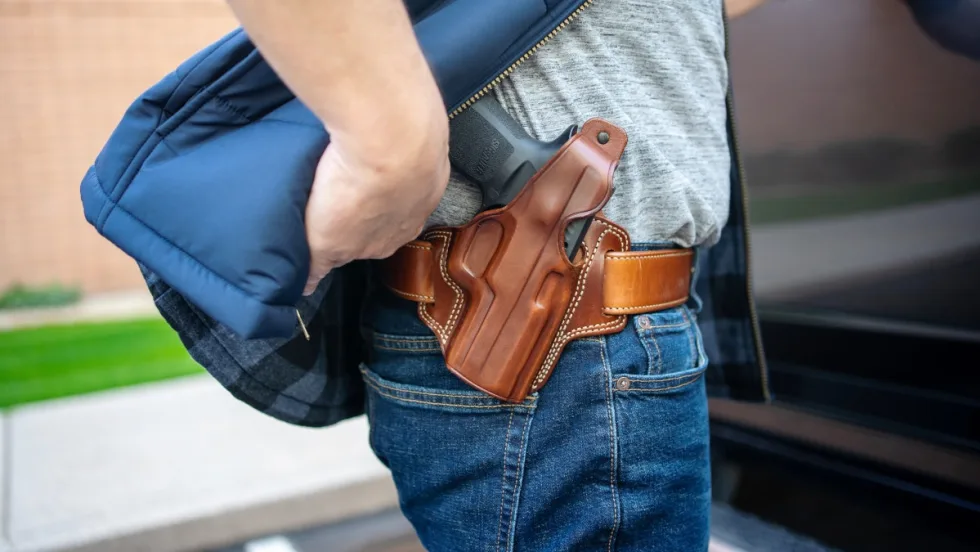
5 Things to Know When Buying Concealed-Carry or Off-Duty Holsters
Mike Barham, of Galco Holsters, shares five important considerations to keep in mind when you buy off-duty concealed or plain-clothes carry holsters.
Read More →
10 Tips for Reviewing Use-of-Force Reports
While the burden of accurately reporting use-of-force situations is on an individual deputy or officer, the person reviewing those reports shares in the responsibility of making sure the reporting is done properly, with clear details included.
Read More →