



Keep Your Sense of Humor
As a demonstrably immature 21-year-old, I defensively adopted a more reserved demeanor in the hopes that it would be interpreted by the academy staff as reflective of a sober nature. I beat down any temptation to crack a joke in the academy with whack-a-mole determination and my effort was so successful that I quickly became known as "stress cadet”

An old friend was in the process of introducing me to his beautiful wife when he happened to mention my knack for making our peers laugh back in high school. Pissed-off teachers and Ray weren't the only ones to remember me for that, and I recall with some disappointment my runner-up status for "Class Clown."
Ray's comments made me reflect on how seriously remiss I've been in indulging that sense of humor.
But then getting serious is where the problem started.
Getting serious was a concession to my getting hired by the LASD. As a demonstrably immature 21-year-old, I defensively adopted a more reserved demeanor in the hopes that it would be interpreted by the academy staff as reflective of a sober nature. I beat down any temptation to crack a joke in the academy with whack-a-mole determination and my effort was so successful that I quickly became known as "stress cadet”—the never smiling, gloomy cuss determined to hide out in the back and not call attention to himself otherwise.
Not that this act shouldn't have gone the way of my Wallabees shoes and puka shells. After all, plenty of other cadets exercised their sense of humor without fear of reprisal. They included one fellow cadet who would get the other cadets of Platoon Six chuckling under our frozen breaths by skewering the daily absurdities our DIs put us through. ("The DIs are losing their touch. Three hours at parade rest and I still have some circulation in my legs.") The difference was that he was squared away. I wasn't and therefore didn't have such latitude coming to me. The saving grace to my charade was that I graduated some 20 weeks later without having once been assigned class or platoon sergeant. That other cadet was not so lucky. So there.
The act I'd affected was such that when another seven months passed, and I transferred from custody to patrol it'd become second nature. By then, the stick was so far up my butt that I became the stress trainee of patrol at Temple station, commencing a period of beating the shit out of my steering wheel on late-night drives home and comforting myself with the notion of returning to custody before showing up at the station the next day for more of the same. Getting signed off training offered some relief, but I remained an imposter on multiple fronts.
But my sense of humor was still present, albeit in a more dormant form like John Carpenter's "The Thing" under the permafrost. Its DNA was similarly changing, too. While it'd always been a little warped—thank you, Warner Brothers cartoons and MAD magazine—the job was putting more of a mordant spin on things.
Sometimes, it was some unexpected exchange that made me laugh. For example, talking to a one-armed man who was in custody, I asked him what he was in for.
"Assault with a deadly weapon," he replied.
"Didn't you have a prosthetic…?"
"Yeah, but they took it away"
"Why?"
"Cuz I beat some SOB with it"
OK, so maybe you had to be there.
Patrol offered its own charms, and while most of the cringe-inducing, laugh-your-ass-off stuff can't be printed herein, others may help illustrate the point.
Some things were funny only because of the "that's so wrong" factor such as the deputy who arrived at a 211-in progress at a bank and flagged down a child on a bicycle. "Here's a buck, kid," the deputy said. "Go look inside that window and tell me what's going on"
Other comments were more innocuous such as when the sight of a couple whacked out on angel dust and passed out on a front lawn prompted a partner to ask, "When did they get rid of the pink flamingos?"
There were pranks that culminated in explorers being tasked with snake retrieval from the trunks of patrol vehicles, deputies fleeing in terror from the men's locker room, and pepper spray being applied to nether regions. (You have to figure the latter bit of inventiveness would appeal to a guy whose family crest is a dude in a doctor's smock planting a chili on a guy's tongue.)
Little absurdities afforded their own mirth. Like the deputy who requested a Chinese translator, then reconsidered, explaining, "Forget it—the guy speaks Mandarin." There was also weird stuff like the coroner who, saddled with having to inventory every one of the hundreds of pennies a suicide had on his person to ensure safe passage in the hereafter, was cussing up a storm and cursing the decedent to every place this side of heaven.
On occasion, my own screw-ups provided some laughs, if only for others. I was once told to check for vertical nystagmus in a possible PCP suspect. Shining my Streamlight directly into his eyes, I pinpointed his pupils.
"Great," another deputy winced. "You've just made him a hype."
Such moments provided relief from the job's less savory aspects such as unsuccessfully performing CPR on a SIDS victim or comforting the woman who'd returned from an errand to find her cancer-ridden husband had taken his life during her absence.
Just as every ice age runs its course, it followed that in time I would thaw enough to allow some of my suppressed sense of humor out of its cage long enough to come back to bite me in the ass. After alluding to a female deputy's breasts in a column for the sheriff's department's STAR News publication, I received a written reprimand. This was in the 1980s. Today, I'd probably be drawn and quartered and my ashes spread across Hugh Hefner's bedspread.
Such episodes tempered my resurrected humor. And I now remind my son of the importance of factoring time and place into one's conduct. Whether it's asserting one's presence, opinion, or pressure to one's lower colon—and there are those who routinely do all three simultaneously—nothing is immune to outside considerations. Indeed, in an age where diversity is on everyone's lips but conformity on everyone's mind one needs a goddamn environmental impact study before sharing a joke heard over the radio that morning.
And that's sad.
Because the older I get, the more sure I am of the importance of laughter, even as I am less sure of what provokes it.
I'm not alone on that front. No less than the estimable Mark Twain noted that the dissection of humor was analogous to that of a frog—both patients tend to expire in the process. For my case, I will simply note that what one man finds hilarious another may find infantile. Noel Coward's high wit is lost on many a Three Stooges fan, and there are those who wouldn't know funny if Robin Williams ran up and bit them on the ass.
And while there is no universal formula for making people laugh, there are certain commonalities to found. The juxtaposition of the expected and the unexpected is a trigger for me. I remember arriving at an attempt suicide call to find a cussing man holding two knives at his abdomen and swearing that any attempts at intervention would result in his evisceration then after deploying a TASER we found Mr. Profanity couldn’t get rid of his knives fast enough. There are also certain factors to be weighed, with questions of audience, timing ("Too soon?"), and presentation high on the list.
A U.S. Supreme Court justice accustomed to high-falutin' parlance said he couldn't define pornography, but he knew it when he saw it. That's kind of how I feel about humor.
Increasingly, I also see its import.
Just last week, my son mentioned a girl he knew. He said the girl's grandfather had recently died and in the aftermath of his passing friction between her parents had ensued, amplifying the family's anguish. She Instagrammed a message asking what good a life lived was if it only caused her loved ones grief.
Normally, the girl could be relied upon to post humorous messages and funny pictures so this latter message was decidedly out of character. My son replied, saying that she had a gift for making people laugh and feel better and that as far as he was concerned there was nothing better that one person could do for another. She replied that that was the nicest thing that she'd heard in over a year.
Inarguably, there are things that are at least on par with making people laugh in importance—saving a person's life certainly ranks up there. But how many of them make that life worth living? I may have saved people's lives, but I sure as hell haven't been a little beam of sunshine for some time now. As such, I am inclined to agree with my son's appraisal.
The holiday season can bring joy. But it can also bring stress, aggravations, and grief.
A deputy friend just recently found himself dealing with an extremely tragic situation. As he is one of the funniest people I know, I hope his sense of humor—though stretched thin—will hang in there for him. And while I'm too much of a realist to just adopt a sunny, "devil-may-care" 24/7 smile myself, I would like to become reacquainted with that part of me who once indulged bad Cheech and Chong impressions and was prone to laughing and making others laugh. The one that my school friends and I remember.
Might it singe my ass again? Yeah. But I'm too tired of having to sweat the prospect of someone taking offense with everything and anything I have to say. Besides, I don't see anyone worrying about offending me.
Nor should they. In the immortal words of "Stripes"'s Sgt. Hulka, "Lighten up, Francis"
With that, I will close with sincere hopes that you have a happy holiday season and that I can make good on my commitment.
And that my old classmate hadn't confused me with someone else.
More Blog Posts
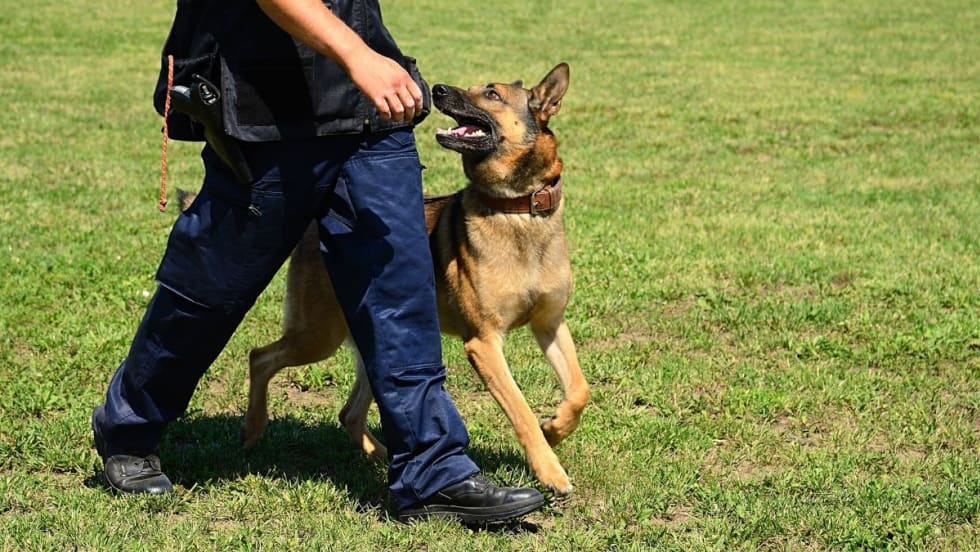
Preventing Heat Injury in Police K-9s
In the relentless heat of summer and even early fall in some parts of the country, officers face the important task of protecting their K-9 partners while working in sweltering temperatures. Recognizing changes in a dog’s behavior is the key.
Read More →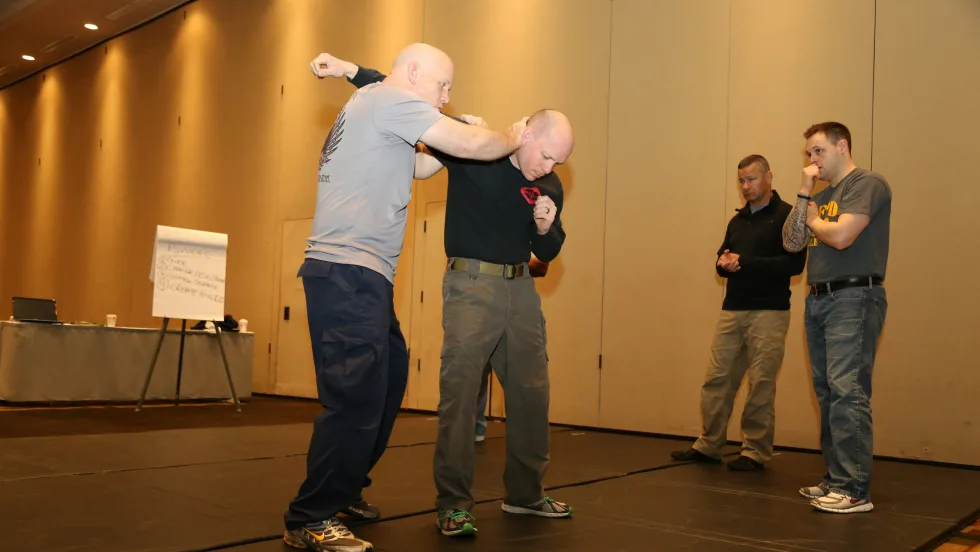
Why Your Agency Needs to Attend the ILEETA Conference
ILEETA is a complete resource for trainers to address trainers' needs. Its mission is to enhance the skills and safety of criminal justice practitioners while fostering stronger and safer communities.
Read More →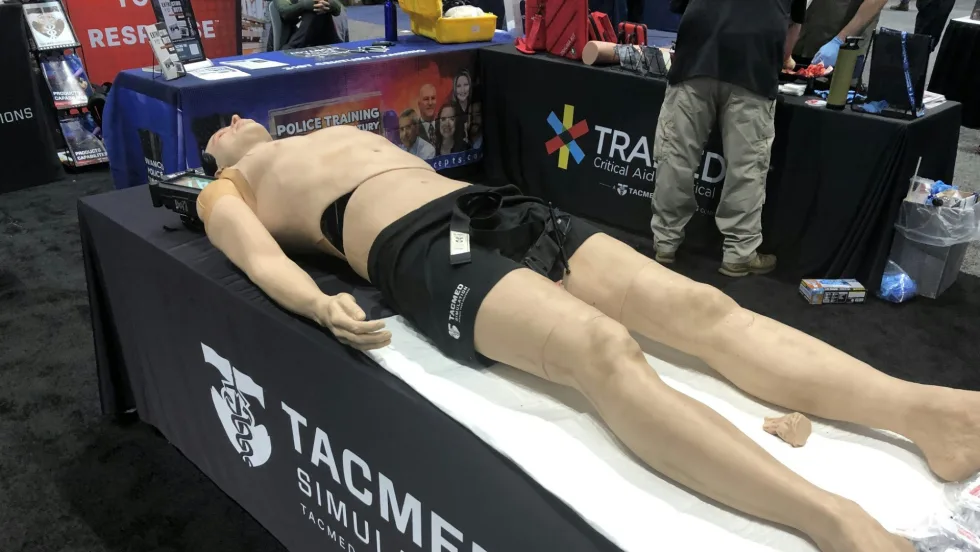
IACP 2023: New Training Products
Technologies for improving law enforcement training and training management were some of the highlights at this year's show.
Read More →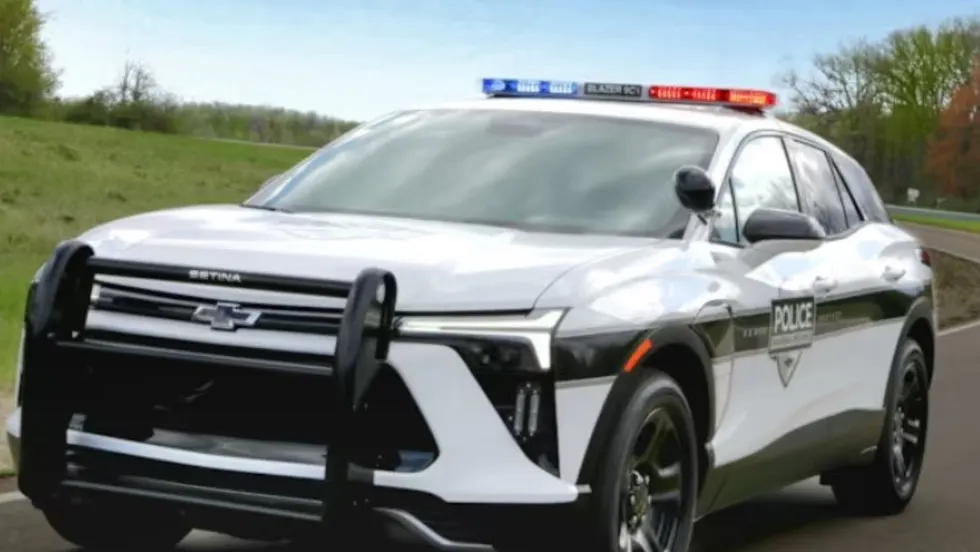
Initial Results Released from MSP 2024 Police Vehicle Testing
The 2024 pursuit-rated vehicles--all pickup trucks or SUVs, including two battery electric models the Chevrolet Blazer EV AWD and Ford Mustang Mach-E--were put through their paces.
Read More →
Officer Safety Considerations Related to Alternative-Fuel Vehicles
As more alternative-fuel and hybrid vehicles hit the road, police and other first responders need to understand that they are no more dangerous than conventional vehicles. However, there are certain safety considerations every cop should know.
Read More →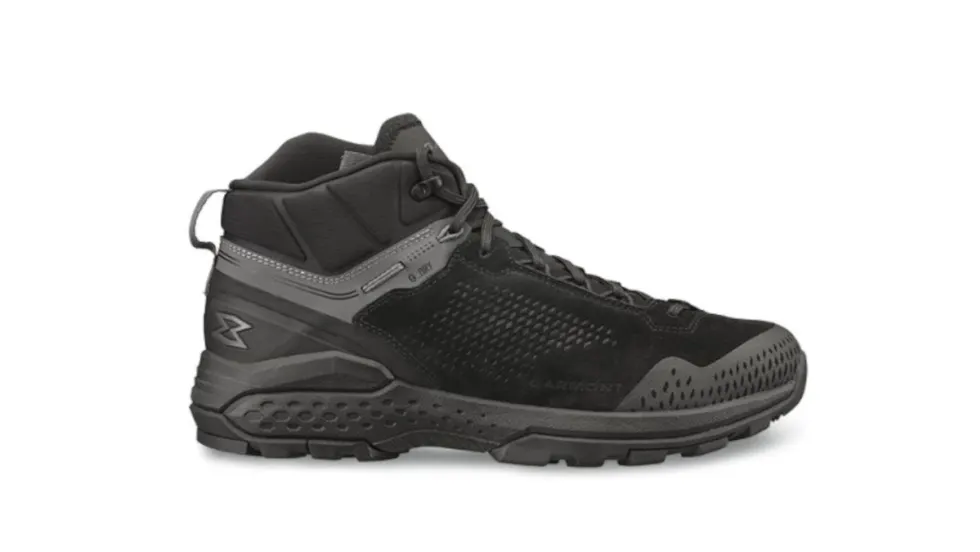
Garmont Working to Grow LE Market Presence
Garmont Tactical has found wide acceptance by military boot buyers, but now the company is trying to better respond to the needs of police officers. Many cops now are not fans of 8-inch boots, so Garmont is adapting.
Read More →
Publisher’s Note: Our Commitment to You
Through our magazine and website and our Police Technology eXchange event, we promise to provide you with information and access to resources to help you do your job safer and better.
Read More →
10 Tips for Responding to Mental Health Crisis Calls
The Harris County Sheriff's Office is a model for other agencies that want to learn about crisis intervention and mental health crisis response. Sgt. Jose Gomez shares the story of their programs and provides 10 tips for mental health crisis call response
Read More →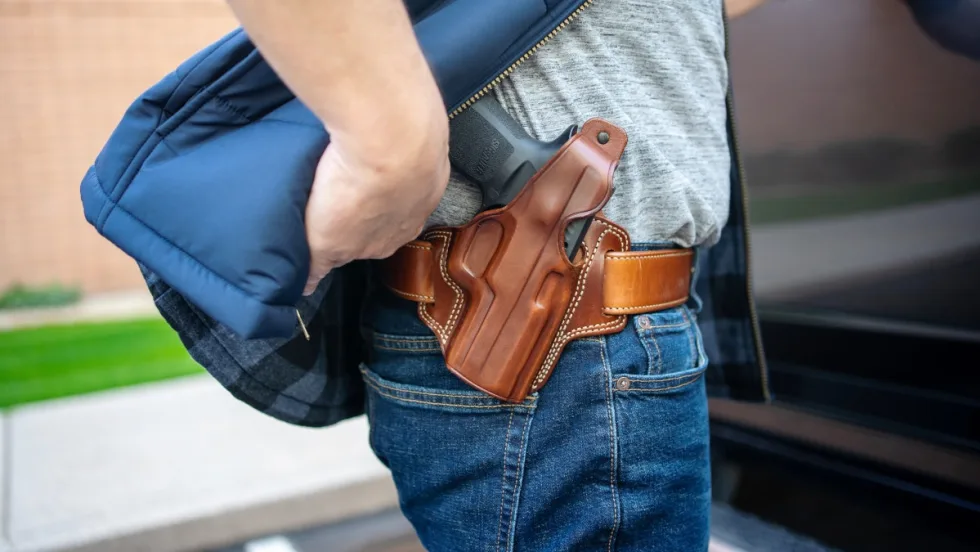
5 Things to Know When Buying Concealed-Carry or Off-Duty Holsters
Mike Barham, of Galco Holsters, shares five important considerations to keep in mind when you buy off-duty concealed or plain-clothes carry holsters.
Read More →
10 Tips for Reviewing Use-of-Force Reports
While the burden of accurately reporting use-of-force situations is on an individual deputy or officer, the person reviewing those reports shares in the responsibility of making sure the reporting is done properly, with clear details included.
Read More →