



How Can Law Enforcement Mitigate the Opioid Crisis in America?
According to the National Institute on Drug Abuse (NIDA), more than 115 people die by overdose on opioids — prescription pain relievers, heroin, and synthetic opioids such as fentanyl — every day in America. That's roughly the equivalent of one (mostly-full) 737 airliner auguring into the earth every day.

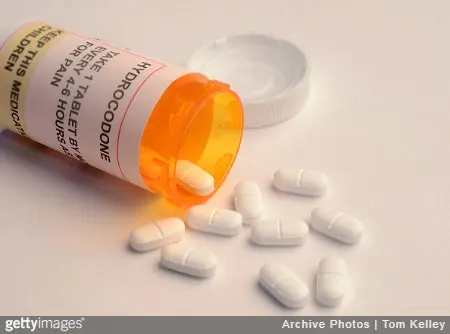
According to the National Institute on Drug Abuse (NIDA), more than 115 people die by overdose on opioids — prescription pain relievers, heroin, and synthetic opioids such as fentanyl — every day in America. That's roughly the equivalent of one (mostly-full) 737 airliner auguring into the earth every day.
Earlier this week, the Department of Justice announced a new rule to "improve the Drug Enforcement Administration's ability to combat the national opioid crisis."
The rule states that "the Attorney General, through the Drug Enforcement Administration (DEA), has issued and administers regulations setting aggregate production quotas for each basic class of controlled substances in schedules I and II, manufacturing quotas for individual manufacturers, and procurement quotas for manufacturers to produce other controlled substances or to convert the substances into dosage form."
In essence, the DOJ is giving the DEA enhanced power to limit the volume of prescription opioids produced by any given manufacturer.
They're going after "big pharma" — the source of prescription pain killers.
At the time the new rule was first introduced in April, Attorney General Jeff Sessions said, "If DEA believes that a company's opioids are being diverted for misuse, then they will reduce the amount of opioids that company can make."
I'm not usually really big on increasing federal regulations in the commercial space, but in this instance, I applaud the effort.
It remains to be seen, however, whether the effort will be effective.
We shall soon see what we shall see.
Staggering Numbers
According to the National Institute on Drug Abuse (NIDA), more than 115 people die by overdose on opioids — prescription pain relievers, heroin, and synthetic opioids such as fentanyl — every day in America.
That's roughly the equivalent of one (mostly-full) 737 airliner auguring into the earth every day.
Also according to the NIDA, more than 33,000 Americans died as a result of an opioid overdose in 2015 alone.
That's close to the number of American military combat deaths suffered during the entire Korean War.
In 2016, more than 42,000 people in the U.S. died from opioid overdoses — more than any other year on record, according the Centers for Disease Control and Prevention.
Oh, and all of the abovementioned numbers do not include the non-fatal overdoses that are mitigated with the application of naloxone (Narcan) — more on naloxone in a minute.
The financial impact of the opioid crisis is also significant.
According to a 2016 report (analyzing 2013 data), the "total economic burden is estimated to be $78.5 billion. Over one third of this amount is due to increased health care and substance abuse treatment costs ($28.9 billion)."
The report said further that "approximately one quarter of the cost is borne by the public sector in health care, substance abuse treatment, and criminal justice costs."
That data was from five years ago.
It boggles the mind to contemplate what the economic costs are today.
Clearly, something has to be done.
Caught In the Middle
As is the case in many matters — from homelessness to domestic violence to immigration enforcement — the opioid crisis has American police officers caught between a rock and a hard place.
Officers across the country have begrudgingly become drug counselors and medical workers — jobs for which they are not sufficiently trained to be truly effective, nor did they sign up for.
I've heard stories from many officers who are rightfully frustrated with the number of times they've returned to the same scene — to find the same subject overdosing — and administering naloxone (Narcan).
Sometimes it's the same scene and the same subject several times a day!
Some officers have told me privately — not for attribution, of course — that they sometimes wish they could "slow roll it" to those calls and allow Darwin to rule the day.
They quickly add that they don't delay, no matter what the call, and answer the call to preserve life — but that the thought is definitely there.
Some tell me they wish they didn't have to carry naloxone at all — but for officer safety reasons they have a life-saving dose or two on their duty belt.
Countless officers are resigned to powerlessly stand by and watch matters get worse.
Opioids don't just kill drug addicts — opioids are killing officer morale as well.
Between Supply and Demand
Some politicians advocate for "forced rehabilitation" for chronic opioid addicts in jail, but the fact is that only someone willing and eager to get clean will ever actually stay clean for any appreciable length of time.
Some people promote "outreach programs" to prevent at-risk youth from ever getting involved in opioid abuse in the first place, but more often than not, when a kid wants to get high, they will probably find a way to get high.
So, if addressing the demand side of the equation isn't working (and it isn't), and with the jury still out on the DOJ's recently announced effort to work the supply side of the problem, what's left for law enforcement to do?
I'd like to see more law enforcement intervention in the distribution element of the equation — the conduit that connects the supply side with the demand side.
In addition to doing more to target the illegal sale of heroin — increased street-level drug interdiction coupled with a willingness among prosecutors to double-down on their efforts to put dealers behind bars — I'd like to see more doctors losing their licenses for wantonly over-prescribing opioids.
It's no secret that doctors across the country are writing countless "scripts" for pain killers — which is very lucrative for them — when other pain-killing alternatives would work just as well (if not better).
Nearly every state — if not every state — has laws on the books that penalize doctors who are found to be over-prescribing opioids.
The trouble is, those laws are woefully under-enforced — there simply are not enough resources to go after the bad docs, and even when police do, those doctors tend to get the best legal counsel money can buy and end up walking.
Perhaps the American Medical Association can do a better job of policing their own.
Perhaps that's wishful thinking.
Perhaps… but I can't think of anything significantly better to wish for to end this crisis.
More Blog Posts

Preventing Heat Injury in Police K-9s
In the relentless heat of summer and even early fall in some parts of the country, officers face the important task of protecting their K-9 partners while working in sweltering temperatures. Recognizing changes in a dog’s behavior is the key.
Read More →
Why Your Agency Needs to Attend the ILEETA Conference
ILEETA is a complete resource for trainers to address trainers' needs. Its mission is to enhance the skills and safety of criminal justice practitioners while fostering stronger and safer communities.
Read More →
IACP 2023: New Training Products
Technologies for improving law enforcement training and training management were some of the highlights at this year's show.
Read More →
Initial Results Released from MSP 2024 Police Vehicle Testing
The 2024 pursuit-rated vehicles--all pickup trucks or SUVs, including two battery electric models the Chevrolet Blazer EV AWD and Ford Mustang Mach-E--were put through their paces.
Read More →
Officer Safety Considerations Related to Alternative-Fuel Vehicles
As more alternative-fuel and hybrid vehicles hit the road, police and other first responders need to understand that they are no more dangerous than conventional vehicles. However, there are certain safety considerations every cop should know.
Read More →
Garmont Working to Grow LE Market Presence
Garmont Tactical has found wide acceptance by military boot buyers, but now the company is trying to better respond to the needs of police officers. Many cops now are not fans of 8-inch boots, so Garmont is adapting.
Read More →
Publisher’s Note: Our Commitment to You
Through our magazine and website and our Police Technology eXchange event, we promise to provide you with information and access to resources to help you do your job safer and better.
Read More →
10 Tips for Responding to Mental Health Crisis Calls
The Harris County Sheriff's Office is a model for other agencies that want to learn about crisis intervention and mental health crisis response. Sgt. Jose Gomez shares the story of their programs and provides 10 tips for mental health crisis call response
Read More →
5 Things to Know When Buying Concealed-Carry or Off-Duty Holsters
Mike Barham, of Galco Holsters, shares five important considerations to keep in mind when you buy off-duty concealed or plain-clothes carry holsters.
Read More →
10 Tips for Reviewing Use-of-Force Reports
While the burden of accurately reporting use-of-force situations is on an individual deputy or officer, the person reviewing those reports shares in the responsibility of making sure the reporting is done properly, with clear details included.
Read More →