



Dealing With the Off-Duty Cop
Not much has been written about the prospect of dealing with the off-duty cop. Yet you can be certain that at some point you will.

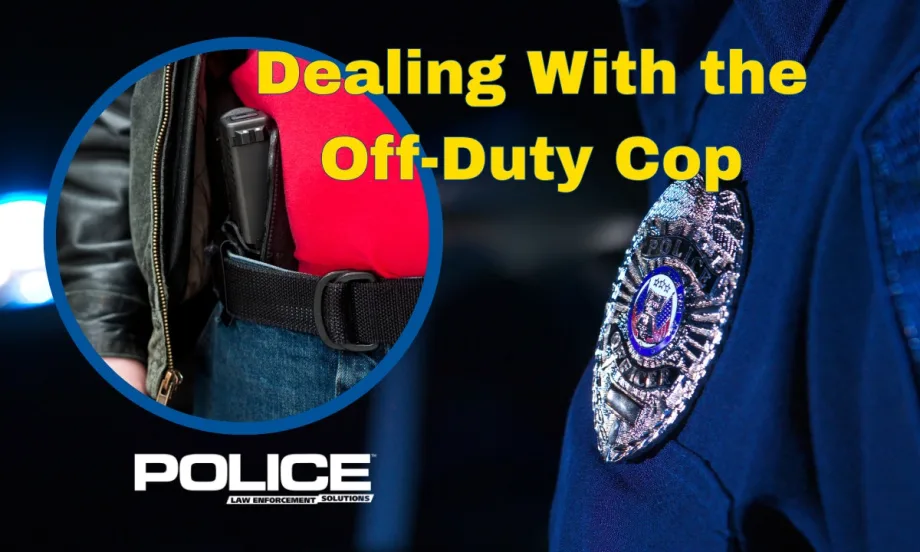
It is inevitable that in the course of your work, you will have to deal with off-duty cops.
POLICE
Many a column has been written about the inherent threats that come with being an off-duty cop, how important it is to weigh the need to take positive action, and how to avoid becoming a victim of friendly fire in the process.
Not so much has been written about the prospect of dealing with the off-duty cop. Yet you can be certain that at some point you will.
Most of the time, the contacts will be innocuous. He may be the informant on a call...a witness to a collision...the motorist you warned and advised before sending him on his way.
There are other times, too, such as when you encounter them incident to family disturbance calls, residential burglary reports, or civil dispute.
Even then, they will be decidedly in one camp, and you in another.
Yet there are other situations that can prove problematic: situations where you find yourself becoming part of the equation, or dealing with someone who just gets under your skin and happens to have a badge.
One deputy found himself in a real can of worms when he was contacted by the commander of a nearby city's PD. The commander, off-duty and in civilian attire, had left a fanny pack containing his sidearm in a shopping cart that he was sure had been collected by a black female shopper. The deputy asked him if he was sure that the woman in question had his gun.
"I'm positive," the commander said. "She's the only one that could have gotten it."
The deputy contacted the female, who immediately became defensive and uncooperative. To make a long story short, the deputy ended up using force on the woman.
The commander immediately began to backpedal, hedging any proclamation that she'd taken the weapon.
"I said that I thought she'd taken it," he said.
It turned out that she never had the gun. It was found by another shopper who subsequently reported it to the station.
As the woman was understandably upset, the incident had acquired a racial undertone, and words like "I'll sue all your asses" were in the air. I ended up interviewing store employees who'd been in proximity of the conversation between the commander and the deputy. Their statements corroborated the deputy's version of events documented and on tape.
It wasn't as though the deputy hadn't done as much as possible to nail down the guy's story in the first place - he had. But the faith he placed in the man - by virtue of the man's being a fellow officer - had been betrayed. Suddenly, the guy was backtracking and leaving the deputy who'd acted as his agent out to hang.
As a supervisor I'd find myself being asked to roll by where some deputy had detained an off-duty cop for DUI. The unspoken hope (expectation) was that I'd kick him loose. I thought it was chickenshit for them to try to pass the buck on to me and told them as much. I also told them to take him in. It didn't make me feel good, but it was what it was.
Depending upon the circumstances, I wasn't above the occasional "spirit of the law" amnesty whether a guy was a cop or not. But in such situations it was my decision from the get-go: I didn't try to pass the buck.
Off-duty cops can display all manner of attitudes. Some will flash badges out the driver's window while you're trying to pull them over (for the third time in a month). Others will loudly proclaim their vocational status after they've knocked some poor schmuck on his ass in a bar as though it's a "king's x." Then there are those who won't even attempt to disguise the contempt they feel that you're not a member of their esteemed department.
I love cops. But as Stephen King notes of police hiring practices in his latest novel, Under the Dome, "You buy cheap, you get cheap." It follows that some are not so deserving of the faith we tend to put in them.
Professional courtesy is a phrase that gets tossed around and debated on the listserve Police_L. It is something that I suspect most practitioners of similar ilk extend one another. However, it is not something that should be extended lightly, and there are those who have extended a "professional courtesy" to a fellow officer and regretted it, either because the guy went out and did another DUI, or because he spouted his mouth off about the amnesty and the wrong person (or the right person) got wind of it.
Regardless of which side of the equation you may one day find yourself on, it will help to have a game plan in place ahead of time.
I don't imagine most cops lie awake at night wondering how they can hook up another officer. If anything, they wonder how they can avoid it.
One thing you can do to prevent negative situations is to model good off-duty behavior yourself, and reward it when you come across it. Another is to not reward bad behavior.
Any off-duty cop who's inclined to give you a bad time will probably do as much to the next cop down the road. Indeed, it may well be business as usual with him. Do what you have to do. If he doesn't like it, then get a supervisor - just as you might when dealing with any other citizen.
Which is exactly what he is.
Read More: Carrying Off Duty
More Blog Posts
Preventing Heat Injury in Police K-9s
In the relentless heat of summer and even early fall in some parts of the country, officers face the important task of protecting their K-9 partners while working in sweltering temperatures. Recognizing changes in a dog’s behavior is the key.
Read More →
Why Your Agency Needs to Attend the ILEETA Conference
ILEETA is a complete resource for trainers to address trainers' needs. Its mission is to enhance the skills and safety of criminal justice practitioners while fostering stronger and safer communities.
Read More →
IACP 2023: New Training Products
Technologies for improving law enforcement training and training management were some of the highlights at this year's show.
Read More →
Initial Results Released from MSP 2024 Police Vehicle Testing
The 2024 pursuit-rated vehicles--all pickup trucks or SUVs, including two battery electric models the Chevrolet Blazer EV AWD and Ford Mustang Mach-E--were put through their paces.
Read More →
Officer Safety Considerations Related to Alternative-Fuel Vehicles
As more alternative-fuel and hybrid vehicles hit the road, police and other first responders need to understand that they are no more dangerous than conventional vehicles. However, there are certain safety considerations every cop should know.
Read More →
Garmont Working to Grow LE Market Presence
Garmont Tactical has found wide acceptance by military boot buyers, but now the company is trying to better respond to the needs of police officers. Many cops now are not fans of 8-inch boots, so Garmont is adapting.
Read More →
Publisher’s Note: Our Commitment to You
Through our magazine and website and our Police Technology eXchange event, we promise to provide you with information and access to resources to help you do your job safer and better.
Read More →
10 Tips for Responding to Mental Health Crisis Calls
The Harris County Sheriff's Office is a model for other agencies that want to learn about crisis intervention and mental health crisis response. Sgt. Jose Gomez shares the story of their programs and provides 10 tips for mental health crisis call response
Read More →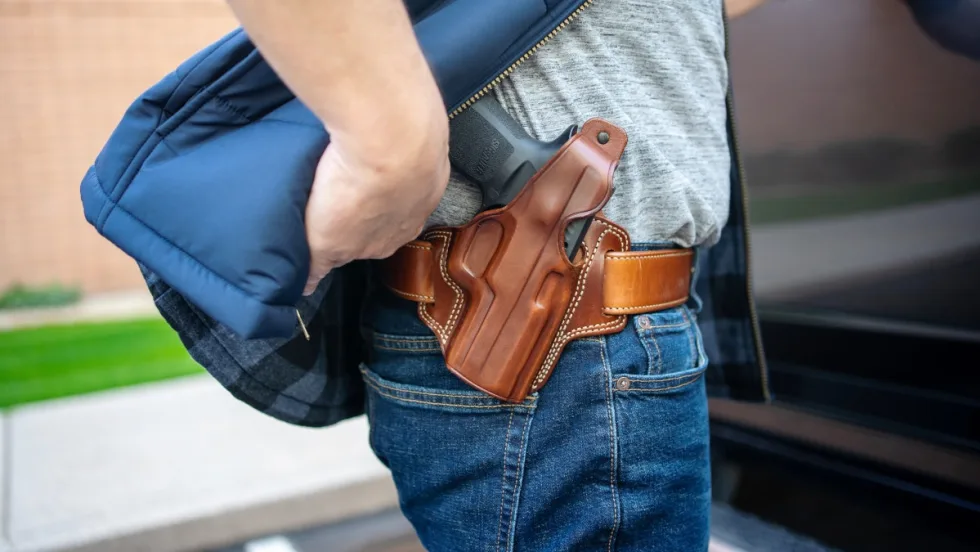
5 Things to Know When Buying Concealed-Carry or Off-Duty Holsters
Mike Barham, of Galco Holsters, shares five important considerations to keep in mind when you buy off-duty concealed or plain-clothes carry holsters.
Read More →
10 Tips for Reviewing Use-of-Force Reports
While the burden of accurately reporting use-of-force situations is on an individual deputy or officer, the person reviewing those reports shares in the responsibility of making sure the reporting is done properly, with clear details included.
Read More →