



Chicano Power and the Brown Berets
Although the Brown Berets claimed to be advocates of education and the politically informed, the majority of the Brown Beret members were high school drop-outs, and many were street gang members. They were motivated more by marijuana than the moratorium.

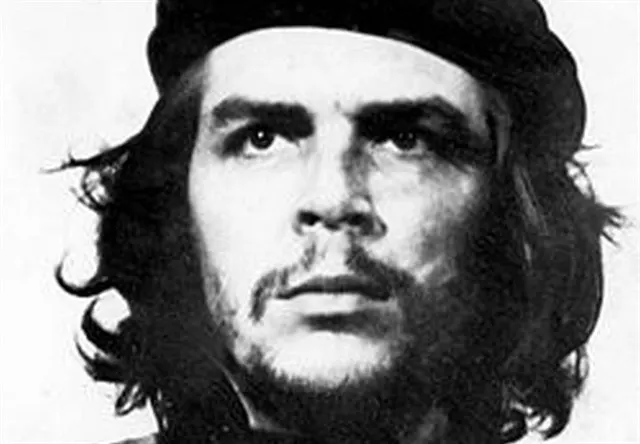
Photo: Richard Valdemar.
The civil rights movement of the 1960s dominated the American media's attention. Almost every household now had a television, and what people saw deeply impacted the American conscience. Television coverage of "sit-ins" and "Freedom Marchers" depicted cops with helmets, shields, sticks and growling dogs set against the civil rights workers, Christian and Jewish Clerics and the common people.
Though the great American civil rights leaders such as Martin Luther King, Jr., founded their organizations on peaceful non-violent principles, the demonstrations often ended in rioting and violence.
Fringe elements from organizations such as the Ku Klux Klan and the Revolutionary Communist Party hijacked these demonstrations to suit their own agendas. Today, the stereotypical racist Southern sheriff image is still used to suggest that the police were the "bad guys." Many of these officers were sympathetic to the civil rights movement, but their job was to keep order and prevent violence. They were often caught in the middle in this national debate.
In the 60s, I was a student in the predominantly African-American city of Compton, Calif. I attended Ralph J. Bunche Junior High and later, Compton High School. Many of the teachers in the Compton and Los Angeles school systems had only recently graduated from colleges that boasted a strong civil rights curriculum. These liberation teachers assigned school works that featured these issues. Students read books such as "Letter from Birmingham Jail" by MLK, "Soul On Ice" by Eldridge Cleaver, and "Black Like Me by John Howard Griffin instead of English or American classics. Geography and social studies classes had discussions about the abuse of third-world countries by colonial powers rather than lessons about the U.S. Constitution, American patriots, or civics topics.
In my circle, we enjoyed spirited discussions and debates with outspoken, intellectual classmates who would become members of organizations such as the Us Organization, the Black Panther Party, the Revolutionary Communists Party, or other militant groups. These were the college-bound elite in Compton. Every Sunday, we would listen to MLK's speeches broadcast over the local Black rhythm-and-blues radio station, and occasionally read the Black Muslim paper "Mohammad Speaks."
The civil rights cause motivated an interest in Latino students as well. Mexican American activists such as Cesar Chavez supported and marched with African American Civil Rights leaders and Liberation theology was being taught from American pulpits.
In my junior year, I became a political activist and was selected by faculty as a promising student leader. At church, I was elected president of the youth group and ran the local Willowbrook teen center for the Catholic Youth Organization and the federal "war on poverty." I was sent to various youth conferences where the attendees voted me their president. In 1965, I attended a six-week Spanish speaking youth conference in Puerto Rico sponsored by Julian Nava, "the father of bilingual education," and the Los Angeles County Commission on Human Relations.
This is not an attempt to boast about my leadership skills, but an attempt to illustrate some background and the mass indoctrination that was occurring in the minority communities that fueled the radicalism of the '60s and '70s that continues today.
The Puerto Rico "Encampment for Citizenship" (global citizenship), was attended by college students from all over the U.S. and from every Spanish-speaking country. A few attendees leaned politically to the right (such as Argentina), but most were Saul Alinksy-like activists who leaned toward socialism or communism. The Cuban representatives tried hard to recruit several of us for further indoctrination by going to Cuba to help cut sugar cane for Fidel Castro.
Unhappy with the diplomatic translations made by the official conference translators of the fiery Spanish anti-American oratory, I began to translate these speeches for the English speakers more literally. I was also influenced by the anti-Communist and anti-Castro Spanish speakers. Not everyone in Central and South America loved Che and Fidel. I found myself defending the U.S. from leftist lies.
In August of 1965, I returned to Los Angeles just in time for the Watts Riots. Martial law was declared. Much of the violence was instigated by outside agitators and groups trying to ferment a Communist revolution. These agitators utilized local criminal gangs against the police and community.
In the 1950s and '60s, the term "Chicano" was derogatory and used to describe youthful Mexican Americans who had lost their true cultural identity and Spanish language. They had become Americanized, hamburger-eating, rock-and-roll loving, and Calo-slang-talking Mexican Americans.
Spinning off from the Black civil rights movement, the Chicano movement was a national attempt to re-identify with the Mexican culture and language and organize the Latino community politically against racism, police brutality and eventually the war in Vietnam. There was a strong emphasis for higher education.
In 1966, a Chicano student conference was held in Los Angeles. From this conference, a group of high-school students formed the Young Citizens for Community Action (YCCA) with support from my former mentor, Julian Nava. Among the original members were Moctesuma Esparza, Vickie Castro, Jorge Licon, Rachel Ochoa, John Ortiz, and David Sanchez. Both Sanchez and Esparza had been trained in social action in Lincoln Heights at the Church of the Epiphany by the Rev. John B. Luce. The name of the organization was changed to Young Chicanos for Community Action and the Piranya Coffee House was started by the YCCA in 1967. Sal Castro, a Lincoln High School teacher and Korean War veteran, began meeting with the group in September and the group adapted a para-military look and a brown beret similar to the one worn by Che Guevara.
"The Brown Beret was a symbol of pride in our culture, race and history," former minister of information, Carlos Montes, told "Fight Back News" in a Feb. 1, 2003 interview. "It also symbolized our anger and militancy and fight against the long history of injustice against the Chicano people in the U.S., especially the Southwest."
Rather than being referred to as the YCCA, the group was commonly called the Brown Berets. Montes said, "We claim the Southwest as Aztlan, the original homeland of the indigenous Aztec ancestors and founders of Mexico City, Tenochtitlan." And in another quote, "We first took on the issue of police brutality. The ELA (East Los Angeles) sheriffs were notorious for their brutality, especially against Chicano youth, which I experienced cruising Whittier Boulevard on the weekends with hundreds of other youth."
In 1967, the Brown Berets led a march on the ELA sheriff's station in protest of the death of a Chicano youth. By 1968, there were Brown Beret chapters in other California cities, Arizona, Texas, Colorado, New Mexico, Milwaukee, Chicago, Detroit, Minnesota, Ohio, Oregon, and Indiana.
Through the efforts of Cristo Cebada, the Brown Berets produced and circulated a newspaper called "La Causa" (The Cause). The paper featured articles about Brown Beret causes such as support for the United Farm Workers and the New Mexico Land Grant movement. In 1969, the Brown Berets participated in the first Rainbow Coalition and the first Chicano Youth Liberation Movement in Denver, Colorado, organized by Corky Gonzales.
The Brown Berets came out against the Vietnam War, citing the disproportionate number of Chicano casualties in the war. The first Chicano moratorium march against the Vietnam War occurred in 1970 and, a few months later, the larger National Chicano moratorium drew up to 20,000 protesters. Both of these events ended in violence and rioting. Two Brown Berets and journalist Ruben Salazar were killed during the first riot.
Because of my background, I was pulled out of my Los Angeles County Sheriff's Department academy class and assigned an undercover role in the events surrounding the second riot. Working for the sheriff's intelligence unit, I passed myself off as an AWOL Army soldier from Fort MacArthur. I was quickly accepted because I had a fake ID, Brown Beret membership card, and I was fluent in the same Communist and racist rhetoric.
The group I infiltrated marched on the LAPD's Harbor Station and protested against deaths at the LAPD lock-up and police brutality. I was appointed to be a squad leader by the Berets as we marched from the Harbor area toward downtown Los Angeles. During the march, I also met with representatives of the Revolutionary Communist Party.
Although the Brown Berets claimed to be advocates of education and the politically informed, the majority of the Brown Beret members were high school drop-outs, and many were street gang members. They were motivated more by marijuana than the moratorium. The organization was also anti-feminist and excluded females from the leadership. The Brown Beret organization was being agitated and manipulated to serve bigger fish.
Apparently recognizing me from my prior activist work in Compton, someone pointed me out to the demonstrators. I ran from the marchers until I was rescued by undercover intelligence units. I later re-joined the moratorium march, mixing with the huge crowds near East Los Angeles. During the rioting that followed, protesters exploded a fragmentation grenade in front of the ELA sheriff's station.
About the same time in San Diego, the Brown Berets and other Chicano radicals occupied a section of land below a freeway overpass where the California Highway Patrol intended to build a sub-station. The state capitulated and allowed this land to become "Chicano Park." In 1972, Brown Berets attempted to occupy the Santa Catalina Island with 26 members. After a few days, this effort failed.
Brown Berets in Chicago in 1972 are credited with starting a health clinic named after Benito Juarez, known as the "Abraham Lincoln of Mexico." After the Berets occupied Frobel Middle School in Chicago, a riot broke out. One policeman and several rioters were injured, and six police cars were destroyed. In 1979, in response to complaints, San Diego built Benito Juarez High School in the community.
In El Monte, Calif., the Student Non-Violent Coordinating Committee (SNCC), an African-American organization, formed alliances with the Brown Berets. They supported each other's causes and activities against the Vietnam War. SNCC even ran African-American candidates under La Raza Unida Party.
Washington state spawned one of the most active Brown Beret chapters in Granger. Students at the University of Washington transplanted the group to Seattle in the late 1960s. Many of the most active students were from Yakima and formed La Raza Unida Party in Washington state.
In 1972, Brown Beret Prime Minister David Sanchez officially disbanded the national organization in Albuquerque, but others claim that it continues today. In the 1995, RICO trial of the Mexican Mafia, Brown Berets demonstrated in front of the federal court house in Los Angeles in support of the defendants. Both the Mexican Mafia and the Nuestra Familia prison gangs teach La Raza and Aztlan ideologies in prison.
In the most recent incident in January, at California State University, Fresno, during a discussion about the Development, Relief and Education for Alien Minors (DREAM) Act, a Brown Beret member was escorted out of the building for speaking out of turn. In support, the audience began shouting "Go to Hell Tea Party" and "This was Mexico first."
More Blog Posts
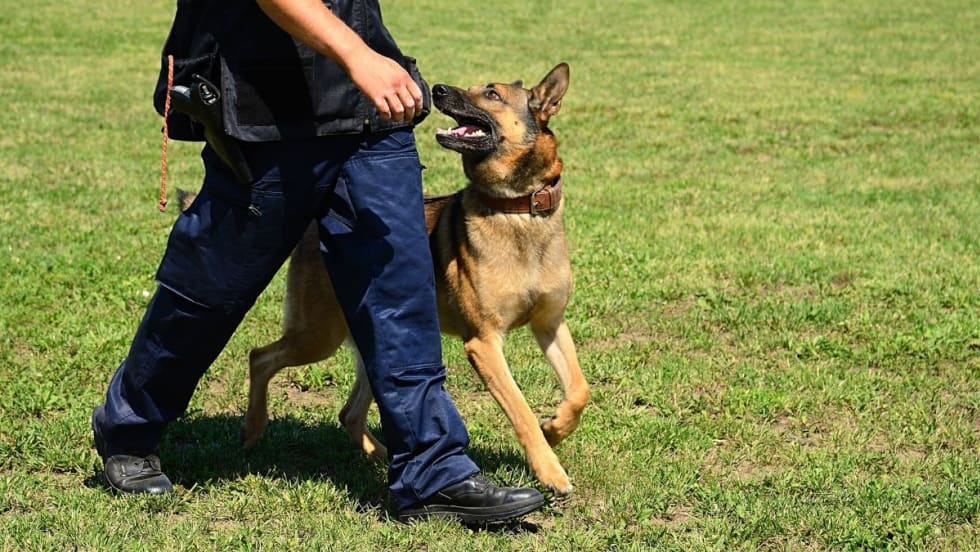
Preventing Heat Injury in Police K-9s
In the relentless heat of summer and even early fall in some parts of the country, officers face the important task of protecting their K-9 partners while working in sweltering temperatures. Recognizing changes in a dog’s behavior is the key.
Read More →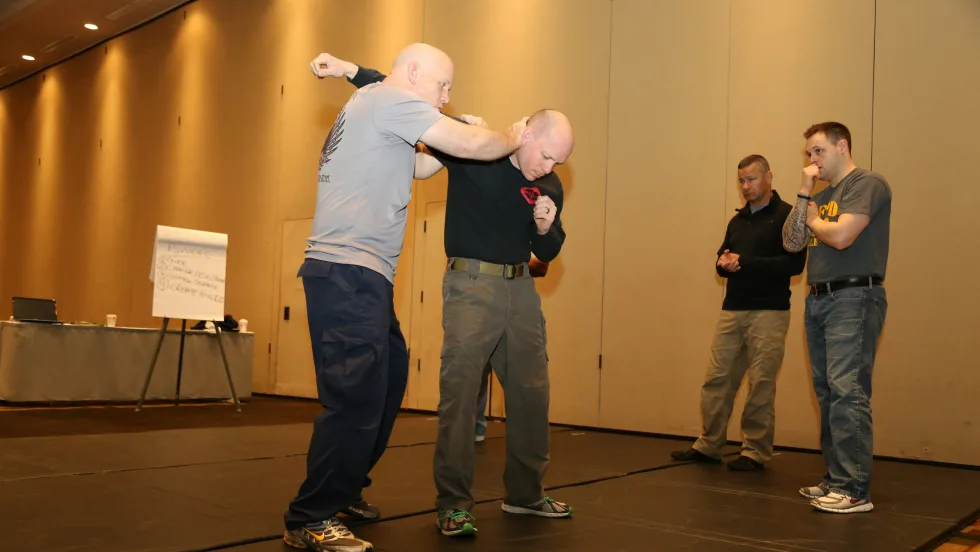
Why Your Agency Needs to Attend the ILEETA Conference
ILEETA is a complete resource for trainers to address trainers' needs. Its mission is to enhance the skills and safety of criminal justice practitioners while fostering stronger and safer communities.
Read More →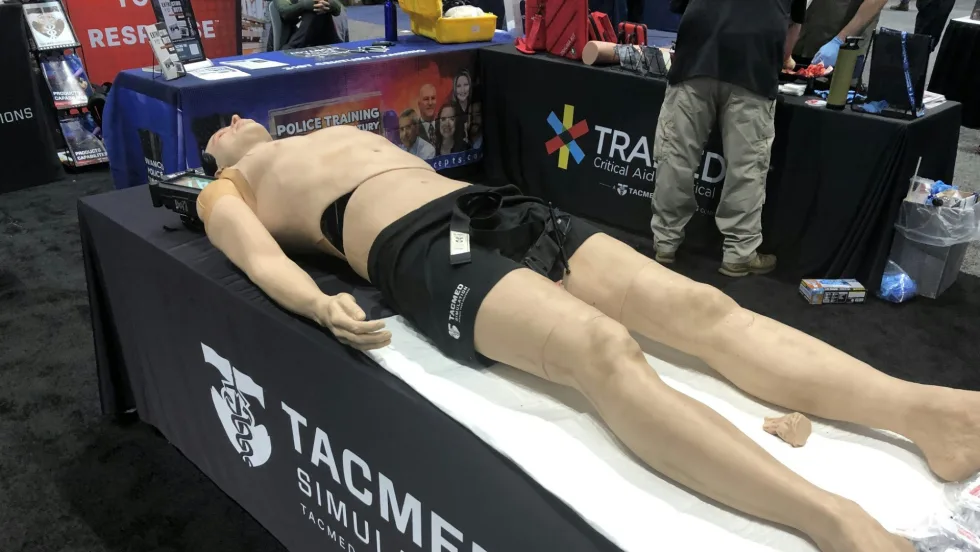
IACP 2023: New Training Products
Technologies for improving law enforcement training and training management were some of the highlights at this year's show.
Read More →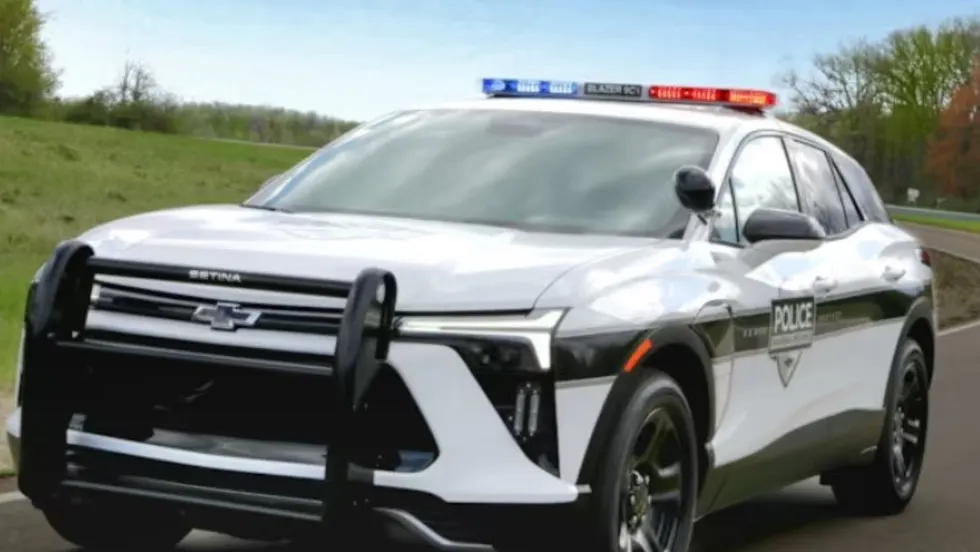
Initial Results Released from MSP 2024 Police Vehicle Testing
The 2024 pursuit-rated vehicles--all pickup trucks or SUVs, including two battery electric models the Chevrolet Blazer EV AWD and Ford Mustang Mach-E--were put through their paces.
Read More →
Officer Safety Considerations Related to Alternative-Fuel Vehicles
As more alternative-fuel and hybrid vehicles hit the road, police and other first responders need to understand that they are no more dangerous than conventional vehicles. However, there are certain safety considerations every cop should know.
Read More →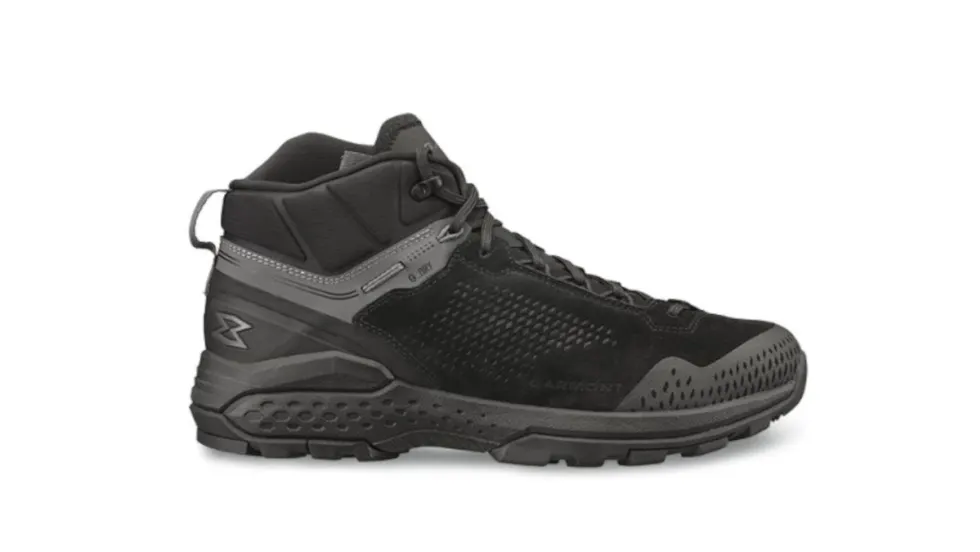
Garmont Working to Grow LE Market Presence
Garmont Tactical has found wide acceptance by military boot buyers, but now the company is trying to better respond to the needs of police officers. Many cops now are not fans of 8-inch boots, so Garmont is adapting.
Read More →
Publisher’s Note: Our Commitment to You
Through our magazine and website and our Police Technology eXchange event, we promise to provide you with information and access to resources to help you do your job safer and better.
Read More →
10 Tips for Responding to Mental Health Crisis Calls
The Harris County Sheriff's Office is a model for other agencies that want to learn about crisis intervention and mental health crisis response. Sgt. Jose Gomez shares the story of their programs and provides 10 tips for mental health crisis call response
Read More →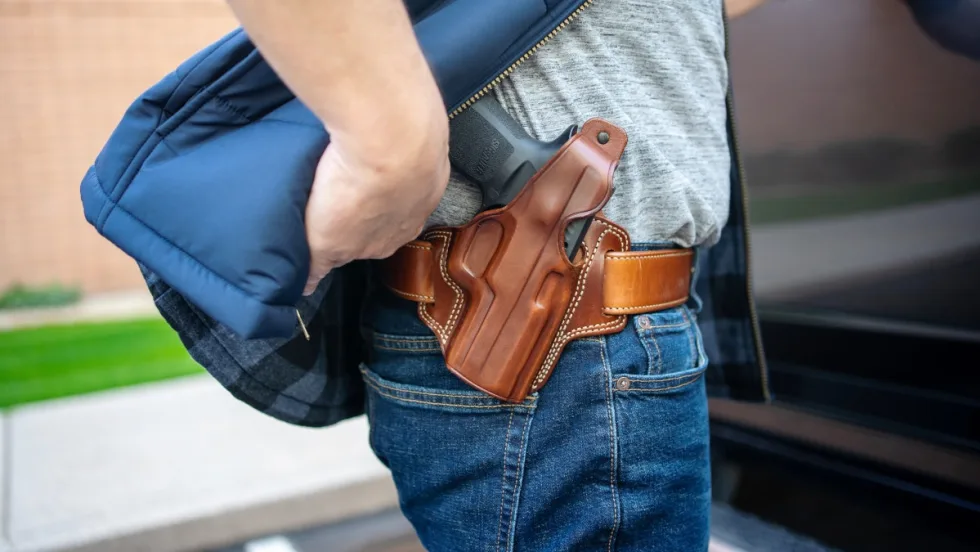
5 Things to Know When Buying Concealed-Carry or Off-Duty Holsters
Mike Barham, of Galco Holsters, shares five important considerations to keep in mind when you buy off-duty concealed or plain-clothes carry holsters.
Read More →
10 Tips for Reviewing Use-of-Force Reports
While the burden of accurately reporting use-of-force situations is on an individual deputy or officer, the person reviewing those reports shares in the responsibility of making sure the reporting is done properly, with clear details included.
Read More →