
Police Magazine

 MENU
MENU SEARCHMENUSEARCH
The proposed federal Assault Weapons Ban, which is supposed to curtail mass shootings, could be very bad for law enforcement officers. It may take the tools you need to protect the public from active shooters right out of your hands.
Read More →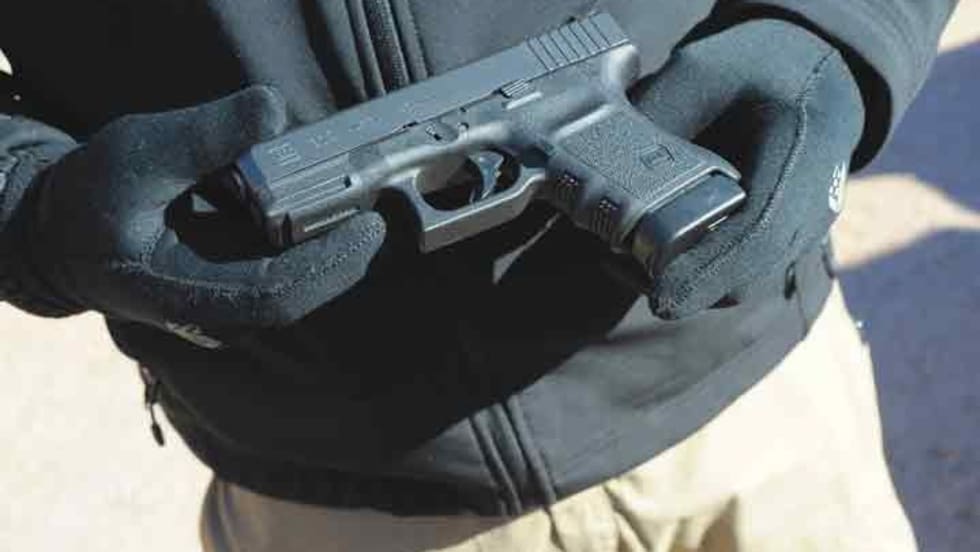
The big trend at this year's SHOT Show was flashlights so bright that they can probably take X-rays. Police staff members accidentally got blasted a few times with these 700-lumen light sabers, and they are more less-lethal weapons than illumination tools.
Read More →
The plan here is to introduce a Monday-Wednesday-Friday exercise regimen that is unique, fast (sub-30 minutes each), and cheap. Do as you read here for six weeks and you'll be nothing less than shocked at the level of strength and conditioning you attain with so little time invested in each workout.
Read More →
Soft body armor ballistic vest packages are rated levels 1 through 4 by the National Institute of Justice (NIJ) based on how much protection from ballistic rounds they are rated to provide. Similarly, armor plates are available in two different types or classes tested and recognized by the NIJ: type 3 and type 4.
Read More →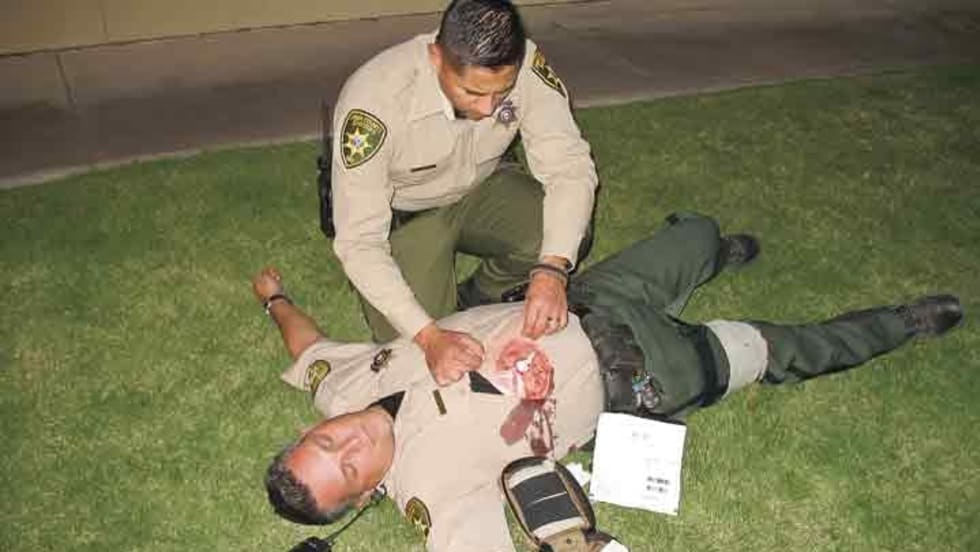
It can take time for Emergency Medical Services (EMS) to arrive on scene. During that time law enforcement officers may be the only medical care available. So officers need to be trained to supply that care.
Read More →
Tens of thousands of combat-weary warriors are now being discharged out of the military, often without a game plan as to what they will do next. Many of them entered the military right out of high school, so being a warrior is the only job they've ever had.
Read More →
As law enforcement officers we find it hard to think of ourselves as "victims." We tend to think that robberies, burglaries, and home invasions happen to other people, not to us. After all, we're the cops. Unfortunately, crime can affect anyone, even us.
Read More →
Disabled federal agents face severe and unwarranted reductions to their Federal Employees Compensation Act (FECA) benefits should Title III of S. 1789, the "21st Century Postal Service Act," become law.
Read More →
Zombies aside, there are trends emerging in the firearms industry, and they have the potential to determine what tools you will be issued in the near future.
Read More →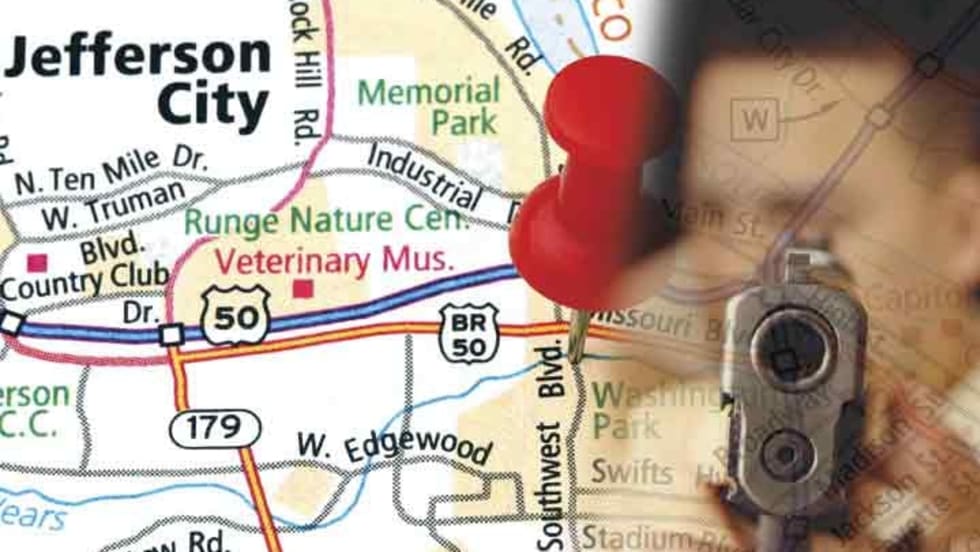
The sight of the wagon pulling into the hotel parking lot caused Bohanan's heart to sink. He hoped that the suspect would drive through the hotel lot and continue on. He didn't want to have to deal with a desperate murder suspect loose in the hotel.
Read More →