



Your Role as a Supervisor
Just doing your job is not enough. You have to fulfill your role as a supervisor, which encompasses much more.

Typically, the responsibilities of a firstline supervisor stem from one of four broad categories: personnel policies and procedures, staffing, employee training and development, and employee performance management. Each agency creates a set of tasks from those broad categories that, in turn, become the job description of a supervisor. It seems logical then that if you complete your list of tasks, then you are doing your job. Life would be great if things were really that simple. Unfortunately, just doing your job is not enough. You have to fulfill your role as a supervisor, which encompasses much more.
In order to understand what is meant by job and role, we can refer to their differences in terms of hard and soft skills. Supervisors who don't understand the importance of each focus on the hard skills (job) and glance over soft skills (role). In order to rise to your full potential, you need both.
Supervisory hard skills are those pure management tasks like preparing time sheets, writing performance appraisals, filling staffing requirements, performing vehicle inspections, and making sure policy and procedure are being followed.
Soft skills, on the other hand, are more subjective because they are people oriented and fall more on the leadership side. In other words, soft skills relate to the way you interact with people in order to accomplish goals and objectives; yours and theirs. Examples of soft skills include your abilities with written and oral communication, motivation, problem-solving, how you protect institutional knowledge, and how you bring about teamwork.
There is always a high level of expectation in your role as a supervisor. For example, you are supposed to coach and mentor your subordinates, be an advocate for your agency, and at the same time be an advocate for your subordinates. In order for you to meet these expectations, you have to be willing to put yourself out there in the middle of things. You have to be willing to challenge the status quo. Unfortunately, not everyone is willing to do that and many keep a low profile by embracing the safety of mediocrity instead. Many of the ills we see in law enforcement today stem from supervisors ignoring their role and failing to engage.
In order to further understand, let's stop and reflect for a moment. What's been your experience with supervisor roles? Have any of your supervisors mentored you in the past? Is your current supervisor mentoring you now? Has any supervisor helped you achieve any of your career goals and objectives? Has any supervisor ever stood up for you when necessary? Have you ever had a supervisor you enjoyed working with because they set a positive tone and led by example? Do you know of a supervisor who is well respected in the community? If you are shy on answers, somebody should be asking why.
In today's world, there is a tendency for the quick fix. We look for short-term solutions and forget about establishing long-term goals. Law enforcement is no exception. We tend to forget that today's rookies are tomorrow's command staff. We have to improve in this area or we'll suffer the same mediocrity or, in some cases, incompetence.
The only way to have supervisors and a command staff that are worth having is to make sure that as officers rise up through the ranks, they are made to understand the importance of the roles they play in and out of the agency. They have to be given the opportunity to develop both hard and soft skills. We have to put a premium on making a difference by creating a culture of engagement. And one of the best ways to do this is for supervisors to lead the charge.
Supervisors need to become more involved with their agencies and the communities they serve. The only cure for inexperience is experience, so it's extremely helpful for supervisors to get involved with things like serving on agency committees and hiring boards, and in helping evaluate promotional exams. It's also important to volunteer in various in-house programs like Police Explorers, citizen academies, and Crime Watch. And it wouldn't hurt to become an agency or police academy instructor to share your experiences and help your agency grow.
The argument for doing your job is a simple one; do the minimum and you still get paid. The argument for fulfilling your role is more complicated. It's only compelling, however, to those who want to rise above mediocrity, set high standards, and make a difference.
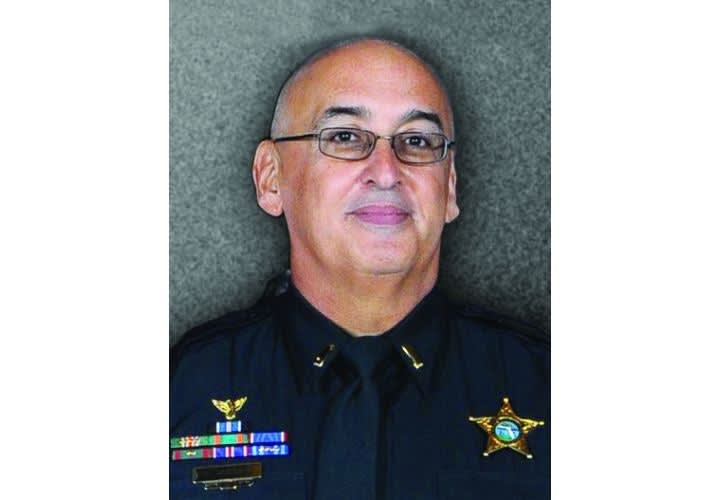
Amaury Murgado retired a senior lieutenant from the Osceola County (FL) Sheriff's Office with over 29 years of experience. He also retired from the Army Reserve as a master sergeant.
More Training

Registration Underway for Sixth Annual First Responders Relay
The California Police Athletic Federation’s annual First Responder Relay will welcome first responder teams from across the globe to compete along Ventura's scenic coastline on Oct. 11. Registration is underway.
Read More →
Vector Solutions Launches Comprehensive Online Dispatch Training Catalog for Emergency Communications Professionals
Vector Solutions’ new catalog of 35 expert-developed online courses can help emergency communication centers strengthen training, meet certification requirements, and simplify continuing education.
Read More →
Tools for Active Shooter Response Training
What technologies help prepare officers for active shooter response situations? This behind-the-scenes look at law enforcement training explores shot simulators, smart firearms, laser target systems, and the tools used to build safer, more effective training environments.
Read More →
Two-Officer Tactical Doorway Entry Techniques
Entering a room during active-threat situations requires communication, coordination, and disciplined tactical movement. In this video, trainers from the United States Deputy Sheriff’s Association demonstrate critical room entry concepts, including fatal funnel awareness, team coordination, and safe tactical movement.
Read More →
High Compressed Ready Explained | Muzzle Control For Room Entry
In this video, Mike Willis, law enforcement national training and program director for the United States Deputy Sheriffs’ Association, demonstrates the high compressed ready position and discusses muzzle control during room entry.
Read More →
Why Attend the DroneSense Innovation Summit by Versaterm?
Let’s hear from Ryan Bracken, head of product, about why your agency should send someone to the first annual DroneSense Innovation Summit by Versaterm in April.
Read More →
Caswell Live Fire Spins Off from InVeris
Caswell Live Fire has spun off from parent company InVeris, coinciding with the 100th anniversary of Caswell’s founding. Over the past 100 years, Caswell has developed pioneering solutions that support military, law enforcement, and commercial clients worldwide.
Read More →
When Do You Transport a Wounded Officer Instead of Waiting for EMS?
Thumbnail for video series POLICE Topics, Tactics & Tips with a yellow headline that reads When Do You Transport a Wounded Officer Instead of Waiting for EMS?
Read More →
How to Pick Your High-Risk Stop Location for Tactical Advantage
Hear veteran trainer Mike Willis, of the United States Deputy Sheriff’s Association, explain several considerations that can help you wisely pick your best spot to initiate high-risk or felony traffic stops.
Read More →
Coffee Break with Police Experts: Using Your Patrol Vehicle for Cover
In this video, hear from Dustin Mowery, a product specialist at Team Wendy, as he discusses how to best use a patrol vehicle for cover.
Read More →