



Why You Need a Med Kit
The need for law enforcement officers to have ready access to high-quality first-aid products has never been more pressing. In an officer-down scenario, one of the most critical things you can do to improve survival is to reduce blood loss.

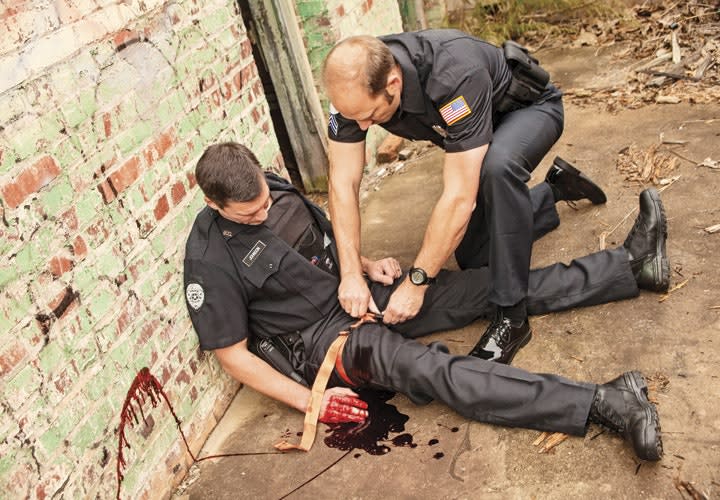
Photo: Tactical Medical Solutions
At about 9 a.m. on Saturday Dec. 7th, 2013, Silverton, Ore., police officers were in pursuit of a stolen vehicle. The vehicle was lost in the snow but was soon found abandoned, and Marion County (Ore.) Sheriff’s deputies joined in the search for the suspect.
Citizens told the deputies they’d seen a man running from the truck carrying several guns. A containment was formed, and during the search of a Christmas tree farm, the suspect ambushed Dep. Jim Buchholz, shooting him once in the right thigh.
Buchholz returned fire then treated his own gunshot wound, possibly saving his own life. The suspect was wounded and taken into custody. Buchholz was transported to a local hospital. Three days later he went home.
Law officers have long carried “bail out” bags stuffed with ammo, more ammo, snacks, and basic first-aid supplies. The question was always whether the officer would have access to the bag (or think to get it) when he or she needed it; fortunately, few have had to know the answer. Today, necessity and improved technology may be making bulky “bail out” bags a thing of the past, as they are being replaced by smaller pieces of kit that officers are more likely to have on or around them, especially hemostatic blood stoppers like QuikClot or tourniquets.
QuikClot, tourniquets, and other life-saving tools have become both easily accessible and incredibly affordable in the last few years thanks in large part to their development and refinement during U.S. military operations in Somalia, Iraq, and Afghanistan.
The need for law enforcement officers to have ready access to high-quality first-aid products has never been more pressing. In recent mass casualty and active shooter incidents, we have seen that medical responders can be overwhelmed or unable to enter the danger area to render aid. That means law enforcement has to be ready to step up and assist. Also, officers need access to emergency medical tools above and beyond what is found in a typical first-aid kit to save officer lives, even their own. In an officer-down scenario, one of the most critical things you can do to improve survival is to reduce blood loss.
Beyond First Aid
Law enforcement engaging in medical response is not new: Many officers are certified as EMTs, agencies often provide LifeFlight paramedic services, some agencies have search-and-rescue responsibilities, and of course law enforcement is often first on scene at medical calls.
What has changed is timing. Research studies and practical evidence have shown that by effectively controlling bleeding as quickly as possible, responders can significantly improve the chances of an injured person’s survival.
Fortunately, technology has improved to enable officers with very little training to employ simple hemostatic tools with great effect. As law enforcement becomes more familiar with tactical EMS concepts, it should be noted that fire departments are also rethinking their traditional role of waiting outside perimeters until a scene is fully secure. For instance, the Los Angeles Fire Department recently announced it would begin issuing firefighters ballistic vests and training them to enter active shooter environments with officers.
“The (Nov. 1, 2013) LAX incident really was a paradigm shift for us… There are people whose lives may depend on us getting them out of there quickly,” Los Angeles Fire Department Medical Director Marc Eckstein told the Los Angeles Times.
So with this larger paradigm shift in mind, let’s look at a few of the key life-saving tools that you should consider keeping on or about your uniform when you’re on patrol, and a few suggestions for where you can store them.
Hemostatic Agents
Bloodstopper bandages the size of kitchen sponges are a thing of yesterday, replaced by small dressings covered in chemicals and minerals that help increase blood clotting and reduce blood loss as well as control infection. Packets holding these dressings are typically small, and when the dressing is needed, the packet can simply be ripped open and the contents compressed onto the wound. QuikClot is the market leader, though there are other options. These products are easily available at sporting goods stores or online for prices ranging from $10 to $50. The more expensive products are reportedly less painful to apply and remove.
A pouch filled with one or more of these hemostatic dressings can be easily placed in a side or shirt pocket, attached to a ballistic vest, or in a small med-bag. The main thing to remember is that you want them to be easily accessible and not in the trunk of your car.
A Tourniquet
A tourniquet is simply a band placed around an arm or leg between the wound and the heart, which is tightened until blood loss at the wound is stopped.
For decades the application of a tourniquet was taught as the blood loss stopper of last resort (after applying pressure and wound elevation), mainly due to concern that tourniquets left on too long (hours) could result in loss of a limb. But as soldiers and law enforcement officers have had to respond immediately to devastating hemorrhaging wounds and as improvements have been made in getting the critically injured into trauma bays more quickly, a life-over-limb philosophy has led trauma specialists to reconsider the tourniquet.
The Philadelphia Police Department recently distributed 5,000 tourniquets to its officers and this measure has already saved lives, including that of the victim of a botched robbery on Dec. 5. “The doctors said using the tourniquet definitely saved his life,” Officer Tighe Wingrove who applied the tourniquet told the Philadelphia Daily News.
A tourniquet recently provided as part of a trauma kit to Bernalillo County (N.M.) Sheriff’s deputies may have also helped save the life of Dep. Robin Hopkins, who was shot in the leg by a suspect who had stolen a police car.
North American Rescue’s excellent patrol-ready tourniquet is available online for $20 to $30. Tourniquet belt, ankle, vest, and carrier holders are readily available from 5.11 Tactical, North American Rescue, and others vendors.
A Chest Seal
A chest seal is a thin piece of self-adhesive plastic that can be placed over a chest wound to not only stop the wound from bleeding, but also, critically, to stop the wound from sucking air into the chest cavity, crushing the lungs’ ability to expand. Some chest seals also include a small one-way vent, which allows air to be forced out the hole but not be sucked back in.
A chest seal can be easily obtained online (from North American Rescue or other sources) for $10. Even when folded it may be too bulky to keep in a pocket, but it should definitely be considered for any small trauma kit.
Gloves
Whether you bum a couple gloves from the hospital or the fire department or have your own supply, you should keep nitrile/latex-free gloves on your person for medical calls or searches. My preference is pre-wrapped Black Talon gloves from North American Rescue. They are available for $15 per bag.
Med Kits
If you want to keep critical medical supplies on your person or immediately accessible, one easy way to go is to pick up a pre-sealed, self-contained kit, which can simply be left in its sterile pouch until needed. These kits are available from a variety of vendors, including North American Rescue and Tactical Medical Solutions. A typical kit contains trauma dressings, a tourniquet, and gloves in a small pouch for about $45. (Note: the Marion County Sheriff’s Department had issued North American Rescue med kits to its deputies only a week before Dep. Buchholz’s shooting.)
A CPR Mask
Though this article’s focus is on ensuring preparedness for officer down and mass casualty medical situations, certainly the frequency of cardiac and “person not breathing” calls for service that you receive should be a reminder of the importance of carrying a CPR mask.
Microshields are available for about $10 and can be easily left in a pants pocket, while a more reassuring hard, plastic mask will have to be stowed someplace easily accessible.
How I Carry
As a patrol deputy already buried in gear, my preference is to keep gloves in my pocket, a packet of QuikClot gauze taped to the outside of my vest carrier (which also indicates my blood type), and my other critical medical supplies in a small pouch I built, which clips to my passenger side visor so it is out of the way but within easy reach. This pouch clips to the visor via a durable plastic clip and includes a vented chest seal, a packet of QuikClot, several trauma dressings, trauma shears (for cutting clothes), a pair of gloves, a small CPR mask, and a tourniquet secured to the side. The pouch is easily grabbed via a bright red handle and is clearly labeled “MEDIC,” so even if I am not in the car, I can easily direct someone else to the bag.
A med kit is not a replacement for your bail out bag. But as the medical tools available to law enforcement have rapidly improved in number, sizing, and pricing, it is a good time to reconsider what supplies you’re keeping where and how easily you’ll be able to get to the supplies you need most when you need them most. Dep. Buchholz stayed in the fight and treated his own gunshot wound. How ready are you to do the same?
Evan Wagner is a Southern California Level 1D reserve deputy sheriff and a trained emergency medical technician.
More Patrol
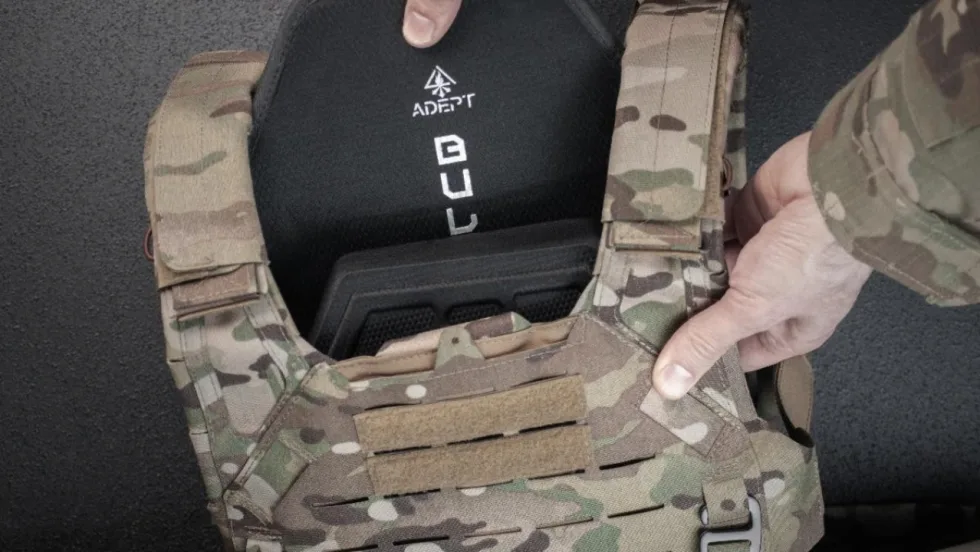
Adept Armor Introduces Two New Rifle Plates
Adept Armor has launched two new Level IV ballistic plates, the Emperor and the Archon Mark 2, which brings Adept Armor’s new Quatroid ceramic to the high-threat, performance-value center of the range at 5.2 pounds.
Read More →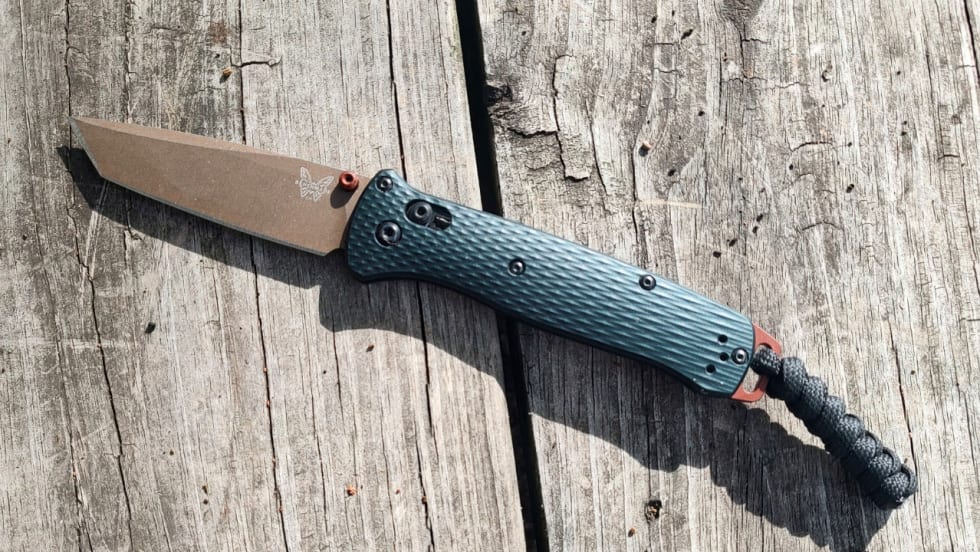
POLICE Product Test: Benchmade Bailout
The Benchmade Bailout is a slim, lightweight carry knife with a deep-ride pocket clip and comes in a variety of blade steels and scales. Here is a detailed review of the Taiga Green Bailout, released earlier this year.
Read More →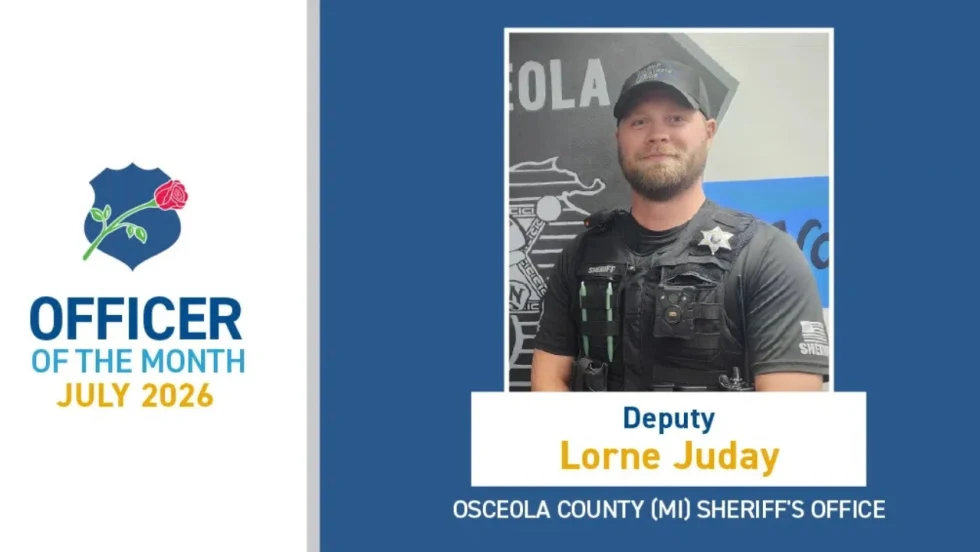
NLEOMF Announces July 2026 Officer of the Month
NLEOMF honored a Michigan deputy sheriff as the July 2026 Officer of the Month for rescuing a trapped driver from a burning vehicle following a Fourth of July crash.
Read More →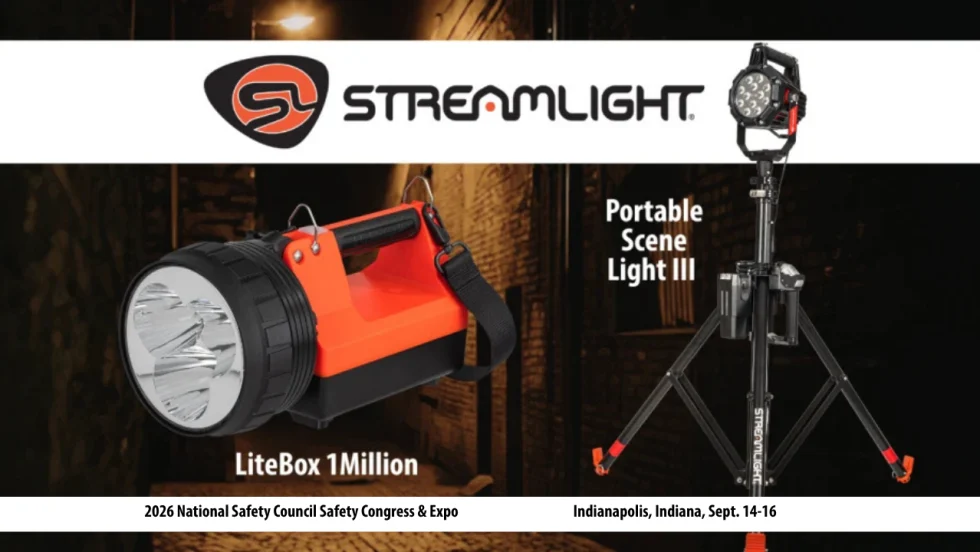
Streamlight to Showcase Newest Lighting Products at National Safety Council’s Safety Congress & Expo 2026
Streamlight will showcase its latest lights, including the Portable Scene Light III and the LiteBox 1Million, at the 2026 National Safety Council (NSC) Safety Congress & Expo.
Read More →
The 2027 World Police & Fire Games Set for Perth, Australia
The 2027 World Police & Fire Games (WPFG) will take place in Perth, Western Australia, from Friday, March 12 through Sunday, March 21, 2027.
Read More →
5.11 Partners with National Fallen Firefighters Foundation to Support #ForThe343
5.11 has joined the nationwide movement honoring the 343 New York City Fire Department firefighters lost on Sept. 11, 2001.
Read More →
Team Wendy Announces Title Sponsorship of the Jorge Pastore Foundation
Team Wendy’s 3-year partnership with the Jorge Pastore Foundation expands access to programs that strengthen those who serve.
Read More →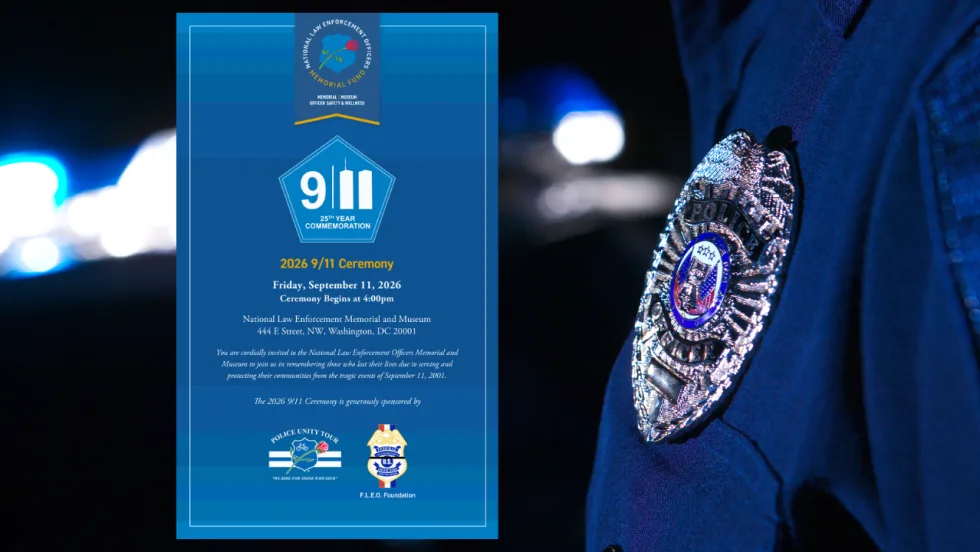
National Law Enforcement Memorial and Museum Hosting 9/11 25th-Year Commemoration Ceremony
The National Law Enforcement Memorial and Museum is hosting a 9/11 25th Year Commemoration Ceremony on Sept. 11 at 4 p.m.
Read More →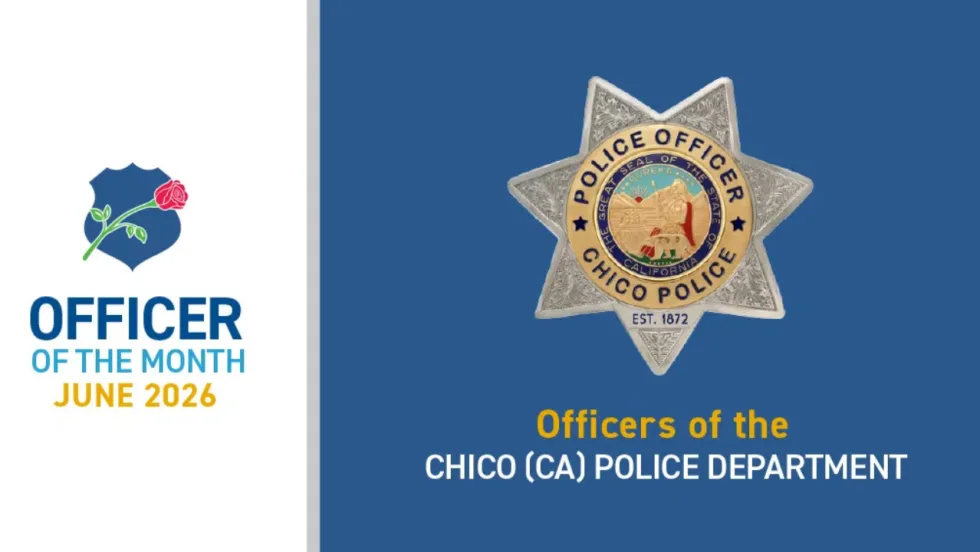
National Law Enforcement Officers Memorial Fund Announces June 2026 Officers of the Month
The National Law Enforcement Officers Memorial Fund (NLEOMF) named 15 officers of the Chico Police Department (California) as the Officers of the Month for June 2026 for their roles in responding to an active-shooter incident at a public library.
Read More →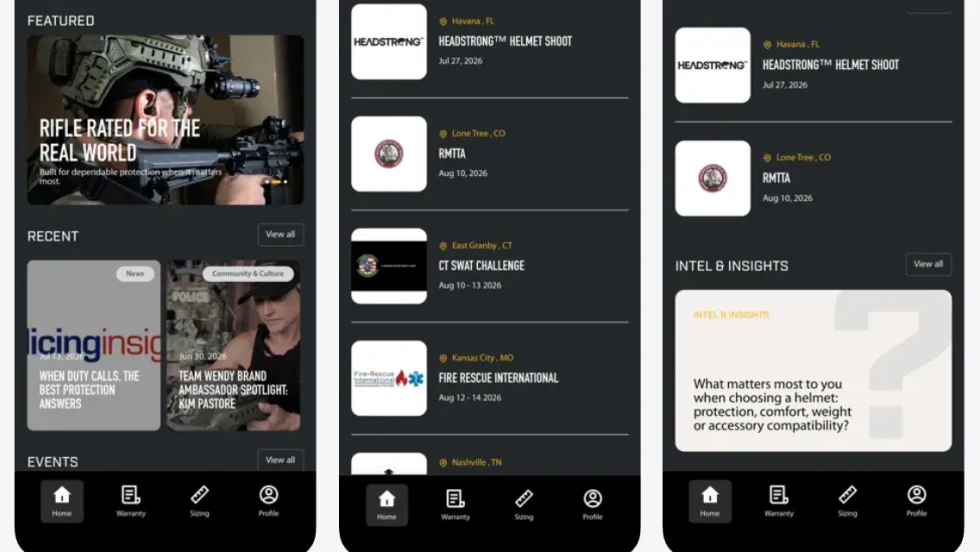
Team Wendy App Creates New Digital Hub for Helmet Owners
The Team Wendy Community App provides one location for warranty registration, size-fit tools, product updates, and community connection. For helmet owners, the new app creates a simpler path to the information and tools that matter most.
Read More →