



To Honor and Protect
When former President Ronald Reagan died in his Bel Air home on June 6, a lot of work began for the numerous law enforcement agencies that protect the nation’s capital and its citizens. For the first time in three decades Washington, D.C., would play host to a major state funeral of an honored U.S. president.

Freedom is a fragile thing and is never more than one generation away from extinction. It is not ours by inheritance, it must be fought for and defended constantly by each generation. - Ronald Reagan
When former President Ronald Reagan died in his Bel Air home on June 6, a lot of work began for the numerous law enforcement agencies that protect the nation's capital and its citizens. For the first time in three decades Washington, D.C., would play host to a major state funeral of an honored U.S. president.
A state funeral for a great leader like Reagan means a lot of pomp and circumstance and a gathering of some of America's and the world's most important office holders. It also means thousands upon thousands of everyday citizens and international mourners thronging the streets, buildings, and monuments of the capital. All of which adds up to serious headaches for the officers and agents charged with ensuring peace and order on the streets of Washington.
The immense task of safeguarding world leaders and the general public for the three-day Reagan remembrance was charged to the U.S. Secret Service. Acting as the umbrella agency over all operations, the Secret Service orchestrated a multi-jurisdictional action plan with the cooperation of such agencies as the Metropolitan Police Department (MPD) of Washington, D.C., the U.S. Capitol Police, and U.S. Park Police, as well as a host of other local and federal departments. Also, the Military District of Washington, representing various branches of the armed services, was instrumental in providing additional security on land, water, and in the air.
Secret Service Special Agent In-Charge Charles Bopp headed up the security effort less than a day after the G8 Summit on Sea Island in Georgia. "Our role was to act as a conduit between agencies by promoting and developing partnerships," Bopp says. He adds that the perception of heavy-handedness by the feds in the past did little to promote cooperation and goodwill among local departments.
"The strategy was not to dictate any particular function during the event, but rather to utilize agency expertise while facilitating communication," Bopp says, explaining how the Secret Service did its best not to appear like an 800-pound gorilla. "We just wanted to cover all our bases. It's a testament to the Secret Service and its ability to handle several complex assignments at once."
The operational network for the three-day effort was placed at the Metropolitan Police Department's Joint Operations Command Center (JOCC). Securely tucked away in its headquarters and activated for special events, this command center has facilities and capabilities that rival the best military war rooms.
The command center is furnished with state-of-the-art communications, including secured telephone and computer lines. Inside, each agency has a dedicated workspace, and anyone in the room can monitor weather, air traffic, city surveillance cameras, and other critical intelligence on overhead plasma displays.
Charles Ramsey, chief of the MPD, praises the JOCC, and says it was an ideal tool for the Reagan operation. "The framework was in place. We just needed to make the necessary adjustments based on routes, conditions, and the number of people attending each day of the event," he says.
Revising the Plans
President Reagan's funeral had actually been in the works since the final days of his administration. It was planned more than 20 years ago with the goal of striking a balance between public safety and public access.
Unfortunately in the intervening years, new concerns arose that weren't even on the security radar in the late 1980s. Domestic and international terrorists have now placed the nation's capital in their crosshairs. This meant that the security plans for the funeral needed to be revisited.
Of course, Washington-area law enforcement is used to working security for events that present rich targets for terrorists. As the acting seat of the federal government the District often hosts important international dignitaries who somebody wants to kill. And with its many landmarks, including monuments and memorials, Washington is a symbol of America and that makes it the focus of hate by many of the world's evildoers.
An Initial Scare
Every officer working to protect the funeral, the public, and the VIPs during the Reagan remembrance events was keenly aware of the threat of terrorism. And for one brief and tense moment it looked like all of our fears were about to become very real.
As the massive motorcade escorted by D.C. Police made its way toward the city from Andrews Air Force Base in nearby Maryland, U.S. Capitol Police Chief Terrence Gainer was informed by ICE (Immigration and Customs Enforcement) that an unidentified single-engine aircraft had entered the restricted airspace. With the plane bearing down on the Capitol, Gainer activated Aircon-Red, the planned response to such an event and he conference called the heads of the House and Senate.
A determination was then made to evacuate the Capitol building. The order was given, and a rush of people trying to exit the building set off a chain reaction. This carried over to the tremendous lines of people who were waiting outside the Rotunda, where President Reagan's body was soon to lie in state. Fortunately, the evacuation order was rapidly rescinded, which brought back an uneasy calm to the area, and the lines on the west side of the Capitol began to reform.
The attack precautions were triggered because a plane strayed off course. Since the aircraft could not be identified, it was whisked away by escort jets to an undisclosed location for identification. Later that day, it was reported that the governor of Kentucky was aboard the plane and his pilot, a state trooper, had turned off the transponder by error and mistakenly flown into the restricted airspace.
Now, the threat was over, but a cautious tranquility remained.
The Funeral Procession
Other than the incident with the pilot who mistakenly flew his aircraft into a no-fly zone, the funeral and the associated events went very smoothly. But only because of the dedicated work of numerous local and federal personnel.
The official state funeral began on Wednesday June 9, when President Reagan's casket was flown from California to Andrews Air Force Base. It was met by an Air Force honor guard and a 21-gun salute and then transferred to a waiting hearse for the former president's final trip to the White House.
The night before, the U.S. Park Police had secured the Ellipse and made hasty arrangements in accordance with the Reagan family's last-minute wish to provide a thousand seats as a reserved viewing area for the Reagan administration's former staff and cabinet members.
The subsequent transfer from the hearse took place at the rear of the White House and went flawlessly. The flag-draped casket was placed upon a horse-drawn caisson for the slow methodical procession up Constitution Avenue to the Capitol. A riderless horse trotted behind, symbolizing a fallen leader who shall never ride again.
The overall logistics to accomplish this feat from a public safety standpoint were overwhelming. Despite a total shutdown of the central business and government sectors of the city, the sheer volume of people who wanted to attend the event presented an enormous manpower challenge.
Security required a heavy uniformed presence of more than 4,500 personnel from a variety of agencies. To put this army of cops on the street, some days off were suspended, some leaves were canceled, and tours of duty were extended.
In addition to the police presence on the street, numerous special operations teams played a major role in maintaining security. Tactical teams took positions on nearby rooftops, sharpshooters at the ready, and bomb dogs and their handlers aggressively worked the crowds.
These teams covered the land. But there were also concerns about threats from the water and the air. Coast Guard units aided the Metropolitan Police Harbor Patrol Branch in policing the Potomac River. Above, U.S. Customs Black Hawk helicopters kept a close watch for trouble and F-16s circled the city.
In addition to the visible security precautions, there were also plenty of behind the scenes anti-terrorism response units. Biological and chemical detection was attended to at street level and in the Metro subway system below. Some pocket-sized detection units were also carried by officers, and larger, more sophisticated chemical, bio, and radiation detection units were permanently installed at key locations throughout the city.
But there was one constant threat to everyone on the ground that all the best special ops teams couldn't control, the weather. Officers and spectators alike suffered the typically brutal D.C. summer conditions of oppressive heat and humidity. However, emergency medical services were up to the task. They treated more than 40 cases of dehydration and heat exhaustion, despite the free bottled water that was available to all.[PAGEBREAK]
Lying in State
When President Reagan's casket arrived at the Capitol, it was carried off the caisson and into the Rotunda by a military honor guard. There the former president lay in state as thousands of people passed by to pay their last respects.
First to visit were the swarms of American and international dignitaries. They were followed by a massive but orderly crowd of everyday people.
Maintaining security in the Rotunda and in the crowd that snaked around the building was the unenviable task of the Capitol Police. Each person in attendance was required to undergo a thorough security screening before he or she was admitted into the Rotunda.
Most of the crowd cooperated with the security procedures. Some even heeded the warnings not to bring backpacks, pocketbooks, cameras, and other items that would slow the airport-like inspection process. However, others did not and that presented the Capitol Police with a challenge.
Rather than turn away mourners who had been waiting and sweating in line for up to six hours, security teams hurriedly established a two-tier screening process to expedite the procedures. A preliminary screening occurred about 200 yards from the building. This identified people with prohibited valuables, and these items were checked hotel-style via claim check. Other, less expensive items were simply temporarily confiscated and returned to the guests as they left. A typical, more thorough screening took place at a second station closer to the building.
Inside the Rotunda, a hush compose overtook all, while military and Capitol Police honor guards stood at silent attention. The mourners respectfully honored the former leader and noiselessly filed out, many in tears.
Capitol Police estimate that by 9 a.m. on Friday June 11, more than 150,000 people had entered the Rotunda for the public viewing. Although there were some cases of people "line jumping" the barricades, the majority of the public waited patiently in an orderly fashion.
The Final Act
The two-hour funeral took place at the National Cathedral, befittingly at the highest point in the city. This was the first presidential funeral at the church since President Eisenhower's observance in 1969.
Mourners who were admitted to the funeral included about 4,000 of the most influential people in the world, comprising many prominent political and entertainment figures. In other words, they were VIPs who needed to be protected.
MPD's Special Operations Division together with the Secret Service mobilized resources to tackle VIP security in the cathedral, while the Capitol Police provided escorts to legislators traveling from Capitol Hill to the cathedral. Officers and agents involved in the effort say that the fine-tuned plan and a little bit of luck helped them get everyone safely to the church.
Security was extremely tight at the cathedral itself. The event blueprint required closing the church for 48 hours prior to the service. Miles of galvanized chain-link fence was placed around the perimeter of the church and the adjoining 57-acre grounds to prevent any non-authorized person from gaining access to the area. Parking was restricted in a six-block radius to the cathedral. And because President Bush was giving the main eulogy, the Secret Service also dispatched its advance team for a comprehensive security sweep.
In an unusual move, the Secret Service also released the funeral route from the Capitol to the cathedral to the press in advance. It was forced to by decisions outside its control. The original procession route was changed at the request of Nancy Reagan. She felt that as much of the national day of mourning as possible should be open and accessible to the public, since the church ceremony was a closed event.
With the route public knowledge, traffic and crowd control became critical concerns. Traffic was diverted throughout the entire procession route.
Even the remaining open thoroughfares were subject to a series of coordinated rolling street closures so that they could accommodate the motorcades of dignitaries known to the police as "packages." Since so many world leaders were in attendance, the motorcades had to be funneled to the west entrance of the church in stages to allow for a smooth flow while still maintaining a secure environment. As such, the cathedral resembled a busy airport with the rapid, methodical arrival of motorcades depositing package after package to the secured cathedral grounds.
Last Salute
On Friday morning as the VIPs arrived at the cathedral for the service, the funeral procession rolled slowly forward, eliciting salutes from police and military personnel and giving the crowds one last chance to pay tribute to the 40th President.
U.S. Park Police Acting Chief Dwight Pettiford even arranged a special stop in front of the new World War II Memorial.
"It was our way to say 'Thanks' to those local cops that always assist us," says Pettiford. "We depend on each other because no department can do it alone."
The gesture was appreciated. A multi-agency contingent of uniformed law enforcement officers stood silently on the steps of the Memorial and saluted in unison. Officers in attendance say that time seemed to stand still for a moment, before the motorcade began to inch on again at a deliberate pace.
The procession twisted its way through the spectators and the police-lined streets of the Capital City for one final time. And then it arrived at the church. The timing was choreographed with Swiss watch precision, as the church bells rang out upon its entrance to the compound.
A Nation Mourns
In the cathedral, several additional procedures were implemented in order to protect the large gathering. The area was "sanitized" shortly before the program began. This entailed all of the safeguards of the first day concentrated directly upon the church compound.
Then as an extra measure of safety, plainclothes agents were interspersed throughout the congregation during the service. This effectively neutralized the threat level by placing the cathedral on lock-down status.
Upon the conclusion of the program, the funeral procession geared up for a quick return trip to Andrews Air Force Base. Pressed for time because of the Reagan family's desire for a California sunset burial, the motorcade took a more direct route out of the city and into Maryland. There, the casket was carried onto Air Force One for the trip back to Southern California.
The three-day-long Reagan state funeral events placed Washington, D.C.-area law enforcement officers and agents in the international spotlight. And they rose to the challenge with an unprecedented level of cooperation, information sharing, and organization.
"When the eyes of the world were upon us, we were standing tall," says MPD Chief Ramsey. "There was never a moment I was more proud of our department and this city."
Perhaps the pride of all the officers who were involved in the effort was summed up by Acting Chief Pettiford of the U.S. Park Police. "Sometimes you're an offensive lineman out here with no recognition, but sometimes you get to be the quarterback and everyone sees you. Either way it doesn't really matter because you're playing in the 'Super Bowl of Policing,' Washington, D.C."
More Patrol
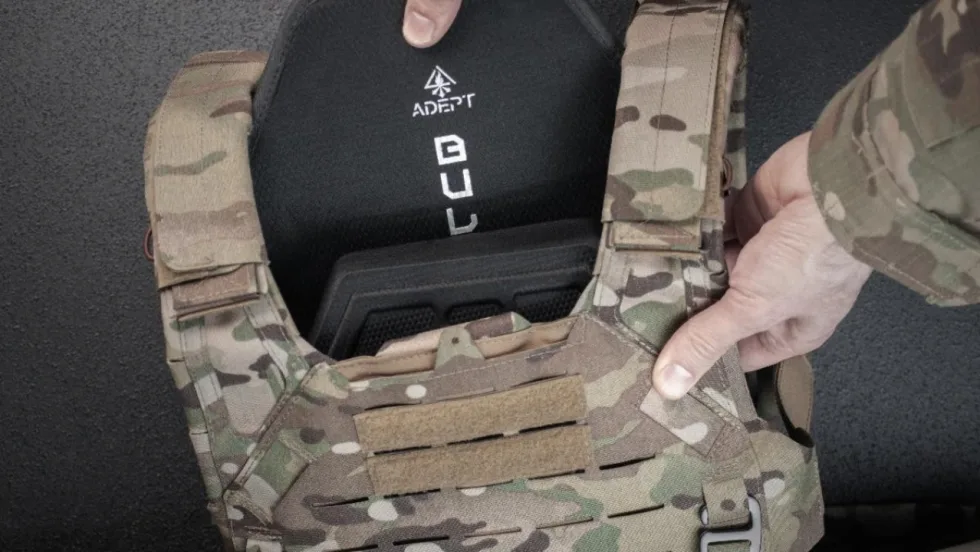
Adept Armor Introduces Two New Rifle Plates
Adept Armor has launched two new Level IV ballistic plates, the Emperor and the Archon Mark 2, which brings Adept Armor’s new Quatroid ceramic to the high-threat, performance-value center of the range at 5.2 pounds.
Read More →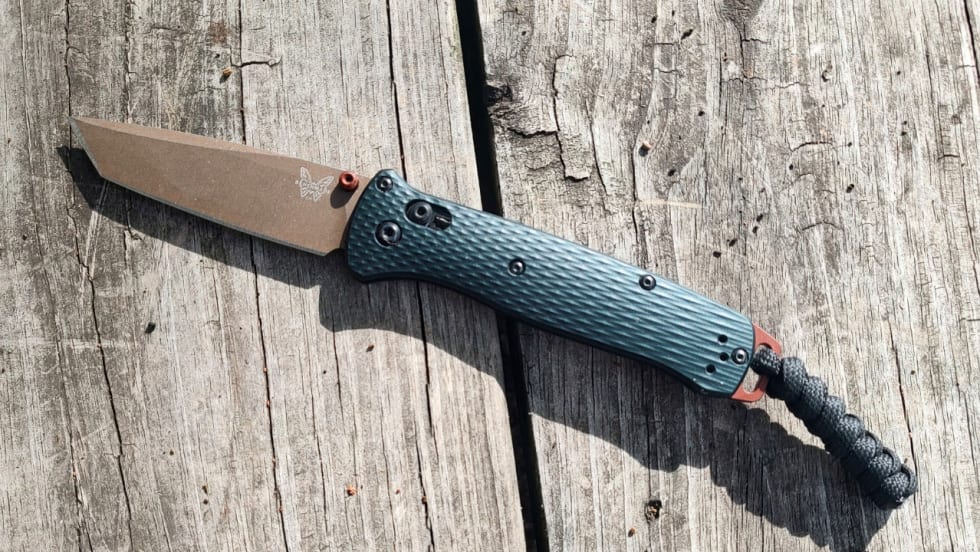
POLICE Product Test: Benchmade Bailout
The Benchmade Bailout is a slim, lightweight carry knife with a deep-ride pocket clip and comes in a variety of blade steels and scales. Here is a detailed review of the Taiga Green Bailout, released earlier this year.
Read More →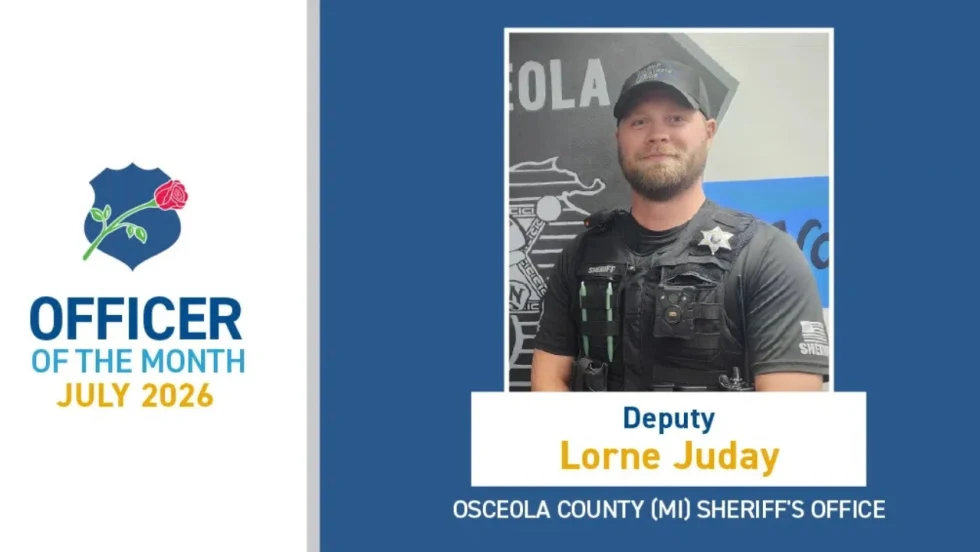
NLEOMF Announces July 2026 Officer of the Month
NLEOMF honored a Michigan deputy sheriff as the July 2026 Officer of the Month for rescuing a trapped driver from a burning vehicle following a Fourth of July crash.
Read More →
Streamlight to Showcase Newest Lighting Products at National Safety Council’s Safety Congress & Expo 2026
Streamlight will showcase its latest lights, including the Portable Scene Light III and the LiteBox 1Million, at the 2026 National Safety Council (NSC) Safety Congress & Expo.
Read More →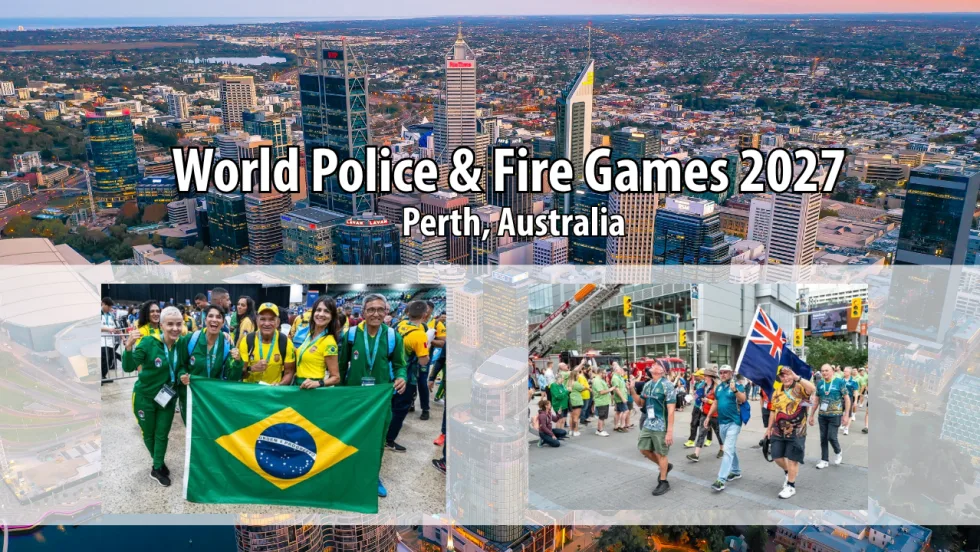
The 2027 World Police & Fire Games Set for Perth, Australia
The 2027 World Police & Fire Games (WPFG) will take place in Perth, Western Australia, from Friday, March 12 through Sunday, March 21, 2027.
Read More →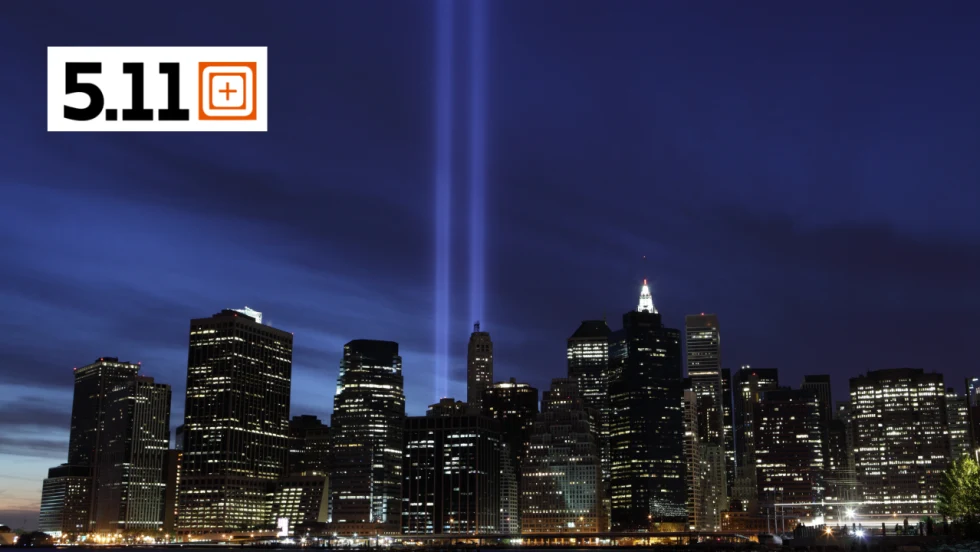
5.11 Partners with National Fallen Firefighters Foundation to Support #ForThe343
5.11 has joined the nationwide movement honoring the 343 New York City Fire Department firefighters lost on Sept. 11, 2001.
Read More →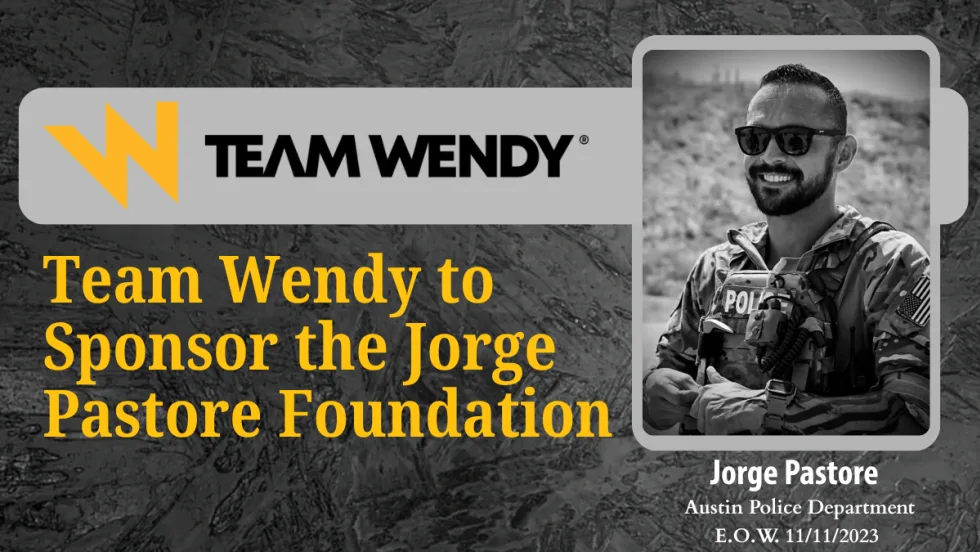
Team Wendy Announces Title Sponsorship of the Jorge Pastore Foundation
Team Wendy’s 3-year partnership with the Jorge Pastore Foundation expands access to programs that strengthen those who serve.
Read More →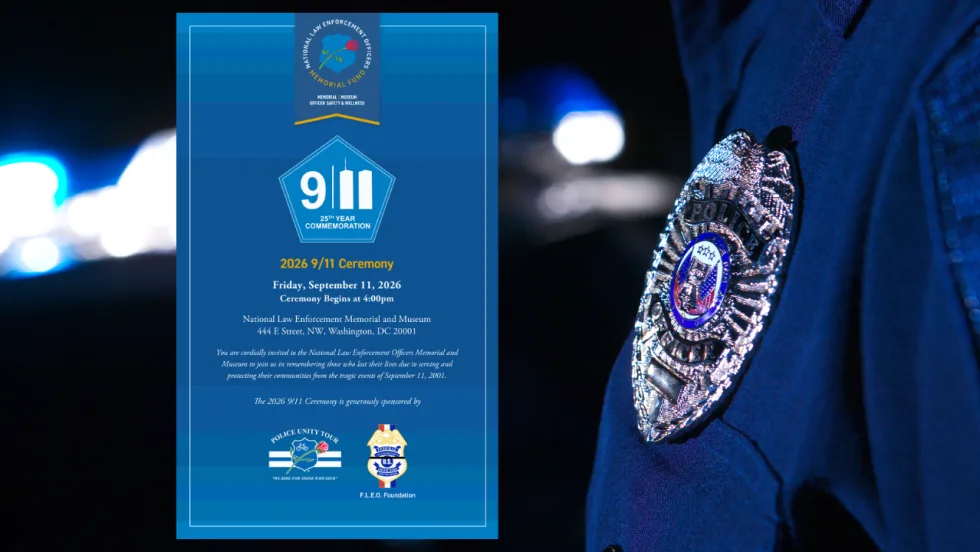
National Law Enforcement Memorial and Museum Hosting 9/11 25th-Year Commemoration Ceremony
The National Law Enforcement Memorial and Museum is hosting a 9/11 25th Year Commemoration Ceremony on Sept. 11 at 4 p.m.
Read More →
National Law Enforcement Officers Memorial Fund Announces June 2026 Officers of the Month
The National Law Enforcement Officers Memorial Fund (NLEOMF) named 15 officers of the Chico Police Department (California) as the Officers of the Month for June 2026 for their roles in responding to an active-shooter incident at a public library.
Read More →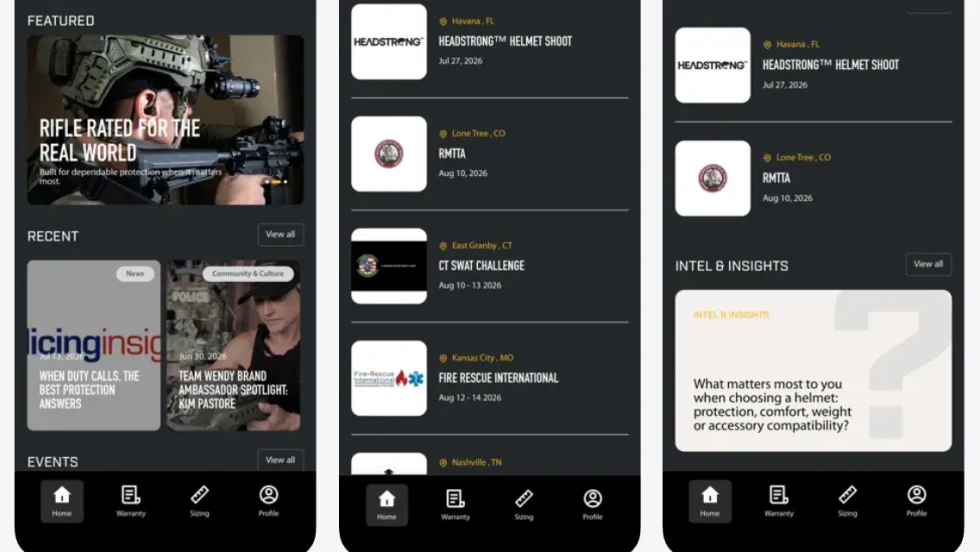
Team Wendy App Creates New Digital Hub for Helmet Owners
The Team Wendy Community App provides one location for warranty registration, size-fit tools, product updates, and community connection. For helmet owners, the new app creates a simpler path to the information and tools that matter most.
Read More →