



The Twist That Saves Lives
Not that long ago any police commander who was buying tourniquets for officers and urging their use when appropriate would have been thought reckless. But now more officers are carrying these life-saving devices on duty.

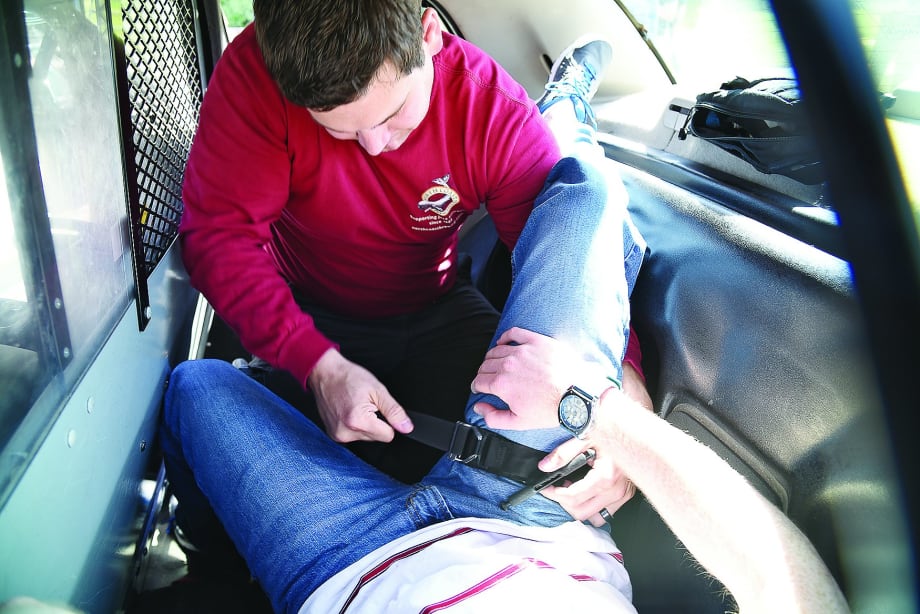
Photo by Lawrence Heiskell.
On April 15, 2013, two terrorists placed bombs on the street near the finish line of the Boston Marathon. The bombs, constructed in pressure cookers and concealed in backpacks, exploded at street level sending a hail of ball bearings and nails flying into spectators crowded on the sidewalks and participants in the annual footrace.
That blast killed three people and wounded more than 260. Because of the placement of the bombs, most of the wounds inflicted on the victims were in the lower extremities. Sixteen of the surviving victims lost limbs to the blast or to medical amputation because of the severity of their injuries.
Some emergency medical personnel was on the scene to provide support for the race, but many of the first public safety personnel to reach the bleeding victims were law enforcement officers. Those officers did not have emergency medical kits, so they did the best they could.
Former Boston Police Commissioner Ed Davis told USA Today that the response to the bombing was the reason he decided to buy tourniquets for all of his officers. "Anybody could see there was just this enormous need," Davis said. "People were ripping their shirts, pulling off their belts, and trying to find anything to help stop the bleeding. [Buying the tourniquets] wasn't a hard decision."
Changing Views
Not that long ago any police commander who was buying tourniquets for officers and urging their use when appropriate would have been thought reckless. The medical wisdom of the day was that the use of tourniquets to stop bleeding was dangerous and could result in amputation of the victim's limb and even death.
Historians say ancient Macedonian and Roman armies used tourniquets to stanch blood flow. But widespread use of the tourniquet began in the 1700s, and they were used by both sides during the American Civil War. They were also widely used in World War I, which is likely where they started to be labeled as dangerous. In 1916 the Journal of the Royal Army Medical Corps called tourniquets the "invention of the devil" because soldiers' attempts to use improvised tourniquets on the battlefields of the Western Front often led to tissue destruction, loss of limbs, and increased mortality.
Disdain for tourniquets in emergency medical response prevailed into the 1990s. Boy Scouts and Girl Scouts studying first aid just a few decades ago were firmly discouraged against using tourniquets to stop blood loss because they would result in the person's leg or arm being cut off.
Medical attitudes toward tourniquet use in first aid started to change in the late 1990s and early 2000s. That's when published studies of casualties in the Vietnam War started to reveal that as many as 2,500 wounded American soldiers died of bleeding from extremity wounds and that a substantial number of those deaths could have been prevented if the blood loss had been stopped in the field. That research was backed up by reports coming in from Afghanistan and Iraq. The Mayo Clinic reports that blood loss from extremity wounds accounted for 7.8% of the preventable deaths in the early days of the Global War on Terror. As the wars against al Qaeda and other enemies continued, the military decided it was time to try tourniquets, and the results were impressive.
What the medical community knew all along about tourniquets is that the likelihood of ill effects caused by their application tended to increase the longer the blood flow was cut off. The reputation of tourniquets started to be revised when combat physicians in Iraq and Afghanistan realized that wounded personnel were reaching trauma care quickly enough to mitigate the damage caused to their extremities by squeezing off the blood supply.
The Hartford Consensus
Bloody events on the American home front such as the Boston Marathon Bombing and the Newtown, CT, school massacre led to a push to promote tourniquet use for first responders. The definitive emergency medical statement on the use of tourniquets by non-EMT public safety personnel was made by The Joint Committee to Create a National Policy to Enhance Survivability from Intentional Mass-Casualty and Active Shooter Events. This was a meeting of leading trauma surgeons, including tactical doctors, who assembled in Hartford, CT, in 2015 to draft what's known as "The Hartford Consensus III: Implementation of Bleeding Control." In this report, the committee concluded that one of the best ways to save lives in the aftermath of accidents and attacks was to train first responders, including law enforcement officers, in the proper application of effective tourniquets.
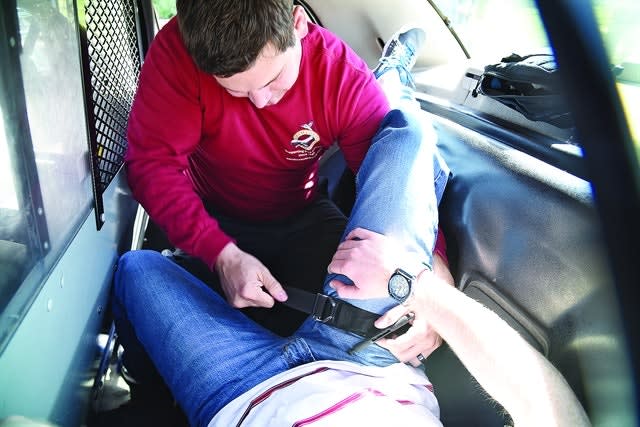
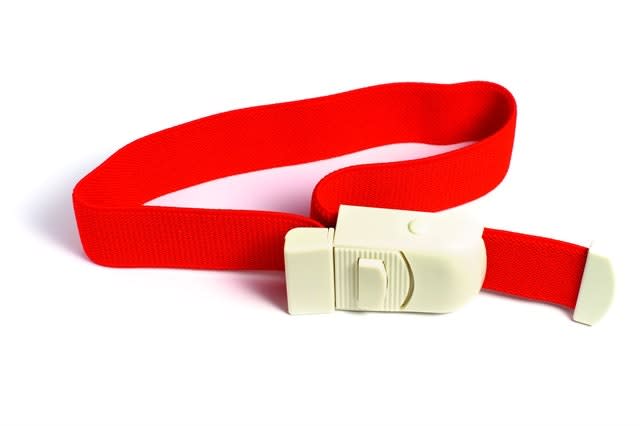
The Hartford Consensus specified effective tourniquets because devices designed specifically to squeeze off blood flow are much safer than the old leather belt and stick. Purpose-built effective tourniquets are easy to slip on the injured person's limb, are wide enough to properly do the job, come with a built-in windlass (stick) or ratchet to tighten them so they stanch blood loss, and some have a clip or another device to keep the windlass in place after it has been tightened down.
As for training, agencies thinking of issuing tourniquets to their officers don't have to worry about a lot of time lost to training. Officers can be trained very quickly in when and how to use a tourniquet and what to do after it is applied.
Saving Lives
Thousands of American law enforcement officers are now carrying trauma kits that include tourniquets on patrol, and they have proven to be lifesavers. Trained officers can stop blood loss when civilians or fellow officers are injured in accidents or wounded in attacks. The purpose-built tourniquet is so easy to use that wounded officers have even put them on themselves, saving their own lives.

Last May Philadelphia police officer James McCullough was shot through the upper thigh by a suspect who was trying to steal a car, according to police. McCullough realized that he was bleeding out and needed immediate intervention to stanch the flow. He applied a tourniquet to his own leg and likely survived the incident because of it.
But perhaps the most widely known use of a tourniquet to save an officer wounded in action occurred in Boston last October. In that incident, two Boston officers responded to a domestic violence call that was a fight between two roommates. When they arrived, a man opened fire on them. Officer Matt Morris was hit in the leg, severing a major artery. He survived because his fellow officers had been trained in what to do. They put pressure on the wound and applied a tourniquet.
The reason a tourniquet was available to save Officer Morris was former Boston Police Commissioner Ed Davis' post Marathon Bombing policy. Every Boston officer is now issued a tourniquet and trained to use it.
Issuing trauma kits with tourniquets to law enforcement officers and training them to effect emergency medical care is a revolutionary concept that once would have been unthinkable. But when blood is pumping out of a person's torn limb, they may not survive long enough for paramedics to arrive. Time is blood is what emergency medical personnel say. And as we all know, blood is life.
More Patrol

Team Wendy Introduces the EXFIL Endurance Ballistic Helmet, Engineered to Reduce the Burden of Extended Wear
Team Wendy has launched its EXFIL Endurance, a new lightweight ballistic helmet engineered to deliver protection, comfort, and fit during demanding, extended operations.
Read More →
The First Responders Children’s Foundation National First Responders Day Roll Call of Heroes Ceremony Returns to Times Square, NYC
First Responders Children’s Foundation (FRCF), in collaboration with T-Mobile, will host the Roll Call of Heroes ceremony in Times Square to commemorate National First Responders Day on Wednesday, Oct. 28. During the event, FRCF will present 18 Hero Awards.
Read More →
Streamlight to Showcase Newest Lighting Products for Law Enforcement Professionals at IACP 2026
Streamlight will showcase its newest lights for law enforcement at the International Association of Chiefs of Police Annual Conference & Expo. Featured lights will include the TLR-3 X, the PolyTac 1X, and more.
Read More →
Streamlight Portable Scene Light III Wins 2026 OH&S New Product of the Year Award
Streamlight’s Portable Scene Light III has won the 2026 Occupational Health & Safety (OH&S) New Product of the Year Award in the Lighting category.
Read More →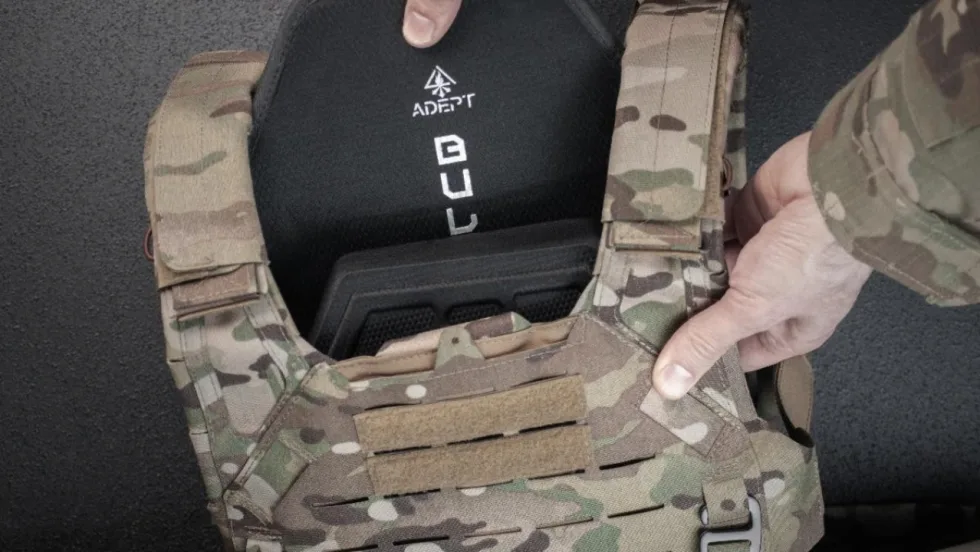
Adept Armor Introduces Two New Rifle Plates
Adept Armor has launched two new Level IV ballistic plates, the Emperor and the Archon Mark 2, which brings Adept Armor’s new Quatroid ceramic to the high-threat, performance-value center of the range at 5.2 pounds.
Read More →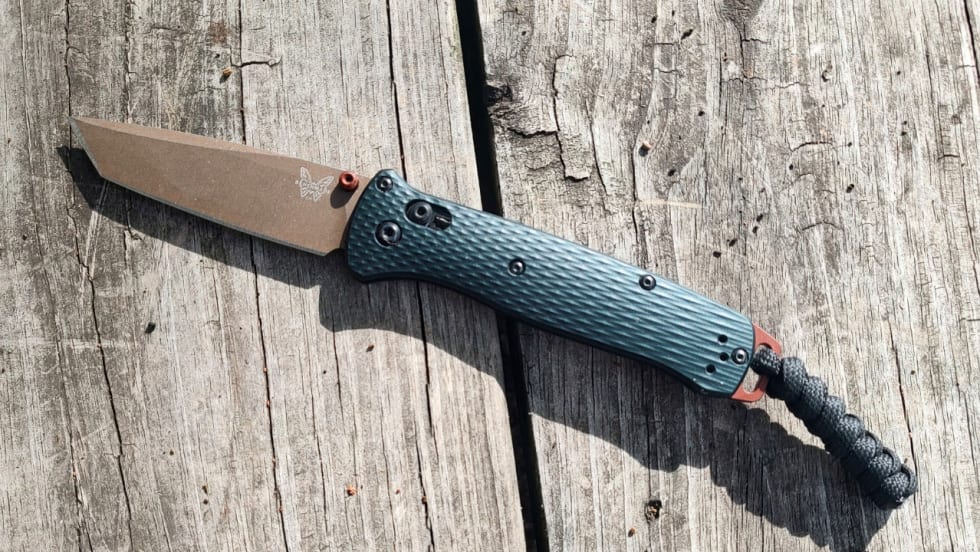
POLICE Product Test: Benchmade Bailout
The Benchmade Bailout is a slim, lightweight carry knife with a deep-ride pocket clip and comes in a variety of blade steels and scales. Here is a detailed review of the Taiga Green Bailout, released earlier this year.
Read More →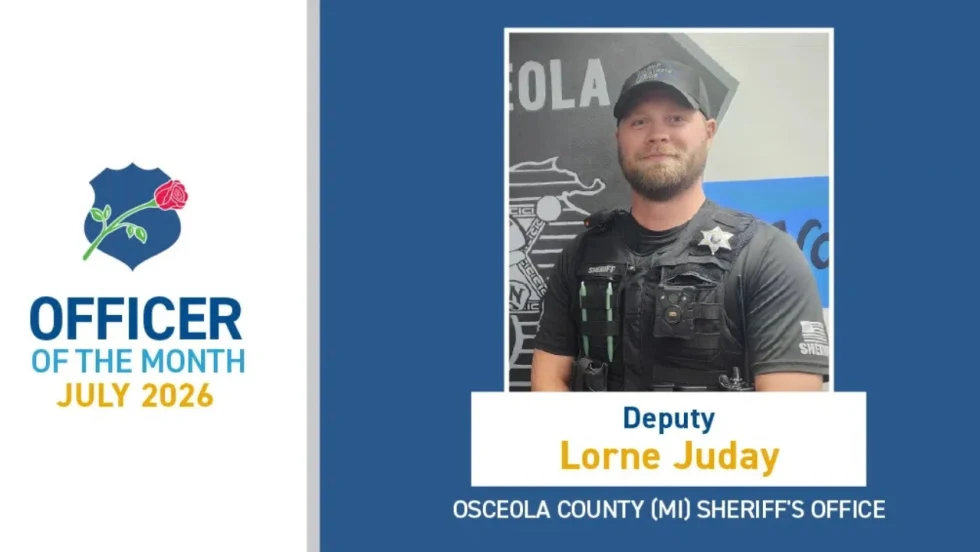
NLEOMF Announces July 2026 Officer of the Month
NLEOMF honored a Michigan deputy sheriff as the July 2026 Officer of the Month for rescuing a trapped driver from a burning vehicle following a Fourth of July crash.
Read More →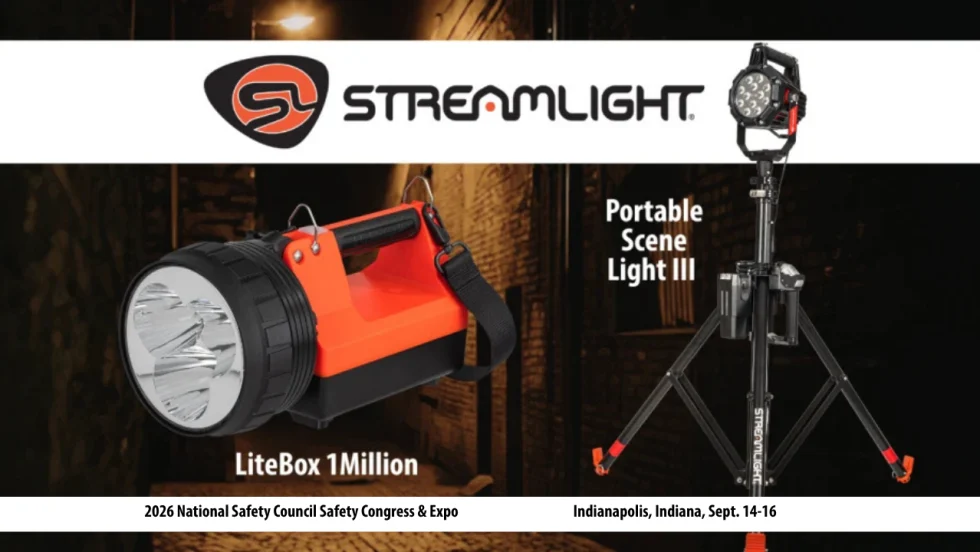
Streamlight to Showcase Newest Lighting Products at National Safety Council’s Safety Congress & Expo 2026
Streamlight will showcase its latest lights, including the Portable Scene Light III and the LiteBox 1Million, at the 2026 National Safety Council (NSC) Safety Congress & Expo.
Read More →
The 2027 World Police & Fire Games Set for Perth, Australia
The 2027 World Police & Fire Games (WPFG) will take place in Perth, Western Australia, from Friday, March 12 through Sunday, March 21, 2027.
Read More →
5.11 Partners with National Fallen Firefighters Foundation to Support #ForThe343
5.11 has joined the nationwide movement honoring the 343 New York City Fire Department firefighters lost on Sept. 11, 2001.
Read More →