



The Money Crunch: Brother, Can You Spare a Few Mil?
When Oregon laid off 139 of its state troopers and 300 employees total in one day, the already spread thin department was left with few officers to police the state, while the crime labs that process evidence for all Oregon law enforcement agencies were all but shut down. And the agency is not alone in suffering budget woes.


When Oregon laid off 139 of its state troopers and 300 employees total in one day, the already spread thin department was left with few officers to police the state, while the crime labs that process evidence for all Oregon law enforcement agencies were all but shut down.
Funding for the Oregon State Police has been mostly restored to where it was in 2003 before the mass layoffs, but that doesn't mean the same thing couldn't happen again. In fact, a repeat was narrowly avoided this year. And the number of state troopers currently employed in Oregon is only half of what it was 20 years ago when the state population was only half as large.
"We're just now back to the crisis mode we were in before the layoffs," says Superintendent Ron Ruecker, who heads the Oregon State Police. And his agency is not alone.
With continued budget woes following 9/11, the Oregon State Police and most law enforcement agencies across the country are struggling to do more with less. Some have come up with innovative ways to supplement grants and other forms of funding so they can continue to serve the public as best they can.
Crisis and Opportunity
Chief James Montgomery of the Bellevue (Wash.) Police Department has an optimistic view of the current budget crunch.
"I'm a firm believer that tight financial times often are the genesis for creative ideas. If you're flushed with money, the tendency is just to sort of continue to do business as usual."
In fact, many law enforcement agencies are using the current budget crunch as an impetus to conserve resources and to develop new efficient programs that might not otherwise have seen the light of day. They focus on mitigating the outflow of money and maximizing opportunities for revenue.
Chief Craig Steckler of the Fremont (Calif.) Police Department has a practical outlook. He believes the most important thing to keep in mind is the essential job at hand. "You need to look at what your absolute core mission is and protect that," he says.
Right now, for the Fremont PD that means answering the calls that absolutely require an officer on the scene to maintain citizens' safety.
Steckler has lost 52 positions at his department. Now 188 officers are left to serve a population of 209,000. "To do that I laid off seven police officers that were just finishing the academy," he says.
But the chief feels he and his department are doing their best to serve the public while operating at a "critical minimum."
One way Fremont PD has managed to stay afloat and service its city has been through innovative approaches to resource use. An online reporting system put in place just months ago has automated the process of taking crime reports from citizens for many non-emergency crimes. This has freed up a lot of officers to respond to higher priority calls.
Because the Internet reporting software directly interfaces with the department's CAD system, the necessary information appears in the proper form immediately. There's no need for staff to do additional data entry after the fact.
"We're getting up to 50 or 60 reports per day online," says Steckler. "It's a cost saving but it's also a customer service benefit."
Hoping for the Best
At the Garden Grove (Calif.) Police Department, Chief Joseph Polisar has seen things go from bad to worse.
"For the last 10 years or so, local and state law enforcement has become accustomed to receiving assistance at the federal level in the form of local law enforcement block grants and COPS money. Those funding sources have quickly dried up in the past few years," he says.
Polisar is doing his best to convince the federal government to reverse the flow of finances.
As president of the International Association of Chiefs of Police, Polisar led a group of chiefs in February who met on Capitol Hill in Washington to try to convince Congress to restore some of the funding it had cut from law enforcement grants. While Polisar says he understands that homeland security is important and deserves its own funding, he doesn't want to see police departments handicapped by a lack of funding for basic necessities not covered under Homeland Security grants.
The group of chiefs had one simple request for Congress, albeit one that will be difficult to grant: "Just don't rob Peter to pay Paul. And that's what we see happening," says Polisar.
While the fate of federal funding for law enforcement's non-homeland security concerns remains undecided, Garden Grove PD is making do with its current resources.
In fact, the department has realized amazing savings and improved efficiency by privatizing its inhouse booking facility. Because Garden Grove PD doesn't have its own jail, it must transport suspects to either the Orange County Jail or another city's holding facility. Stopping to book suspects at the Garden Grove station and then driving them to a jail, often in gridlocked traffic, took police officers off of the street for an average of two hours.
Now, civilians take over custody of suspects at the station and complete the booking process, taking fingerprints and mug shots. The same private company then transports the suspects to the appropriate jail. This leaves Garden Grove officers free to get back on the beat once they drop off a suspect at the booking facility.
Polisar says this process, begun four years ago, saves the department an enormous amount of time and money, effectively putting four more officers on the street.
"The officers love it," says Polisar, "because they're no longer tied up for more than two hours just getting an arrested person into the system. Now they're done in 15 minutes and they're back on the street."
Of course, Polisar admits, this is only a cost-saving solution if your agency already has its own booking facility. For his department, this was the best way to boost finances using already existing resources.[PAGEBREAK]
Making Money
Actively bringing in revenue can help a department even more than saving costs, especially for a smaller agency.
The Juneau (Wis.) County Sheriff's Department has found ways to create extra revenue for its cash-strapped agency, even though it's working with what Sheriff Brent Oleson calls a skeleton crew.
Because the department shares a facility with the District Attorney's office, it benefited from a grant that refurbished the justice center that houses both. Now, the Sheriff's Department operates a jail that holds 154 beds. After accommodating the county's own inmates, the facility still has room to regularly house 35 to 40 inmates from surrounding counties that are short of jail space.
"We charge those counties $45 a day per inmate. So that will probably bring in close to a half-million dollars for us this year," says Oleson. "Maybe we'll be able to get new vehicles now."
For large events, Juneau County also provides extra after-hours security to local organizations and businesses...for a price. "If it's over and above what we normally would do we charge for the service and bill the organization," Oleson says. "Other than that, we're broke."
Recovering Costs
Officer Michael Chiu, public information officer with the Bellevue (Wash.) Police Department, says his agency has found that jailing practices can save money.
"We're farming out the holding of arrested individuals to the most cost-effective locations instead of always going to the King County Jail," says Chiu.
Because some jails are 10, 20, or 50 percent cheaper than others, Chiu says this creates a great cost savings, even counting the time and money to bus inmates to jails farther afield.
"Yes, it costs money to get them out there, but daily incarceration-food and administrative costs-is what really costs a lot," Chiu says.
Drunk drivers have also helped Bellevue PD save money, with a DUI cost recovery program.
"People arrested for driving under the influence, once convicted, get billed for police services. We bill them for officer hours worked for paperwork, processing, and court." Although it's not a perfect system, the revenue that has been recovered hasn't hurt.
"Maybe 25 to 40 percent of people pay, but just that alone has brought in tens of thousands of dollars," says Chiu. "And we use police volunteers to send the notices and collect the fines."
The department is currently streamlining the process and the enforcement of payment, which should recover more money through the program. Specific cost-saving strategies and programs aren't the only ways to save money. Some general rules of thumb can go a long way toward protecting agency revenues.
Officer Awareness
"Pushing down the budget," is something Chief William Harvey of the Lebanon (Pa.) Police Department believes can help any agency use its resources more wisely. He explains that when police officers at the lower levels understand more about how the agency obtains its funding for equipment and uniforms, they are more likely to make better choices about spending and maintenance.
For example, Harvey encourages his staff to compare costs each time any replacements are needed instead of automatically ordering the same brand. He also puts sergeants in charge of cost comparisons instead of someone higher up in the ranks, pushing down fiscal awareness to the lower levels of command.
"I think the chief of today should not be the sole guardian of the budget. Having staff members who know how to wisely shop and be guardians of the budget themselves makes success easier to come by," says Harvey.
Making Connections
Most law enforcement administrators agree that one of the keys to running a police agency in the best way possible is to maintain contact with the outside world and consult other departments to determine best practices-or in this case, the most fiscally efficient practices. It's often the best way to find out about cost-saving strategies and available resources.
Oregon State Police's Ruecker recommends that department administrators get involved in regional and national organizations. In addition to giving you an inside track on what's new in law enforcement, networking also acquaints you with others who can help you when you're in a really tight spot.
"It would be nice if everything I need to know showed up in a little bulletin, but in reality there's too much going on on too many different levels. So you've got to be constantly talking to people," Ruecker says.
Ruecker recognizes that such involvement can be time consuming, but he says it can be well worth it in the long run.
"Especially in the federal system, once they establish their distribution rules or grant guidelines, it's a done deal. If at some local community level, or even the state level, you say, 'That doesn't really work for us,' there's no flexibility in how it goes. So the place to get involved in the discussion is before the decisions are made."
Not everyone can be part of a national panel, but that shouldn't prevent anyone from remaining active in the community-, county-, or even state-level organizations, advises Ruecker.
Organizational involvement needn't be limited to heads of agencies or even higher ranked officers, either. Members of SWAT teams or K-9 units probably already meet at least semi-regularly with other like-minded individuals. These meetings can be used to discuss financial concerns in addition to technique and liability issues.
"Get actively involved in your local law enforcement associations and attend training and meeting opportunities where you can build relationships with others," advises Ruecker. "That's how you find out about important information."
More Patrol

Adept Armor Introduces Two New Rifle Plates
Adept Armor has launched two new Level IV ballistic plates, the Emperor and the Archon Mark 2, which brings Adept Armor’s new Quatroid ceramic to the high-threat, performance-value center of the range at 5.2 pounds.
Read More →
POLICE Product Test: Benchmade Bailout
The Benchmade Bailout is a slim, lightweight carry knife with a deep-ride pocket clip and comes in a variety of blade steels and scales. Here is a detailed review of the Taiga Green Bailout, released earlier this year.
Read More →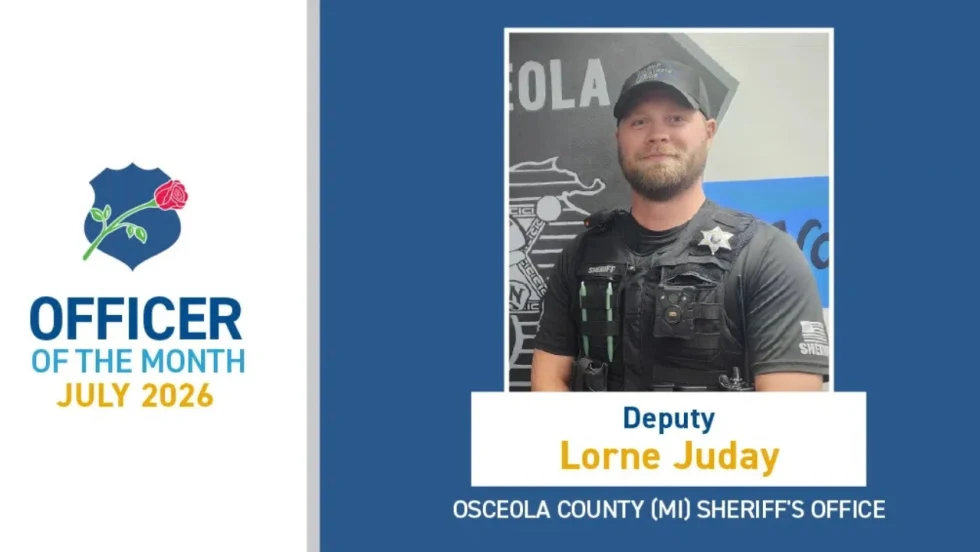
NLEOMF Announces July 2026 Officer of the Month
NLEOMF honored a Michigan deputy sheriff as the July 2026 Officer of the Month for rescuing a trapped driver from a burning vehicle following a Fourth of July crash.
Read More →
Streamlight to Showcase Newest Lighting Products at National Safety Council’s Safety Congress & Expo 2026
Streamlight will showcase its latest lights, including the Portable Scene Light III and the LiteBox 1Million, at the 2026 National Safety Council (NSC) Safety Congress & Expo.
Read More →
The 2027 World Police & Fire Games Set for Perth, Australia
The 2027 World Police & Fire Games (WPFG) will take place in Perth, Western Australia, from Friday, March 12 through Sunday, March 21, 2027.
Read More →
5.11 Partners with National Fallen Firefighters Foundation to Support #ForThe343
5.11 has joined the nationwide movement honoring the 343 New York City Fire Department firefighters lost on Sept. 11, 2001.
Read More →
Team Wendy Announces Title Sponsorship of the Jorge Pastore Foundation
Team Wendy’s 3-year partnership with the Jorge Pastore Foundation expands access to programs that strengthen those who serve.
Read More →
National Law Enforcement Memorial and Museum Hosting 9/11 25th-Year Commemoration Ceremony
The National Law Enforcement Memorial and Museum is hosting a 9/11 25th Year Commemoration Ceremony on Sept. 11 at 4 p.m.
Read More →
National Law Enforcement Officers Memorial Fund Announces June 2026 Officers of the Month
The National Law Enforcement Officers Memorial Fund (NLEOMF) named 15 officers of the Chico Police Department (California) as the Officers of the Month for June 2026 for their roles in responding to an active-shooter incident at a public library.
Read More →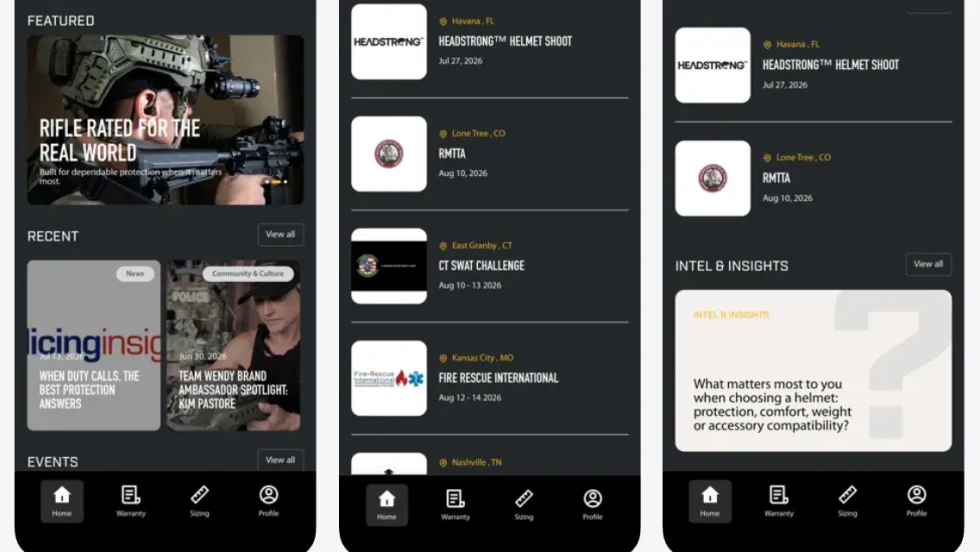
Team Wendy App Creates New Digital Hub for Helmet Owners
The Team Wendy Community App provides one location for warranty registration, size-fit tools, product updates, and community connection. For helmet owners, the new app creates a simpler path to the information and tools that matter most.
Read More →