



Taking Back the Neighborhood
David Kennedy, director of the Center for Crime Prevention and Control at the John Jay College of Criminal Justice in New York City, had developed a new drug interdiction strategy, and he was trying to sell a police department into trying it. The frustrated officers of the High Point PD were willing guinea pigs.

Even three years later you can still hear the sting in Maj. Marty Sumner's voice when he recalls a conversation he had with one of the people he is sworn to serve and protect.
Sumner, a command officer with the High Point (N.C.) Police Department, was speaking with a community leader from the city's West End neighborhood. The man had attended a meeting in the neighborhood in which the High Point PD's new chief reached out to the public and asked them for help in fighting a growing problem with drug-related violence. After the chief's address, Sumner was approached by a man who said, "Major, we have lost our faith in your ability to impact the problem. We see the officers working. We see you working hard, but we don't think you can do anything about it."
The problem was crack cocaine. The five square blocks of High Point's West End neighborhood encompassed one of the city's most notorious open drug markets. High Point PD would patrol the street, arrest dealers, but the drug dealing and the violence just got worse.
Chief James Fealy and the other commanders of the High Point PD knew that they needed a new approach to the city's growing crime problem. They were searching for that new approach when they attended an October 2003 meeting in the neighboring city of Winston-Salem with criminal justice scholar and police consultant David Kennedy.
Kennedy, director of the Center for Crime Prevention and Control at the John Jay College of Criminal Justice in New York City, had developed a new drug interdiction strategy, and he was trying to sell a police department into trying it. The frustrated officers of the High Point PD were willing guinea pigs.
Developing a Strategy
The Kennedy plan was radical. It called for police to actually investigate drug dealers without charging them. Instead, drug dealers with no history of violence would be called in for an intervention of sorts where people who had influence in their lives-parents, siblings, preachers, OG gang members who went straight-would convince them to reform. After that intervention, the dealers would be led into another room and shown the investigative files that detailed their illegal activities. If they failed to get the message, the cases would be activated.
Sumner says he and the other department executives believed that the program would be a hard sell for the rank-and-file officers because of a potential for the misconception that it was soft on crime. "That was one of the challenges of leadership we had to work through," he says. "We decided that before we went forward that everybody who works here would have to think that the strategy was a good idea and support it."
Surprisingly, most of the High Point PD's street cops agreed that it was worth a try. They were just as frustrated as their commanders with the lack of results from their more traditional approach.
"In the [more drug infested] neighborhoods, we were doing a sting, a street sweep, or a major undercover operation every month," Sumner says. "We were putting up plenty of cases to the DA, but the situation persisted. So they were ready to try something different." The department's commanders sought more than just buy-in from the street officers. They also sought their advice on how to execute the strategy and how to keep any gains that they achieved.
While the street cops mapped out tactics, Sumner and the other commanders reached out again to the community. At a meeting with the West End Ministries in Dec. 2003, they explained that they were going to go after the entire market, not individual dealers. The response from most of the attendees was an offer of assistance.
One of the women in attendance even came up to Sumner after the meeting and pointed out a drug dealer in the audience. "He's taking notes, and he's going to go back and tell them all about it," she told Sumner. The major just smiled at her and said, "I hope he goes back and tells all his buddies what we have planned for them. I hope he tells them that a new day is dawning and the gig is up."
Gathering Intelligence
Officers of the High Point PD had begun executing their plan a month earlier. The neighborhood had been surveiled and 16 crack houses had been identified.
And much to their amazement, the officers learned that only 20 dealers were causing most of the trouble in the community. "Most cops believed there were hundreds of these guys out there doing this," Sumner says. "But when we did our intelligence, we discovered that it was less than 20 people in each of these neighborhoods who were actually driving the street-level stuff."
Throughout February and March of 2004, High Point PD officers sent informants out to buy crack from specific West End dealers who had been identified by police intelligence and surveillance. Each buy was recorded and videotaped.
Three of the dealers had records of violence and were immediately arrested. They included guys so bad that the other dealers were glad to see them go. One had even made a career of robbing other dealers.
The Call-In
The next day, May 18, 2004, things got interesting. All of the dealers who weren't arrested for violence were invited to a face-to-face meeting with the High Point PD.
High Point officers had not just been investigating the crimes of the dealers. They had also been investigating their personal lives. And with the help of parole officers and jail visitation logs, they identified the people who had influence over the dealers' lives.
These people were on hand to meet with the dealers when they arrived at the station. What followed was an attempt by the people Prof. Kennedy calls "influentials" to convince the dealers that what they were doing was wrong and that it hurt the community.
That was the soft part of the proceedings. After the intervention, each dealer was led into another part of the station to learn the potential consequences of his or her actions. At the front of the room were three empty chairs with pictures of the dealers who had been arrested a day earlier and the amount of time that they were facing.
Each dealer was then presented with a hard choice: stop dealing within seven days or face immediate arrest. The dealers, who were all more than 16 years old, faced prison time of 18 months if arrested. However, some also faced habitual and career criminal status that could have earned them up to 20 years.
The West End drug market ended almost overnight. Sumner says he was astounded by the effect of Kennedy's strategy. He says that the next day both the crack houses and the prostitutes were gone. Also, the West End neighborhood, which once accounted for a tenth of all homicides in the city (population 100,000), is now so quiet that not a single murder or rape has been reported in the area since the call-in.
Influence and Intervention
Sumner believes that the High Point PD's drug interdiction policy owes its success to its balance of soft pressure from the community and promises of hard time from law enforcement.
"Despite what we think, drug dealers are not irrational. They don't like it when parents, preachers, and community leaders tell them that they are doing wrong," Sumner says. "So if we can reset the norm and get whoever's got influence on them to tell them that they're wrong and show them a predictable consequence of continuing to do wrong, they will make a choice."
Sumner says that it was the certainty of prosecution and likely conviction that made the dealers look for other occupations. "Professor Kennedy has calculated that the day-to-day threat of arrests for these guys is really nil," he says. "These guys go more than a thousand transactions between arrests. The reason for not arresting them on this charge and holding it over them is that it creates a 100-percent guarantee that if they step out of line, you will get them."
The result of the High Point PD's crack interdiction program is a better life for the residents of the West End. Sumner says that people living in the community no longer feel like prisoners in their homes. They attend local social events. They let their children walk to Bible school at the local church. They are even willing to testify in criminal cases.
"I'll tell you a story," Sumner says. "Back in 2003, three young drug dealers broke into a man's home in the West End because they knew he had cash. They robbed and killed him. The neighbor called 911, but she only reported that she heard shots.
"In 2004 after the call-in, a DA's investigator went out to interview her about the case. She told him, 'I did hear it. And I did see it. I can identify them. Back then I was too afraid to tell anyone. But this is my neighborhood now, and I'll testify.'"
Rollout
The interdiction strategy was such a success in the West End that the High Point PD decided to try it in two other sections of the city that were also plagued with open drug sales. Operations in the Daniel Brooks Area and the South Side have met with equal success. The result is that High Point now has 20 percent less violent crime than it did in 2003.
And Sumner is certain that the dealers called in by the High Point PD did not just resume their careers in another location. Their files were flagged, indicating that charges are pending in High Point and can be activated if they commit an offense in any jurisdiction.
Some cops are skeptical that the High Point strategy can work in larger cities, but others are willing to give it a try. Operations are now under way or being considered in Winston-Salem, N.C., Newburgh, N.Y., Tucson, Ariz., Providence, R.I., and Kansas City, Mo.
"It's neighborhood based, so it really doesn't matter how big the city is," Sumner says. "Even bigger cities have neighborhoods and, if that neighborhood has a name and a sense of itself, I think this program will work."
Sumner's advice is to bite off one neighborhood at a time. "We needed to clean up three neighborhoods, but we knew that was too much for our force of 225 sworn to take on at one time. So we decided to take a beachhead approach. We took one neighborhood at a time, held it, and moved on to the next one. If you're a large city, do one neighborhood, get the publicity from that, and then move on to another one."
More Patrol

Streamlight Portable Scene Light III Wins 2026 OH&S New Product of the Year Award
Streamlight’s Portable Scene Light III has won the 2026 Occupational Health & Safety (OH&S) New Product of the Year Award in the Lighting category.
Read More →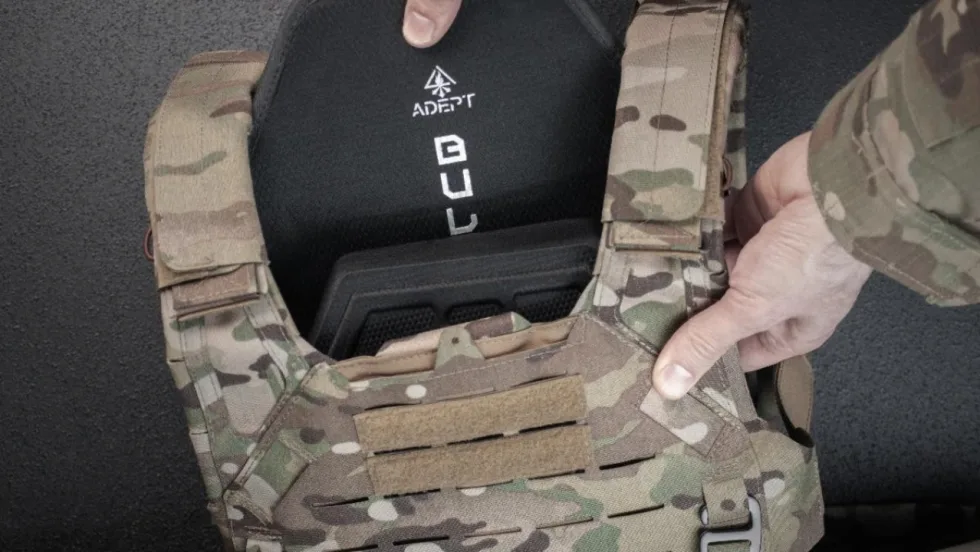
Adept Armor Introduces Two New Rifle Plates
Adept Armor has launched two new Level IV ballistic plates, the Emperor and the Archon Mark 2, which brings Adept Armor’s new Quatroid ceramic to the high-threat, performance-value center of the range at 5.2 pounds.
Read More →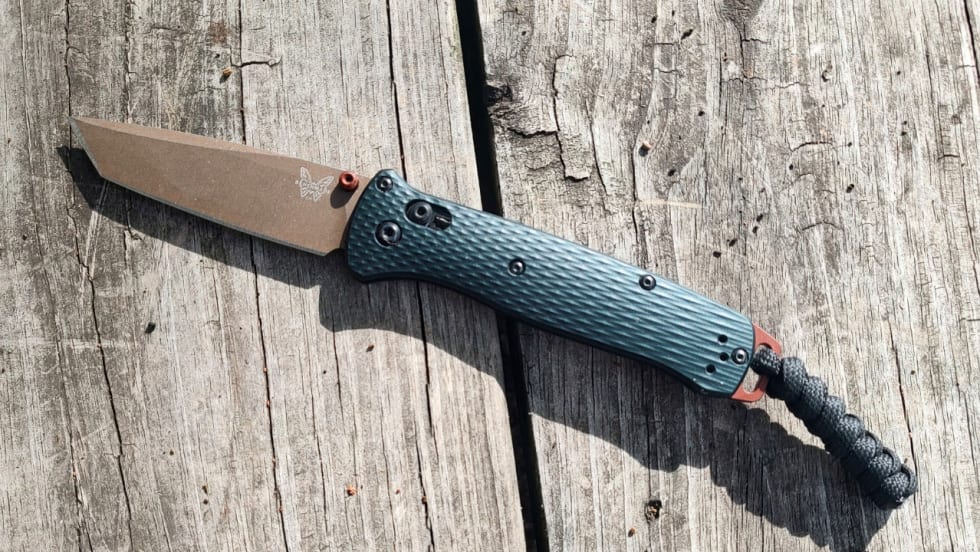
POLICE Product Test: Benchmade Bailout
The Benchmade Bailout is a slim, lightweight carry knife with a deep-ride pocket clip and comes in a variety of blade steels and scales. Here is a detailed review of the Taiga Green Bailout, released earlier this year.
Read More →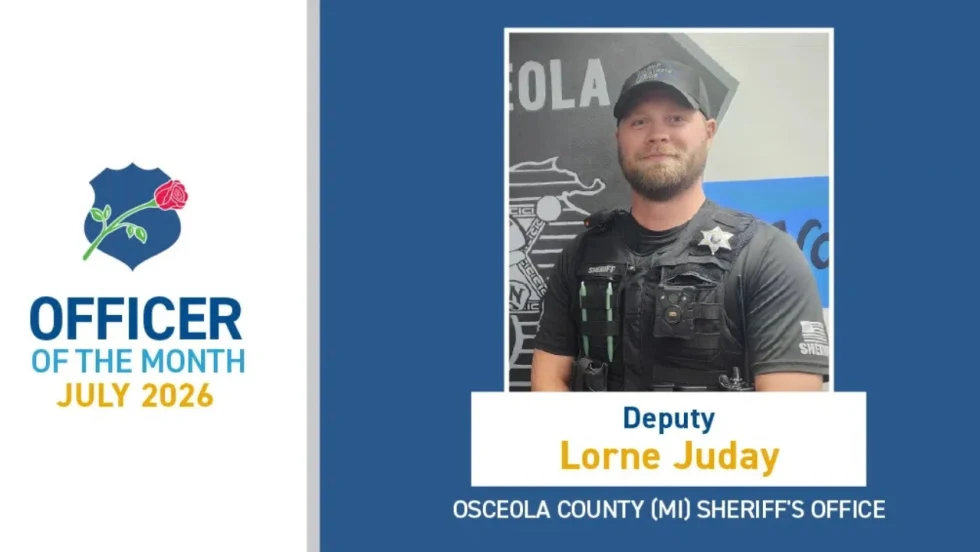
NLEOMF Announces July 2026 Officer of the Month
NLEOMF honored a Michigan deputy sheriff as the July 2026 Officer of the Month for rescuing a trapped driver from a burning vehicle following a Fourth of July crash.
Read More →
Streamlight to Showcase Newest Lighting Products at National Safety Council’s Safety Congress & Expo 2026
Streamlight will showcase its latest lights, including the Portable Scene Light III and the LiteBox 1Million, at the 2026 National Safety Council (NSC) Safety Congress & Expo.
Read More →
The 2027 World Police & Fire Games Set for Perth, Australia
The 2027 World Police & Fire Games (WPFG) will take place in Perth, Western Australia, from Friday, March 12 through Sunday, March 21, 2027.
Read More →
5.11 Partners with National Fallen Firefighters Foundation to Support #ForThe343
5.11 has joined the nationwide movement honoring the 343 New York City Fire Department firefighters lost on Sept. 11, 2001.
Read More →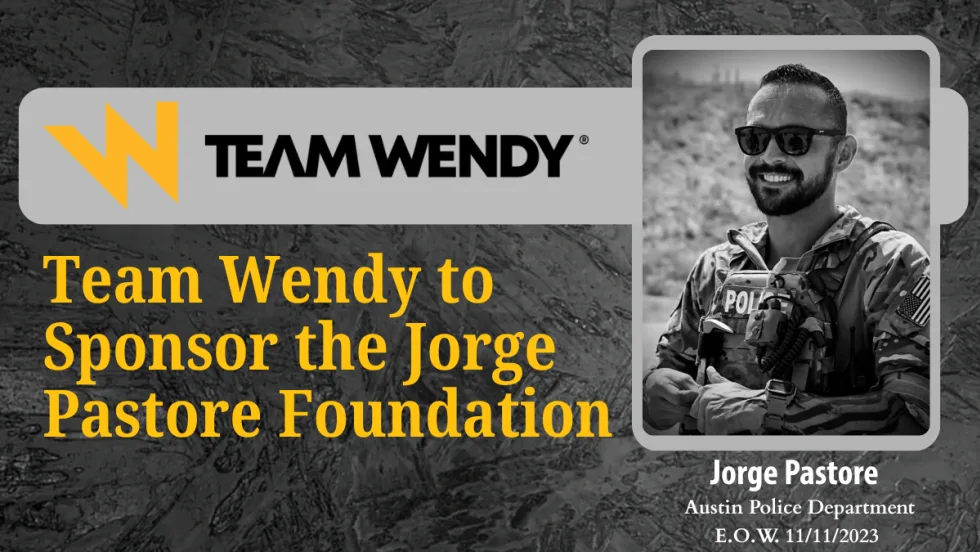
Team Wendy Announces Title Sponsorship of the Jorge Pastore Foundation
Team Wendy’s 3-year partnership with the Jorge Pastore Foundation expands access to programs that strengthen those who serve.
Read More →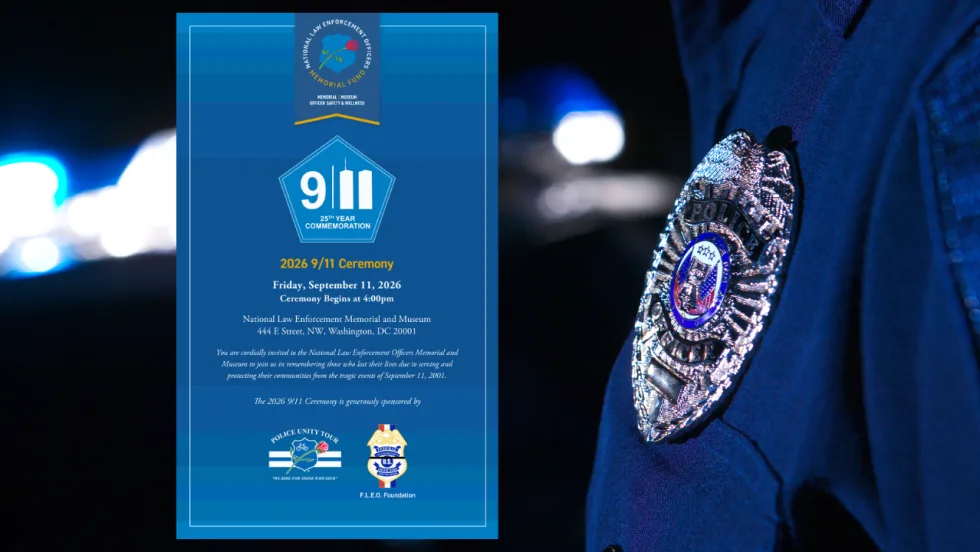
National Law Enforcement Memorial and Museum Hosting 9/11 25th-Year Commemoration Ceremony
The National Law Enforcement Memorial and Museum is hosting a 9/11 25th Year Commemoration Ceremony on Sept. 11 at 4 p.m.
Read More →
National Law Enforcement Officers Memorial Fund Announces June 2026 Officers of the Month
The National Law Enforcement Officers Memorial Fund (NLEOMF) named 15 officers of the Chico Police Department (California) as the Officers of the Month for June 2026 for their roles in responding to an active-shooter incident at a public library.
Read More →