



Stopping Officer Suicides
Know the warning signs and the resources available so you can get help for a colleague contemplating suicide before it's too late.


Know the warning signs and the resources available so you can help a colleague contemplating suicide before it's too late.
Photo: Pixabay.com
In January, POLICE reported the tragic news that in 2019, more American law enforcement officers reportedly died by suicide than those who died in the line of duty.
According to data released by Blue H.E.L.P.—an organization that tracks police officer suicides while simultaneously seeking to prevent such tragedies from occurring—228 American officers died by suicide in 2019.
By comparison, 132 police officers died in the line of duty last year. This is a substantial decrease in duty deaths in comparison to previous years—indeed, a decrease of 20% compared to 166 in 2018, 175 in 2017, and 175 in 2016.
Yet while duty deaths declined in 2019, the number of reported police officer suicides—including active-duty and recently retired—increased significantly. Compared to 228 in 2019, there were 169 reported suicides in 2018. The number of reported suicide deaths was 168 in 2017 and 143 in 2016.
Agencies across the country are beginning to recognize the problem of officer suicide.
For example, the New York Police Department—which suffered a tragically substantial number of officer suicides last year—has declared that it will deploy psychologists to every borough to encourage better officer mental health and wellness.
Other agencies have increased their efforts to make post-traumatic stress—a topic that has for decades been taboo—something that officers can discuss without fear of professional repercussion. This is obvious progress toward the goal of smashing the stigma of officers seeking help when they know they're approaching crisis.
Two areas that law enforcement officers and organizations can continue to improve upon are recognizing the warning signs of a potentially suicidal officer—or dispatcher, or administrative staff, or any other employee—and knowing the wealth of resources available to provide assistance.
Warning Signs
Families of officers who died by suicide—as well as department colleagues left behind—frequently say the officers displayed visible warning signs of life-threatening mental or emotional crisis that only really registered after the officer's death.
Some of those warning signs include:
Displaying feelings of hopelessness
Withdrawing from friends and family
Increase in alcohol consumption
Noticeable change in weight—either gain or loss
Ending typically beloved recreational activities
Sudden, unexpected outbursts of anger or sadness
Increased risk-taking both on and off duty
A change in attitude or personal demeanor
Saying things like, "You'll take care of my family if I die, right?"
Threatening suicide—many suicide victims verbally telegraph their death
Some of these behaviors are far more likely to be observed by an officer's colleagues than his family, particularly the last three listed.
Available Resources
If you observe in your co-worker or spouse any of these behaviors, let them know that you care enough about them to suggest that they get help. They can seek the assistance of a department resource like a mental health counselor or chaplain. They can talk with an outside psychiatrist or psychologist.
Further, there is plenty of literature available to help officers in crisis. Books like "Emotional Survival for Law Enforcement" by Dr. Kevin Gilmartin, "I Love a Cop" by Dr. Ellen Kirshman, and "Armor Your Self" by John Marx can be great resources for officers who may be approaching crisis. Add to that list books like "The Price they Pay" by Karen Solomon and Jeffry McGill—two of the founders of BlueH.E.L.P.
Then, there is the National Suicide Prevention Lifeline (1-800-273-8255), which provides 24/7, free and confidential support for people in distress. The Lifeline website also provides prevention and crisis resources for you or your loved ones, and best practices for professionals.
Safe Call Now (1-206-459-3020) is one of the organizations that offers those services specifically for first responders. It was established in April 2009 by Washington state Lieutenant Governor Brad Owen, Congressman Dave Reichert, and Gil Kerlikowski with the mission of ensuring that no first responder or public safety employee walk through a crisis alone.
There is also Copline (1-800-267-5463), a not-for-profit organization dedicated to serving law enforcement officers and their families by providing a confidential 24-hour hotline answered by retired law enforcement officers. Copline peer listeners are trained in crisis intervention and can offer referrals to specifically skilled mental health professionals in the caller's area for follow-up and continued assistance.
Badge of Life is a not-for-profit organization with the mission of educating and training law enforcement about mental health and suicide prevention. The Illinois-based organization hosts events for law enforcement personnel and their families to learn more about mental health wellness.
BlueH.E.L.P. operates a website the organization maintains, a first responder need only enter a few data points—such as their location and what kind of assistance is needed—and the individual will be provided with a list of options for help from a searchable database dedicated to helping first responders find emotional, financial, spiritual, and other forms of assistance.
But what does a person do to come to the aid of a colleague or a spouse who appears to be exhibiting any of the warning signs listed above?
Let's unpack that complicated question.
Individual Action
Intervening—having that "difficult discussion" with an individual you perceive to be approaching suicidal crisis—is multifaceted, nuanced, and challenging.
Approaching a colleague or a family member who is exhibiting any of the above warning signs is simple, but not easy. There is an important distinction between simple and easy. Simple is the absence of complexity. Easy is the absence of effort.
Saying something along the lines of "I care about you enough to act to ask you how you're doing" can be the difference between saving a life and watching the funeral procession of an officer who died by his or her own hand.
The response to this might be, "I'm not ready to talk right now, but thanks."
The approach might be, "Let's get a cup of coffee off-duty" or "I'm going fishing tomorrow. I'd love it if you'd come with me" or "I'm heading to church on Sunday morning—want to go with me?"
Regardless of how the conversation starts, the intention is the same—being there.
The response might be, "Thanks, but no thanks."
Even if someone resists initial outreach, they will know that you're there at some point in the future.
Institutional Action
Law enforcement agencies across the country provide training to recruits and active-duty officers on myriad topics—from crisis intervention to use of force—but for a few notable exceptions a scant few train agency employees in suicide prevention.
While it is changing, still altogether too many agencies are guilty of professionally penalizing officers who come forward and admit that they've been traumatized either by a single incident or in the aggregate over a period of time. Promotions are declined. Requests for special assignments such as SWAT or K-9 or Motors are declined.
Officers in those agencies see what happened to the colleagues before them and choose to suffer in silence instead of seeking necessary assistance.
Police organizations at every level must make it clear to their employees that mental and emotional distress is as much of a medical emergency as a gunshot wound or a broken bone, and that treatment is nothing different than life-saving emergency medical attention.
Police agencies should use roll call to emphasize that there is no penalty for asking to get help.
Command staff should be on the lookout for those warning signs mentioned above and take caring action to say simply, "I care about you."
No More Hiding
For decades, the issue of police officer suicide has been hidden, swept under the rug, because those who have been left behind had some sense of shame that they had either not recognized the warning signs or failed to take action if they did see imminent crisis.
Fortunately, the practice of hiding the issue of police suicide may be coming to an end.
This is possibly due to the number of officers who die by suicide in a very visible way—on duty, in a police station or a squad car—so it becomes public record. The mainstream media covers it as they would a line-of-duty death, as well they should.
The narrative of an off-duty officer "dying of an accidental discharge while cleaning their service weapon" has been revealed for what it is—a cover-up. No officer cleans a gun with a round in the chamber.
The number of reported law enforcement deaths by suicide is almost certainly lower than the actual number of police suicides. But with more attention being paid to the issue—with individuals and institutions paying closer attention to the warning signs and guiding officers toward support services—perhaps the profession can watch that number shrink.
A closing thought to any officer who is contemplating suicide: The world is better with you in it.
Doug Wyllie is contributing web editor for POLICE/PoliceMag.com.
Officer Suicide:
Preventing Police Suicides
Talking About Suicide
Is Officer Suicide on the Rise?
More Patrol

Adept Armor Introduces Two New Rifle Plates
Adept Armor has launched two new Level IV ballistic plates, the Emperor and the Archon Mark 2, which brings Adept Armor’s new Quatroid ceramic to the high-threat, performance-value center of the range at 5.2 pounds.
Read More →
POLICE Product Test: Benchmade Bailout
The Benchmade Bailout is a slim, lightweight carry knife with a deep-ride pocket clip and comes in a variety of blade steels and scales. Here is a detailed review of the Taiga Green Bailout, released earlier this year.
Read More →
NLEOMF Announces July 2026 Officer of the Month
NLEOMF honored a Michigan deputy sheriff as the July 2026 Officer of the Month for rescuing a trapped driver from a burning vehicle following a Fourth of July crash.
Read More →
Streamlight to Showcase Newest Lighting Products at National Safety Council’s Safety Congress & Expo 2026
Streamlight will showcase its latest lights, including the Portable Scene Light III and the LiteBox 1Million, at the 2026 National Safety Council (NSC) Safety Congress & Expo.
Read More →
The 2027 World Police & Fire Games Set for Perth, Australia
The 2027 World Police & Fire Games (WPFG) will take place in Perth, Western Australia, from Friday, March 12 through Sunday, March 21, 2027.
Read More →
5.11 Partners with National Fallen Firefighters Foundation to Support #ForThe343
5.11 has joined the nationwide movement honoring the 343 New York City Fire Department firefighters lost on Sept. 11, 2001.
Read More →
Team Wendy Announces Title Sponsorship of the Jorge Pastore Foundation
Team Wendy’s 3-year partnership with the Jorge Pastore Foundation expands access to programs that strengthen those who serve.
Read More →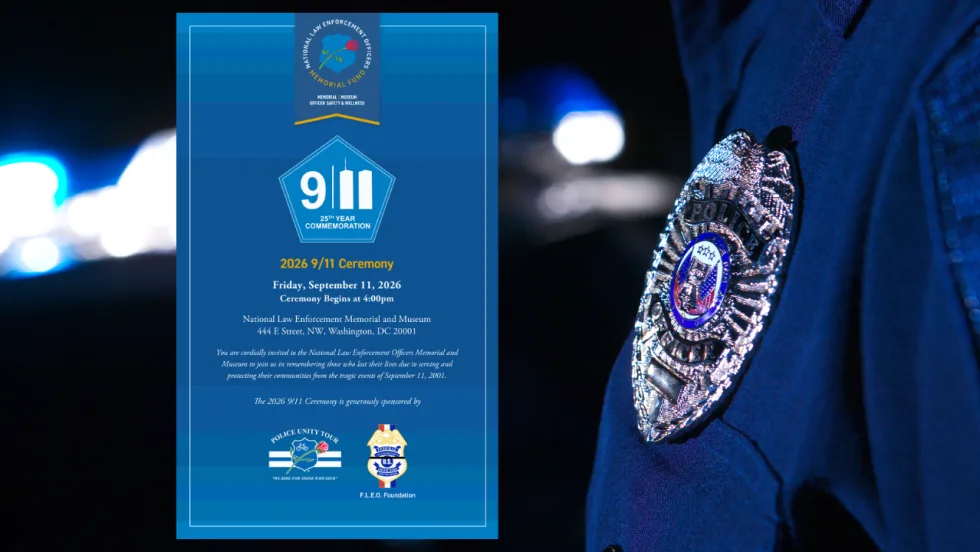
National Law Enforcement Memorial and Museum Hosting 9/11 25th-Year Commemoration Ceremony
The National Law Enforcement Memorial and Museum is hosting a 9/11 25th Year Commemoration Ceremony on Sept. 11 at 4 p.m.
Read More →
National Law Enforcement Officers Memorial Fund Announces June 2026 Officers of the Month
The National Law Enforcement Officers Memorial Fund (NLEOMF) named 15 officers of the Chico Police Department (California) as the Officers of the Month for June 2026 for their roles in responding to an active-shooter incident at a public library.
Read More →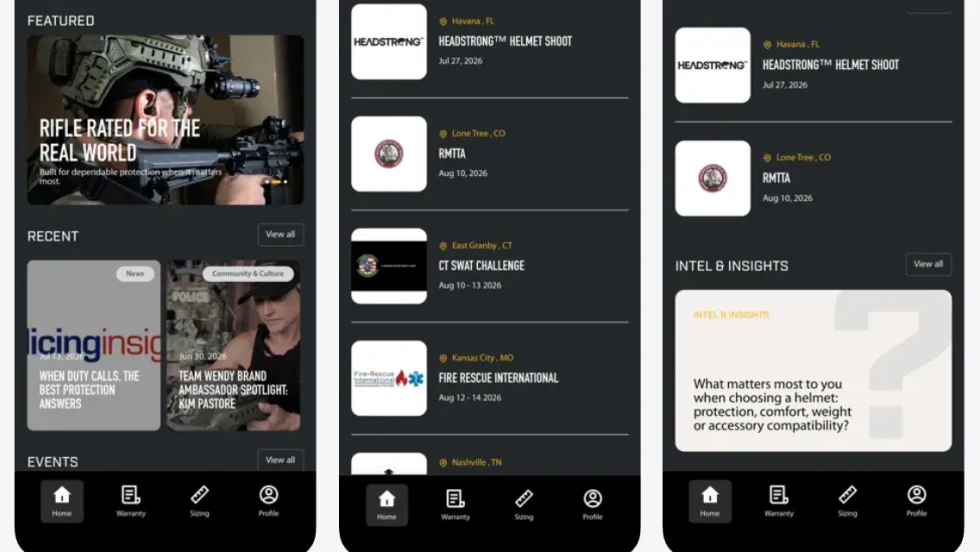
Team Wendy App Creates New Digital Hub for Helmet Owners
The Team Wendy Community App provides one location for warranty registration, size-fit tools, product updates, and community connection. For helmet owners, the new app creates a simpler path to the information and tools that matter most.
Read More →