



Staying Safe During Foot Pursuits
From sudden medical emergency to ambush on officers, foot pursuits can turn deadly in an instant.

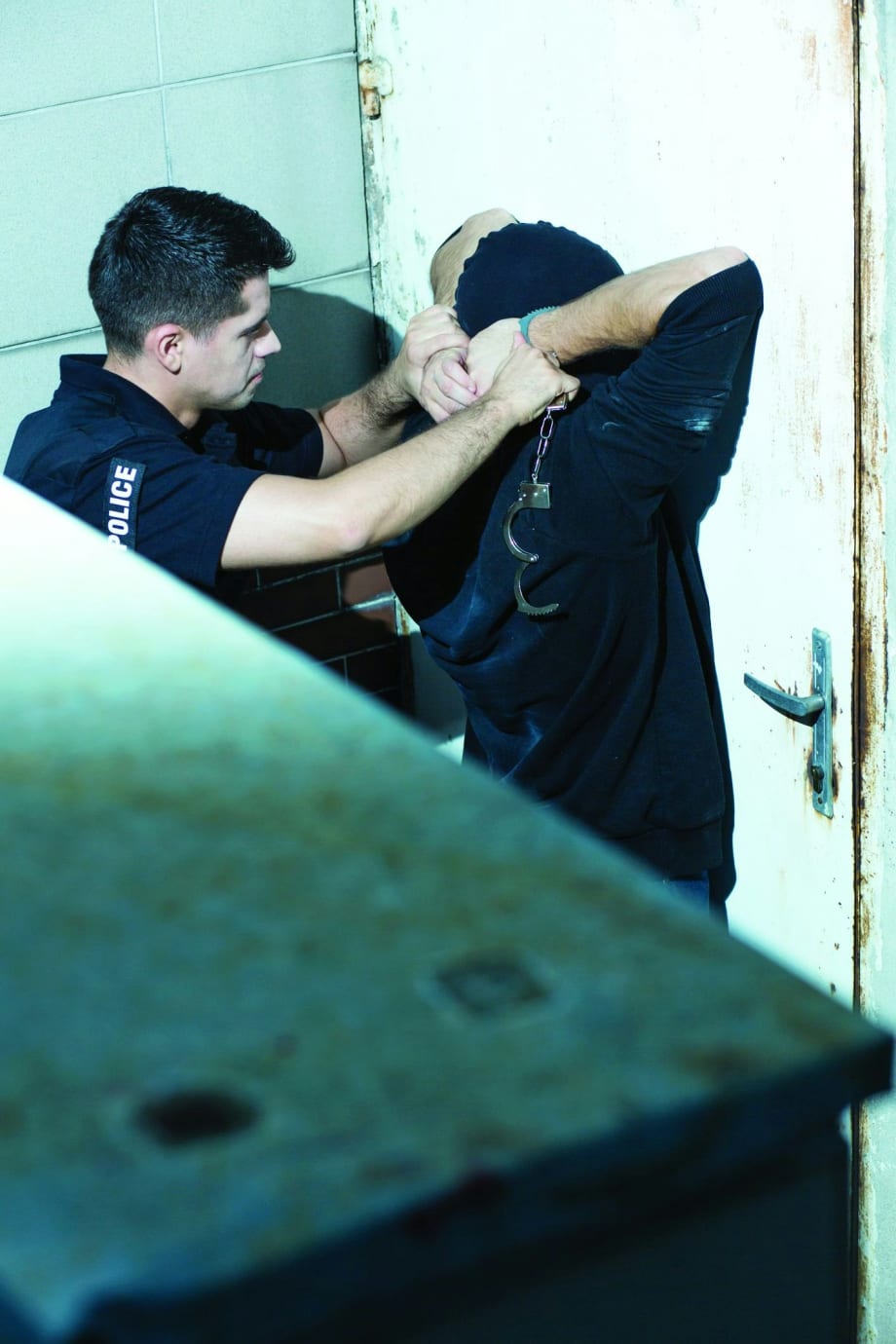
At the end of a successful foot pursuit, you still have to make an arrest. Before tearing after a fleeing suspect, you need to know if you are fit enough to endure the run and the fight that may happen if the subject resists.
Photo: Getty Images
![[|CREDIT|]](https://firstresponse-assets.bobitstudios.com/image/upload/f_auto,q_auto,dpr_auto,c_limit,w_684/pm.we_runningblue_gettyimages-78028378_1759886628829_jbowph.jpg)
In November, PoliceMag.com reported on a foot pursuit that ended in a gun battle between the pursuing officer and the fleeing subject. An unidentified Chicago police officer was shot in his ballistic vest after a suspect opened fire during a foot pursuit that began when the subject fled a traffic stop. During the pursuit, the subject reportedly turned and fired at the officer.
The officer's body armor stopped at least one round, according to reports. The officer returned fire, striking the gunman in the throat. Both the officer and the subject were transported to nearby hospitals—the subject was subsequently listed in critical condition.
Fortunately, the officer was treated and released and is expected to be OK.
Pursuit Safety
The recent incident in Chicago acts as a stark reminder that myriad hazards exist for officers engaging in foot pursuits. For example, a fleeing subject may know the immediate area better than the pursuing officer, and take advantage of that knowledge to elude the officer and lie in wait for an ambush. When a subject clears a wall or a corner, they have a substantial advantage to attack as the pursuing officer clears the obstacle or terrain feature.
If a pursuing officer loses sight of the fleeing subject, that officer may determine that the best course of action is to discontinue the pursuit, and communicate to other responding officers the suspect's last known location and direction of travel. If the pursuing officer decides to continue the pursuit after briefly losing sight of the subject, it's important to remember to never jump over walls or fences exactly where the suspect did, and to "pop a peek" around corners from an unexpected height—whenever practical.
It's also important to remember that darkened backyards offer a wide variety of hazards—vicious dogs, swimming pools, clotheslines, and fixed objects in the ground like sprinkler heads—all of which can ruin an officer's day. Another consideration is the terrain itself. Is there snow, ice, standing water, sand, mud, or other traction issues that can cause an injury?
Finally, a foot pursuit will ideally involve at least two officers. For this reason, it's important to call for backup as soon as you get the sense that a contact might beat feet. It's recommended that in the event that two officers are giving chase that they not separate unless they remain in sight of each other and maintain communication.
![[|CREDIT|]](https://firstresponse-assets.bobitstudios.com/image/upload/f_auto,q_auto,dpr_auto,c_limit,w_684/pm.we_fitness_gettyimages-859536308_1759886763331_rrou6m.jpg)
Five Questions
The recent incident in Chicago presents an opportunity to ask—and answer—several important questions that merit consideration before a police officer gets into their next foot pursuit.
1. "Am I in good physical health?" Because a substantial number of foot pursuits end in some use of force to bring the fleeing subject into custody, it's fair to ask, "Do I have the cardio and strength conditioning to engage in a physical struggle with a resistive subject after running at top speed for several minutes?"
It's important to have a very accurate—and recent—assessment of your health and fitness. Too many officers die from heart attack or other medical emergency during or immediately following a foot pursuit. Further, there's no point in continuing a pursuit only to have a subject—who has done nothing much more than physically train while behind bars—get the best of you in a fight, potentially disarming and killing you.
2. "Have I observed any pre-attack indicators prior to the subject fleeing on foot? Have I seen any behaviors during the initial portion of the pursuit that might reveal an intention to turn and attack me?"
It's important to keep in mind what the subject did immediately before he or she turned and ran. Things like blading of the feet into a fighting stance, clenching of the fists, gnashing of the teeth, making target glances to your duty belt, and other signals prior to a foot pursuit should put you on notice that once the chase ends, the fight may have only just begun.
3. "Do I know the subject? If so, do I know them to regularly carry weapons? Can I make a radio call about the contact and look to apprehend the individual at a later date and time—when I can respond in greater number and with the element of surprise?"
Of course, if the person running from you is known to be armed and potentially dangerous to others in his or her path, Tennessee v. Garner kicks in and a pursuing officer may legally resort to deadly force—in lieu of chasing the suspect—if the officer "has probable cause to believe that the suspect poses a significant threat of death or serious physical injury to the officer or others." In such instances, the United States Supreme Court has ruled quite clearly that deadly force is legally justified.
4. "Have I trained to discharge my firearm while running—or immediately after having been running—at a full sprint for a lengthy period of time?"
As a civilian police writer, I've been incredibly fortunate to be invited to participate in many, many hours of law enforcement firearms training in the past decade or so. In only one instance was such a scenario run—no pun intended. Of course, this is probably due to safety concerns—running with a firearm in your hand significantly increases the possibility of a negligent discharge. Further, it's likely that some agencies have policies prohibiting the discharge of a firearm while running. Nonetheless, for those departments that do not have such limitations, this is an issue to take into consideration.
5. "Is this pursuit even worth the effort? Related somewhat to question three in this list, is the person I'm thinking of chasing wanted for a serious felony or a petty crime that doesn't rise to the level of risking my life?"
Resist the temptation to take off like a greyhound after the mechanical rabbit at the old-time dog track just for the sake of doing so. It's very, very tempting to run after a subject "just because," but the payoff may not be worth the investment. Be strategic in the application of your tactics. Too many officers have been injured or killed over "contempt of cop" on the part of a fleeing subject.
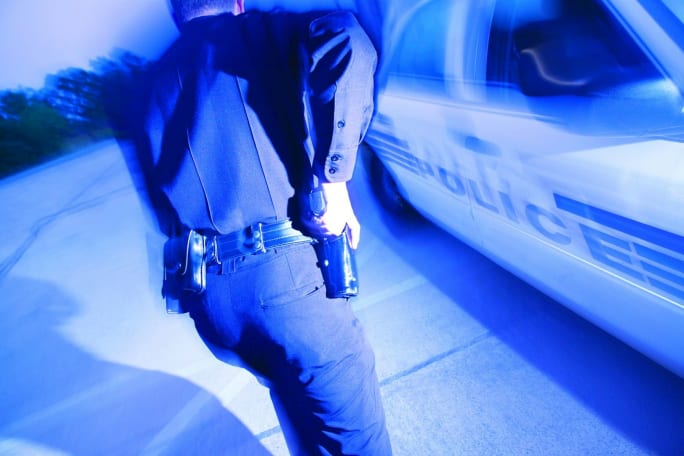
Few officers have trained to fire a handgun while running after a suspect. Make sure you know how it will affect your aim.
Photo: Getty Images
Parting Thoughts
While empirical data doesn't exist—at least to my knowledge—on lost productivity due to injuries sustained during foot pursuits, anecdotal evidence suggests that medical leave following such incidents is significant enough to give police trainers and command staff cause for some deeper thought into the matter.
It makes sense for police trainers and command staff alike to examine how to mitigate potential injury to officers—as well as preventable line-of-duty deaths—resulting from foot pursuits.
Oh, and like that officer in Chicago whose vest stopped a bullet, please wear your body armor every shift. It could well save your life.
Doug Wyllie is contributing web editor for POLICE.
More Patrol

Streamlight Portable Scene Light III Wins 2026 OH&S New Product of the Year Award
Streamlight’s Portable Scene Light III has won the 2026 Occupational Health & Safety (OH&S) New Product of the Year Award in the Lighting category.
Read More →
Adept Armor Introduces Two New Rifle Plates
Adept Armor has launched two new Level IV ballistic plates, the Emperor and the Archon Mark 2, which brings Adept Armor’s new Quatroid ceramic to the high-threat, performance-value center of the range at 5.2 pounds.
Read More →
POLICE Product Test: Benchmade Bailout
The Benchmade Bailout is a slim, lightweight carry knife with a deep-ride pocket clip and comes in a variety of blade steels and scales. Here is a detailed review of the Taiga Green Bailout, released earlier this year.
Read More →
NLEOMF Announces July 2026 Officer of the Month
NLEOMF honored a Michigan deputy sheriff as the July 2026 Officer of the Month for rescuing a trapped driver from a burning vehicle following a Fourth of July crash.
Read More →
Streamlight to Showcase Newest Lighting Products at National Safety Council’s Safety Congress & Expo 2026
Streamlight will showcase its latest lights, including the Portable Scene Light III and the LiteBox 1Million, at the 2026 National Safety Council (NSC) Safety Congress & Expo.
Read More →
The 2027 World Police & Fire Games Set for Perth, Australia
The 2027 World Police & Fire Games (WPFG) will take place in Perth, Western Australia, from Friday, March 12 through Sunday, March 21, 2027.
Read More →
5.11 Partners with National Fallen Firefighters Foundation to Support #ForThe343
5.11 has joined the nationwide movement honoring the 343 New York City Fire Department firefighters lost on Sept. 11, 2001.
Read More →
Team Wendy Announces Title Sponsorship of the Jorge Pastore Foundation
Team Wendy’s 3-year partnership with the Jorge Pastore Foundation expands access to programs that strengthen those who serve.
Read More →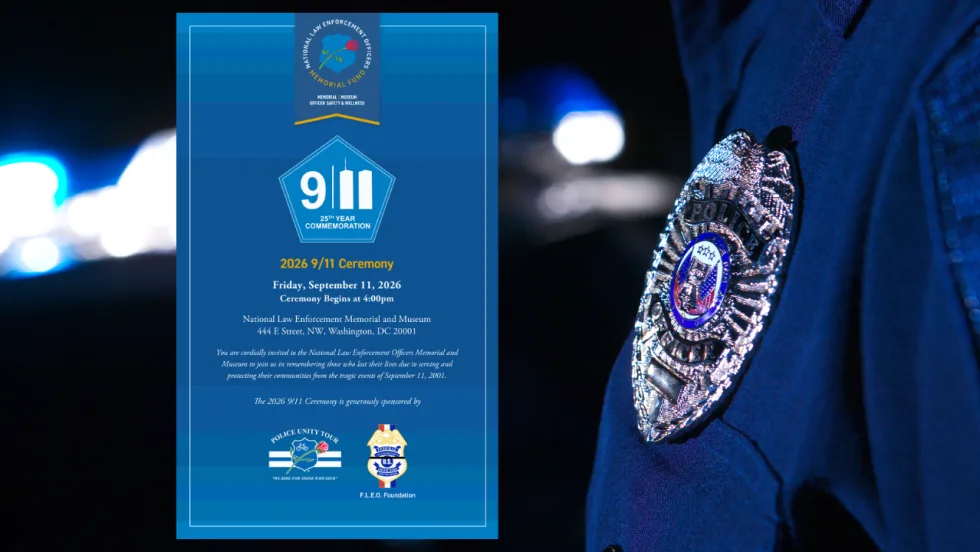
National Law Enforcement Memorial and Museum Hosting 9/11 25th-Year Commemoration Ceremony
The National Law Enforcement Memorial and Museum is hosting a 9/11 25th Year Commemoration Ceremony on Sept. 11 at 4 p.m.
Read More →
National Law Enforcement Officers Memorial Fund Announces June 2026 Officers of the Month
The National Law Enforcement Officers Memorial Fund (NLEOMF) named 15 officers of the Chico Police Department (California) as the Officers of the Month for June 2026 for their roles in responding to an active-shooter incident at a public library.
Read More →