



Shock Treatment
Because the high-powered Taser has been so swiftly fielded by so many agencies, there is no consensus on how officers who carry the weapon should be trained. Despite the fact that Taser International no longer emphasizes that all users should be stunned with the weapon, people at the company believe there are many reasons for departments to consider mandatory exposure.

Because the high-powered Taser has been so swiftly fielded by so many agencies, there is no consensus on how officers who carry the weapon should be trained. The manufacturer of the weapon, Scottsdale, Ariz.-based Taser International, employs a cadre of trainers and master trainers with the goal of providing instruction to agencies that deploy Tasers, but not every agency follows the Taser International program and even those that do often skirt the issue of whether officers need to be shot with the weapon to understand it.
Steve Tuttle, Taser International’s director of government and law enforcement affairs, says the company itself has relaxed its stance on whether officers should receive a taste of the Taser before they carry the weapon. “The company used to have its national instructor trainers teach that certified instructors should make exposure to the Taser mandatory in basic user programs. Our position currently regarding instructor level training is that we ‘strongly urge’ our instructor candidates to be exposed. We leave it to the decision of individual agencies to make it mandatory or voluntary for the basic user.”
Despite the fact that Taser International no longer emphasizes that all users should be stunned with the weapon, Tuttle believes there are many reasons for departments to consider mandatory exposure. “Officers will understand the importance of safety and survival during field use as well as a better understanding and knowledge of what the Taser can actually do if they have experienced it,” he says.
Taser International has also discovered that one shock from a Taser gun is way more effective than thousands of words from instructors. Tuttle says the company has conducted exhaustive research on the issue of exposure in training, and it has concluded that exposure is the best way to open the eyes of potential users and dispel some of the myths about the Taser.
One such myth is that the Taser can trigger cardiac arrest. “Those that do not understand the weapon believe that it can stop the target’s heart,” says Tuttle. “This is because they don’t understand how the Taser actually affects the body.” Tuttle believes that one quick way to dispel this concern is to shoot the officer with the Taser and let him or her discover that the weapon is very effective but does no harm.
Gun-Shy
Even though Taser’s research shows that the weapon has no lasting physical effect on its targets, many agencies are skittish about requiring their officers to take a shock.
Veteran police trainers believe that agencies are gun-shy about Taser exposure because of the legal flak that some encountered when they required officers who carry OC spray to be hit with the spray in training.
In the mid-‘90s, defensive tactics instructors and use-of-force experts nationwide were stressing the importance of exposure to “live” pepper spray (OC) in training. Police trainers argued that officers needed to know what to expect in the field should they receive an indirect hit of pepper spray during a confrontation. Accordingly, trainers structured their pepper spray courses to include light or indirect exposure to their department’s issue pepper spray. In these programs, officers were required to perform a series of tasks such as using a baton, handcuffing a suspect, pulling the trigger of an unloaded firearm, and/or performing a reload of an empty magazine after getting a face full of OC.
Initially some officers resisted the exposure and a few officers even attempted to have the practice stopped through legal action. However, a majority of officers nationwide have now come to realize that OC exposure in training is beneficial.
Taking a hit of OC in training teaches officers the strengths and weaknesses of pepper spray. Also, because the deploying officer has been exposed to OC he or she can easily explain why greater force is required on a subject who manages to overcome the effects of the aerosol.
Use-of-force experts argue that similar benefits can be derived by shooting officers with a Taser in Taser training.
[PAGEBREAK]
Administrative Stance
Ultimately, the decision to expose officers to a less-lethal weapon in training is up to the individual agency’s administrators.
Chief David G. Bishop of the Beaverton (Ore.) Police Department was recently faced with this decision regarding the Department’s Taser training. Bishop says he made his decision using the following analogy, “If officers are going to deliver pain, they should probably experience the pain.”
Bishop explains that his goal is not to torture his officers, it’s to help them justify their use of Tasers, especially if a Taser is deployed multiple times on one individual. “They need to know what the subjects are experiencing,” he says.
One thing Bishop emphasizes is that it’s important for chiefs to listen to their use-of-force instructors on issues like Taser exposure. “My instructors usually do not have to convince me that what they want to do is right. I empower them to make the right decisions,” he says.
Lethal vs. Less-Lethal Training
Often it’s not the chiefs that have to be convinced. Most people are not too thrilled at the prospect of being shot with an electric weapon, and police officers are no exception. Skittish officers tend to argue that they do not have to be shot with their gun or struck with their baton to understand the effects of those weapons, and they ask why the Taser is any different.
Taser trainers say the difference is that officers know very well the effects of being struck with a baton or shot with a pistol. And for obvious reasons, officers can’t be shot with a pistol or struck with a baton in training. In contrast, with Tasers and pepper spray, use-of-force experts can design training that exposes officers to the effects of the weapons.
Exposure Training
Once an agency decides to acquire and deploy Tasers, it then must establish carry policies and training requirements for officers who are permitted to carry the weapon. One of the training decisions that must be considered is whether to shoot the officers with the Taser during the training program.
An informal survey of agencies in the Portland, Ore., metropolitan area shows that in most of their training programs Taser exposure is voluntary. But interestingly enough, an overwhelming majority of officers who attend the training courses elect to be exposed.
Police trainers say that exposure to the Taser during training pays many dividends. “Once officers are exposed and experience the debilitating effects of the Taser, it makes them a real believer and gives them ‘buy in’ to the program,” says Officer Tom Forsyth, a Portland Police Bureau trainer. “Exposure is essential. Officers who have been exposed to the Taser can formulate quickly what to do if their Taser falls into a suspect’s hands. They know how to quickly make contingency plans and also know to practice good retention skills during close confrontations.”
When to Shoot
Chris Lamberger, senior training officer for the Beaverton Police Department, says that the timing of when to shoot officers with the Taser in training is critical to the success of the class.
“Taser International suggests a basic user course of four hours,” says Lamberger. “Design your lesson plan so that for the first hour you introduce the basics of the Taser, its success rates, how it works (on the body), basic function checks, and cartridge load and unload. At the start of hour two, do your qualification fire, and then do your live exposures.
“Otherwise, for four hours, your students will be sitting there wondering what the exposure is going to feel like. During the two-and-a-half hours after the exposure, you will have a much more attentive audience with their minds on the important issues such as deployment, reporting/documentation, and the like,” Lamberger adds.
[PAGEBREAK]
Justifying Exposure
By witnessing several of their fellow officers exposed to the actual Taser, whether it’s a full five-second cycle or a one- or two-second charge, officers will quickly realize why it is important for them to be exposed to the Taser during training. This, in turn, will give them information that can protect them from false allegations of improper use and to defend the decision to escalate force when necessary.
Also, by witnessing exposures in the classroom, officers will have first-hand knowledge of the Taser’s effect on a subject. They will realize that additional force will be needed if a subject can somehow fight his or her way through the effects of the Taser. Also, they will instantly realize the danger of having the weapon turned on themselves on the street and the need for lethal cover when deploying it.
Should a suspect grab and aim a Taser at an officer, the officer may decide to deploy deadly force, especially if he or she has no backup. The officer could authoritatively testify in court from first-hand knowledge about the Taser’s capability to incapacitate that he or she knew that the Taser’s effect would give the subject the opportunity to obtain his or her sidearm.
Certain jurisdictions have already cleared officers who eventually used higher levels of force and even deadly force as a result of exposure to their own pepper spray. So it is likely that the courts would also accept similar arguments from officers faced with the prospect of being Tasered by a subject.
Murphy on the Street
Another reason for exposing officers to the effect of the Taser is to make them realize that if the weapon doesn’t work that something has gone wrong. The ability of high-powered Tasers like Taser International’s M26 and X26 to stop SWAT officers, martial artists, and determined, altered, or crazed assailants is well documented.
But the Taser is not necessarily a sure thing on the street.
Since both probes have to make contact to complete the circuit, missing the mark with one means that the subject will keep coming. Also, a thrashing suspect can break the wire leading from the Taser to a probe or pull out a probe. Heavy winter clothing can also sometimes prevent the Taser charge from reaching the subject’s skin.
And the weapon itself can malfunction. The most common reason why the Taser doesn’t work is that the batteries are weak. When a Taser with weak batteries is deployed on a subject, it may not immediately incapacitate him, if at all.
During training, due to repeated use of the Taser, officers may witness a student receiving a sub-standard charge. And this is a good thing because it shows the students that the Taser is not foolproof.
A subject exposed to a sub-standard charge may be able to move forward, step, kick, or even perform a specific task due to not receiving a full Taser charge. This is a graphic demonstration of the importance of why the Taser needs to be operating correctly and fully charged at the beginning of every shift.
Force Continuum
Many states are placing Tasers on the same level of the force continuum as OC spray due to ease of subject “after care” and research that shows Taser exposure has no long-term physical effect. This means that Taser use is increasing.
And because so many agencies have Tasers and so many officers have been authorized to use them, there is a greater likelihood that officers may be exposed to the Taser effect during an incident. This is one of the reasons why exposure to Tasers in the training environment is so critical. Officers need to know the capability of the weapon, and they need to know that by removing their hands from the wire, probe, or between the probes that they will be able to continue to engage.
To protect against the risk of officer injuries and civilian lawsuits from improper use, police agencies should thoroughly train officers on proper use of Tasers.
And the operative word here is thorough. As police trainers have seen over the years with the use of pepper spray, actual exposure to the live product in training is justifiable and beneficial to officers.
Although it should be left up to each agency to decide if exposure to the Taser effect in training is mandatory or voluntary, Taser training programs should be designed to reflect realistic situations and to keep officers safe and out of civil court.
More Patrol

Streamlight Portable Scene Light III Wins 2026 OH&S New Product of the Year Award
Streamlight’s Portable Scene Light III has won the 2026 Occupational Health & Safety (OH&S) New Product of the Year Award in the Lighting category.
Read More →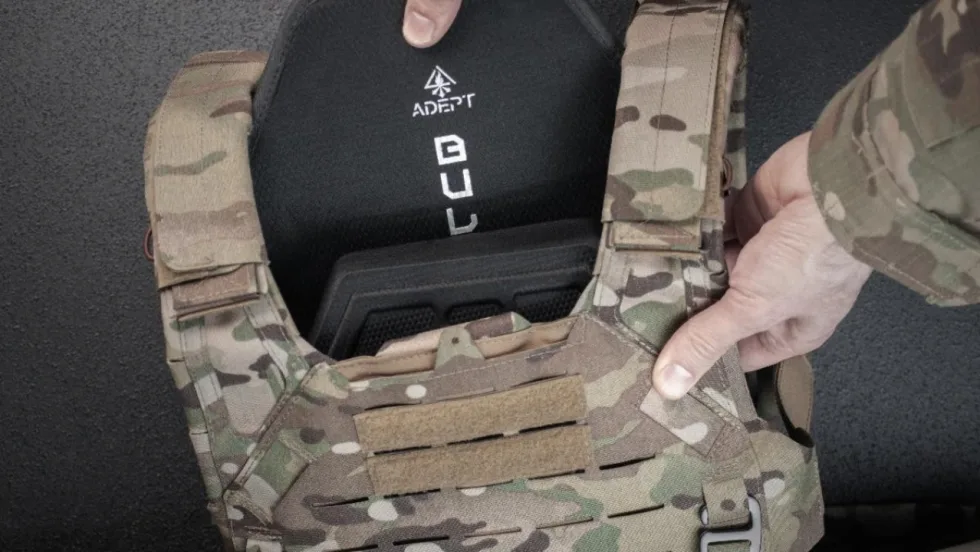
Adept Armor Introduces Two New Rifle Plates
Adept Armor has launched two new Level IV ballistic plates, the Emperor and the Archon Mark 2, which brings Adept Armor’s new Quatroid ceramic to the high-threat, performance-value center of the range at 5.2 pounds.
Read More →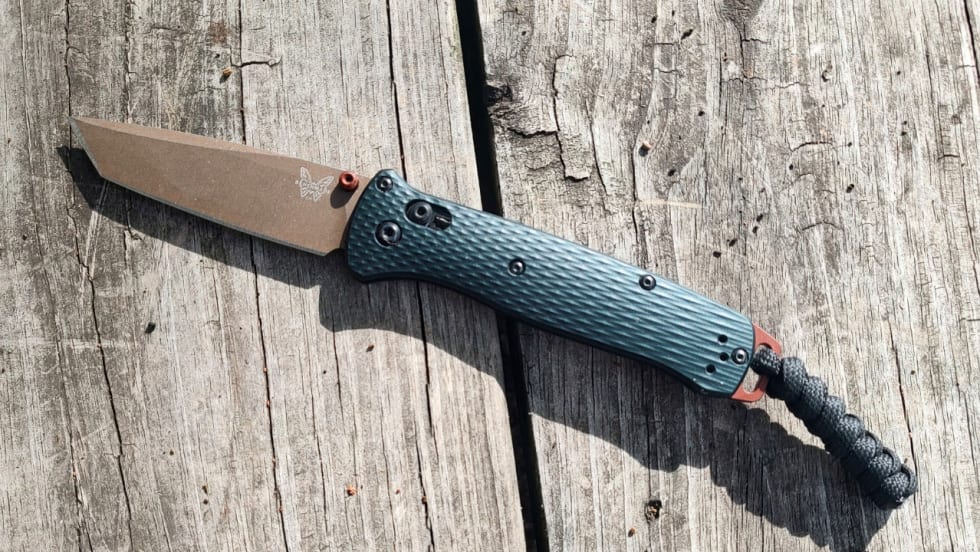
POLICE Product Test: Benchmade Bailout
The Benchmade Bailout is a slim, lightweight carry knife with a deep-ride pocket clip and comes in a variety of blade steels and scales. Here is a detailed review of the Taiga Green Bailout, released earlier this year.
Read More →
NLEOMF Announces July 2026 Officer of the Month
NLEOMF honored a Michigan deputy sheriff as the July 2026 Officer of the Month for rescuing a trapped driver from a burning vehicle following a Fourth of July crash.
Read More →
Streamlight to Showcase Newest Lighting Products at National Safety Council’s Safety Congress & Expo 2026
Streamlight will showcase its latest lights, including the Portable Scene Light III and the LiteBox 1Million, at the 2026 National Safety Council (NSC) Safety Congress & Expo.
Read More →
The 2027 World Police & Fire Games Set for Perth, Australia
The 2027 World Police & Fire Games (WPFG) will take place in Perth, Western Australia, from Friday, March 12 through Sunday, March 21, 2027.
Read More →
5.11 Partners with National Fallen Firefighters Foundation to Support #ForThe343
5.11 has joined the nationwide movement honoring the 343 New York City Fire Department firefighters lost on Sept. 11, 2001.
Read More →
Team Wendy Announces Title Sponsorship of the Jorge Pastore Foundation
Team Wendy’s 3-year partnership with the Jorge Pastore Foundation expands access to programs that strengthen those who serve.
Read More →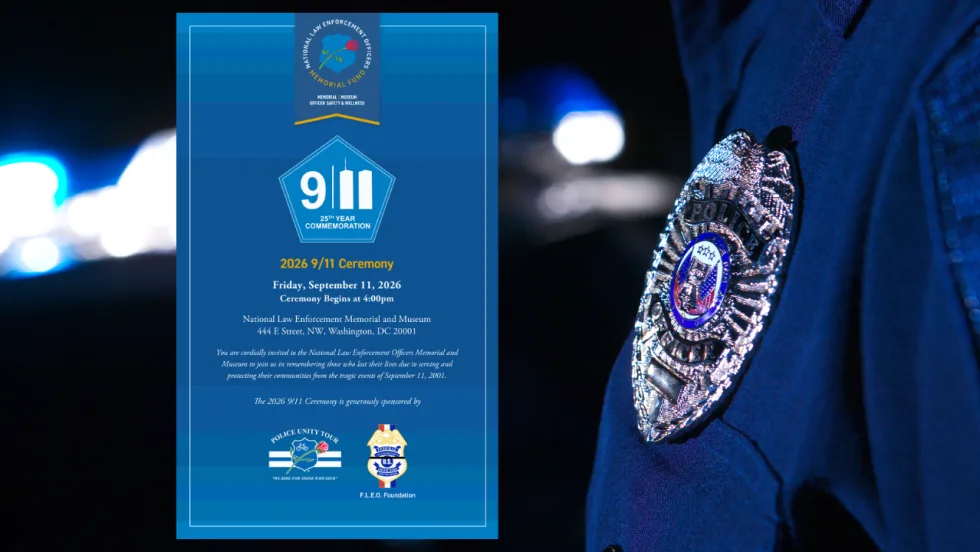
National Law Enforcement Memorial and Museum Hosting 9/11 25th-Year Commemoration Ceremony
The National Law Enforcement Memorial and Museum is hosting a 9/11 25th Year Commemoration Ceremony on Sept. 11 at 4 p.m.
Read More →
National Law Enforcement Officers Memorial Fund Announces June 2026 Officers of the Month
The National Law Enforcement Officers Memorial Fund (NLEOMF) named 15 officers of the Chico Police Department (California) as the Officers of the Month for June 2026 for their roles in responding to an active-shooter incident at a public library.
Read More →