



Seeing Soft Spots
It’s important for you to be able to analyze vulnerabilities in your community, prioritize potential targets, and plan for a response. In other words, to protect your jurisdiction from dedicated and motivated fanatics, you need to look at it through their eyes.

In each community across the United States, law enforcement is the most critical element in protecting infrastructure and responding to a terrorist act. You are the linchpin that will hold your community together in a time of crisis, maintain order, protect other emergency responders like fire-fighting and emergency medical personnel, stop the terrorists from further action, and set the example for others to prevent panic. Make no mistake. The everyday cop in every little town or big city is essential to all of our anti-terror (preventive) and counter-terror (reactive) plans.
This is why it’s important for you to be able to analyze vulnerabilities in your community, prioritize potential targets, and plan for a response. In other words, to protect your jurisdiction from dedicated and motivated fanatics, you need to look at it through their eyes.
Protecting any organization, group, or community involves four basic steps: Identifying the threat and its methods of attack, determining what places and things in your jurisdiction are the most important “targets,” studying the weaknesses of the potential targets in light of the threat(s), and finding resources to improve protection of potential targets or limit the terrorist’s options.
Know Your Enemy
Terrorism, in its simplest form, is a criminal act designed to have an impact beyond the immediate target audience. We classify terrorism as a crime for two reasons. First, intimidation, kidnapping, vandalism, torture, and murder are crimes in our society, regardless of the reasons for committing these acts. Second, if we do not classify terrorist acts as crimes, we legitimize the efforts of terrorists; i.e. it’s OK for terrorists to kill people because they are either misunderstood, oppressed, or for some other ding-a-ling reason.
And if you think that all terrorists come from countries whose names end in the syllable “stan,” or they all wear turbans, or all bow to Mecca five times a day, then put that out of your head. Terrorists are a part of every nation and culture in the world, and they have been for thousands of years.
The thing that makes terrorist organizations difficult to catch is that they maintain great secrecy. This is accomplished by organizing into cells that often consist of as few as two to six personnel. The people in each individual cell may have no knowledge of other cells in the same city. Such an organizational structure makes it hard for law enforcement to arrest one cell member and roll up the whole network.
Worse, organizations like Al Qaeda have now refined their cellular structure so that each cell is an independent element. This means that a single cell can independently organize, gather resources, communicate with other cells, obtain financing, collect intelligence, plan an operation, train, and execute a terrorist act.
In all likelihood that act will be a bombing. Terrorists typically favor a single, horrific event that produces the largest body count possible. And when it comes to bang for the buck, explosives have a tendency to yield lots of carnage.
This is why during the last decade, bombings have been the most preferred technique used by terrorists, leading all other types of attacks in frequency by as much as 85 percent. Of course, that doesn’t mean that bombs are the only terrorist tool. Sniper attacks, kidnapping, extortion, sabotage, and propaganda-based threats round out the terrorist’s repertoire.
Know What to Protect
Now that we’ve discussed the characteristics of terrorists and their methods, let’s talk about law enforcement priorities and how to analyze potential targets in your community.
The top priority of local law enforcement is security. It forms the basis from which all other emergency responses originate. The 1992 Los Angeles Riots is a poignant example of how important security can be in a crisis. Officers were actually called into action to provide cover fire for other emergency responders who were trying to save lives and property. But in other locations, officers were not available to stop people from running amok and vandalizing entire city blocks because there was insufficient security presence to stop them. This is not intended as a slight against the Los Angeles Police Department, but it is an example of how personnel deployment decisions during a crisis have many consequences and are among some of the toughest decisions made by onsite leadership.
What’s this have to do with terrorism and potential targets? Plenty. Anti-terrorism efforts at the local level are all about the allocation of resources and personnel. Put simply, you can’t protect everything in your jurisdiction from a terrorist attack, so you have to learn to see your community in the way that a terrorist sees it and determine what is most important to your community.
After security, there are at least 16 types of critical infrastructure or key assets deemed important by the U.S. Department of Homeland Security. (See “The Physical Protection of Critical Infrastructures and Key Assets,” www.dhs.gov/dhspublic/display?theme=31&content=463).
These Homeland Security guidelines are a good start. But prioritizing what targets are most important in your community depends largely on each community’s individual situation and environment. So not I nor anyone else can do this work for you.
What I can offer, however, is a subjective opinion based on my overseas experience in both destroying and restoring critical infrastructure while serving with the U.S. Army Special Forces.
Target Hierarchy
Power and water are the two most precious commodities any community needs to function properly. As we’ve seen in Iraq, every service a community relies on uses electricity in some form or another to provide that service. That includes the clean water supply. And a clean source of water is essential to preventing the spread of disease.
Mass communication, especially television and radio broadcast stations, is the next most important service to protect. Broadcast systems are the primary means through which the public receives updates on service restoration and other important information needed to rebuild the community.
Wastewater treatment is the next service to protect. We use water to clean ourselves and to flush or rinse away other material or contamination. Wastewater is rife with germs and disease that can debilitate entire regions in the mid- to long-term. However, you need water to treat water and electricity to pump it. That’s why wastewater treatment facilities are less critical than clean water and electricity. If wastewater treatment is disrupted for only a short time, say three to seven days, the threat to community health is negligible.
Medical facilities, particularly emergency services, are another resource to consider. Where this falls on your list of target priorities is determined by the nature of the medical infrastructure in your community. If you have numerous medical facilities, however, it is unlikely that all but the most catastrophic attacks can deprive your community of emergency medical resources. However, if you have only one major medical facility with a regional responsibility for disaster events, then it should be moved up your priority target list and given all due protection.
Other target categories to consider include transportation, road networks, food supply, and commercial industry. Their priority for protection or support will vary according to each situation, and, of course, politics and policy will also be a determining factor.
Gauging Vulnerability
Once services and facilities are prioritized, your next job is to evaluate which of these targets is the most vulnerable. Knowledge of the threat is critical in this equation.
You have to know what types of terrorist acts extremists prefer in your area. This is because there is no generic methodology for studying a system’s weakness. The steps that you can take to prevent a car-bomb attack differ from those that would be effective against a sniper attack.
In the absence of recent factual information, your analysis should focus on three types of attacks: large bomb attacks (cars, trucks, trailers, etc.); small bomb attacks (backpacks, purses, briefcases, shopping bags, etc.); and active shooters, either long-range or on-premises shooters. This means there will be three reports for each system evaluated; one for each type of likely attack.[PAGEBREAK]
In 1952, the U.S. Army Special Forces developed a matrix for evaluating the threat against various industrial systems. When the “Green Berets” had to help protect foreign interests, they used this matrix. When they had to destroy those same types of systems, the matrix helped identify the weakest places to hit.
The Special Forces target matrix goes by the acronym CARVER, which stands for criticality, accessibility, recuperability, vulnerability, effect on populace, and recognizability.
Criticality refers to how important the infrastructure target is to the functioning of the town, city, county, etc. A water treatment plant is critical to the survival of the city; a park is not. A highway bridge is important, but the local fast-food restaurant is not.
Accessibility is an estimate of how easy it is for someone to approach or get inside the target and attack it. It’s very easy to go into a library, but it’s a little harder to gain access to a carnival (admission); and harder still to enter a police station.
Recuperability rates how long it takes to restore a target to full working order. This includes replacing critical personnel that is killed, wounded, or scared away by the attack. For example, if only one person in your jurisdiction knows how to operate a drawbridge, and is killed or injured while the bridge is open, it may take days to find someone to lower the bridge.
Vulnerability is a broad rating of the target’s security; it includes both construction and security personnel. A park has no real barriers, but surround it with enough armed security officers, detectors, and concrete barriers, and you can almost make it impregnable.
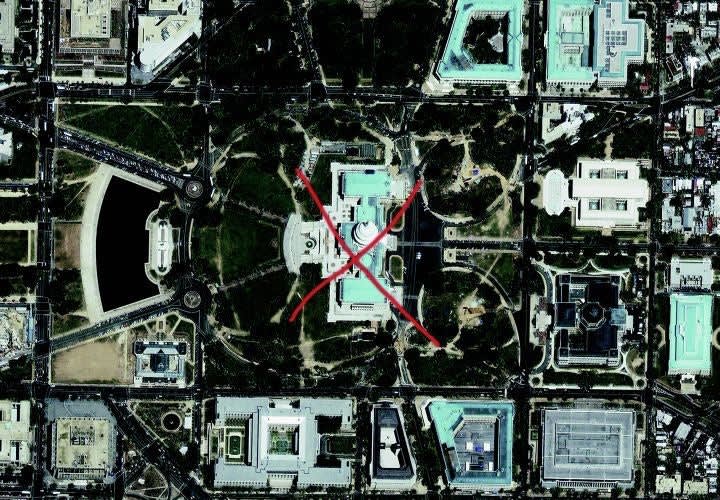
Effect on the populace is one of the more important ratings in a CARVER assessment. A high rating here can make a terrorist group ignore security, access issues, and other factors in an all-out effort to create maximum impact. Remember, effect is beyond the immediate target audience. At the point of attack, people will get hurt or die, but the real target is the symbol and the morale of the people. The Mall in Washington, D.C., is not a worthy target, except on the 4th of July when thousands of people gather there for celebrations and rallies. But a terrorist attack on the Mall that destroyed a major monument would seriously affect the nation’s morale and could occur at any time.
Recognizability rates how hard it is to locate the target. Believe it or not, terrorists sometimes hit the wrong target. If they perform their reconnaissance during the day, then attack at night, there’s a good chance they’ll move to the wrong location. So if the terrorists can’t find the target or its location is not well known that works to your advantage. It doesn’t make the target 100-percent secure, but it helps.
To use the matrix, you assign each target a rating of 1 to 5 in each category, with “1” being the lowest (or best) to “5” being the highest (or worse).
When you have assigned the numbers in each category, each target is “scored” by adding up the numeric ratings from each category in the matrix. If you are on the defense, then ideally all critical infrastructure should have a score of “6,” the lowest possible score. But that’s hard to get. So in reality, the score will be between 6 and 30 (the highest and worst rating).
Of course, just assigning numbers to targets does nothing to enhance your community’s security. You have to act on your findings. A CARVER assessment can help you focus limited resources for protection and evaluate what measures to take in driving down the CARVER rating. OK. Let’s go over the categories in the CARVER Matrix, so that you can understand how to analyze your community for targets.
The purpose of defensively analyzing your community’s infrastructure with the CARVER Matrix is that it shows what facilities need attention to improve their overall security, which is quantified in the Matrix’s 6 to 30 scale. The score shows vulnerability, and any target with a total over 20 or a single 5 in any category should be given priority consideration for hardening.
Narrow Your Study
When beginning analysis on your infrastructure, consider the scope of what you want to achieve. The CARVER matrix works for an individual store, classroom, a whole school, or an entire city. Analysts often find that one element in a target can skew a rating in the matrix. This can help you reveal important facilities in your community to which you may have never given a second thought and require you to perform a deeper study.
For example, let’s say your CARVER analysis shows that a rather “quiet” shopping center scores a high rating in two areas: criticality and effect on populace. You shake your head in wonder and ask, “Why would anyone see this collection of stores as a critical target?” But then you realize the reason for the high ratings is the acute illness clinic in the strip mall. It’s the only one in the area and averages 100 patient visits per day. By redoing your analysis, you can better focus on the weaknesses of the clinic.
Performing the Analysis
A CARVER analysis of your community is best accomplished by a select team of experts. This task force should have representatives from the following public safety specialties: explosive ordnance disposal, SWAT (especially snipers), firefighting, emergency management, and city planning. The task force leader should either be from the police department or fire department.
I doubt that any municipal organization has the resources to create a full-time CARVER task force; so the next best alternative is an ad-hoc organization that puts in extra hours (probably without pay) to do the analysis. Of course, if the top leadership in your organization does not support doing this tough analytical work, it’s going to be extremely hard to carry out the mission.
And remember, the CARVER Matrix is just a starting point. If it doesn’t exactly fit what you are looking for, make the changes and drive on with the analysis (it won’t hurt my feelings). Just one caveat: Make your adjustments to the system before you do your analysis. If you make the changes during your analytical work, you risk invalidating your previous work, which means starting over.
The most common adjustment that I have seen is to allow a decimal rating for each category such as 1.3, 4.6, 2.5, etc. Another common type of change is to “spread” the rating over 6-10 levels instead of five levels.
Finally, nothing ever remains constant, so it’s important to schedule periodic reviews of your CARVER studies to make sure the rating has not changed for better or worse.
Hardening the Targets
After you’ve determined your community’s vulnerabilities, the biggest hurdle still remains: finding the resources to enhance a target’s survival. Terrorists are very good at striking where we’re not looking. They study a series of targets and strike the weakest ones.
So ideally we should harden them all. Unfortunately, that’s not possible. We can’t afford to bankrupt a community or a nation in an effort to protect against a probable threat. This is especially true because we still have to guard against other calamities such as natural disasters, accidents, etc.
OK. So how do we strengthen the targets that we decide to make priorities? It’s not easy. There is no magic list of things to buy or do that will make a target stronger. Every single target is unique, and it will take a group effort from your community’s public safety personnel to find the most effective solution.
Funds are tight. So be especially careful about what you buy. There are thousands of business representatives out there who want to sell you all kinds of stuff that they say will enhance a target’s survival.
Before you buy their merchandise, I recommend that you ask for two basic pieces of information. Ask for a list of other buyers using the same exact equipment or service. And ask for a list of terrorist incidents that their product or service helped to prevent or mitigate. Talk to the buyers, study the results, and make the decision accordingly.
Keep in mind there are a lot of businesses trying to market military products to civilian agencies, and what works for the military doesn’t necessarily work for law enforcement. Some products only work in all-out combat, and severe casualties are an acceptable risk of combat but not of law enforcement.
One of the more interesting things that we’ve learned over the years of studying critical targets is that they tend to be in close proximity to each other. This has its pluses and minuses. It makes a target area more lucrative for terrorists, but it also allows you to consolidate protection for those same systems.
Hardening targets is all about making tough decisions. You can’t protect everything and even the things that you choose to protect may still come under attack. So you may discover that the best use of your limited resources is to mitigate the effects of an attack. This sounds callous, but it’s the way you must think in order to serve your community.
There is no magic solution for terrorism. Its method of operation and motivation is an almost perfect foil to the world community. As long as there is discontent and sympathizers, terrorism will flourish.
But while we can’t stop terrorism entirely, we can make it harder for terrorists to work and we can force them to make mistakes. Security will always be inconvenient and protection will always be uncomfortable. The question we must ask ourselves is, how much inconvenience and discomfort are we willing to tolerate in stopping terrorism?
Law enforcement will be at the fore of our efforts to combat this menace in all aspects. And remember, we have to be continuously alert to stop terrorism, but terrorists only have to get lucky once.
More Patrol
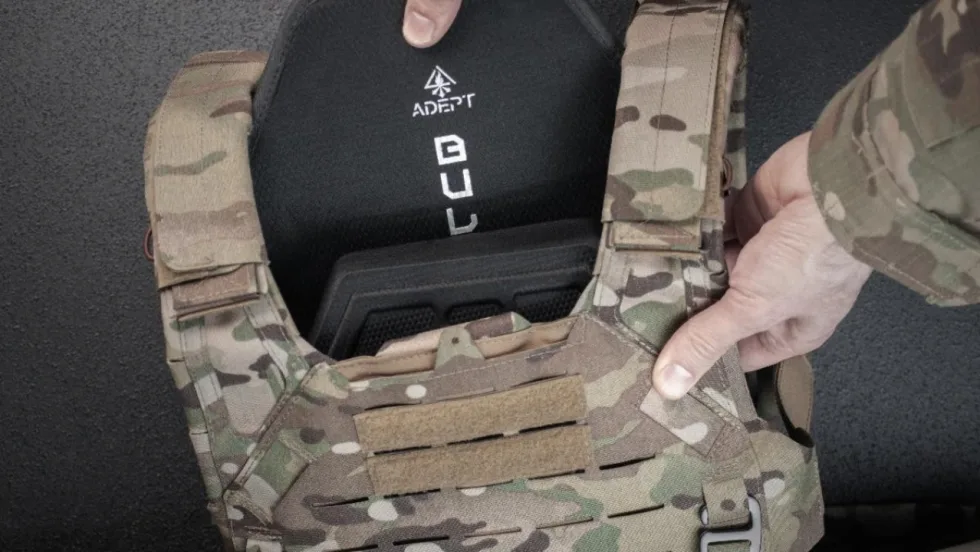
Adept Armor Introduces Two New Rifle Plates
Adept Armor has launched two new Level IV ballistic plates, the Emperor and the Archon Mark 2, which brings Adept Armor’s new Quatroid ceramic to the high-threat, performance-value center of the range at 5.2 pounds.
Read More →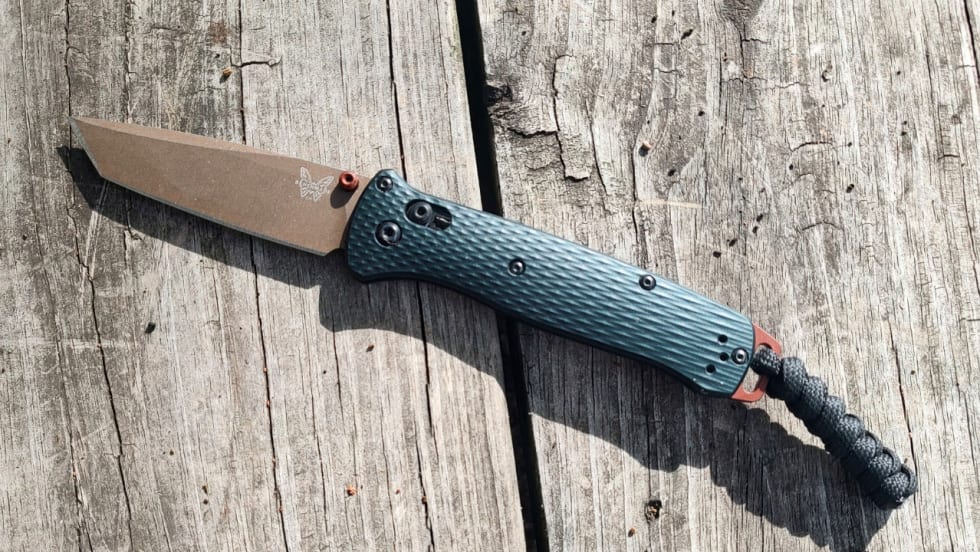
POLICE Product Test: Benchmade Bailout
The Benchmade Bailout is a slim, lightweight carry knife with a deep-ride pocket clip and comes in a variety of blade steels and scales. Here is a detailed review of the Taiga Green Bailout, released earlier this year.
Read More →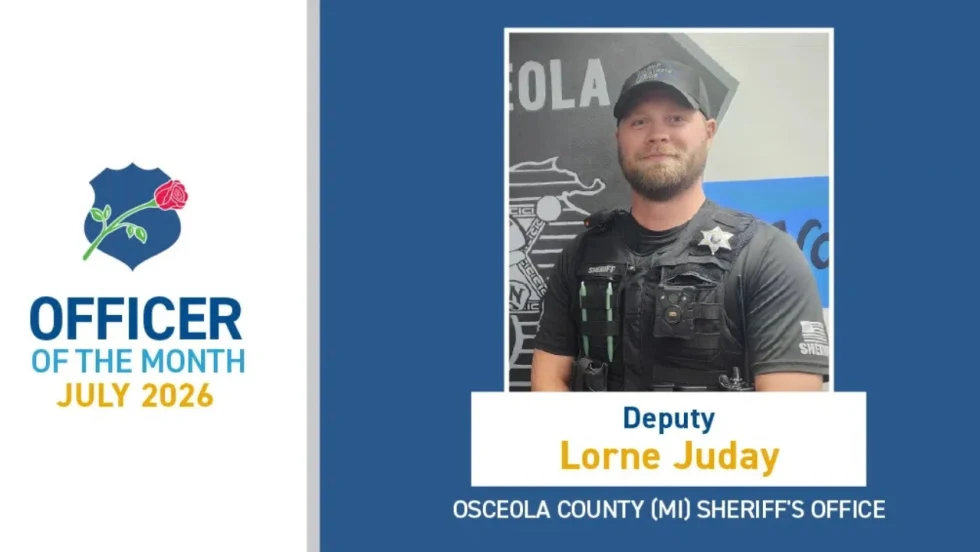
NLEOMF Announces July 2026 Officer of the Month
NLEOMF honored a Michigan deputy sheriff as the July 2026 Officer of the Month for rescuing a trapped driver from a burning vehicle following a Fourth of July crash.
Read More →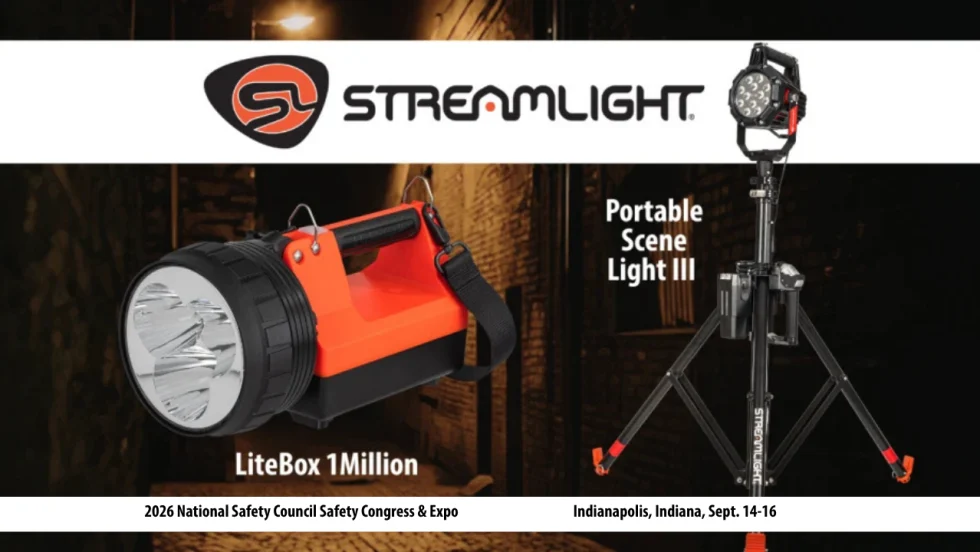
Streamlight to Showcase Newest Lighting Products at National Safety Council’s Safety Congress & Expo 2026
Streamlight will showcase its latest lights, including the Portable Scene Light III and the LiteBox 1Million, at the 2026 National Safety Council (NSC) Safety Congress & Expo.
Read More →
The 2027 World Police & Fire Games Set for Perth, Australia
The 2027 World Police & Fire Games (WPFG) will take place in Perth, Western Australia, from Friday, March 12 through Sunday, March 21, 2027.
Read More →
5.11 Partners with National Fallen Firefighters Foundation to Support #ForThe343
5.11 has joined the nationwide movement honoring the 343 New York City Fire Department firefighters lost on Sept. 11, 2001.
Read More →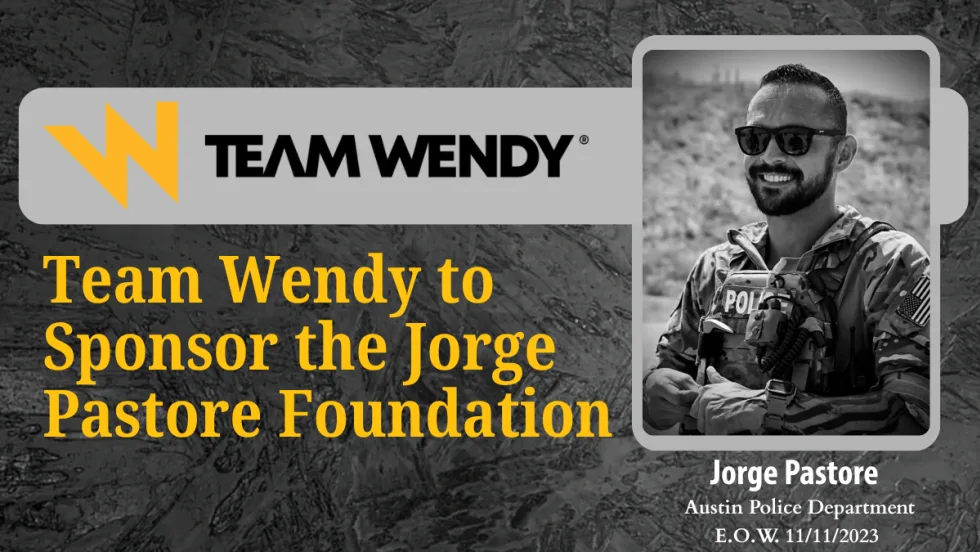
Team Wendy Announces Title Sponsorship of the Jorge Pastore Foundation
Team Wendy’s 3-year partnership with the Jorge Pastore Foundation expands access to programs that strengthen those who serve.
Read More →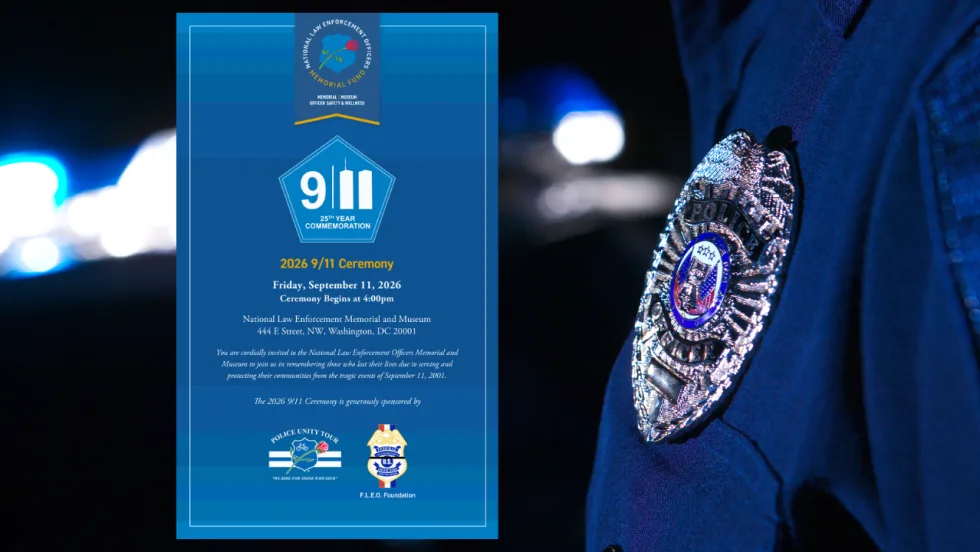
National Law Enforcement Memorial and Museum Hosting 9/11 25th-Year Commemoration Ceremony
The National Law Enforcement Memorial and Museum is hosting a 9/11 25th Year Commemoration Ceremony on Sept. 11 at 4 p.m.
Read More →
National Law Enforcement Officers Memorial Fund Announces June 2026 Officers of the Month
The National Law Enforcement Officers Memorial Fund (NLEOMF) named 15 officers of the Chico Police Department (California) as the Officers of the Month for June 2026 for their roles in responding to an active-shooter incident at a public library.
Read More →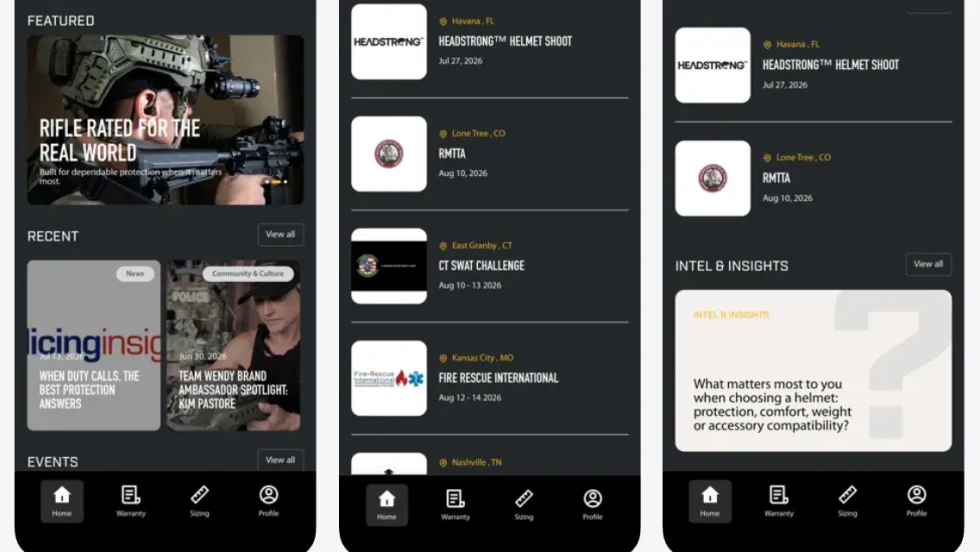
Team Wendy App Creates New Digital Hub for Helmet Owners
The Team Wendy Community App provides one location for warranty registration, size-fit tools, product updates, and community connection. For helmet owners, the new app creates a simpler path to the information and tools that matter most.
Read More →