



Searching Third-Party Residences
Most officers are aware of the general rule on entering a suspect's home to arrest him or to search for evidence. These actions must be supported by either valid consent or a recognized exigency.

Most officers are aware of the general rule on entering a suspect's home to arrest him or to search for evidence. These actions must be supported by either valid consent; an arrest or search warrant; probation or parole regulation; or a recognized exigency, such as immediate threat to person or property, imminent destruction of evidence, fresh pursuit of a dangerous offender, or preventing the escape of a suspect lawfully attempted to be detained or arrested in a public place.
Unless one of these justifications supports both the entry and any search or seizure within a home, a Fourth Amendment violation occurs (Payton v. New York). The consequences can include both suppression of evidence and civil liability.
But what if a suspect or evidence is sought from someone else's home, rather than the suspect's own residence? Under what circumstances would a suspect be able to exclude the evidence or bring a civil suit relating to the entry and search of another's residence? What precautions can law enforcement officers take to reduce the risks of loss of evidence or civil liability claims in third-party cases? Three decisions from the U.S. Supreme Court provide the answers.
Steagald v. U.S.
DEA agents were looking for Ricky Lyons, a federal fugitive named in an arrest warrant for trafficking cocaine. A confidential informant tipped agents that Lyons could be found in the Atlanta home of Gary Steagald. Based on this tip, agents entered the Steagald residence to look for Lyons. The agents believed the arrest warrant for Lyons was enough to allow them to enter any home where they had reason to believe their fugitive was present.
Although they did not find Lyons in the Steagald home, agents did find 43 pounds of cocaine and other evidence. They arrested Steagald and charged him with federal drug crimes. He moved to suppress all of the evidence against him on grounds of illegal entry.
When the case reached the U.S. Supreme Court, the evidence was ordered suppressed. The court agreed that an arrest warrant will permit entry into the suspect's home when there is reason to believe he is there, but rejected the argument that an arrest warrant authorizes entry into another's home to search for the person named in the warrant.
Otherwise, said the court, police could enter the homes of all friends, relatives, and neighbors of the fugitive to look for him, and this would violate the privacy rights of all those other people. "Thus," wrote the court, "while the warrant in this case may have protected Lyons from an unreasonable seizure, it did nothing to protect Steagald's home from an unreasonable invasion and search of his home."
The Steagald ruling means that lacking one of the recognized exceptions, officers intending to serve an arrest warrant in a home where the fugitive is only a temporary visitor or guest-and is not reasonably believed to reside-must also obtain a separate search warrant for the third party's home in order to look for their fugitive inside.
Minnesota v. Olson
Roger Olson was the getaway driver in the robbery of a gas station in Minneapolis. The other robber shot and killed the attendant. After the gunman was apprehended and the murder weapon was recovered, police tracked Olson to the home of his friends, about 36 hours after the crimes had occurred.
Police surrounded the house and phoned the residents, telling them to have Olson surrender and come out. Olson was overheard to say, "Tell them I'm not here." Officers then entered the home and found Olson hiding in a closet. He made incriminating statements, which he later sought to suppress as the fruit of illegal entry into his hosts' home.
A person must have "standing" to bring a motion to suppress evidence, or to maintain a civil suit based on an alleged Fourth Amendment violation. This means that the person has to prove that he had a legitimate expectation of privacy, possession, or liberty that was violated by the search or seizure. The prosecution argued that since Olson was not in his own home but was merely an overnight guest, he had no legitimate interest that was compromised by the warrantless entry and search.
The U.S. Supreme Court ruled that Olson could move to suppress the fruits of the entry and search, including his incriminating statements, explaining that society accepts as reasonable an overnight guest's expectation of privacy in his or her host's home.
The court wrote, "To hold that an overnight guest has a legitimate expectation of privacy in his host's home merely recognizes the everyday expectations of privacy that we all share. Staying overnight in another's home is a longstanding social custom that serves functions recognized as valuable by society. We think that society recognizes that a houseguest has a legitimate expectation of privacy in his host's home." Olson's conviction was reversed and his statement was ordered suppressed.
The Olson decision teaches that the general rules regarding warrantless, non-consensual, and non-exigent entries and searches of a third party's residence can be asserted by a non-resident who is merely an overnight guest. Based on the ruling, such a person spent the previous night there or intended to spend the coming night there.
Minnesota v. Carter
An informant tipped an officer in Eagan, Minn., that two men were packaging drugs in an apartment. The officer went to the location, walked around the building, and peeked through a window to see Carter and Johns bagging cocaine in an apartment that was rented to Kimberly Thompson.
After the two men left, they were kept under surveillance and their car was stopped. Officers saw a handgun and zippered pouch, and a search of the vehicle produced 47 grams of cocaine in sandwich baggies. Police later learned that the men had come to Eagan from Chicago to have a place to package their drugs. They had stayed in Thompson's apartment about 2.5 hours and had given her an "eight ball" in exchange for the temporary use of her apartment. Both men were convicted of drug crimes.
The issue on appeal was whether Carter and Johns had "standing" to allege that the officer's observation through Thompson's window was an illegal search. Although the Minnesota Supreme Court agreed with the defendants that they had "standing" to challenge a search of Thompson's home, the U.S. Supreme Court reversed this ruling and held that they did not.
"An overnight guest in a home may claim the protection of the Fourth Amendment," wrote the court. "But one who is merely present with the consent of the householder may not. Defendants here were obviously not overnight guests, but were essentially present for a business transaction and were only in the home a matter of hours. They had no legitimate expectation of privacy in the apartment. Any search that may have occurred did not violate their rights."
Documenting Guest Status
Olson and Carter illustrate the importance of asking occupants of a residence whether they live there, stayed overnight or intended to stay overnight, or were merely stopping by for a short visit, and then documenting their responses in the arrest report. If they deny being residents or overnight guests, they cannot later attack the entry and search in a motion to suppress or a civil suit.
Devallis Rutledge, a former police officer and veteran prosecutor, is Special Counsel to the Los Angeles County District Attorney.
More Patrol
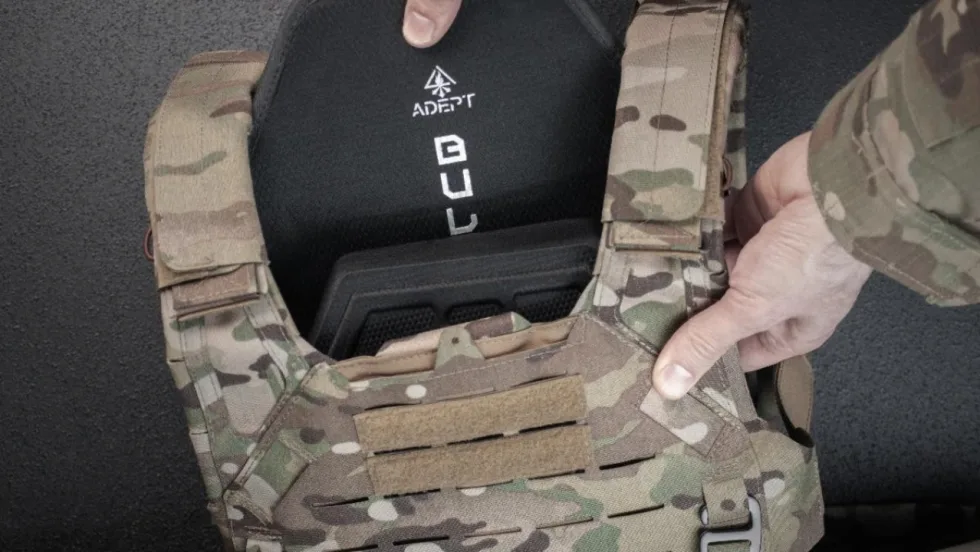
Adept Armor Introduces Two New Rifle Plates
Adept Armor has launched two new Level IV ballistic plates, the Emperor and the Archon Mark 2, which brings Adept Armor’s new Quatroid ceramic to the high-threat, performance-value center of the range at 5.2 pounds.
Read More →
POLICE Product Test: Benchmade Bailout
The Benchmade Bailout is a slim, lightweight carry knife with a deep-ride pocket clip and comes in a variety of blade steels and scales. Here is a detailed review of the Taiga Green Bailout, released earlier this year.
Read More →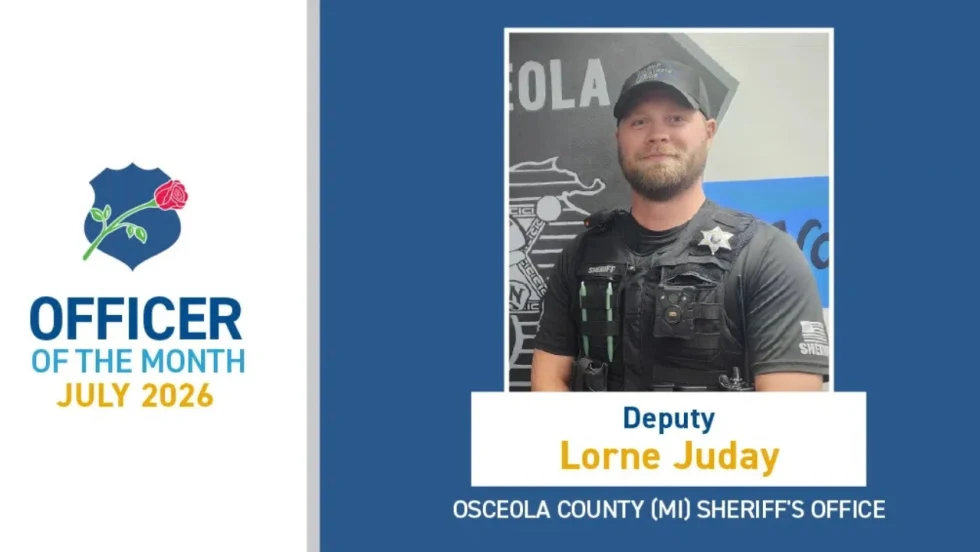
NLEOMF Announces July 2026 Officer of the Month
NLEOMF honored a Michigan deputy sheriff as the July 2026 Officer of the Month for rescuing a trapped driver from a burning vehicle following a Fourth of July crash.
Read More →
Streamlight to Showcase Newest Lighting Products at National Safety Council’s Safety Congress & Expo 2026
Streamlight will showcase its latest lights, including the Portable Scene Light III and the LiteBox 1Million, at the 2026 National Safety Council (NSC) Safety Congress & Expo.
Read More →
The 2027 World Police & Fire Games Set for Perth, Australia
The 2027 World Police & Fire Games (WPFG) will take place in Perth, Western Australia, from Friday, March 12 through Sunday, March 21, 2027.
Read More →
5.11 Partners with National Fallen Firefighters Foundation to Support #ForThe343
5.11 has joined the nationwide movement honoring the 343 New York City Fire Department firefighters lost on Sept. 11, 2001.
Read More →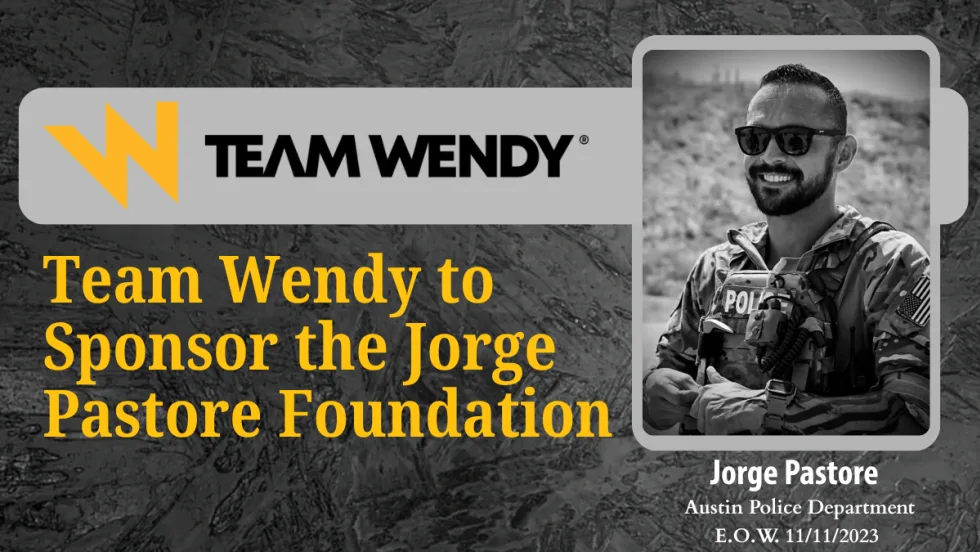
Team Wendy Announces Title Sponsorship of the Jorge Pastore Foundation
Team Wendy’s 3-year partnership with the Jorge Pastore Foundation expands access to programs that strengthen those who serve.
Read More →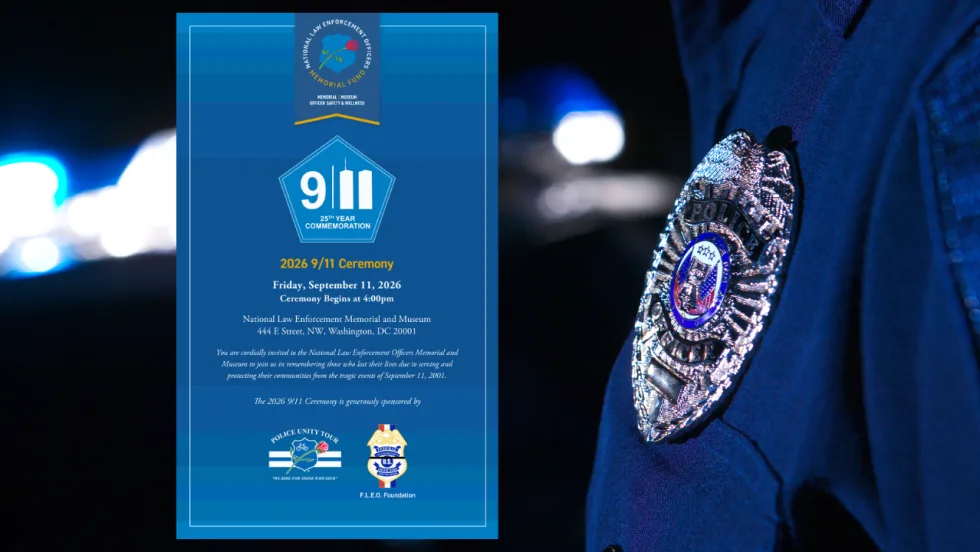
National Law Enforcement Memorial and Museum Hosting 9/11 25th-Year Commemoration Ceremony
The National Law Enforcement Memorial and Museum is hosting a 9/11 25th Year Commemoration Ceremony on Sept. 11 at 4 p.m.
Read More →
National Law Enforcement Officers Memorial Fund Announces June 2026 Officers of the Month
The National Law Enforcement Officers Memorial Fund (NLEOMF) named 15 officers of the Chico Police Department (California) as the Officers of the Month for June 2026 for their roles in responding to an active-shooter incident at a public library.
Read More →
Team Wendy App Creates New Digital Hub for Helmet Owners
The Team Wendy Community App provides one location for warranty registration, size-fit tools, product updates, and community connection. For helmet owners, the new app creates a simpler path to the information and tools that matter most.
Read More →