



Search Warrant Detentions
When you make a search of premises under authority of a search warrant, it is generally permissible to detain the occupants pending completion of the search. The authority to do so, and the rationale supporting detention, were limited by a 2013 decision.


Photo courtesy of Zuma Press.
When you make a search of premises under authority of a search warrant, it is generally permissible to detain the occupants pending completion of the search. The authority to do so, and the rationale supporting detention, were set forth in a 1981 decision of the U.S. Supreme Court (Michigan v. Summers), reaffirmed in a 2005 ruling (Muehler v, Mena), and limited by a 2013 decision (Bailey v. U.S.). Officers need to be aware of the principles set forth in each of these cases.
George Summers was walking down his front steps as Detroit officers arrived with a search warrant. They had him remain while they searched his house. Summers moved to suppress heroin found on him, arguing that he had been illegally detained. Although Michigan courts agreed and ordered the heroin suppressed, the U.S. Supreme Court reversed the suppression order.
The court gave three reasons for deciding that occupants may lawfully be detained at premises where a search warrant is being served—preventing flight of guilty occupants, minimizing risks to officer safety, and facilitating the orderly completion of the search (for example, if occupants remain, they can open locked spaces and prevent damage from forcible opening). The court declared that "The risk of harm to both the police and the occupants is minimized if the officers routinely exercise unquestioned command of the situation." Given this conclusion, the court announced an automatic-detention rule, as follows:
"If the evidence that a citizen's residence is harboring contraband is sufficient to persuade a judicial officer that an invasion of the citizen's privacy is justified, it is constitutionally reasonable to require that citizen to remain while officers of the law execute a valid warrant to search his home. Thus, for Fourth Amendment purposes, we hold that a warrant to search for contraband founded on probable cause implicitly carries with it the limited authority to detain the occupants of the premises while a proper search is conducted." (Michigan v. Summers)
Although this rule was worded in terms of searches for "contraband" and detentions of the "citizen" who was suspected of possessing the contraband, a subsequent case made clear that the same rule applies to searches for other forms of evidence, and applies to detentions of non-suspects who are on the premises during the search.
Iris Mena resided in one room of a house where police served a search warrant to look for deadly weapons involved in a gang drive-by shooting. Mena was not herself a suspected gang member, but given the nature of the crime and the evidence being sought, officers kept her and several other occupants detained in handcuffs for two or three hours while the search was completed. Mena sued the officers for claimed Fourth Amendment violations, and she was awarded $60,000 in damages against the officers. On the officers' appeal, the U.S. Supreme Court vacated this award and ruled that the officers were entitled to immunity from suit, under the rule of Summers.
Even though this search was for evidence, rather than contraband, and even though Mena was not suspected of any wrongdoing when officers detained her, the court ruled that the authority to detain "occupants" during warrant service nevertheless applied. The court said this:
"An officer's authority to detain incident to a search is categorical; it does not depend on the quantum of proof justifying detention or the extent of the intrusion imposed by the seizure. Thus, Mena's detention for the duration of the search was reasonable under Summers because a warrant existed to search 1363 Patricia Avenue and she was an occupant of that address at the time of the search. Inherent in Summers' authorization to detain an occupant of the place to be searched is the authority to use reasonable force to effectuate the detention. The officers' detention of Mena in handcuffs during the execution of the search warrant was reasonable and did not violate the Fourth Amendment." (Muehler v. Mena)
Recall that Summers had been departing the premises when he was lawfully detained, and Mena was in a bedroom. Would the holdings of these two cases permit officers to make a remote detention, away from the premises, while a warrant was being served? The Supreme Court recently answered that question.
Officers obtained a warrant to search a basement apartment in Wyandanch, N.Y., for a particular handgun. Surveillance officers were watching the address while awaiting arrival of the search team, when they saw Chunon Bailey and another man walk out of the location, get into a car, and begin to drive away. Fearing that a vehicle stop in front of the address could alert other occupants to the impending search and allow them to conceal or remove evidence, the surveillance officers decided to follow Bailey until his car was out of sight of the apartment before making a stop, about 0.7 miles away.
Bailey subsequently moved to suppress evidence and statements from the vehicle stop, claiming that he had been unlawfully detained. The officers invoked Summers, arguing that for officer safety and to prevent the destruction of evidence, it was reasonable to detain departing occupants away from the premises, as soon as reasonably practicable. In a 6-3 ruling, the U.S. Supreme Court has disagreed.
The court majority said that the rationale for allowing the automatic detention of occupants during warrant service no longer applies once occupants are away from the immediate vicinity—there is no flight risk as to people who are no longer present, they can no longer endanger officers on the scene of the search, and they are in no position to facilitate the search by opening locked doors or telling officers where the targeted items can be found. Since the reasons for allowing occupant detentions are not present to justify remote detentions, officers must separately justify such detentions on some other legitimate basis (such as with reasonable suspicion that the persons are involved in criminal activity). This limitation on Summers detentions was phrased as follows:
"It is necessary to confine the Summers rule to those who are present when and where the search is being conducted. The categorical authority to detain incident to the execution of a warrant must be limited to the immediate vicinity of the premises to be searched. Once the individual has left the immediate vicinity of a premises to be searched, detentions must be justified by some other rationale.
"This case presents neither the necessity nor the occasion to further define the meaning of immediate vicinity. In closer cases, courts can consider a number of factors, including the lawful limits of the premises, whether the occupant was within the line of sight of his dwelling, the ease of reentry from the occupant's location, and other relevant factors." (Bailey v. U.S.)
Independent Justification for Detention
Even though a remote detention cannot be justified as incident to service of a search warrant, persons could still be detained out of view of the target premises if those individuals/vehicles were expressly authorized to be searched by the warrant, or if officers have reasonable suspicion of criminal involvement, or even where a traffic violation is observed. (Whren v. U.S.)
Devallis Rutledge is a former police officer and veteran prosecutor who currently serves as special counsel to the Los Angeles County district attorney. He is the author of 12 books, including "Investigative Constitutional Law."
More Patrol
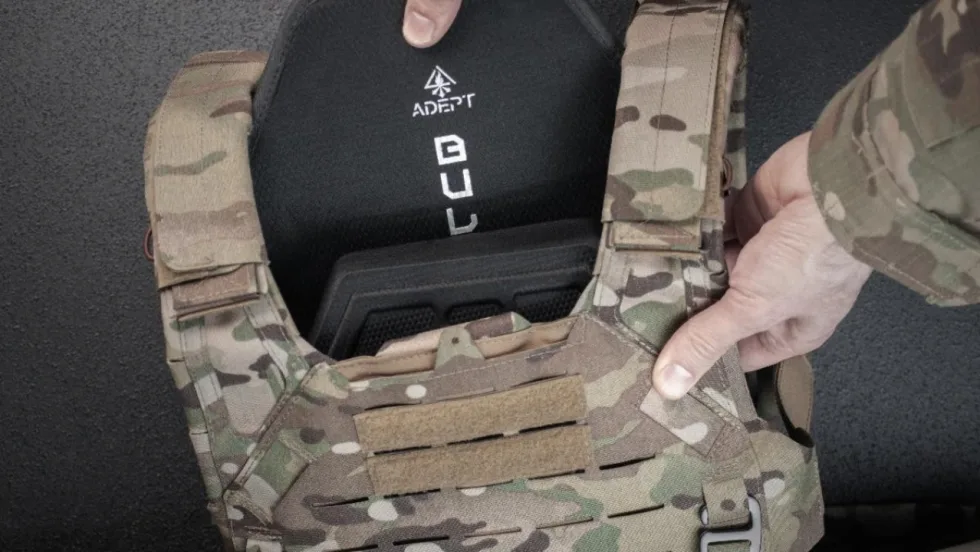
Adept Armor Introduces Two New Rifle Plates
Adept Armor has launched two new Level IV ballistic plates, the Emperor and the Archon Mark 2, which brings Adept Armor’s new Quatroid ceramic to the high-threat, performance-value center of the range at 5.2 pounds.
Read More →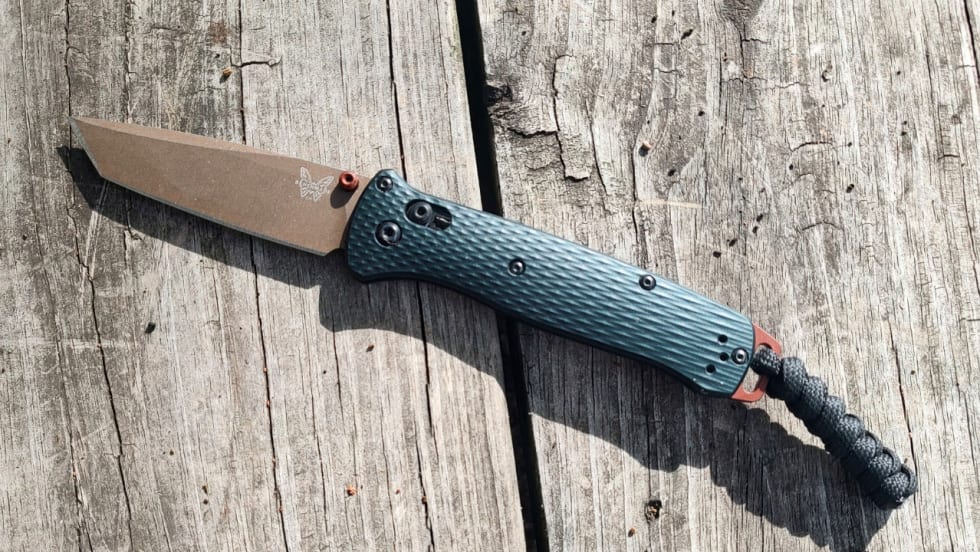
POLICE Product Test: Benchmade Bailout
The Benchmade Bailout is a slim, lightweight carry knife with a deep-ride pocket clip and comes in a variety of blade steels and scales. Here is a detailed review of the Taiga Green Bailout, released earlier this year.
Read More →
NLEOMF Announces July 2026 Officer of the Month
NLEOMF honored a Michigan deputy sheriff as the July 2026 Officer of the Month for rescuing a trapped driver from a burning vehicle following a Fourth of July crash.
Read More →
Streamlight to Showcase Newest Lighting Products at National Safety Council’s Safety Congress & Expo 2026
Streamlight will showcase its latest lights, including the Portable Scene Light III and the LiteBox 1Million, at the 2026 National Safety Council (NSC) Safety Congress & Expo.
Read More →
The 2027 World Police & Fire Games Set for Perth, Australia
The 2027 World Police & Fire Games (WPFG) will take place in Perth, Western Australia, from Friday, March 12 through Sunday, March 21, 2027.
Read More →
5.11 Partners with National Fallen Firefighters Foundation to Support #ForThe343
5.11 has joined the nationwide movement honoring the 343 New York City Fire Department firefighters lost on Sept. 11, 2001.
Read More →
Team Wendy Announces Title Sponsorship of the Jorge Pastore Foundation
Team Wendy’s 3-year partnership with the Jorge Pastore Foundation expands access to programs that strengthen those who serve.
Read More →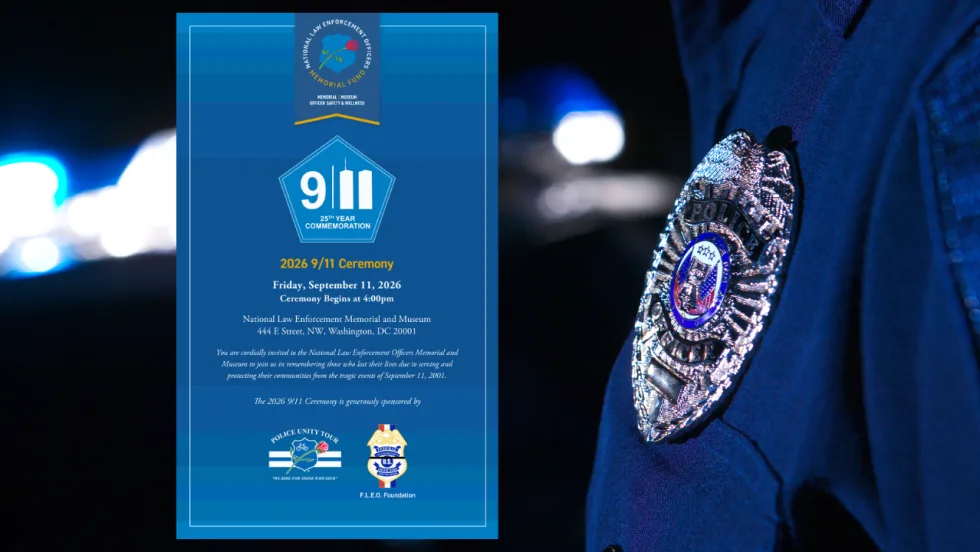
National Law Enforcement Memorial and Museum Hosting 9/11 25th-Year Commemoration Ceremony
The National Law Enforcement Memorial and Museum is hosting a 9/11 25th Year Commemoration Ceremony on Sept. 11 at 4 p.m.
Read More →
National Law Enforcement Officers Memorial Fund Announces June 2026 Officers of the Month
The National Law Enforcement Officers Memorial Fund (NLEOMF) named 15 officers of the Chico Police Department (California) as the Officers of the Month for June 2026 for their roles in responding to an active-shooter incident at a public library.
Read More →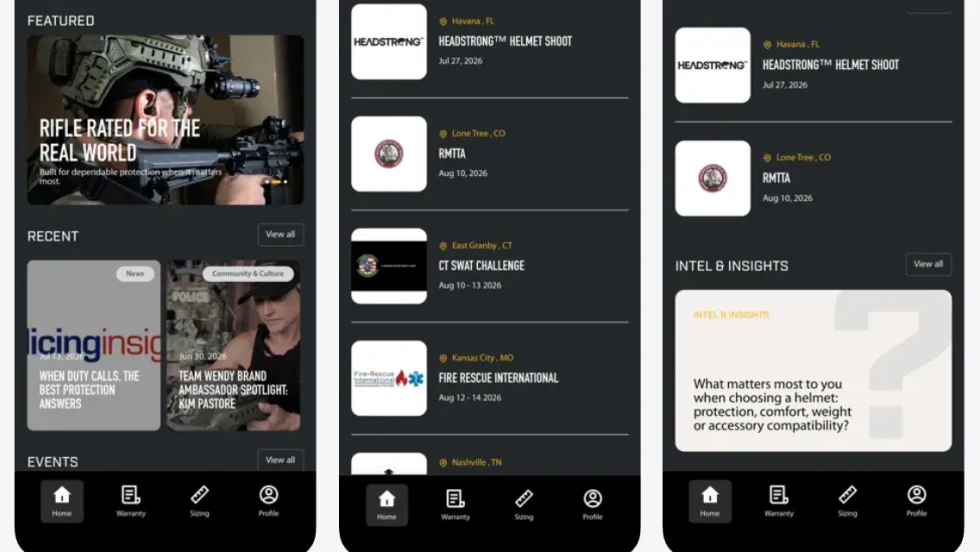
Team Wendy App Creates New Digital Hub for Helmet Owners
The Team Wendy Community App provides one location for warranty registration, size-fit tools, product updates, and community connection. For helmet owners, the new app creates a simpler path to the information and tools that matter most.
Read More →