



Reflex Fire
It's not uncommon to hear or read about officer-involved shootings where multiple officers emptied their loads into the suspect and anything within 10 feet of him. Asked about why they opened fire, bystander officers may reply, "When another officer started shooting, I just reflexively started shooting, too."


It's not uncommon to hear or read about officer-involved shootings where multiple officers emptied their loads into the suspect and anything within 10 feet of him. Asked about why they opened fire, bystander officers may reply, "When another officer started shooting, I just reflexively started shooting, too."
Sometimes referred to as "sympathetic fire" or "contagious shooting," this phenomenon can have implications not only for officer and public safety, but also for public relations, internal discipline, civil liability, and even potential criminal prosecution.
While these collateral consequences cannot override necessary survival instincts, it is important for officers to understand and comply with legal constraints on the use of deadly force.
The Use-of-Force Standard
In Graham v. Connor, the U.S. Supreme Court gave guidelines for evaluating the reasonableness of force used to make a detention or arrest: "All claims that law enforcement officers have used excessive force-deadly or not-in the course of an arrest, investigatory stop, or other seizure of a free citizen should be analyzed under the Fourth Amendment and its 'reasonableness' standard."
The court then acknowledged that force must sometimes be used by officers to complete these seizures: "Our Fourth Amendment jurisprudence has long recognized that the right to make an arrest or investigatory stop necessarily carries with it the right to use some degree of physical coercion or threat thereof to effect it."
All of the circumstances of a use-of force incident should be considered, said the court, including three key factors: "Proper application [of the reasonableness test] requires careful attention to the facts and circumstances of each particular case, including [1] the severity of the crime at issue, [2] whether the suspect poses an immediate threat to the safety of the officers or others, and [3] whether he is actively resisting arrest or attempting to evade arrest by flight."
Importantly, the court said that "The 'reasonableness' of a particular use of force must be judged from the perspective of a reasonable officer on the scene, rather than with the 20/20 vision of hindsight. The calculus of reasonableness must embody allowance for the fact that police officers are often forced to make split-second judgments-in circumstances that are tense, uncertain, and rapidly evolving-about the amount of force that is necessary in a particular situation."
Finally, the court said that an objective test must be used to analyze use-of-force incidents, rather than looking to officers' subjective intentions: "The question is whether the officers' actions are 'objectively reasonable' in light of the facts and circumstances confronting them, without regard to their underlying intent or motivation. An officer's evil intentions will not make a Fourth Amendment violation out of an objectively reasonable use of force; nor will an officer's good intentions make an objectively-unreasonable use of force constitutional."
The Supreme Court's leading case on the use of deadly force is Tennessee v. Garner. In that 1985 opinion, the court invalidated a state force statute in a civil suit where a burglar was fatally shot in the head while trying to escape over a backyard fence. The Supreme Court said the use of deadly force in these circumstances constituted an unreasonable seizure under the Fourth Amendment. The court gave guidelines for evaluating the constitutionality of the use of deadly force in any given case, which would include situations in which "reflex fire" is directed at the suspect.
The court first defined the circumstances under which the use of deadly force would be considered unconstitutional:
"Notwithstanding probable cause to seize a suspect, an officer may not always do so by killing him. Where the suspect poses no immediate threat to the officer and no threat to others, the harm resulting from failing to apprehend him does not justify the use of deadly force to do so. A police officer may not seize an unarmed, nondangerous suspect by shooting him dead."
Then, Garner set forth examples of circumstances in which deadly force could constitutionally be used: "Where the officer has probable cause to believe that the suspect poses a threat of serious physical harm, either to the officer or to others, it is not constitutionally unreasonable to prevent escape by using deadly force. Thus, if the suspect threatens the officer with a weapon or there is probable cause to believe that he has committed a crime involving the infliction or threatened infliction of serious physical harm, deadly force may be used if necessary to prevent escape, and if, where feasible, some warning has been given."
Qualifying Garner
For more than 20 years, many lower courts interpreted Garner to mean that deadly force could only be used by an officer to prevent the escape of a dangerous offender, or in self-defense or defense of others. But in this year's opinion in Scott v. Harris (see "Point of Law" from the July, 2007 issue), the court clarified that Garner did not establish any automatic prerequisites for the lawful use of deadly force.
In Scott, a fleeing motorist, Victor Harris, was seriously injured when a deputy ran him off the road. Harris sued, claiming an unlawful use of deadly force, since he might easily have been killed by the maneuver. Even though Harris's original speeding offense (73 mph in a 55 mph) was not necessarily an inherently dangerous crime, the court found that it was reasonable to use deadly force to stop him because his reckless driving during flight from law enforcement endangered officers and other motorists.
Harris' attorneys argued that Garner's "preconditions" for the use of deadly force had not been met. Specifically, it was argued that the original speeding infraction did not threaten the infliction of serious physical harm, and force was not necessary to prevent escape because the driver could have been tracked through vehicle registration records and arrested later.
The court rejected these arguments and explained that Garner did not attempt to define the only possible circumstances under which deadly force could permissibly be used:
"Garner did not establish a magical on/off switch that triggers rigid preconditions whenever an officer's actions constitute 'deadly force.' By way of example only, Garner hypothesized that deadly force may be used 'if necessary to prevent escape' when the suspect is known to have 'committed a crime involving the infliction or threatened infliction of serious physical harm,' so that his merely being at large poses an inherent danger to society. It was respondent's flight itself (by means of a speeding automobile) that posed the threat of 'serious physical harm to others. Whether or not (Deputy Scott's actions constituted application of 'deadly force,' all that matters is whether Scott's actions were reasonable."
Not Just Reflex
When an officer joins a fire fight in progress, the justification for firing cannot be simply that other officers were shooting, too. Each officer must be able to show that his or her shooting was reasonable, under the Fourth Amendment.
The justification may be, for example, self-defense or defense of fellow officers or others, or to prevent the escape of a dangerous suspect, or to stop the flight of a minor offender whose evasive actions are threatening the public safety. Targeting another with deadly force must be a reaction to articulable, perceived danger — not merely a conditioned reflex to the sound of gunfire.
Devallis Rutledge, a former police officer and veteran prosecutor, currently serves as Special Counsel to the Los Angeles County District Attorney. His latest book is "Criminal Investigations and Evidence."
More Training
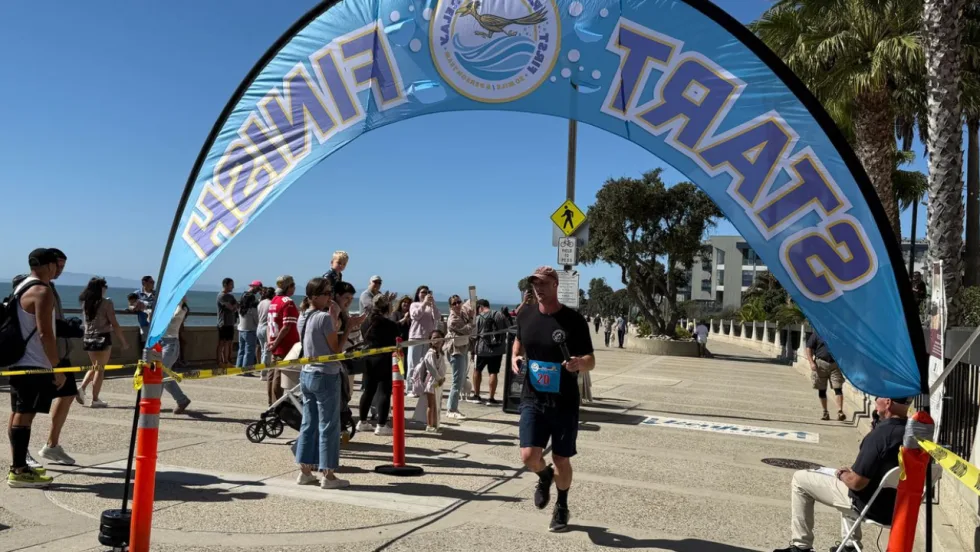
Registration Underway for Sixth Annual First Responders Relay
The California Police Athletic Federation’s annual First Responder Relay will welcome first responder teams from across the globe to compete along Ventura's scenic coastline on Oct. 11. Registration is underway.
Read More →
Vector Solutions Launches Comprehensive Online Dispatch Training Catalog for Emergency Communications Professionals
Vector Solutions’ new catalog of 35 expert-developed online courses can help emergency communication centers strengthen training, meet certification requirements, and simplify continuing education.
Read More →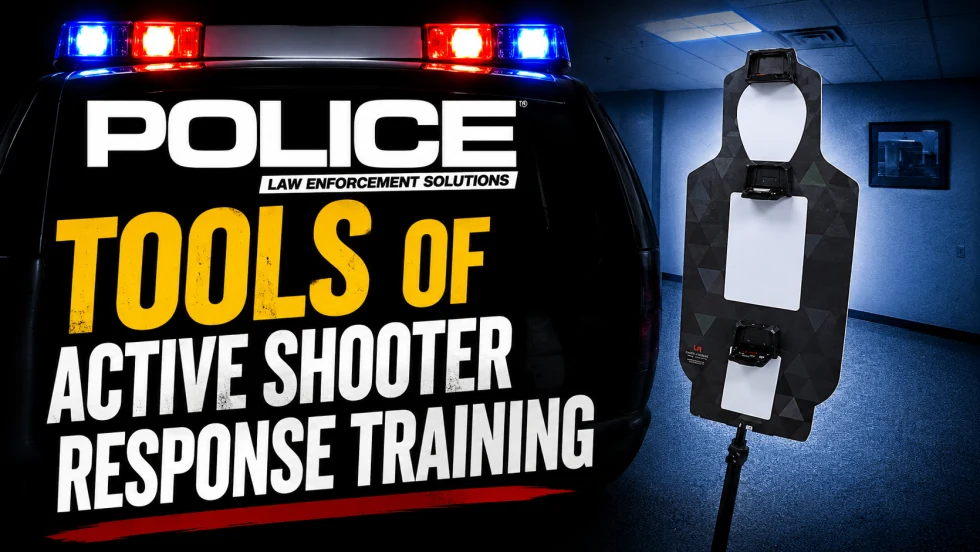
Tools for Active Shooter Response Training
What technologies help prepare officers for active shooter response situations? This behind-the-scenes look at law enforcement training explores shot simulators, smart firearms, laser target systems, and the tools used to build safer, more effective training environments.
Read More →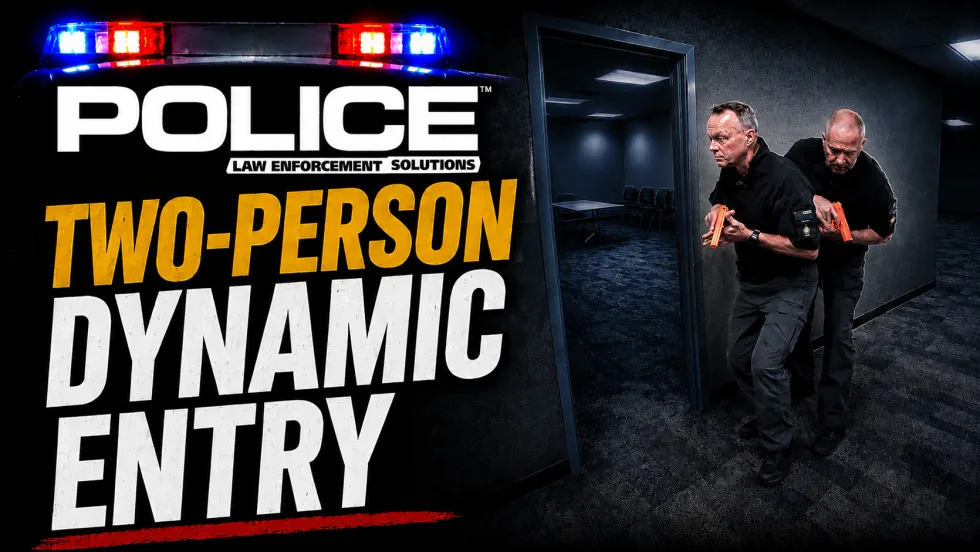
Two-Officer Tactical Doorway Entry Techniques
Entering a room during active-threat situations requires communication, coordination, and disciplined tactical movement. In this video, trainers from the United States Deputy Sheriff’s Association demonstrate critical room entry concepts, including fatal funnel awareness, team coordination, and safe tactical movement.
Read More →
High Compressed Ready Explained | Muzzle Control For Room Entry
In this video, Mike Willis, law enforcement national training and program director for the United States Deputy Sheriffs’ Association, demonstrates the high compressed ready position and discusses muzzle control during room entry.
Read More →
Why Attend the DroneSense Innovation Summit by Versaterm?
Let’s hear from Ryan Bracken, head of product, about why your agency should send someone to the first annual DroneSense Innovation Summit by Versaterm in April.
Read More →
Caswell Live Fire Spins Off from InVeris
Caswell Live Fire has spun off from parent company InVeris, coinciding with the 100th anniversary of Caswell’s founding. Over the past 100 years, Caswell has developed pioneering solutions that support military, law enforcement, and commercial clients worldwide.
Read More →
When Do You Transport a Wounded Officer Instead of Waiting for EMS?
Thumbnail for video series POLICE Topics, Tactics & Tips with a yellow headline that reads When Do You Transport a Wounded Officer Instead of Waiting for EMS?
Read More →
How to Pick Your High-Risk Stop Location for Tactical Advantage
Hear veteran trainer Mike Willis, of the United States Deputy Sheriff’s Association, explain several considerations that can help you wisely pick your best spot to initiate high-risk or felony traffic stops.
Read More →
Coffee Break with Police Experts: Using Your Patrol Vehicle for Cover
In this video, hear from Dustin Mowery, a product specialist at Team Wendy, as he discusses how to best use a patrol vehicle for cover.
Read More →