



Policing Dissent
For more than a week, thousands of protesters waged a campaign of civil disobedience in the city's downtown area, blocking intersections, the entrances to government contractor companies like Bechtel, and generally causing confusion and consternation for anyone trying to get to work.

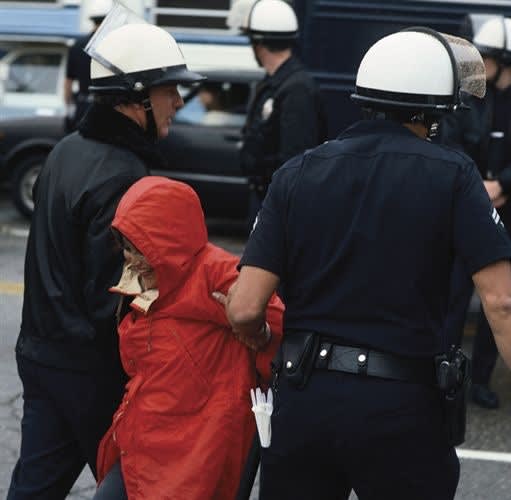
Months before the first bombs fell in the Iraq War, police departments nationwide were coping with its implications. The Homeland Security barometer was set to orange as terrorists threatened revenge, police lines thinned as law enforcement officers in the military reserves were called up to active duty, and officers began to deal with the difficult job of policing anti-war demonstrations and marches.
As anti-war protest groups started to apply for permits for demonstrations, police intelligence officers and commanders were not sure what they might be facing. They didn't know if the anti-war protests would be peaceful or whether they would attract the same hard-core anarchists and disaffected youth who turned the streets of Seattle into a war zone during the 1999 meetings of the World Trade Organization.
Perhaps if the war had dragged out into the summer months, the nightmares of police planners would have come true and the anti-war protests might have boiled over into a nationwide Seattle. But the war, at least the major operations, ended weeks after it had begun and by mid-April the protests had faded.
Even at their peak, the anti-war demonstrations were not Seattle-style riots. And police crowd control experts say the anti-war protests did not rage out of control because of several factors: the demographic character of the protesters, the professionalism of the officers who were tasked with managing the crowds, and the application of lessons learned the hard way in the last 35 years of street battles.
Civil Disobedience
Protests over the Iraq war started with the buildup of U.S. forces in Kuwait and reached a crescendo in the first week of the conflict. As U.S. and British forces made lightning strikes in Saddam's heartland, thousands of people protested the war in the streets of America's largest cities and smallest towns. And police suffered through long shifts keeping the peace and making sure that lawful expression of First Amendment rights didn't boil over into violence and property damages.
Perhaps the most unruly anti-war actions were visited upon the city of San Francisco. For more than a week, thousands of protesters waged a campaign of civil disobedience in the city's downtown area, blocking intersections, the entrances to government contractor companies like Bechtel, and generally causing confusion and consternation for anyone trying to get to work.
San Francisco police were up to the challenge. The department had been preparing for the protests for months and has decades of experience handling all kinds of downtown disturbances. Such advanced planning and the tactical application of lessons from previous protests prevented what some anarchists dubbed the "Battle of San Francisco" from being anywhere near as catastrophic as the 1999 World Trade Organization riots known to many people as the "Battle of Seattle."
As at many of the anti-war protests nationwide, there were a variety of different elements present in the San Francisco actions. Protesters ranged from soccer moms who wanted to make a statement against the war to hardcore anarchists who may have wanted peace in the streets of Iraq but wanted to wage war in the streets of the United States.
That last element, the people who hoped to do battle with the police and tear up the commercial center of the city, was the biggest headache for the SFPD. But Department spokesman Sgt. Neville Gittens says the SFPD implemented tactics that largely neutralized the anarchists. "There were splinter groups," he says. "About one percent of the crowd would break off from the main demonstration and go out and do these roaming non-planned protests. We helped facilitate their movement, until they started to break the law. That's when we took action."
The tactic of keeping the anarchists moving and avoiding confrontation unless it became necessary worked very well for SFPD. No less-lethal weapons had to be deployed against the protestors, arrests were largely non-violent, and no one was badly injured on either side.
Cutting the Crowd
However, casualty counts for the Battle of San Francisco could have been much higher. After dispersing some of the more unsavory types among the protesters, police found discarded weapons, including knives, slingshots, rocks, wrenches, steel bars, iron bolts, bottles, and bicycle locks on chains. It's a testament to SFPD's tactics that the anarchists chose to drop their weapons rather than use them.
Over the years, many police tacticians have developed techniques for minimizing the hazards of crowd control and riot suppression. Lt. Pete Durham of the Los Angeles Police Department says that, since Seattle, more departments nationwide share information and tactics and he believes that such inter-departmental cooperation helped maintain the peace during the anti-war protests.
Durham, who has worked numerous protests out of LAPD's Metro Division, says that the tactics used in policing the anti-war demonstrations in Los Angeles were a reflection of the generally non-violent nature of the crowds. "With the types of crowds that we had at the anti-war demonstrations, just talking was often enough to get the job done," he explains.[PAGEBREAK]
For the LAPD officers working the anti-war protests, the "job" was to get the crowds to disperse after the demonstration was over. And Durham says the key to achieving that goal is not to use overwhelming force or confrontational tactics, but to respect the demonstrators' First Amendment rights and ask them to go home when the demonstration is over. "In Hollywood, Capt. Mike Downing got on a PA system and told the crowd, 'Thank you very much. We've had a wonderful demonstration. Your permit expires at 3 this afternoon. Thank you for your cooperation.'"
What Durham is describing is a very gentle way to tell a crowd to disperse, and for the largely peaceful anti-war protesters in Hollywood, it worked. Durham says the purpose for a dispersal order is not just to let people know that the event is over or to warn them that police action is imminent, it's also a way to gain tactical advantage over a large crowd.
"Downing's message cut the crowd in half," Durham explains. Then the LAPD had to deal with the remainder. "There was another group of people who sat down in the intersection. If they're sitting down and they're just being an inconvenience to the community because now the intersection is closed, it's not violent and you've got a lot of time on your side. Downing gave the dispersal order several times. That resulted in 99 percent compliance."
Of course, not everybody at a protest is going to cooperate. "We had 78 people who didn't comply," says Durham. "So we went in and arrested them. We did it without incident. And everybody we arrested cooperated with the arrest."
What Durham describes is a far cry from the widely held public belief that such protests end with the police "cracking heads." Durham says that both the police and the protesters played a role in ensuring that the arrests did not provide a flash point for violence.
"Significant numbers of the crowd were still watching, and they watched without throwing stuff at us as we made the arrests," Durham says. "There were no attempts to rescue the people who were being arrested. I attribute a lot of that to the fact that we showed a pretty high level of reasonableness. If you do your homework and you appear reasonable and you have been seen by the legitimate demonstrators as being somewhat reasonable, then you're going to get a reasonable response to your request."
Of course, no matter how reasonable or restrained a police response, the primary factor in determining whether a demonstration is a peaceful protest or a full-blown riot is the crowd itself. Durham says one of the factors that made the anti-war demonstrations so peaceful in Los Angeles was the fact that the crowds included families, women, children, and significant numbers of middle-aged protesters.
According to Durham, crowds of young men are the biggest concern for violence. He offers as an example, a Rage Against the Machine concert outside the Democratic National Convention three years ago that deteriorated into a riot. "There were not a whole lot of family units and women and children in that crowd," he explains. "There were significant numbers of males aged 17 to 25."
Preparing for the Worst
Unfortunately, you can't really predict how a crowd will behave at a protest in advance. Demographics and the cause can give you a clue, as can the tone of the event publicity, but Durham says his unit always prepares for "things to go sidewise."
Another problem that faces crowd-management cops is that estimating the size of a crowd is not an exact science and when protest organizers file for their permits they often underestimate or overestimate participation.
In New York City, where some anti-war protest crowds were estimated to be in excess of 100,000, police use the advance information from permit request forms and their own formulas to judge crowd size and the number of officers needed to maintain order. But Chief Michael Esposito, commanding officer of Manhattan South, also uses his experience to gauge what resources he will need to keep the situation under control.
Esposito says he's worked so many protests in his precinct, which includes the United Nations and other high-profile protest targets, that he has a feel for what will be needed to manage them. "I've been here since 1979," he says. "And we've worked so many hundreds of these protests since then that we're kind of world experts."
Moving In
Both Durham and Esposito say it's important for police agencies charged with maintaining peace at major protests to keep some cards up their sleeves. In Manhattan, that card is the Special Operations Division and in Los Angeles it's Metro.
In these two jurisdictions, patrol officers and other units work crowd management until it goes bad, and then the special teams come in. And when they come, they come heavy to intimidate and disperse the crowd.
"Part of crowd control is staging your entrance," says Durham. "That's one of the things that we learned after the 1992 riots."
At a demonstration in downtown Los Angeles in the mid-'90s, Metro put this concept in action. "It was a real production," explains Durham. "Around the corner, out of sight, we staged the Metro officers. Then the dispersal order was read and the protesters didn't budge, so Metro came in to make the arrests."
According to Durham, Metro entered the scene like something from an epic movie. "Down the hill came 25 mounted officers in a column of twos, with helmets, face shields, the whole works. And behind them were four Suburbans with our guys on the side wearing tac vests, helmets, and face shields, and carrying less-lethal weapons. They were followed by a big blue jail bus. The only thing that was missing was a helicopter blasting the 'Flight of the Valkyrie.' I was down with the crowd, and they looked up at that and went, 'Uh-oh.' Then they took a step backwards."
To the casual observer, what Durham describes sounds like police overkill, but its goal is to minimize violence, not cause it. "If we're static and I'm confronting you, then I'm pushing a stationary object and that requires a lot of force. But if I can get you to take one step back, then I have momentum. In the past, we had to use force to get that."
Once again, the idea behind making a big splashy entrance with well-equipped cops is to convince a sizable portion of the crowd to go home. "The more you can cut your crowd down without doing anything, the less support those people who want to be violent have," says Durham. "That's a good deal. If you're getting ready to go into a fight and you can make half the other army go home without firing a shot, then you've just turned it into a more winnable fight."[PAGEBREAK]
Controlling Passions
The preference, of course, is to avoid a fight. It's also key to keep tempers in check during a confrontation. During the recent anti-war protests, for example, officers were tasked with preserving the right of the protesters to dissent, with preserving the peace, and in many cases reining in their own emotions.
It's a fair statement that the majority of officers assigned to crowd management at the anti-war protests personally disagreed with the sentiments of their fellow Americans involved in the demonstration. But they couldn't show it.
"Personally, I would say that most of the officers are pro-government," says NYPD's Esposito. "Most of the officers felt that these people were not doing the right thing. But I also have to tell you that none of that comes out. I didn't see any of that during these demonstrations at all."
Both the NYPD and the LAPD have procedures designed to help officers keep level heads during protests. They both pull cops off the line for regular breaks when they are working crowd control at politically charged events.
"If you stand a guy out on the line for four hours while somebody yells at him, it will tick him off, I don't care what they're yelling," says Durham. "So we rotate our people, bring them in, and let them relax. Then we send them back out on the line."
Durham says that he and other LAPD commanders and supervisors watch their officers to ensure that they don't boil over on the line. "I read enough body language to know when somebody's had enough," he says. "You can see them glaring, you can see that their knuckles are white from gripping their batons."
To ensure that officers don't take action against their abusers, LAPD prefers not to use officers who have been on the line at a protest to make arrests or disperse the crowd. "It's a mistake to try to move the crowd with the officers who are on the line. At LAPD, that's what we want Metro to do. They've been in reserve, off the line, and they don't have any personal grudges against people on the line. They haven't looked at the crowd and decided, 'That guy's a jerk. When this happens, I know who I'm going after.'"
Cooperation
The protests over the Iraq War were largely peaceful for a number of reasons. There is no draft, so they didn't hold an attraction for thousands of young males. American law enforcement has learned a lot about crowd control since the Days of Rage and the Vietnam War. And both the protest organizers and the police displayed restraint and professionalism.
"I have to give a tremendous amount of credit to the event organizers for their openness, honesty, and cooperation," says Durham. "A lot of distrust had to be put aside." He adds that one of the factors in ensuring that the protests were largely peaceful in Los Angeles was advanced planning between the LAPD and the organizers.
"I believe that we convinced them that what we wanted and what they wanted was peaceful protests," Durham says. "We put aside our personal feelings and our politics, and we just concentrated on the tasks at hand."
Creature Comforts
One of the toughest things about working crowd control is that officers are often on the line for hours and hours with no relief. Permits for political protests often run as long as 10 hours, and that's an awful long time to be on your feet without a break.
And that's if all goes well. If a protest turns into a riot, then the cops are on the line for the duration. During the World Trade Organization riots in Seattle, officers had little relief and few bathroom facilities.
Fortunately, a lot of agencies have studied the so-called "Battle of Seattle" for both tactics and procedures, and they've learned to pay more attention to police officer comfort.
For example, Lt. Pete Durham of the Los Angeles Police Department's Metro Division says the LAPD has taken a cue from the San Diego Police
Department on how to provide creature comforts for officers working major protests. "San Diego PD did a fabulous job at the biotech convention in 2001," he says. "They had tents so police off the line weren't in the sun. They had water deliveries. They came up with a snack bar concept in the down area, so that hungry cops were not wandering off to Mickey D's. There was a full-service and free snack bar with sodas, sandwiches, health food, junk food. You name it, they had it."
Now when the LAPD goes out on a protest management call, it carries a canteen truck and clean, police-only porta-potties. "It's important that the guys on the line know they can take a break, get a bite, relieve themselves, and relax. It keeps morale high," Durham says.
The Black Bloc
One of the biggest concerns of police commanders making contingencies for the management of the anti-war protests was the presence of the Black Bloc, hard-core anarchists who caused much of the devastation in Seattle during the World Trade Organization meetings.
The Black Bloc isn't an organization, so much as a school of thought and a form of protest that traces its roots to the German autonomen, a loose network of leftists who spent the 1980s hurling Molotov cocktails at the polizei. Black Bloc activity in the United States began during the protests of the 1991 Gulf War, and Black Blocers were heavily involved in this year's anti-war protests in San Francisco and in other cities.
America's autonomen are both male and female, dress in black (hence the name), and wear masks. They're young, they're disaffected, and their trademark is property damage.
Black Bloc activity at protests tends to start with a group of these hyper-violent, hyper-destructive anarchists breaking away from the main demonstration, roaming streets not covered by the protest permit, and wreaking havoc. Their favorite targets for bricks and firebombs are chain stores and restaurants that they view as symbols of corporate America. One Black Blocer told the online magazine Salon, "We don't want these things in our community anymore. We don't want McDonald's; we don't want Nike; we don't want Starbucks, and we are taking them out."
While most of the people at the recent anti-war protest lived up to their pacifist ideals, the Black Bloc was a dangerous and unpredictable adversary for police. Officers working environmental, anti-war, and other protests against governmental policy and American corporate interests should be wary of a Black Bloc element among peaceful protesters.
More Patrol

Streamlight Portable Scene Light III Wins 2026 OH&S New Product of the Year Award
Streamlight’s Portable Scene Light III has won the 2026 Occupational Health & Safety (OH&S) New Product of the Year Award in the Lighting category.
Read More →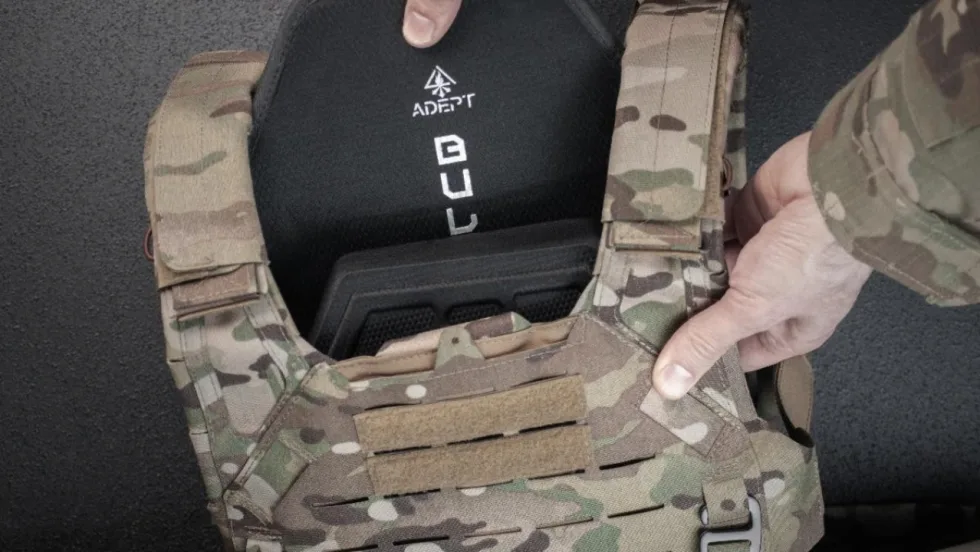
Adept Armor Introduces Two New Rifle Plates
Adept Armor has launched two new Level IV ballistic plates, the Emperor and the Archon Mark 2, which brings Adept Armor’s new Quatroid ceramic to the high-threat, performance-value center of the range at 5.2 pounds.
Read More →
POLICE Product Test: Benchmade Bailout
The Benchmade Bailout is a slim, lightweight carry knife with a deep-ride pocket clip and comes in a variety of blade steels and scales. Here is a detailed review of the Taiga Green Bailout, released earlier this year.
Read More →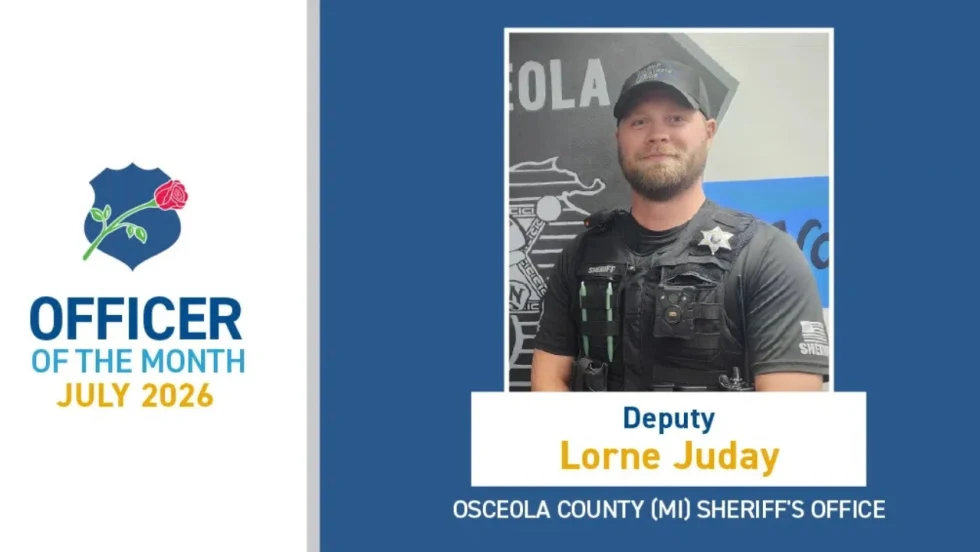
NLEOMF Announces July 2026 Officer of the Month
NLEOMF honored a Michigan deputy sheriff as the July 2026 Officer of the Month for rescuing a trapped driver from a burning vehicle following a Fourth of July crash.
Read More →
Streamlight to Showcase Newest Lighting Products at National Safety Council’s Safety Congress & Expo 2026
Streamlight will showcase its latest lights, including the Portable Scene Light III and the LiteBox 1Million, at the 2026 National Safety Council (NSC) Safety Congress & Expo.
Read More →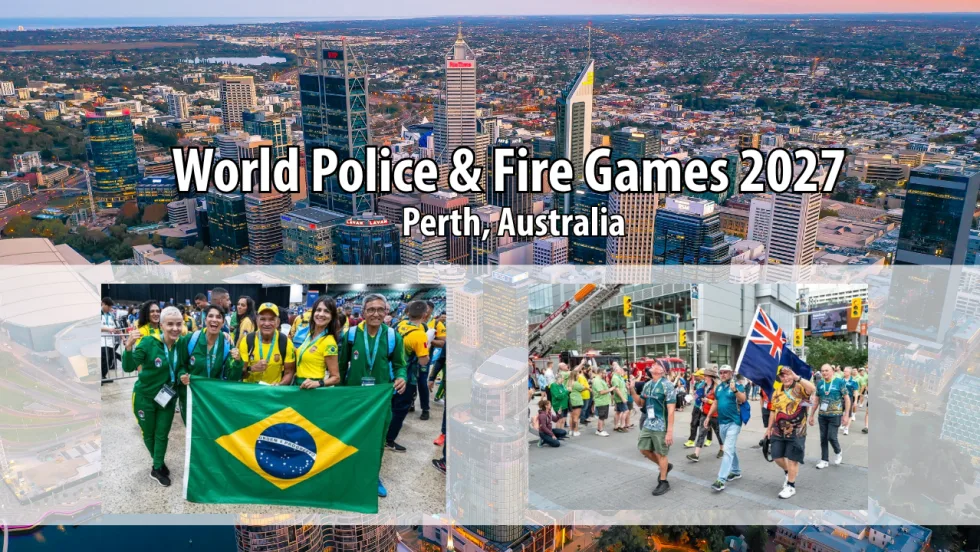
The 2027 World Police & Fire Games Set for Perth, Australia
The 2027 World Police & Fire Games (WPFG) will take place in Perth, Western Australia, from Friday, March 12 through Sunday, March 21, 2027.
Read More →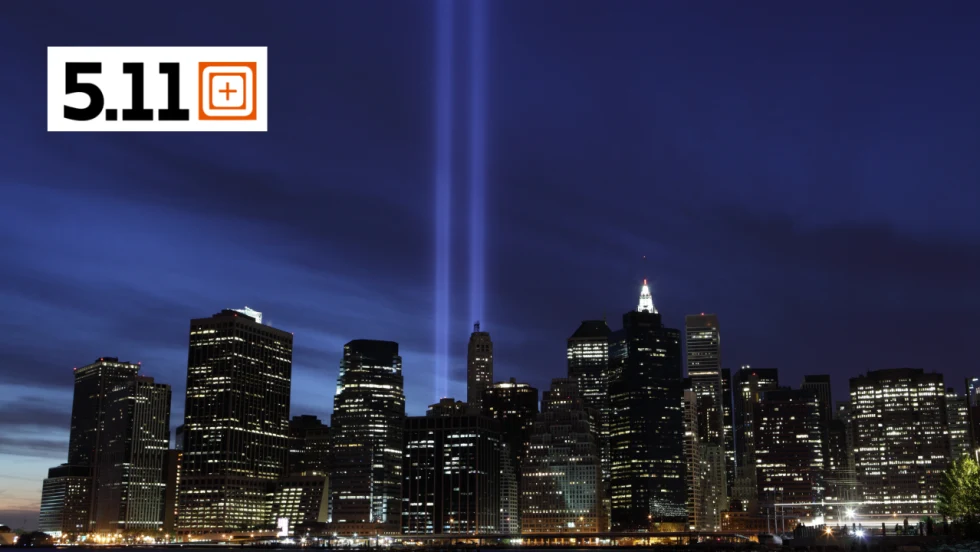
5.11 Partners with National Fallen Firefighters Foundation to Support #ForThe343
5.11 has joined the nationwide movement honoring the 343 New York City Fire Department firefighters lost on Sept. 11, 2001.
Read More →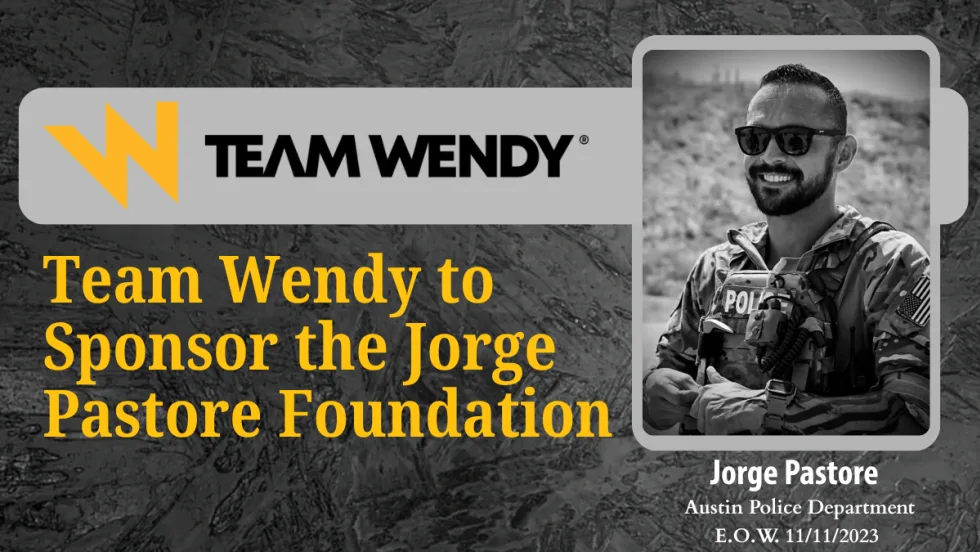
Team Wendy Announces Title Sponsorship of the Jorge Pastore Foundation
Team Wendy’s 3-year partnership with the Jorge Pastore Foundation expands access to programs that strengthen those who serve.
Read More →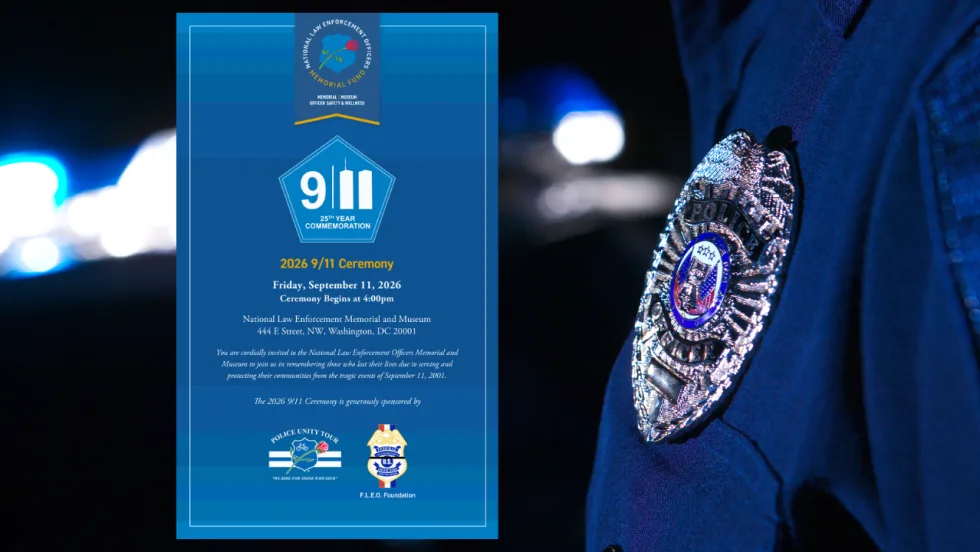
National Law Enforcement Memorial and Museum Hosting 9/11 25th-Year Commemoration Ceremony
The National Law Enforcement Memorial and Museum is hosting a 9/11 25th Year Commemoration Ceremony on Sept. 11 at 4 p.m.
Read More →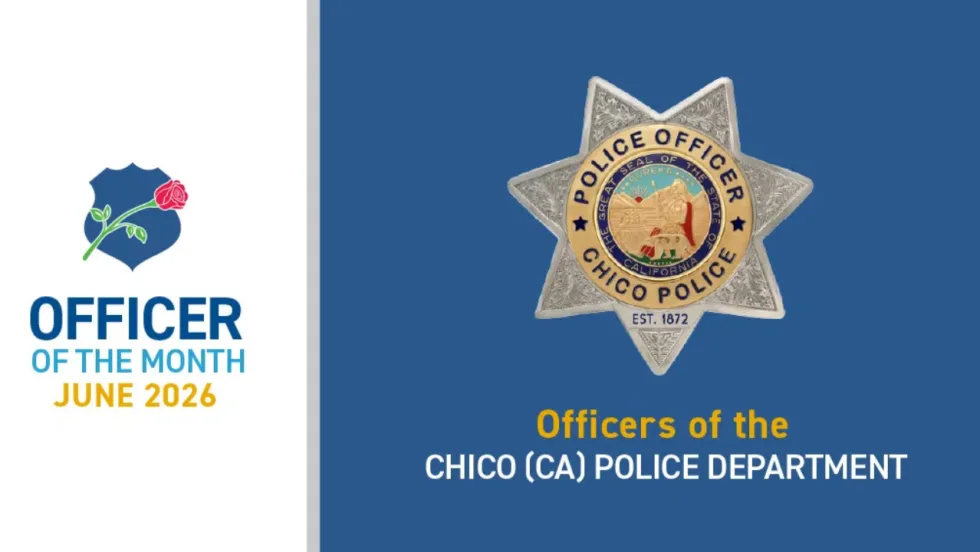
National Law Enforcement Officers Memorial Fund Announces June 2026 Officers of the Month
The National Law Enforcement Officers Memorial Fund (NLEOMF) named 15 officers of the Chico Police Department (California) as the Officers of the Month for June 2026 for their roles in responding to an active-shooter incident at a public library.
Read More →