



Police Service Dogs: The Unheralded Training Tool
Police officers are asked to make split-second life-or-death decisions. We have to decide in a blink of an eye if we are going to shoot. Then over the next several years everyone will dissect, analyze and scrutinize our actions.

In today's ever-changing world, police departments have been compelled to invest in "alternative means" of force, better known as "less-than-lethal force." A few of the more common, less-than-lethal tools are pepper spray, rubber bullets and bean bag guns.
However the courts have said the use of police service dogs can enhance the safety of officers, bystanders and the suspect. Police service dogs can also help prevent officers from having to resort to deadly force.
Less-Than-Lethal Force
Some police officers are confused and think they need to use less-than-lethal tools before they can resort to deadly force. Officers who think this are wrong. There are several case law decisions that state otherwise.
--In Plakas vs. Drinski, 19 F.3d 1143, 1148 (7th Cir. 1994) the Seventh Circuit said, "There is no precedent in this Circuit (or any other Circuit) which says that the Constitution requires law enforcement officers to use all feasible alternatives to avoid a situation where deadly force can justifiably be used. There are, however, cases which support the assertion that, where deadly force is otherwise justified under the Constitution, there is no constitutional duty to use non-deadly alternatives first."
Police officers are asked to make split-second life-or-death decisions. We have to decide in a blink of an eye if we are going to shoot. Then over the next several years everyone will dissect, analyze and scrutinize our actions. If officers could read the minds of suspects our lives would be much easier. Luckily for us the courts are aware we are not mind readers.
For example, in Wilson Vs. Meeks, 52 F.3d at 1553, 1547 (10th Cir. 1995) the court said an officer who is in fear of his life is not required to "know what is in the heart or mind of his assailant."
As mentioned before, suspects dictate the level of force which is used to effect their arrest and the outcome of the incident. There are times when suspects do the opposite of what you tell them to do. The suspect might make a quick or furtive movement, forcing you to make one of those split-second decisions.
The question then becomes whether the plaintiff's quick or furtive movement, combined with the totality of the information known to the officers, was sufficient to lead the officers to reasonably believe the plaintiff posed an imminent threat of death or serious injury. In some cases the answer will be yes. If the answer is yes, then the use of deadly force by the officers is justified.
This is supported by Sherrod vs. Berry, 856 F.2d 802, 807 (7th Cir. 1988) where the court said deadly force was justified despite a weapon not being seen and where the suspect made a "quick movement with his hands into a coat."
The Fourth Circuit also upheld an officer involved shooting where the officer mistakenly believed the suspects were reaching for a weapon. (Elliot vs. Leavitt, 99 F. 3d 640, 642-43 (4th Cir. 1996).
In police shooting cases, the Ninth Circuit has consistently interpreted Tennessee vs. Garner, 471 U.S. 1 (1985) as authorizing deadly force where a suspect poses reasonable threat of death or serious injury to the officer or others. In citing Garner, the Ninth Circuit has concluded, "an officer's use of deadly force is reasonable if the officer ahs probable cause to believe that the suspect poses a significant threat of death or serious physical injury to the officers or others."
Other cases that support this are Reynolds vs. County of San Diego, 84 F. 3d 1162, 1167 (9th Cir. 1996) and Scott vs. Henrich, 39 F.3d 912 (9th Cir. 1994).
The Alternative
In 1990, San Diego police officers shot 22 suspects, killing 12 of them. Public outcry denounced the officers' actions because many of the suspects did not have firearms. They were wielding weapons such as trowels, baseball bats and knives. The public demanded something be done.
San Diego researched the legal issues and found two case decisions in the United States Courts of Appeals Sixth Circuit that would help them. These cases were Robinette vs. Barnes, 854F.2d 909, 1988 and Matthew vs. Jones, 1994 FED APP 327.
The court stated, "...instead of generally causing deadly force to be used to apprehend criminals, we believe these dogs often can prevent officers from having to resort to, or be subjected to such force...the use of dogs can make it more likely that the officers can apprehend suspects without the risk attendant to the use of firearms in the darkness, thus, frequently enhancing the safety of the officers, bystanders and the suspects. Because of these two case decisions, the San Diego Police Department increased their K-9 unit to more than 40 patrol dogs.
K-9s on Misdemeanors
There will always be a debate over whether you can deploy your police service dog after a misdemeanor suspect. The first thing you need to know is what your policy says. The second thing you need to know is Graham vs. Connor (490 U.S. 386 (1989). The use of a police service dog is governed by Graham vs. Connor, which is not even a dog case.
Before the handler deploys the dog, he must consider the "totality of the circumstances" and the information that was available to him at the time of the incident. The handler should also use a three-prong test to justify a K-9 deployment.
The handler must consider 1) the severity of the crime; 2) whether the suspect poses an immediate threat to the safety of law enforcement officers or others; and 3) whether the suspect is actively resisting arrest or attempting to evade arrest by flight.
Two cases which support not using a police service on a misdemeanant are Marley vs. City of Allentown 961 F.2d 1567 (3rd Circuit 1992) and Kerr vs. City of West Palm Beach 875 F.2d 1546 (11th Circuit 1989). These cases say the use of a police dog on a suspected or minor misdemeanant, who poses no threat to the officers, is unreasonable.
However there are several case decisions which state that using a police service dog on a misdemeanant is reasonable as long as the suspect poses a threat to eth officer or residents and is actively resisting or evading arrest by fighting or hiding from the officers.
One of these cases is Matthew vs. Hones 1994 FED APP 327, (6th Circuit 1994). Matthew was wanted for speeding, reckless driving and fleeing from officers in a vehicle pursuit. The court looked at Tennessee cs. Garner, Robinette vs. Barnes and Graham vs. Connor and addressed the issue of felony versus misdemeanor crimes.
The court concluded that a reasonable officer, under these circumstances, would have believed Matthew posed a threat to the officers' safety, as well as the safety of others. The court also basically stated that police service dogs can often help prevent officers from using deadly force.
A second case that supports police service dogs being used on misdemeanants is Fikes vs. Cleghorn 47 F.3d 1011 (9th Circuit 1995). Fikes was arrested and pled guilty to DUI, driving without a license and resisting arrest. The court looked at Graham vs. Connor and concluded that the police officer used reasonable force in effecting the arrest of Fikes with the assistance of his police dog. The courts also ruled that the use of a police dog during the arrest of a misdemeanant did not create substantial risk of causing death or serious bodily harm. (The definition of deadly force).
The latest case is Vera Cruz vs. City of Escondido 126 F.3d 1214 (9th circuit 1997). Vera Cruz had vandalized someone's property, was intoxicated in public and challenged people to fight.
The court looked at Graham vs. Connor and determined the use of a police service dog on a misdemeanant was reasonable. The court also looked at Tennessee vs. Garner to determine if police service dogs constituted deadly force. The court concluded that police service dogs are not deadly force.
They also added that criminals can, for the most part, control the circumstances of their crimes and can thus minimize the force that will be needed to arrest them.
Other cases that support using police service dogs on misdemeanants are Gill vs. Thomas 83 F.d3 537 (1st Circuit 1996) and Shannon vs. Costa Mesa 46 F.3d 1145 (9th Circuit 1995).
In future articles I will discuss how to prepare yourself for meritless lawsuits that are filed by unscrupulous attorneys. We will discuss such areas as training and documentation, actual K-9 deployment, arrest techniques, report writing, evidence collection, interrogatories, depositions and courtroom testimony.
Officer Smith is an 18-year police veteran and designed the first P.O.S.T.-certified K-9 SWAT school in California and Arizona. He has been a K-9 handler for 12 years, 10 of those as a SWAT team member. He can be contacted regarding this article and upcoming K-9 SWAT school programs at topdogwckl@aol.com or at (626) 814-8400 ext. 8998. Off. Smith is an occasional contributor to POLICE having penned our April '99 cover story on "K-9 SWAT Deployment." Future articles from him on this important specialty of law enforcement are planned.
More Patrol

Adept Armor Introduces Two New Rifle Plates
Adept Armor has launched two new Level IV ballistic plates, the Emperor and the Archon Mark 2, which brings Adept Armor’s new Quatroid ceramic to the high-threat, performance-value center of the range at 5.2 pounds.
Read More →
POLICE Product Test: Benchmade Bailout
The Benchmade Bailout is a slim, lightweight carry knife with a deep-ride pocket clip and comes in a variety of blade steels and scales. Here is a detailed review of the Taiga Green Bailout, released earlier this year.
Read More →
NLEOMF Announces July 2026 Officer of the Month
NLEOMF honored a Michigan deputy sheriff as the July 2026 Officer of the Month for rescuing a trapped driver from a burning vehicle following a Fourth of July crash.
Read More →
Streamlight to Showcase Newest Lighting Products at National Safety Council’s Safety Congress & Expo 2026
Streamlight will showcase its latest lights, including the Portable Scene Light III and the LiteBox 1Million, at the 2026 National Safety Council (NSC) Safety Congress & Expo.
Read More →
The 2027 World Police & Fire Games Set for Perth, Australia
The 2027 World Police & Fire Games (WPFG) will take place in Perth, Western Australia, from Friday, March 12 through Sunday, March 21, 2027.
Read More →
5.11 Partners with National Fallen Firefighters Foundation to Support #ForThe343
5.11 has joined the nationwide movement honoring the 343 New York City Fire Department firefighters lost on Sept. 11, 2001.
Read More →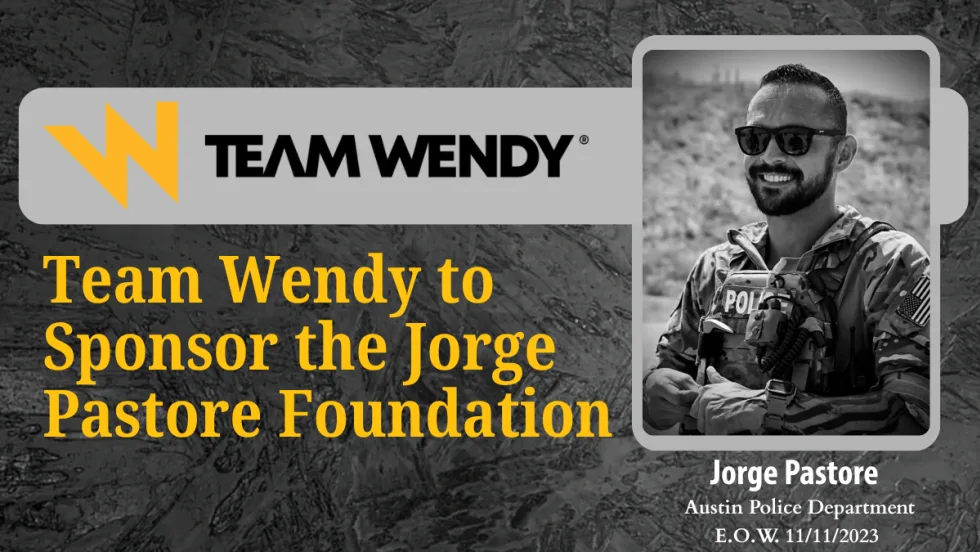
Team Wendy Announces Title Sponsorship of the Jorge Pastore Foundation
Team Wendy’s 3-year partnership with the Jorge Pastore Foundation expands access to programs that strengthen those who serve.
Read More →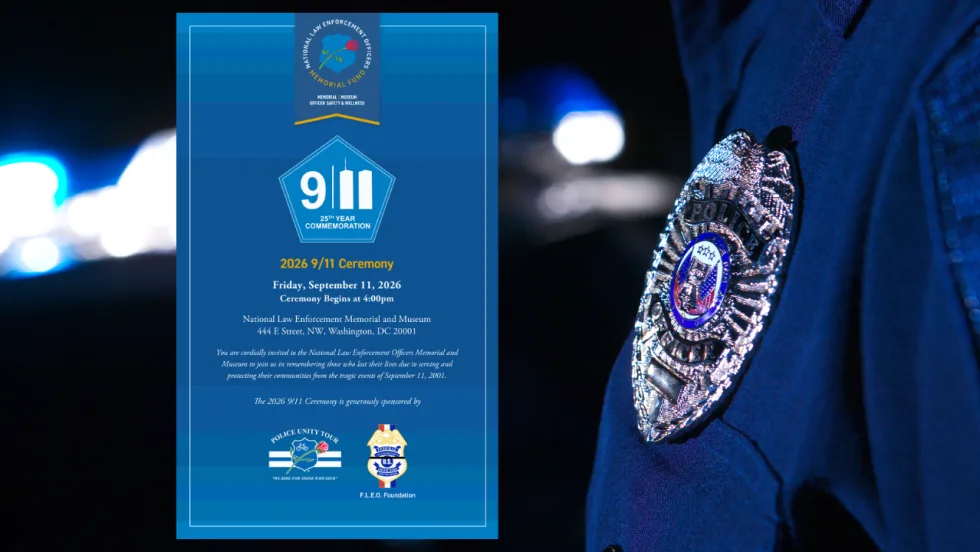
National Law Enforcement Memorial and Museum Hosting 9/11 25th-Year Commemoration Ceremony
The National Law Enforcement Memorial and Museum is hosting a 9/11 25th Year Commemoration Ceremony on Sept. 11 at 4 p.m.
Read More →
National Law Enforcement Officers Memorial Fund Announces June 2026 Officers of the Month
The National Law Enforcement Officers Memorial Fund (NLEOMF) named 15 officers of the Chico Police Department (California) as the Officers of the Month for June 2026 for their roles in responding to an active-shooter incident at a public library.
Read More →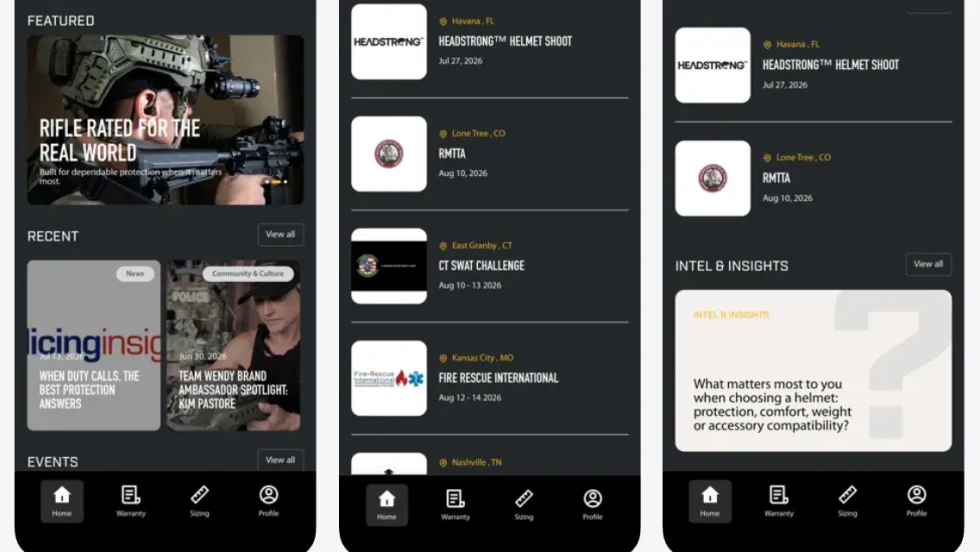
Team Wendy App Creates New Digital Hub for Helmet Owners
The Team Wendy Community App provides one location for warranty registration, size-fit tools, product updates, and community connection. For helmet owners, the new app creates a simpler path to the information and tools that matter most.
Read More →