



Missing the Mark
If you are always on a range with yardage marked and you're standing in a perfect stance out in the open, stop it!


Every once in awhile, I am reminded of the many principles of performance I advocate so adamantly in my seminars. Usually these reminders come in the form of a particular failure on my part. Using my knowledge, I am quickly able to explain why I failed and what motor learning principle I failed to attend to. I do this while assuming a thoughtful, humble, and superior smile, leaving listeners thinking, Why, he might have failed badly, but he sure did it smartly.
So we come to today's lesson. Recently on a Whitetail Deer hunt I was stalking a likely little hot spot I had scouted earlier. I was armed with the finest bow money could buy, the best super carbon arrows with broadheads that kill like cobra venom, and a sighting system that would make a Marine sniper jealous.
Suddenly, my prey appeared on the narrow trail ahead, and stopped and stared at my really cool camouflage hunting clothes, giving me a perfect shot. I put the 20-yard pin over the deer's heart and sent my instant death of an arrow flying downrange. With giddy anticipation I watched the arrow race toward the heart, sink slowly, and pass under the critter and smash into the rocks behind. Damn, a $30 miss!
I was stunned to discover upon pacing the distance that the deer had been at least 35 yards away. Of course, the equipment we have is only as good as the operator. I see patrol officers with more things attached to their firearms than a member of Delta Force and I often wonder if they have done their repetitions? But here is the thing; the repetitions have to be the right kind, as close to the way the skill is used on the street as possible.
Motor scientists break down skills in lots of ways, and one of them is whether a skill is "open" or "closed." An open skill is usually reactive and without sidelines or timelines, while closed skills are those used for darts or bowling. All of our skills can be put on that continuum, but sometimes we train for an open activity, like an armed confrontation or hunting a deer, by doing repetitions in a closed activity.
My repetitions with my bow are done on a range where I know the distances and my sight is set for each of them. When I hunt I usually sit in a stand where I take my rangefinder out and get my surroundings "framed" for distance references: That tree is 20 yards away, that rock 30, etc. The Whitetail I missed wasn't next to anything I had premeasured, leaving my estimate to be based on a guess affected by a slight rush of adrenaline.
I know why I missed and you do, too, but you make sure you do your repetitions properly….Just like I am going to start doing with my bow.
If you are always on a range with yardage marked and you're standing in a perfect stance out in the open, stop it! Get behind cover and shoot in other non-traditional positions like sitting, or crouching, or even lying on your back. Shoot targets that look like people and set it up so you have to react and not pace yourself. In other words, start practicing like you are going to have to play.
One more thing; we live in the day of the cool gizmo for everything we do. We are putting stuff on our belts and in our cars that all require some level of training and I wonder if we are getting in our repetitions and if we are doing them the right way. We are going to have to perform these skills in an "open" setting; no starter pistol will go off, but the shot of a pistol may start your reactions, so you have to be ready.
My miss cost me a pretty penny, sure, but yours has everything riding on it.
Dave Smith is the creator of "Buck Savage" and a retired law enforcement officer from Arizona. Currently, he is the lead instructor for Calibre Press' "Street Survival" seminar.
More Training
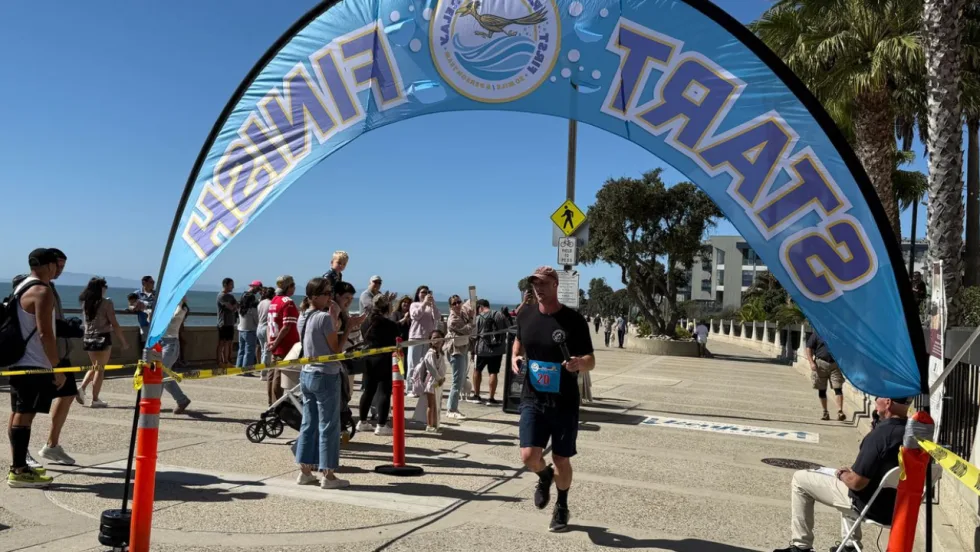
Registration Underway for Sixth Annual First Responders Relay
The California Police Athletic Federation’s annual First Responder Relay will welcome first responder teams from across the globe to compete along Ventura's scenic coastline on Oct. 11. Registration is underway.
Read More →
Vector Solutions Launches Comprehensive Online Dispatch Training Catalog for Emergency Communications Professionals
Vector Solutions’ new catalog of 35 expert-developed online courses can help emergency communication centers strengthen training, meet certification requirements, and simplify continuing education.
Read More →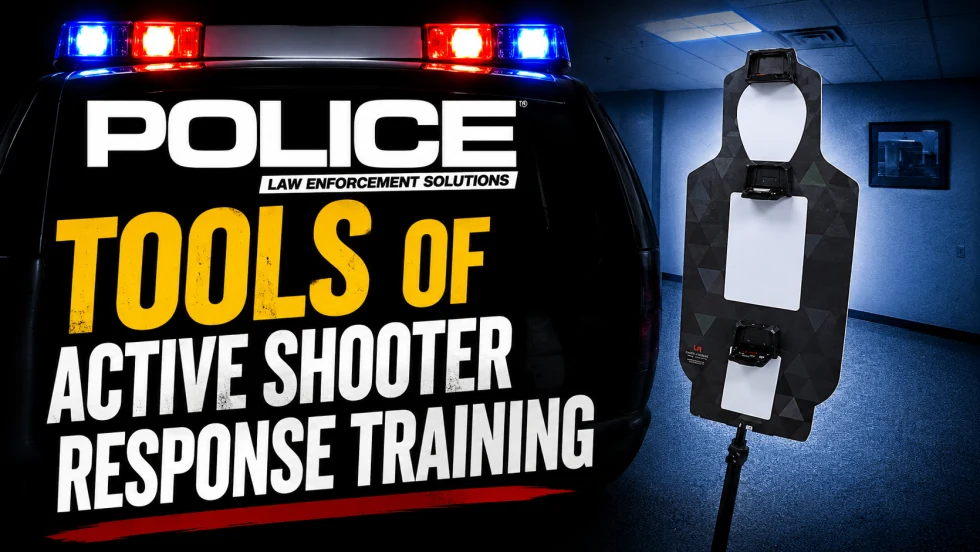
Tools for Active Shooter Response Training
What technologies help prepare officers for active shooter response situations? This behind-the-scenes look at law enforcement training explores shot simulators, smart firearms, laser target systems, and the tools used to build safer, more effective training environments.
Read More →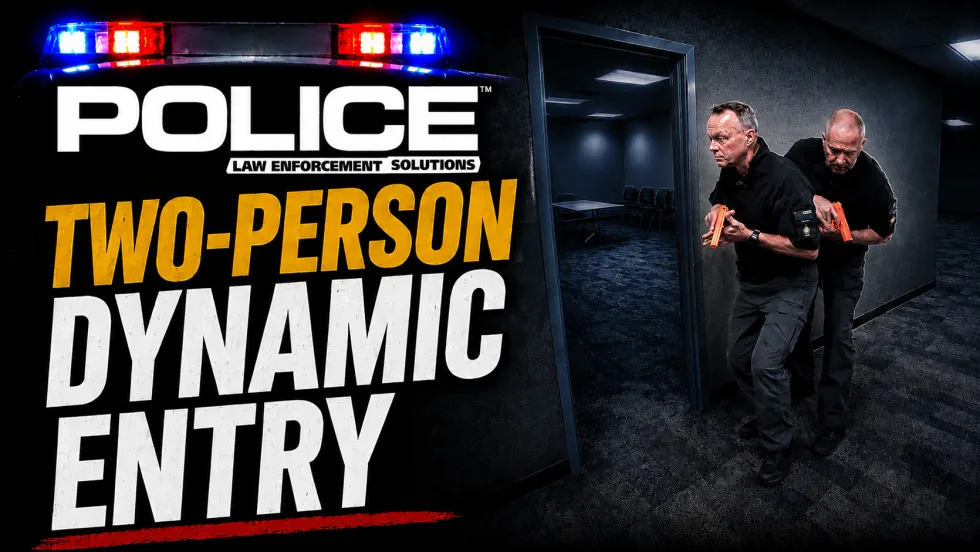
Two-Officer Tactical Doorway Entry Techniques
Entering a room during active-threat situations requires communication, coordination, and disciplined tactical movement. In this video, trainers from the United States Deputy Sheriff’s Association demonstrate critical room entry concepts, including fatal funnel awareness, team coordination, and safe tactical movement.
Read More →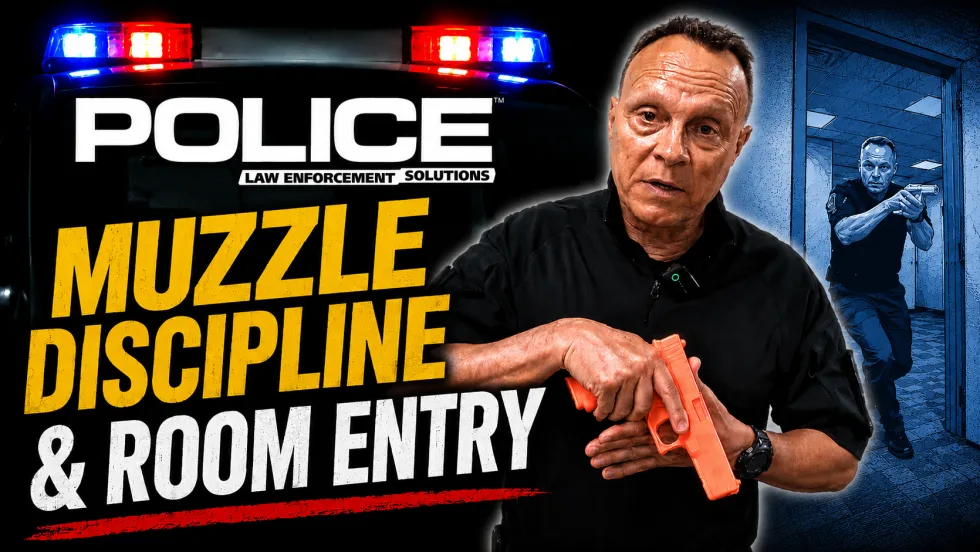
High Compressed Ready Explained | Muzzle Control For Room Entry
In this video, Mike Willis, law enforcement national training and program director for the United States Deputy Sheriffs’ Association, demonstrates the high compressed ready position and discusses muzzle control during room entry.
Read More →
Why Attend the DroneSense Innovation Summit by Versaterm?
Let’s hear from Ryan Bracken, head of product, about why your agency should send someone to the first annual DroneSense Innovation Summit by Versaterm in April.
Read More →
Caswell Live Fire Spins Off from InVeris
Caswell Live Fire has spun off from parent company InVeris, coinciding with the 100th anniversary of Caswell’s founding. Over the past 100 years, Caswell has developed pioneering solutions that support military, law enforcement, and commercial clients worldwide.
Read More →
When Do You Transport a Wounded Officer Instead of Waiting for EMS?
Thumbnail for video series POLICE Topics, Tactics & Tips with a yellow headline that reads When Do You Transport a Wounded Officer Instead of Waiting for EMS?
Read More →
How to Pick Your High-Risk Stop Location for Tactical Advantage
Hear veteran trainer Mike Willis, of the United States Deputy Sheriff’s Association, explain several considerations that can help you wisely pick your best spot to initiate high-risk or felony traffic stops.
Read More →
Coffee Break with Police Experts: Using Your Patrol Vehicle for Cover
In this video, hear from Dustin Mowery, a product specialist at Team Wendy, as he discusses how to best use a patrol vehicle for cover.
Read More →