



How to Use a Pole Camera to Clear an Attic
Known as perhaps the most dangerous "fatal funnel" in police work, police officers clearing attic spaces are placed at a significant tactical disadvantage in which they are extremely vulnerable to attack. Tactical pole cameras are recommended technology for officers to reduce their risks when clearing attics, basements, or crawlspaces.

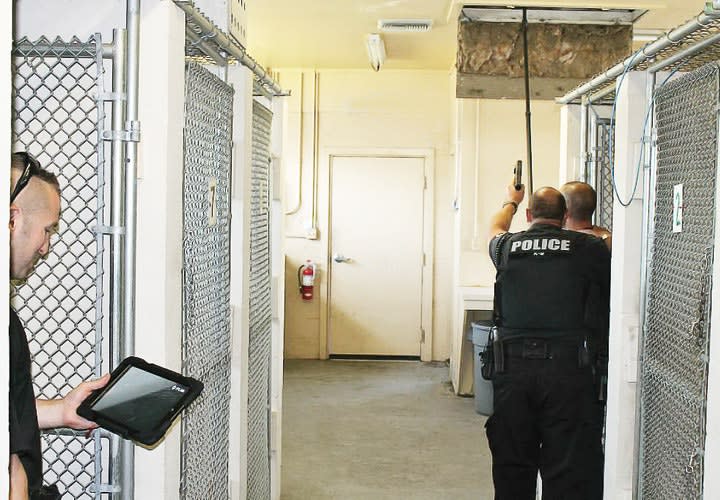
Photo: St. Petersburg (Fla.) PD
In 2011 my agency, the St. Petersburg (Fla.) Police Department, experienced a terrible tragedy when two of my colleagues, Officer Jeffrey Yaslowitz and Sgt. Thomas Baitinger, were killed serving an arrest warrant. Yaslowitz and Baitinger accompanied U.S. Marshal Scott Ley into a house where the suspect was hiding in the attic and was armed with a handgun. Before the day was over Yaslowitz and Baitinger were dead and Ley was seriously wounded. The suspect also died in the incident.
After this tragedy the St. Petersburg PD took the initiative to make thermal pole cameras available to patrol officers, not just the SWAT Team. Although pole cameras have been in use by well-funded SWAT Teams for the better part of two decades, access to the equipment by patrol officers to conduct routine attic checks is an uncommon deployment.
Known as perhaps the most dangerous "fatal funnel" in police work, police officers clearing attic spaces are placed at a significant tactical disadvantage in which they are extremely vulnerable to attack. Tactical pole cameras are recommended technology for officers to reduce their risks when clearing attics, basements, or crawlspaces.
The following patrol officer pole camera deployment techniques were developed by Sgt. James Lofton, K-9 Officer James Olson, K-9 Officer Edward "Matt" Regan, and K-9 Officer Jeremy Krzyiak under the direction of Lt. Scott MacDonald, for department-wide training at the St. Petersburg PD.
Don't Go There
The first thing our officers are taught in the patrol officer pole camera deployment program is when not to use it. If you know the suspect is in the attic, there is no need to use the thermal pole camera.
It is human nature to be tempted to look inside the attic and identify where exactly the suspect is hiding or to determine if the suspect is armed. But resist it.
If a barricaded subject can't be seen, he or she should be considered armed. And when you know definitively the suspect is in the attic, there is no value in moving close to the attic entrance. That attic entrance is a serious fatal funnel and entering it to locate an armed suspect can get you killed.
Popping the Hatch
If it is unknown if a suspect is present in the attic, the space needs to be cleared. Now is the time to deploy the pole camera.
But you need to do it in such a way as to minimize your exposure to any fire coming from a suspect who may or may not be in the attic. Use the pole camera to push open attic hatches/openings with the camera pole itself. We call this action "popping the hatch."
Once the hatch is popped, back away from it to allow it to "breathe" for several minutes. During this stand down time, make sure at least one officer is monitoring the hatch entrance and listening for any signs of a suspect in the attic. After several minutes, if there are no definitive signs of a suspect in the attic, approach the open entrance again.
Team Work
There are some simple guidelines for using a pole camera to search an attic area. Perhaps one of the most important is to make sure you have enough officers to do the job as safely as you can. Our patrol officer pole camera deployment program recommends using a three-officer team.
The first team member is the camera operator who holds the pole that supports the camera. If this is your assignment, hold the pole in such a manner as to ensure it doesn't twist in your hands. The camera should always be aligned and facing the same direction you are facing. This allows for non-verbal recognition by the camera team and other officers as to which direction the camera is facing at any given time by simply glancing at which direction you, the camera operator, are facing. This is particularly important if a suspect is located.
The second team member is the team leader. It's the team leader's job to watch the monitor and guide the camera operator's search pattern, preferably through non-verbal commands. This can be accomplished in a variety of ways, but St. Petersburg officers do this by tapping the camera operator's right shoulder to turn to the right, left shoulder to turn left, and squeezing either of the camera operator's shoulders to signal that he or she should stop moving the camera. If the camera is too low or too high in the attic space or angled too far forward or backward for a good view, just grab the pole and make the adjustment for the camera operator. This is quieter and more efficient than trying to verbalize to the camera operator how to adjust the camera for the best view.
The third essential team member is the cover officer. If this is your assignment, it's your job to point your firearm toward the attic opening and immediately respond to any threat. It is not your job to watch the camera display. So try not to look at it. Viewing the screen may actually compromise your night vision or distract you from threats to you or your fellow team members. NOTE: Team leaders should consider assigning the tallest team member to be the cover person so his or her firearm is held above the other team members' ears.
Optionally, a fourth team member can be used to either provide additional lethal force coverage of the attic entrance or hold a ballistic shield over the heads of the other team members. While at first this option sounds easy to do and an ideal safety precaution, it is very difficult to do and can hamper the team from completing its mission. Holding a typical handgun shield with a weight of nearly 20 pounds over the heads of three other team members is not easy, even for really strong officers. And not only does the weight of the shield quickly wear on the shield holder, the shield itself tends to get in the way of the pole camera and blocks the view of the lethal cover officer. Maneuverability is also an issue, especially in a narrow residential hallway or closet where it tends to be very difficult to turn the shield 360 degrees without constantly hitting the walls. Additionally, it should be noted the handgun shield is only providing a false sense of security if the suspect in an attic fires on the team with a rifle. Rifle shields, which easily weigh twice as much or more than handgun shields, cannot be realistically held over the heads of three other team members for an extended period of time.
All three or four team members should approach the attic entrance together. The team, led by the team leader, slowly moves right or left together as the camera pans the attic space until, eventually, the space is cleared.
Every officer conducting a pole camera search of an attic should at least be wearing his or her concealed body armor. In addition some teams like to wear additional ballistic protection, including helmets.
There are pros and cons to wearing a helmet while conducting an attic search. The pros include added ballistic protection and possible added confidence for the team members. The cons include the cumbersomeness of the heavy helmets when looking upward into an attic and the questionable value of the helmets if the team members are looking up into the attic entrance, which exposes their unprotected faces to an attack.
Spotting the Suspect
After spotting a suspect your first natural response may be to say something like, "I see you" or "I've got you," as it can be a rather satisfying phrase when you've been searching for an extended period of time. But it also eliminates some of the limited tactical advantage you may have over a suspect who may not immediately know he or she has been spotted. Saying "I've got you" may also evoke a fight-or-flight response from a suspect who only moments before was holding still in an attempt to conceal himself.
Remember, surprise is your advantage in this confrontation. Your quarry may not even have noticed the pole camera, especially if you are using thermal and infrared cameras, which typically emit no visible light from their camera heads. Even traditional cameras with white light attachments do not automatically tell suspects you have spotted them as long as you don't let the camera linger on them.
Our patrol officer pole camera deployment program recommends that officers not take immediate action once the suspect is spotted. Instead, quietly remove yourself from the immediate dangers posed by standing under the attic entrance. If the pole camera system has a wireless monitor, which means the camera pole will have no value to the suspect if he grabs it, and the pole is long enough, consider wedging the pole in the corner of the attic opening in such a way that the camera remains trained on the suspect while you back away from the attic entrance with the wireless monitor. Once you have backed away to a safer location, you can order the suspect out of the attic.
Getting the Suspect in Cuffs
Of course he or she may not want to comply.
Best practices for gaining compliance from a suspect in an attic are up for debate. But one thing every police tactics expert agrees on is that you should not enter the attic, unless circumstances make that risky move absolutely necessary.
Ideally, you should be able to force the suspect to exit the attic under his or her own power while you give him or her orders at gunpoint from a position of cover. Once the suspect is out of the attic and on the floor level, your agency's practice for taking a possibly armed suspect into custody applies.
Currently, most law enforcement agencies reserve access to tactical pole cameras for SWAT units. But our tragic experience here in St. Petersburg and our research into how to prevent such tragedies has led us to the conclusion that agencies should consider purchasing additional pole camera systems for patrol officers to clear attic spaces more safely.
This article was written by Officer Robert Lord, Lt. Scott MacDonald, K-9 Officer Jeremy Krzyiak, Sgt. James Lofton, K-9 Officer James Olson, and K-9 Officer Edward "Matt" Regan of the St. Petersburg Police Department.
More Patrol

Streamlight Portable Scene Light III Wins 2026 OH&S New Product of the Year Award
Streamlight’s Portable Scene Light III has won the 2026 Occupational Health & Safety (OH&S) New Product of the Year Award in the Lighting category.
Read More →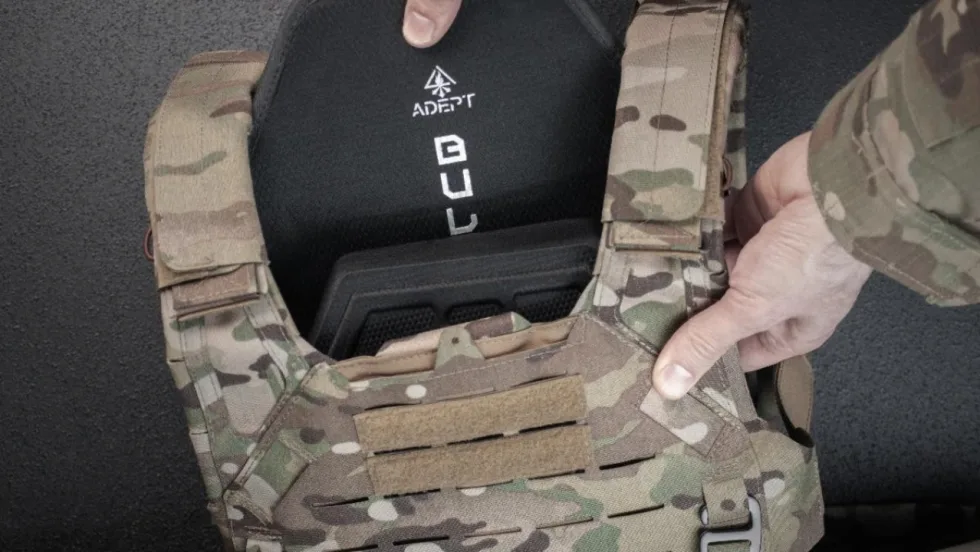
Adept Armor Introduces Two New Rifle Plates
Adept Armor has launched two new Level IV ballistic plates, the Emperor and the Archon Mark 2, which brings Adept Armor’s new Quatroid ceramic to the high-threat, performance-value center of the range at 5.2 pounds.
Read More →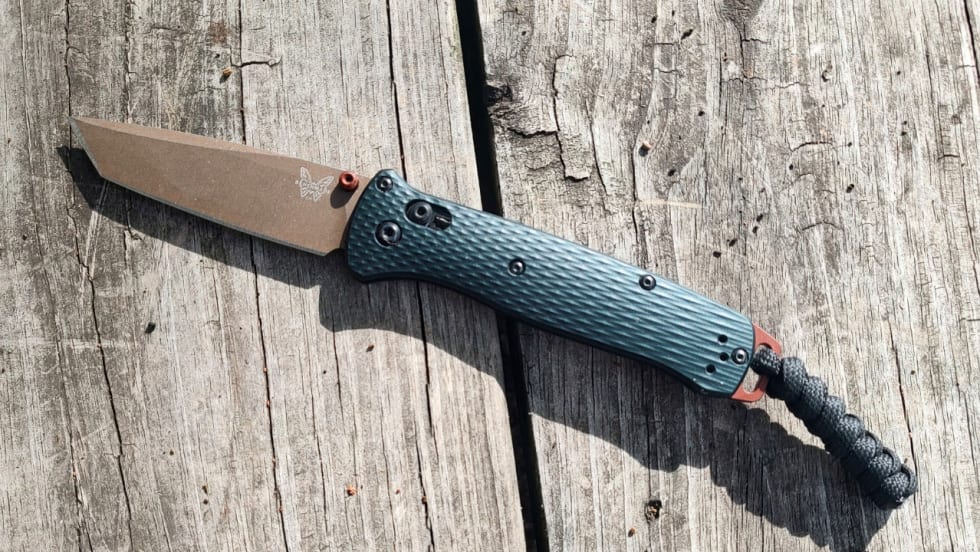
POLICE Product Test: Benchmade Bailout
The Benchmade Bailout is a slim, lightweight carry knife with a deep-ride pocket clip and comes in a variety of blade steels and scales. Here is a detailed review of the Taiga Green Bailout, released earlier this year.
Read More →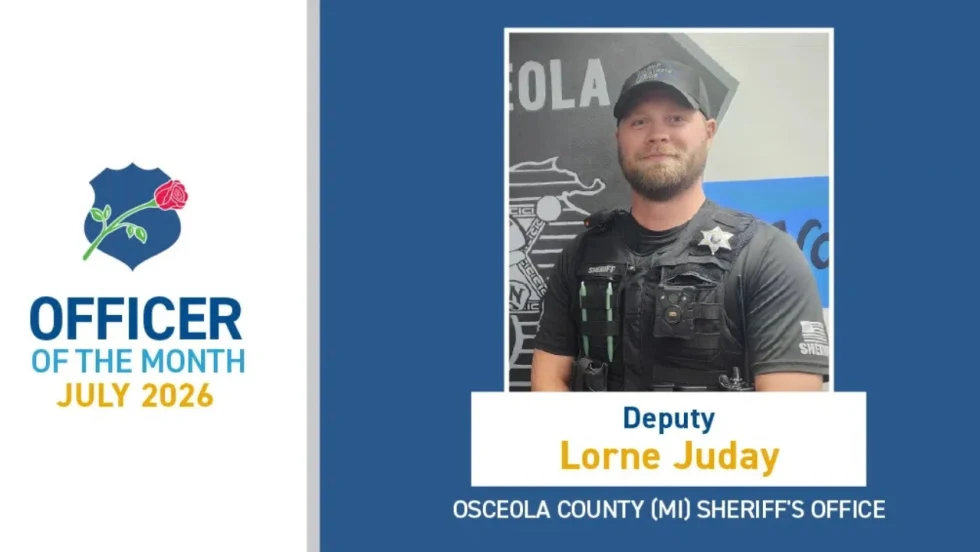
NLEOMF Announces July 2026 Officer of the Month
NLEOMF honored a Michigan deputy sheriff as the July 2026 Officer of the Month for rescuing a trapped driver from a burning vehicle following a Fourth of July crash.
Read More →
Streamlight to Showcase Newest Lighting Products at National Safety Council’s Safety Congress & Expo 2026
Streamlight will showcase its latest lights, including the Portable Scene Light III and the LiteBox 1Million, at the 2026 National Safety Council (NSC) Safety Congress & Expo.
Read More →
The 2027 World Police & Fire Games Set for Perth, Australia
The 2027 World Police & Fire Games (WPFG) will take place in Perth, Western Australia, from Friday, March 12 through Sunday, March 21, 2027.
Read More →
5.11 Partners with National Fallen Firefighters Foundation to Support #ForThe343
5.11 has joined the nationwide movement honoring the 343 New York City Fire Department firefighters lost on Sept. 11, 2001.
Read More →
Team Wendy Announces Title Sponsorship of the Jorge Pastore Foundation
Team Wendy’s 3-year partnership with the Jorge Pastore Foundation expands access to programs that strengthen those who serve.
Read More →
National Law Enforcement Memorial and Museum Hosting 9/11 25th-Year Commemoration Ceremony
The National Law Enforcement Memorial and Museum is hosting a 9/11 25th Year Commemoration Ceremony on Sept. 11 at 4 p.m.
Read More →
National Law Enforcement Officers Memorial Fund Announces June 2026 Officers of the Month
The National Law Enforcement Officers Memorial Fund (NLEOMF) named 15 officers of the Chico Police Department (California) as the Officers of the Month for June 2026 for their roles in responding to an active-shooter incident at a public library.
Read More →